
Sunbird's iMessage for Android App Returns to the Google Play Store
Sunbird's iMessage for Android App Takes Flight Again on the Google Play Store
For years, the dream of sending and receiving "blue bubble" messages directly from an Android phone has been a holy grail for many smartphone users. The social divide created by Apple's exclusive iMessage service has been a constant source of discussion, frustration, and even mild ostracization for Android users in an iPhone-dominated world. Today, that dream inches closer to reality once more as Sunbird Messaging officially reintroduces its app, aiming to bridge the gap and bring iMessage to Android users.
After a period of early access testing, Sunbird is now widely available for download on the Google Play Store. This re-launch marks a significant moment for the app, which has had a tumultuous history, but now returns with promises of enhanced security and a renewed commitment to its users.
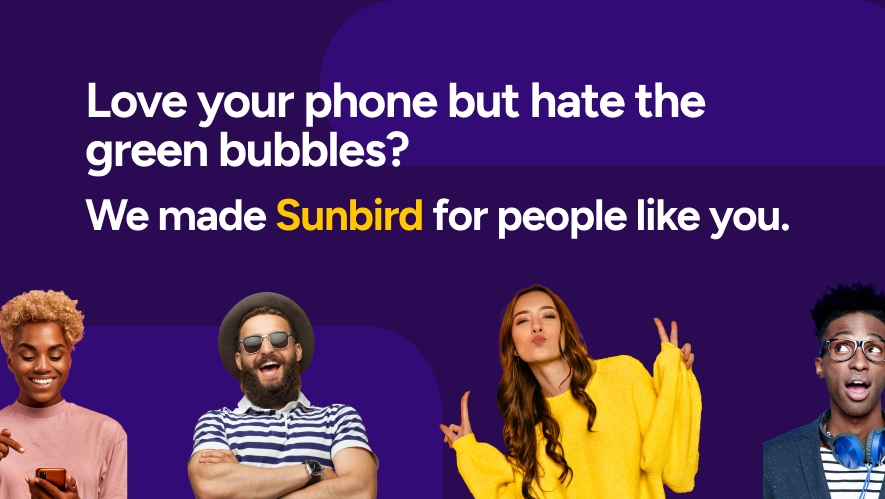
The core promise of Sunbird remains compelling: it allows Android users to send messages that appear as the coveted "blue bubbles" to their iPhone-using friends and family. This isn't just about aesthetics; it's about seamless integration into iMessage group chats, access to features like typing indicators and read receipts, and avoiding the "green bubble" stigma that often accompanies standard SMS/MMS messages from Android devices. Sunbird aims to be your one-stop messaging solution, incorporating not just iMessage, but also the modern RCS (Rich Communication Services) standard, and traditional SMS/MMS messages, all within a single, convenient app.
This comprehensive approach means you theoretically wouldn't need to juggle multiple messaging apps for different contacts or platforms. Whether your contact is on an iPhone, an Android phone with RCS enabled, or an older phone relying on SMS, Sunbird promises to handle it all, providing a more unified and streamlined communication experience.
The Tumultuous Journey: Sunbird's Past and Rebirth
Sunbird's re-entry into the market comes after a period of absence and significant re-evaluation. The app was previously available to users from late 2022 through late 2023, generating considerable excitement and adoption. For a brief period, it seemed like the answer to the long-standing iMessage exclusivity problem had arrived. However, its initial run was cut short due to severe security concerns that ultimately led to the company shutting down the service.
During its initial phase, critical vulnerabilities came to light. The most alarming revelation was that the app was requiring users to send their Apple ID credentials to a Sunbird server. Even worse, this sensitive information, along with user messages and media attachments, was reportedly being transmitted unencrypted over HTTP. This meant that the data was vulnerable to interception by attackers, who could potentially gain access to private conversations and personal information. Furthermore, it was reported that Sunbird employees had access to a platform where all message content was stored, raising serious privacy alarms.
These security lapses were a major blow to user trust and a significant setback for the company. In an era where digital privacy and security are paramount, such vulnerabilities are simply unacceptable. The decision to shut down was a difficult but necessary step, allowing the company to re-evaluate its architecture and address these fundamental issues.
Following this shutdown, Sunbird went silent for a while, leaving many users wondering if the iMessage-on-Android dream was truly dead. However, a glimmer of hope appeared in April 2024, when the app returned in an invite-only beta program. This beta period was crucial for testing the revamped infrastructure and security protocols away from the public eye. Now, after months of private testing and refinement, Sunbird is once again publicly available, hoping to regain the trust of its user base with a stronger, more secure offering.
Rebuilding Trust: Sunbird's New Security Promises
The lessons learned from its past are clearly at the forefront of Sunbird's re-launch strategy. The company is making bold claims about its improved security measures, aiming to reassure users that their data and privacy are now protected. Understanding these changes is crucial for anyone considering using the app.
Sunbird explicitly states that messages are now "encrypted on-device and in transit." Let's break down what this means:
- On-device encryption: This implies that your messages are encrypted the moment they are created on your Android device, before they even leave your phone. This is a fundamental layer of security, ensuring that even if someone were to gain unauthorized access to your device, the messages would be scrambled and unreadable without the proper decryption key.
- In-transit encryption: This means that as your messages travel across the internet and various networks to reach their destination (or Sunbird's servers, if any temporary processing is involved), they remain encrypted. This prevents malicious actors from intercepting and reading your communications while they are in transit. This is typically achieved using industry-standard protocols like TLS/SSL.
Perhaps the most significant change from the previous iteration is the claim that messages "are not stored on Sunbird servers." This is a critical pivot, addressing one of the major privacy concerns from the past. If true, it means Sunbird would not have a central repository of user communications, significantly reducing the risk of a mass data breach or unauthorized access by employees. This "zero-knowledge" approach is a gold standard for privacy-focused messaging apps.
An Apple ID is still required to use Sunbird, which is understandable given that it needs to authenticate with Apple's iMessage service. However, the company now claims that "passwords are used once to set up a session and are then destroyed." This is a powerful statement. If Sunbird genuinely doesn't store your Apple ID password after the initial setup, it drastically reduces the risk associated with sharing those credentials. It suggests a more sophisticated authentication mechanism, possibly involving token-based systems or secure tunnels that establish a connection without retaining the sensitive password itself.
For those who wish to delve deeper into the technical specifics and verify these claims, Sunbird has made more comprehensive security information available on its website. It is always advisable for users to review such documentation and understand the implications before entrusting their personal information to any third-party service, especially one with a history of security issues.
The journey to rebuild trust is long and arduous. While Sunbird's new security promises sound robust on paper, the onus is on the company to consistently demonstrate and prove their commitment to user privacy and data protection. Transparency, regular security audits, and clear communication will be key to earning back the confidence of the Android community.
The Evolving Landscape: Sunbird in the Age of RCS
The messaging world has changed considerably since Sunbird first launched. Back then, one of Sunbird's biggest selling points was its ability to bring advanced features like typing indicators, read receipts, and higher-quality media sharing to Android users communicating with iPhones. These were features that were previously exclusive to iMessage and contributed significantly to the "green bubble" experience feeling inferior.
However, a monumental shift occurred recently: Apple has adopted RCS (Rich Communication Services). RCS is the modern standard for Android messaging, designed to replace the outdated SMS/MMS protocols. With RCS, Android users can enjoy many of the advanced features that iMessage users have long taken for granted, including:
- High-quality photo and video sharing
- Read receipts and typing indicators
- Larger group chats with better management
- Enhanced security (though not always end-to-end encrypted by default, depending on implementation)
Apple's decision to support RCS, expected to roll out in 2024, means that many of the functional disparities between Android and iPhone messaging will disappear. When an Android user messages an iPhone user, and both have RCS enabled, those messages will appear with all the modern features, significantly improving the cross-platform experience. This development raises a pertinent question: if RCS provides most of the advanced features, what exactly is Sunbird primarily offering now?
The answer, for many, boils down to one thing: the "bubble color." While RCS will improve the functionality of Android-to-iPhone chats, it will not change the fundamental aesthetic of the messages on an iPhone. Android messages will still appear as "green bubbles" even with RCS. Sunbird, on the other hand, specifically aims to deliver the coveted "blue bubble" experience, which remains a powerful social identifier and a symbol of seamless integration into Apple's ecosystem.
Beyond the bubble color, Sunbird still offers one crucial advantage for certain users: participation in iMessage-only group chats. If you're an Android user constantly left out of family or friend group chats because they are exclusively iMessage, Sunbird could be a gateway. However, there's an important caveat: iMessage through Sunbird does not register a phone number. Instead, users will appear to their contacts by their email address associated with their Apple ID.
This email-based identification might require some adjustment from your contacts, who are used to communicating with you via your phone number. You might need to inform them to add your Apple ID email to your contact entry for them to see your blue bubbles and for you to seamlessly join their iMessage groups. This small hurdle is a necessary part of how Sunbird establishes its connection to Apple's service without direct carrier integration.
Who Is Sunbird For? Understanding the Value Proposition
Given its history, its new security posture, and the evolving messaging landscape with RCS, who exactly is Sunbird for? The answer lies in a specific set of user needs and priorities:
- The "Blue Bubble" Enthusiast: For many, the aesthetic and social implications of the blue bubble are paramount. If you're tired of being the "green bubble" in group chats or simply want to blend seamlessly into conversations with iPhone users, Sunbird offers that direct visual parity.
- The iMessage Group Chat Participant: This is arguably one of Sunbird's strongest remaining unique selling points. If your family, friends, or work colleagues predominantly use iMessage for group conversations, and you, as an Android user, are constantly excluded or forced into fragmented chats, Sunbird offers a way in.
- Users Seeking a Truly Unified Messaging Experience: While RCS significantly improves Android-to-iPhone communication, Sunbird attempts to go a step further by integrating iMessage, RCS, and SMS/MMS into a single interface. For those who value having all their conversations in one place, regardless of the underlying protocol, Sunbird presents a compelling option.
- Those Willing to Experiment (and Pay): Sunbird is a third-party solution to a proprietary problem. Users who are early adopters, are comfortable with a subscription model, and are willing to navigate the quirks (like email-based identification) will find Sunbird more appealing.
- Users Who Trust the New Security Claims: This is a big one. For Sunbird to succeed, it needs users to believe in its revamped security architecture. Individuals who have reviewed the new security details and feel confident in the measures taken will be more inclined to try it.
It's important to weigh these benefits against the considerations. The subscription model is a factor, as is the potential for minor friction due to the email-based identification for iMessage contacts. Furthermore, while the new security promises are strong, users must decide if they are comfortable with a third-party service handling their Apple ID credentials, even with the "used once and destroyed" claim.
Getting Started with Sunbird: Trial and Subscription
For those intrigued by Sunbird's promise, the company offers a user-friendly entry point. Android users can try the app free for 14 days. This free trial period is an excellent opportunity to test out the app's functionality, assess its reliability, and determine if it meets your specific messaging needs. You can see how your iMessage contacts receive your messages, how group chats function, and whether the overall experience lives up to your expectations.
After the 14-day trial, continued use of Sunbird requires a subscription. The pricing is structured to offer flexibility:
- Monthly Subscription: Priced at $2.99 per month. This option is ideal for those who prefer month-to-month flexibility or are still evaluating the long-term value.
- Yearly Subscription: Priced at $24.99 per year. This offers a discount compared to the monthly rate, making it a more cost-effective choice for users who are committed to using Sunbird long-term.
The subscription model reflects the significant infrastructure and development costs associated with maintaining a service that bridges a proprietary ecosystem like iMessage. Users must decide if the convenience of blue bubbles, unified messaging, and access to iMessage groups is worth the recurring cost. For some, especially those heavily embedded in iMessage communities, this price might be a small price to pay for seamless communication.
The Future of Cross-Platform Messaging
Sunbird's return is a testament to the enduring demand for iMessage on Android. Despite Apple's adoption of RCS, which will significantly improve the baseline Android-to-iPhone messaging experience, the desire for the full "blue bubble" iMessage parity, including integration into iMessage groups, remains strong.
It's highly unlikely that Apple will officially bring iMessage to Android anytime soon, as its exclusivity remains a key factor in iPhone lock-in. Therefore, third-party solutions like Sunbird will continue to play a crucial role in addressing this market gap. The success of Sunbird will hinge not only on its technical prowess and stability but, critically, on its ability to maintain robust security and build unwavering user trust.
The "bubble war" may evolve with RCS, but it won't entirely disappear as long as iMessage remains proprietary. Sunbird offers a bridge for those who are willing to pay for the ultimate cross-platform messaging experience, albeit with its own set of trade-offs and considerations. It represents an ongoing effort to empower Android users with communication options that have long been denied to them.
Conclusion
Sunbird's reintroduction to the Google Play Store is a notable event for Android users yearning for a true iMessage experience. While its past was marred by significant security issues, the company returns with strong promises of enhanced privacy and data protection, alongside its core offering of "blue bubble" messaging, RCS, and SMS/MMS integration.
In a world where Apple has finally embraced RCS, Sunbird's primary differentiators now lie in the iconic blue bubble aesthetic and access to iMessage-specific group chats. The requirement for an Apple ID and the use of an email address for iMessage identification are minor considerations for those who desperately seek this cross-platform harmony.
With a 14-day free trial and flexible subscription options, Sunbird invites users to test its renewed capabilities. For those who prioritize seamless communication with iPhone users, want to participate in iMessage groups, and are confident in the app's new security measures, Sunbird could very well be the solution they've been waiting for. It's an intriguing development in the ever-evolving landscape of mobile messaging, offering a glimpse into a future where the green and blue bubble divide might finally begin to fade.
This article, "Sunbird's iMessage for Android App Returns to the Google Play Store" first appeared on MacRumors.com
Discuss this article in our forums
from MacRumors
-via DynaSage
