
Star Wars: Knights Of The Old Republic Nearly Contained A Swear Word That Would Curl Your Toes
Prepare to Sit Back and Say 'Damn' When You Learn What Lucasfilm Saved Us From Hearing
When you think of Star Wars, what is the first thing that pops into your head? For many, it is the glowing blade of a lightsaber, the imposing black helmet of Darth Vader, or the Millennium Falcon soaring through hyperspace. Visuals are a massive part of why we love this galaxy far, far away. However, there is another side to this cinematic universe that is just as important, if not more so: the sound.
Sound design has the power to make or break a movie. The right sound can turn a cheap plastic prop into a legendary weapon. The right voice can turn an actor in a rubber suit into the most terrifying villain in cinema history. Conversely, the wrong sound can completely ruin the magic, turning an epic space opera into a laughable comedy.
Behind the scenes of Lucasfilm, sound designer Ben Burtt and director George Lucas made some of the most critical audio decisions in film history. Many of the characters we know and love today almost sounded completely different. If those original ideas had made it to the final cut, movie history would have been altered forever. Prepare to sit back and say "damn" as we take a deep dive into the shocking, hilarious, and bizarre sounds that Lucasfilm saved us from hearing.

1. The "Darth Farmer" – David Prowse’s Original Darth Vader Voice
Darth Vader is arguably the greatest cinematic villain of all time. His deep, booming voice, provided by the legendary James Earl Jones, strikes fear into the hearts of audiences and Rebels alike. That slow, rhythmic mechanical breathing is instantly recognizable anywhere on Earth. But Darth Vader did not always sound like a menacing force of nature.
During the filming of the original 1977 movie, the physical actor inside the suit was David Prowse. Prowse was a massive British bodybuilder who stood at an imposing 6 feet 6 inches tall. Visually, he was the perfect choice to play the physical embodiment of the dark side. However, there was a major catch: his natural voice.
Prowse hailed from Bristol, England, and spoke with a very distinct, polite, and thick West Country accent. In the UK, this regional accent is often associated with rural farming communities. When Prowse delivered his lines on set through the muffling layers of the Vader mask, he did not sound like a terrifying galactic dictator. Instead, he sounded like a friendly, rural British farmer trying to give you directions to his tractor.
The crew on set secretly nicknamed him "Darth Farmer." Imagine watching the tense opening scene where Vader interrogates Princess Leia, only to hear him say, "Where are those transmissions you intercepted?" in a cheerful, rustic British drawl. It would have completely stripped away all of the character's menace and mystery.
George Lucas knew immediately that he could not use Prowse's voice for the final film. He wanted a voice that was deep, commanding, and dark. Lucas originally considered casting the legendary filmmaker Orson Welles, but decided his voice might be too recognizable to audiences. Eventually, he hired James Earl Jones for a voice-over recording session. Jones was paid just $7,000 for his work on the first film, but his performance created a cinematic icon. Thanks to Lucasfilm's quick thinking, we were saved from a polite, country-bumpkin Sith Lord.
2. C-3PO as a Fast-Talking Bronx Used-Car Salesman
C-3PO, the golden protocol droid, is famous for his polite, anxious, and highly intellectual British accent. Voiced and physically acted by Anthony Daniels, C-3PO sounds like a fussy butler who is constantly worried about the odds of survival. This voice is central to his charm and comedy. However, George Lucas originally had a vastly different vision for the character.
When Lucas was writing the script, he imagined C-3PO as a fast-talking, slimy, con-man figure. He wanted the droid to sound like a slick, 1930s-style used-car salesman from the Bronx, New York. The idea was to make him a fast-talking hustler who was constantly trying to fast-talk his way out of trouble.
Anthony Daniels, a trained British theater actor, played the physical role of C-3PO on set. He used his natural, polite voice during filming as a placeholder, fully expecting that another actor would dub over him later. In fact, Lucas actually auditioned dozens of actors in the United States to find that perfect "sleazy New York" voice.
Fortunately, as Lucas began editing the movie, he ran into a major problem. Every time they tried to dub a fast-talking American voice over the golden droid, it felt completely wrong. The physical movements that Daniels had brought to the suit—stiff, polite, and nervous—did not match the loud, aggressive tone of a New York salesman. The voice and the body were in a constant fight on screen.
Eventually, legendary voice actor Stan Freberg sat down with Lucas and told him the honest truth: Daniels' original voice was already perfect. Lucas relented, kept Daniels' voice, and film history was made. Had Lucas stuck to his original plan, we would have spent decades listening to a golden robot shouting, "Hey, I'm walkin' here!" in the middle of a galactic civil war.

3. Chewbacca Speaking Perfect, High-Pitched English
Chewbacca is the ultimate loyal co-pilot. We know him by his iconic, rumbling roars, groans, and growls—a language known as Shyriiwook. But during the filming of the original trilogy, the giant Wookiee did not make these sounds on set. Instead, actor Peter Mayhew spoke actual English lines so that his co-stars, particularly Harrison Ford, knew when to speak and how to react.
Peter Mayhew, who stood at an incredible 7 feet 3 inches tall, was a native of Yorkshire, England. On set, he spoke his lines in a relatively high-pitched, soft British voice. Watching the raw, unedited footage from the set of A New Hope is a truly mind-boggling experience. You see a giant, terrifying, hairy beast walking through the Rebel base, but when he opens his mouth, he says things like, "That old man's mad, you know!" in a polite English accent.
If Lucasfilm had decided to use a human voice-over for Chewbacca, or if they had simply failed to create a convincing alien language, the character of Chewbacca would have been ruined. He would have felt like a man in a cheap costume rather than a living, breathing alien from another world.
The man who saved us was sound designer Ben Burtt. To create Chewbacca’s real voice, Burtt traveled the world recording animal noises. He spent hours capturing the sounds of bears, walruses, lions, badgers, and even sick animals at zoos. By editing, pitching, and mixing these organic animal noises together, he created the iconic Wookiee language we know today. It is a masterpiece of sound design that saved us from a giant, furry Yorkshireman flying the Millennium Falcon.
4. R2-D2's Original Foul-Mouthed English Dialogue
R2-D2 is loved by millions as the cute, brave little astromech droid who saves the day in almost every single movie. He speaks in a series of digital beeps, boops, whistles, and squeaks. Because we cannot understand his literal words, we rely on C-3PO to translate for him, or we infer his emotions through the pitch of his sounds.
However, in George Lucas's very first drafts of the script, R2-D2 spoke perfect English. Not only did he speak English, but he was also written as a highly cynical, grumpy, and incredibly rude character. He spent most of his time insulting C-3PO and complaining about their missions.
In fact, some of his dialogue was so harsh and sassy that it borderlined on foul language. While he did not say any heavy curse words, his attitude was incredibly mean-spirited. He was constantly belittling the other characters and acting like a jerk.
Lucasfilm eventually realized that having two talking droids constantly bickering in English was incredibly tedious to listen to. It felt more like a bickering old couple in a sitcom than a sci-fi adventure. Lucas decided to strip R2-D2 of his English voice and tasked Ben Burtt with creating a completely synthetic language for him.
Burtt did something brilliant. He realized that pure electronic sounds from a synthesizer sounded too cold and lifeless. To give R2-D2 a soul, Burtt mixed electronic beeps with his own vocalizations. He made baby-like cooing sounds, sighs, and grunts into a microphone, and then processed them through a synthesizer. This blend of human emotion and machine logic gave R2-D2 a cute, expressive personality that transcended language barriers. By taking away his English words, Lucasfilm turned a grumpy, foul-mouthed robot into one of the most lovable characters in cinematic history.

5. The Hum of the Lightsaber: From Static to Legendary
The lightsaber is arguably the most famous weapon in fiction. Even if you have never watched a single Star Wars film, you know exactly what a lightsaber sounds like. The low, heavy hum as it is held still, and the sharp, crackling whoosh as it cuts through the air are burned into our collective cultural memory.
But before Ben Burtt got to work, nobody knew what a laser sword should sound like. In early science fiction films, laser weapons always made generic, high-pitched "pew-pew" or cartoonish electronic buzzing sounds. If Lucasfilm had followed the trends of the time, the lightsaber would have sounded like a cheap, annoying toy.
The creation of the lightsaber sound is a legendary story of happy accidents. Ben Burtt was working as a research assistant at the University of Southern California when he was hired for Star Wars. One day, while carrying an old microphone past a television set, he noticed that the microphone picked up a strange, low-frequency hum from the TV's tube. It was a rich, vibrating sound.
He combined this television static hum with another sound: the hum of two old, worn-out movie projector motors in the school's department. The motors made a beautiful, rhythmic thrumming sound. By mixing these two sounds together, Burtt created the base hum of the lightsaber.
To get the sound of the blade moving through the air, Burtt played the hum through a speaker in a room, took a microphone, and literally waved it back and forth in front of the speaker. The natural pitch changes created by the physical movement (known as the Doppler effect) gave us that incredible "whoosh" sound. This creative genius saved us from a weapon that would have sounded like a broken hair dryer.
6. The Screaming TIE Fighters
When the Empire’s TIE Fighters scream across the screen, they make a terrifying, roaring sound that sounds like a cross between a howling wind and a screaming banshee. It perfectly fits the evil, cold nature of the Galactic Empire.
If you were to design a spaceship sound today, you might use digital software to create a futuristic engine roar. But back in the mid-1970s, computers were incredibly primitive. Ben Burtt had to get creative. He wanted a sound that felt fast, dangerous, and utterly terrifying.
He found his answer by combining two incredibly mismatched sounds: the trumpeting roar of an angry elephant and the sound of a car driving fast on a wet, rainy highway. By stretching, pitching, and mixing these sounds, he created the TIE Fighter scream. Without this unique combination, these imperial starfighters would have had generic rocket engines, robbing the space battles of their intense, scary atmosphere.
7. The Evolution of the Blaster Fire
In most 1950s and 1960s sci-fi movies, laser guns made a very soft, electronic "zap" sound. It was a clean, artificial sound that lacked any real weight or impact. Lucasfilm wanted their galaxy to feel dirty, lived-in, and dangerous. The weapons needed to feel like real guns that could actually kill you.
Ben Burtt went looking for a sound that had a sharp, metallic ring to it. He found it during a family backpacking trip in the mountains. He happened to bump into the steel guy-wires of a radio tower. When he struck the metal cable, it made a strange, downward-spiraling "ping" sound as the vibration traveled up and down the wire.
Burtt returned with a tape recorder, struck the cables with a hammer, and captured the sound that would become the iconic blaster fire of the Star Wars universe. It was sharp, punchy, and completely unique. Once again, Lucasfilm's audio team saved us from cheesy, old-school sci-fi sound effects that would have made the action scenes feel like a children's cartoon.
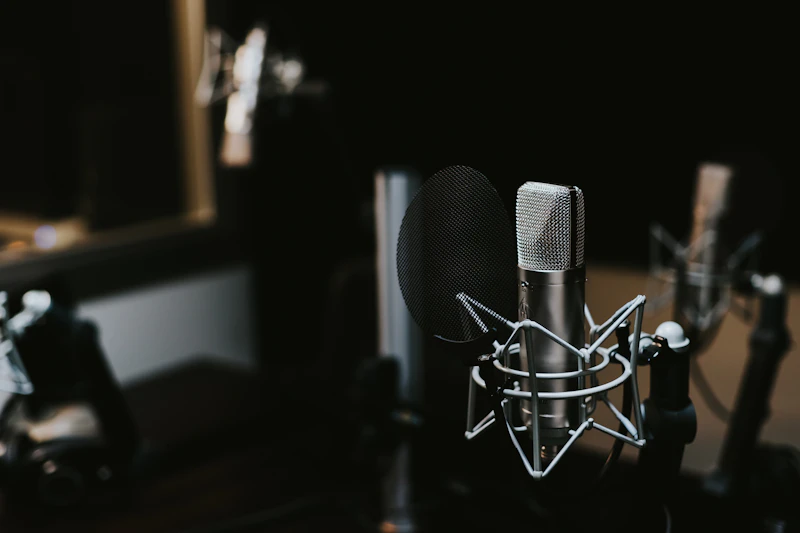
How These Audio Decisions Changed Cinema Forever
It is easy to take sound design for granted. When a movie is good, the sound is so seamless that you do not even think about it. But the stories behind the making of Star Wars prove that sound is fifty percent of the movie-going experience. The hard work, creativity, and sheer luck of the Lucasfilm team saved us from a version of Star Wars that would have been incredibly difficult to take seriously.
Imagine a version of the film where a farming British Darth Vader, a slick Bronx C-3PO, and an English-speaking Chewbacca sit inside a Millennium Falcon that makes generic spaceship noises, fighting off TIE fighters that sound like standard jet engines. The magic of the universe would have evaporated instantly. It likely would have been a massive box office flop, remembered only as a goofy, low-budget failure from the late 1970s.
Instead, George Lucas and Ben Burtt revolutionized the entire film industry. Their work led to the creation of Skywalker Sound, a division of Lucasfilm that went on to design the soundscapes for thousands of iconic movies, including the Indiana Jones series, Jurassic Park, and many more. They proved that sound is not just an afterthought—it is the very soul of cinema.
So, the next time you hear the low hum of a lightsaber, the heavy breathing of Darth Vader, or the cheerful beeps of R2-D2, take a moment to appreciate the incredible bullet we dodged. Sit back, say "damn," and be grateful that Lucasfilm saved our ears from what almost was.
To learn more about the incredible history of film sound design, check out the official Lucasfilm website or explore the extensive movie database on IMDb for more behind-the-scenes trivia.
from Kotaku
-via DynaSage
