
OLED iMac Panel Could Include Extra Layer to Fight Screen Burn-In
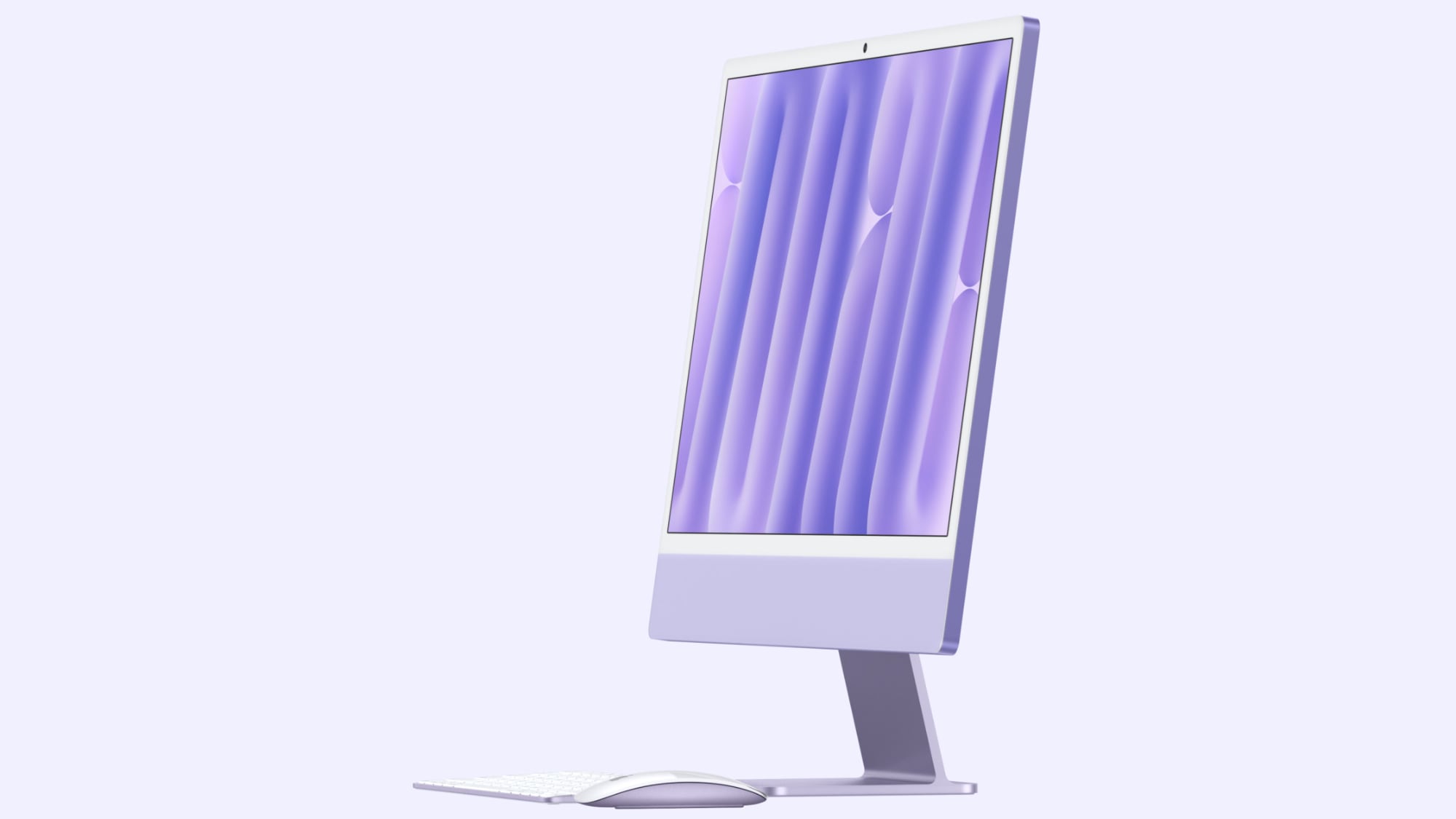
The Future of iMac Displays: How a Five-Layer OLED Could Revolutionize Your Screen
Imagine your next Apple iMac with a display so vibrant, so true to life, that every image and video pops with unbelievable clarity and color. Now, imagine that display also lasts longer, maintains its brilliance over years, and completely eliminates the dreaded "screen burn-in" that has plagued some advanced screens. This vision is rapidly becoming a reality, thanks to groundbreaking developments in display technology.
At the forefront of this innovation is LG Display, a global leader in screen manufacturing. They are reportedly developing an advanced five-layer OLED panel structure specifically designed to overcome these long-standing challenges. This revolutionary panel could very well be the heart of a future iMac, promising a visual experience unlike any before it. The news, first reported by the highly respected industry publication The Elec, suggests a significant leap forward in display technology.
Understanding OLED: A Quick Primer on Why It's So Special
Before diving into the specifics of LG Display's innovation, let's briefly understand what makes OLED (Organic Light-Emitting Diode) technology so coveted, especially by premium brands like Apple. Unlike traditional LCD (Liquid Crystal Display) screens, which rely on a backlight to illuminate all pixels, each pixel in an OLED display generates its own light. This fundamental difference brings several significant advantages:
- Perfect Blacks: When an OLED pixel is off, it's truly off, resulting in absolute black. This creates an incredible contrast ratio, making images appear more three-dimensional and realistic.
- Vibrant Colors: OLED panels typically produce a wider range of colors with greater accuracy, making content look stunningly lifelike.
- Faster Response Times: Individual pixels can change color and brightness much quicker than an LCD's liquid crystals, leading to smoother motion, which is crucial for gaming and fast-paced video.
- Wider Viewing Angles: Colors and brightness remain consistent even when viewed from extreme angles.
- Thinner and More Flexible Designs: Because they don't require a bulky backlight, OLED panels can be made incredibly thin and even flexible, opening up new possibilities for device design.
However, despite these remarkable benefits, OLED technology has historically faced two primary hurdles: burn-in and achieving high, sustained brightness without compromising lifespan.
The OLED Challenge: Burn-In and Sustained Brightness
The "burn-in" phenomenon refers to a permanent discoloration on a screen, where ghost images of static elements (like a taskbar, logo, or game HUD) remain visible even when the content changes. This occurs because the organic materials in OLED pixels degrade over time, and if certain pixels are used more frequently or at higher brightness for extended periods, they degrade faster than their neighbors, leading to an uneven display.
The second challenge is achieving high brightness levels consistently, especially for devices like desktop computers that are often used in well-lit environments. Pushing OLED pixels to higher brightness requires more electrical current. This increased current accelerates the degradation of the organic materials, effectively shortening the panel's overall lifespan and making burn-in even more likely. For a premium product like an iMac, which users expect to last for many years, these issues are critical to address.
Current high-resolution OLED monitors, including those LG Display already produces, typically use a four-stack panel structure. In this arrangement, the light-emitting layers are carefully organized, often in a blue-green-blue-red pattern. This stacking helps distribute the electrical load to some extent, but as pixel densities increase and individual pixels become smaller, the challenge of maintaining brightness and preventing degradation becomes more acute. When each pixel is tiny, the portion of it that actually emits light shrinks proportionally. To maintain the desired brightness, more current must be forced through this smaller emitting area, which, as mentioned, shortens the panel's life and increases the risk of image retention or burn-in.
LG Display's Innovative Solution: The Five-Layer Stack
This is where LG Display's new five-layer OLED panel structure comes in as a potential game-changer. Building upon their existing four-stack design, this innovative approach adds a crucial third blue layer. The previous four-stack pattern was typically a blue-green-blue-red arrangement. The five-stack version reportedly under development strategically incorporates an additional blue layer, creating a new sequence: blue-green-blue-red-blue.
Why is adding an extra blue layer so significant? The key lies in the unique properties of blue OLED emitters. Blue light is generally the most energy-intensive to produce and historically has had a shorter lifespan compared to red and green emitters. By adding a third blue layer, LG Display is effectively addressing this weakest link in the chain. Here’s how this extra layer provides multiple benefits:
- Spreading the Electrical Load: Each pixel is essentially a tiny light bulb. By stacking more of these "bulbs" (emitting layers), the electrical current needed to achieve a certain brightness can be distributed across more layers. This reduces the stress on any single layer. Think of it like adding more lanes to a highway – the traffic (electrical current) can flow more smoothly, and no single lane gets overloaded.
- Increased Efficiency and Brightness: With the electrical load better distributed, the panel can achieve higher brightness levels more efficiently. This means it can produce a brighter image without needing to push individual layers to their breaking point.
- Enhanced Lifespan: Less stress on individual layers directly translates to slower degradation of the organic materials. This significantly extends the overall lifespan of the OLED panel, making it more suitable for long-term use in a desktop computer.
- Superior Burn-In Prevention: The extended lifespan and more uniform degradation across the layers drastically reduce the risk of screen burn-in. If all layers degrade more slowly and evenly, it's far less likely for static elements to leave permanent ghost images.
- Improved Stability for High-Density Displays: As screen resolutions climb and pixels become microscopically small, the challenge of maintaining consistent performance across millions of tiny emitters grows. The five-layer structure provides greater stability and uniformity, which is critical for the exceptionally high pixel densities expected in future iMacs.
Apple's Quest for the Perfect OLED iMac
Apple has always prioritized display quality in its products, from the Retina displays on iPhones and MacBooks to the stunning Pro Display XDR. It's no surprise then that the company is keenly interested in bringing OLED technology to its iconic iMac lineup. Last year, Apple took a significant step by sending out "Requests for Information" (RFIs) to both Samsung Display and LG Display, signaling its serious intent to develop an OLED iMac panel.
The specifications Apple discussed with these suppliers provide a clear glimpse into their aspirations: a 24-inch panel capable of reaching 600 nits of brightness, with a sharp pixel density of 218 pixels per inch (PPI). To put this into perspective, the current 24-inch iMac, which uses an LCD panel, manages 500 nits of brightness at the exact same pixel density. This means Apple is pushing for a noticeable increase in brightness while retaining the excellent clarity users have come to expect from their iMacs.
The move to OLED for the iMac would align with Apple's strategy of adopting OLED across its premium product lines, including iPhones, Apple Watches, and the latest iPad Pro models. The benefits for an iMac user would be immense: incredibly vivid colors for creative professionals, deeper blacks for movie watchers, lightning-fast response times for gamers, and a potentially thinner, more elegant design for the overall desktop computer. An OLED iMac would represent a significant upgrade, further cementing its position as a top-tier all-in-one desktop.
LG Display's Progress and the Hurdles Ahead
LG Display isn't just talking about these advancements; they are actively demonstrating their capabilities. The company has already showcased an impressive 27-inch 5K panel featuring 220 PPI and an RGB stripe subpixel layout. While this specific panel, which uses their four-stack structure, isn't likely destined for an iMac (given Apple's specific requirements for a 24-inch OLED and likely interest in the five-stack structure), it serves as a powerful indicator. The Elec suggests that this demonstration is a crucial "gauge" for LG Display, allowing them to assess their ability to mass-manufacture high-density RGB stripe OLEDs. This is a critical step in refining their processes and proving their production capabilities to demanding clients like Apple.
However, developing cutting-edge technology always comes with its own set of challenges, and the five-stack OLED structure is no exception. The most significant hurdle is cost. Adding more emitting layers directly translates to using more organic material, which is expensive. Furthermore, the manufacturing process becomes considerably more intricate and "fiddlier," as described by industry insiders. The deposition process – where these incredibly thin organic layers are precisely laid down – requires extreme precision and control. Any deviation can lead to defects, reducing the yield of usable panels and consequently driving up costs.
LG Display must strike a delicate balance: meet Apple's stringent brightness and lifespan requirements (which are paramount for a premium product) without allowing the complexity of the five-layer process to ruin their production yields. High yields are essential for keeping manufacturing costs manageable and ensuring a steady supply. This is a complex engineering and manufacturing puzzle that LG Display is working tirelessly to solve.
The Competition: Samsung Display and QD-OLED
LG Display isn't alone in this race to develop the next-generation iMac display. Its primary rival, Samsung Display, is also intensely focused on developing its own advanced OLED technology to meet Apple's demands. Samsung's chosen path for high-performance displays is QD-OLED (Quantum Dot Organic Light-Emitting Diode).
QD-OLED takes a slightly different approach than LG Display's white OLED (WOLED) technology. Instead of using multiple white OLED layers with color filters, QD-OLED starts with blue light emitters. This blue light then passes through a layer of quantum dots, which convert some of the blue light into pure red and green light. The result is a display that combines the perfect blacks and infinite contrast of OLED with the enhanced color vibrancy and brightness potential typically associated with quantum dot technology. Samsung Display is developing QD-OLED for the very same reasons LG Display is pursuing its five-layer stack: to deliver superior brightness, extend panel lifespan, and effectively combat screen burn-in.
The competition between these two display giants is a boon for consumers, as it accelerates innovation and pushes the boundaries of what's possible in display technology. Both suppliers are racing against the clock, aiming to have the first iMac OLED panels developed by 2028. This competitive landscape ensures that Apple will have access to the absolute best technology available when it's ready to launch its next-generation iMac.
Timelines and What to Expect
While the development of these advanced OLED panels is well underway, bringing such sophisticated technology to market, especially for a demanding client like Apple, takes time. Both LG Display and Samsung Display are targeting 2028 as the year they expect to have the first iMac OLED panels fully developed and ready for production. However, from Apple's perspective, integration, testing, and mass production mean that a consumer launch is likely to follow later. Current projections suggest that an OLED iMac won't hit the shelves until 2029 at the earliest.
In the interim, Apple understands that customers are always looking for the latest and greatest. Therefore, before the revolutionary OLED iMac makes its debut, Apple is expected to refresh its current 24-inch LCD-based iMac lineup. This refresh will likely feature a new, more powerful processor, keeping the existing iMac competitive and fresh until the groundbreaking OLED version is ready. These updated models are anticipated to launch later this year, providing a welcome performance boost for those who can't wait for OLED.
The Impact of OLED iMacs on the User Experience
When the OLED iMac finally arrives, it will undoubtedly redefine the desktop computing experience. For creative professionals – photographers, video editors, graphic designers – the perfect blacks, vibrant colors, and incredible contrast will mean their work is displayed with unprecedented accuracy and realism. This leads to more precise edits, truer color grading, and a more immersive creative workflow.
For everyday users, the benefits will be equally compelling. Watching movies and TV shows will be a cinematic experience, with scenes displaying incredible depth and detail. Gaming will become more immersive than ever, thanks to rapid response times and stunning visuals. Even simple tasks like browsing the web or working on documents will feel more engaging on such a high-quality display. The enhanced lifespan and burn-in resistance will also provide peace of mind, knowing that this premium investment will continue to deliver top-tier performance for many years.
Furthermore, the success of OLED in the iMac could pave the way for its wider adoption across other Apple product lines. Imagine future MacBooks with similar five-layer OLED technology, offering unparalleled portable display quality. High-end external monitors could also benefit, further cementing Apple's commitment to pushing the boundaries of visual fidelity across its entire ecosystem.
Conclusion: A Brighter Future for Your Desktop
The journey towards a burn-in-resistant, ultra-bright OLED iMac is a testament to the relentless pace of innovation in display technology. LG Display's development of a five-layer OLED panel structure represents a monumental step forward, promising to resolve the primary drawbacks of OLED while enhancing its already impressive capabilities. This, combined with Apple's clear interest and Samsung Display's competitive QD-OLED advancements, sets the stage for a truly revolutionary product.
While we may have to wait a few more years, the prospect of an iMac featuring a display with perfect blacks, unparalleled contrast, vibrant colors, and the assurance of long-term reliability is incredibly exciting. It signifies not just an upgrade, but a fundamental transformation in how we interact with our desktop computers, promising a visual experience that is more immersive, more beautiful, and more enduring than ever before. The future of the iMac is undoubtedly bright, and thanks to innovations like the five-layer OLED, it will be incredibly clear.
This article, "OLED iMac Panel Could Include Extra Layer to Fight Screen Burn-In" first appeared on MacRumors.com
Discuss this article in our forums
from MacRumors
-via DynaSage
