
Apple's All-Glass 20th Anniversary iPhone Reportedly Canceled
Apple's Futuristic All-Glass iPhone for 20th Anniversary Reportedly Canceled
A highly anticipated, radically redesigned all-glass iPhone, once rumored to be a groundbreaking tribute to the device's 20th anniversary, has reportedly been canceled. This surprising news comes from Jefferies analyst Edison Lee, whose insights, frequently derived from intricate supply chain checks, often provide an early glimpse into Apple's future plans and production realities. The cancellation marks a significant shift in expectations for Apple's upcoming product releases and carries notable implications for its financial outlook.
The Vision of a Seamless, All-Glass iPhone
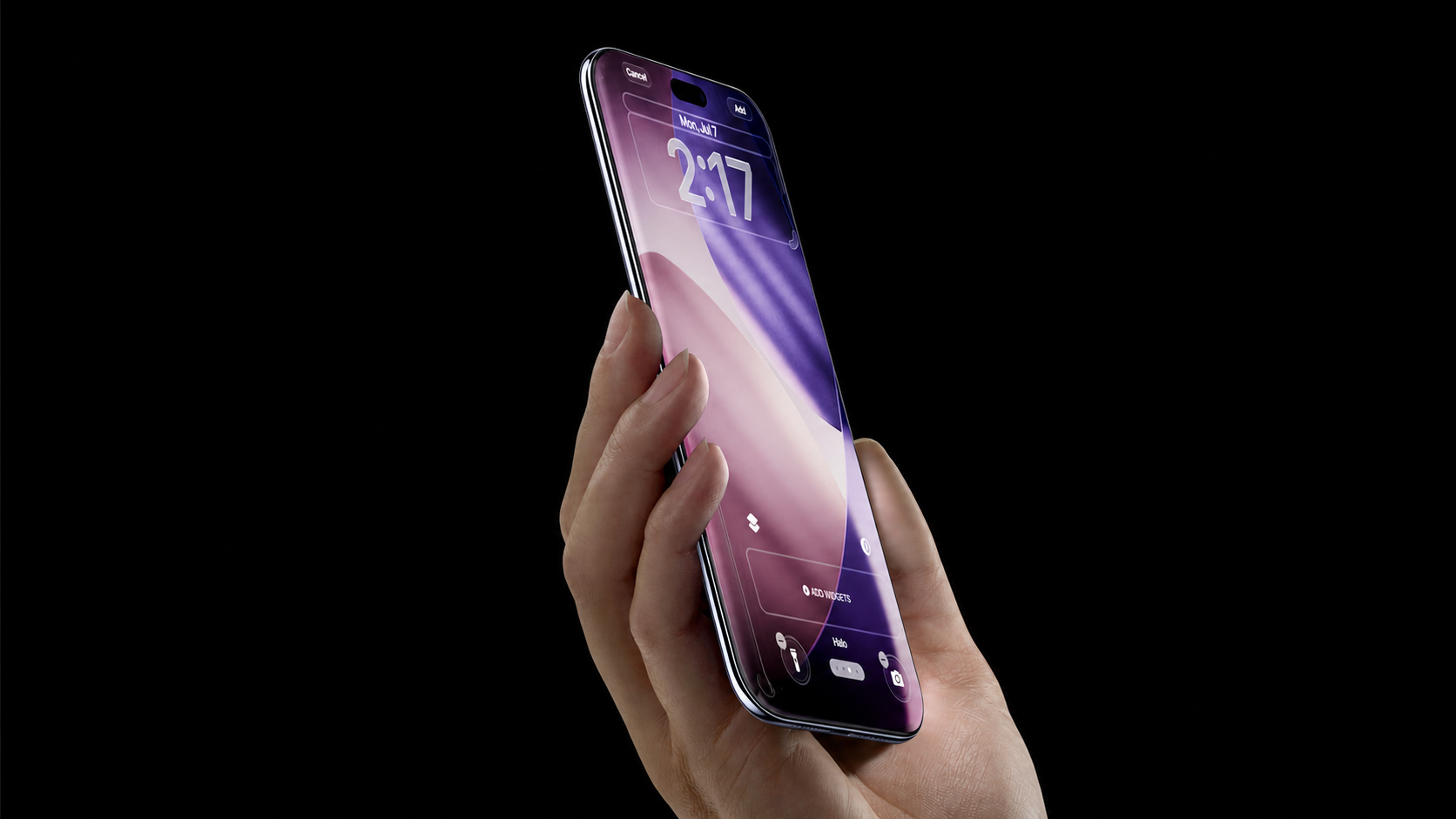
For well over a year, speculation has buzzed intensely around the concept of an all-glass iPhone. This wasn't just another iterative update; it was envisioned as a monumental leap forward in smartphone design, potentially the most significant redesign since the transformative iPhone X that first introduced the notch and Face ID. Rumors, which began circulating as early as 2025, painted a picture of a device that pushed the boundaries of industrial design, promising an aesthetic and tactile experience unlike any smartphone before it. It was expected to launch as early as September 2027, coinciding with what would have been a landmark 20th anniversary for the iconic iPhone, first introduced by Steve Jobs in 2007.
A Deep Dive into the Rumored Features: What We Almost Had
The allure of the all-glass iPhone lay in its rumored features, which suggested a device truly from the future:
- Curved Glass Panel Wrapping Around: Imagine a phone where the display didn't just meet the edges but seamlessly curved over them, blending into the device's back. Reports pointed to a curved glass panel that would wrap around the front and back, creating a continuous, uninterrupted surface. This design choice would have offered an incredibly sleek profile, making the device feel like a singular, sculpted piece of glass rather than a collection of assembled components. Such a design would not only be visually stunning but also enhance the ergonomic feel in the hand, making the phone a delight to hold. The engineering challenge to achieve this without compromising durability or antenna performance would have been immense.
- Virtually No Cutouts in the Display: One of the most talked-about aspects was the potential elimination of all visible cutouts. This meant no notch, no Dynamic Island, just a pure, unblemished screen. Achieving this requires incredibly advanced technology, specifically the ability to embed cameras, sensors, and even speakers beneath the display itself. It represents the ultimate goal of many smartphone manufacturers: a truly "all-screen" experience where content can fill every pixel without interruption, offering an immersive viewing experience for videos, games, and browsing.
- Under-Display Face ID: A key enabler for the "no cutouts" vision was the integration of under-display Face ID. Currently, Apple's advanced facial recognition system resides within the Dynamic Island or the traditional notch. Moving these complex sensors beneath the screen would be a monumental engineering feat, allowing for biometric authentication without consuming any visible screen real estate. This technology promises to be faster, more secure, and entirely invisible to the user until activated, further enhancing the seamless design.
- Solid-State Buttons: Moving beyond traditional mechanical buttons, the rumored design included solid-state buttons. Similar to the home button on older iPhones (like the iPhone 7 and 8) or the trackpads on modern MacBooks, these buttons would not physically move. Instead, they would use haptic feedback (tiny vibrations) to simulate the feel of a click when pressed. This design choice offers several advantages: increased durability (no moving parts to break), improved water and dust resistance, and greater design flexibility for thinner devices. It also provides Apple with finer control over the tactile response, allowing for customized feedback.
These features combined would have positioned the 20th-anniversary iPhone not just as a new product, but as a bold statement about the future of personal technology, setting a new benchmark for premium smartphones.
The Cancellation: Reality Bites Hard
Edison Lee's analysis, published in Barron's, delivers the sobering news: Apple's ambitious all-glass iPhone project has been scrapped. The primary culprit? "Poor production yield."
Understanding Production Yield: Apple's Achilles' Heel
Production yield refers to the percentage of units produced in a manufacturing process that are free of defects and meet quality standards. For a company like Apple, which manufactures hundreds of millions of devices annually, a high production yield is absolutely critical. Even a small percentage drop in yield can translate into billions of dollars in lost revenue and wasted materials.
The challenges of manufacturing an all-glass iPhone at Apple's scale are immense:
- Material Fragility: Glass, while beautiful, is inherently fragile. Shaping it into complex curves, integrating antennas, and ensuring structural integrity without visible seams is incredibly difficult. Even microscopic imperfections can lead to cracks or structural weaknesses under stress.
- Precision Engineering: Achieving the seamless look, especially with under-display components, requires almost impossibly precise manufacturing tolerances. Aligning sensors, cameras, and display elements perfectly beneath a curved glass surface without introducing visual distortions or functional impairments is a nightmare for manufacturing engineers.
- Cost of Defects: When yield is low, it means a large percentage of units produced are unusable. These defective units represent wasted raw materials, energy, labor, and machine time. For a premium product like an iPhone, where individual components are expensive, a low yield can dramatically inflate the per-unit cost, making the device economically unviable for mass production, especially if it targets a premium price point already.
- Supply Chain Scalability: Apple relies on a vast and complex global supply chain. For a radically new design, ensuring that all suppliers can meet the necessary quality and volume demands simultaneously is a Herculean task. If even one key component or manufacturing step has a low yield, it bottlenecks the entire production process.
Lee's firm, Jefferies, likely gathered this information through their extensive "supply chain checks." This involves analysts contacting various suppliers, component manufacturers, and assemblers within Apple's ecosystem to gauge production volumes, order forecasts, and identify any manufacturing bottlenecks or issues. These checks are a crucial way for financial analysts to get ahead of official announcements and understand the underlying realities of a company's product pipeline.
Financial Repercussions: A Downgrade for Apple Stock
The cancellation of such a pivotal product, combined with other factors, immediately sent ripples through the financial markets. As a direct consequence of these findings, Jefferies took the significant step of downgrading Apple stock to "Underperform" from "Hold."
Decoding Analyst Ratings and Their Impact
"Underperform" is essentially the equivalent of a "Sell" rating. It signals to investors that Jefferies believes Apple's stock is likely to perform worse than the broader market or its industry peers over the coming months. This is a strong negative signal, especially from a reputable firm like Jefferies.
Along with the downgrade, Jefferies slashed its price target for Apple shares from $285.56 down to $263.66. A price target is an analyst's estimate of a security's future price, often based on fundamental and technical analysis. This new target is notably one of the lowest on Wall Street, indicating a significant lack of confidence in Apple's near-term growth prospects from Jefferies' perspective.
The market reacted swiftly: Apple shares fell 2.1% following the downgrade. While a 2.1% drop might seem modest for a single day, for a company of Apple's immense market capitalization, this translates into billions of dollars in lost market value. It reflects investor nervousness and the immediate impact of negative analyst sentiment on a company's stock.
Lee, who previously viewed the all-glass iPhone as a plausible and exciting upcoming release, fundamentally changed his outlook on Apple's ability to increase iPhone prices in the future after discovering the project's cancellation. This shift in perspective underscores the importance of groundbreaking design and innovation in justifying premium pricing for Apple's products.
Strategic Implications: Pricing, Profitability, and Innovation
The cancellation of the all-glass iPhone has far-reaching strategic implications for Apple, impacting its pricing power, future product strategy, and overall profitability, particularly in a challenging economic environment.
The Price Problem: Justifying Higher Costs
Apple has historically relied on breakthrough features and innovative designs to justify its premium pricing strategy. Each significant redesign, from the original iPhone to the iPhone X, has allowed Apple to introduce higher price points, reinforcing its position as a luxury tech brand. Edison Lee viewed the all-glass iPhone as the perfect vehicle for Apple to further push average selling prices (ASPs) higher, especially in the face of rising component costs. Lee estimated that this device, had it launched in 2027, would have commanded a blended retail price of around $2,060 – a figure substantially higher than any previous iPhone model.
The cancellation means Apple loses a key differentiator that could have commanded such a price. With memory costs, in particular, continuing their upward trend, Apple faces a dilemma: absorb these rising costs and cut into profit margins, or raise prices on existing designs without a compelling new "wow" factor, which could alienate consumers.
Beyond a Single Model: Impact on Pro and Pro Max Lines
Lee's concerns extend beyond just this single anniversary model. He believes that Apple had a broader strategy in mind: to eventually integrate the all-glass styling and associated advanced features into its higher-margin iPhone Pro and Pro Max lines. This strategic move would have served as a powerful lever to further elevate the average selling price and, crucially, the profit margins of these premium devices.
Profit margins are critical for Apple, a company that thrives on selling high-value products. In an environment where rising component costs are already "squeezing profitability," a distinctive, premium design like the all-glass aesthetic would have provided a much-needed boost. Without it, Apple might find it harder to differentiate its Pro models sufficiently to justify consistent price increases, potentially impacting its overall financial health and ability to reinvest in future innovations.
Additional Headwinds: AI Strategy and Component Costs
Lee's downgrade wasn't solely due to the canceled all-glass iPhone. He also highlighted other significant challenges facing Apple, particularly concerning its artificial intelligence (AI) strategy and the persistent issue of rising component costs for upcoming models.
The Apple Intelligence Conundrum
Apple's entry into the generative AI space with Apple Intelligence was met with considerable fanfare. However, Lee points to a "slow rollout" as a significant concern. Apple Intelligence is designed to run many of its advanced AI models directly on the device (on-device AI) to enhance privacy and speed. This requires substantial computational power and, critically, more RAM (Random Access Memory) than previous iPhone models.
The challenge here is two-fold:
- Hardware Requirements: Equipping more iPhones with the extra RAM needed to run sophisticated on-device AI models significantly increases manufacturing costs. If the rollout of Apple Intelligence is perceived as slow or limited, it becomes harder for Apple to justify these increased hardware costs to consumers, who might not immediately see the benefit of the enhanced AI capabilities.
- Competitive Landscape: In an increasingly competitive AI market, a slow rollout could mean Apple falls behind rivals who are aggressively integrating AI features into their hardware and software. This could dilute Apple's "innovator" image and make it harder to attract new users or justify its premium pricing based on AI capabilities alone.
The interplay between advanced hardware and sophisticated AI software is complex, and any misstep in either area can have ripple effects on product strategy and profitability.
Rising Component Costs for the "iPhone 19 Pro Max"
Adding to Apple's challenges are the general rising component costs across the industry. Lee specifically mentioned this for the "iPhone 19 Pro Max," expected in 2027. Global supply chain disruptions, inflationary pressures, increased demand for advanced materials, and geopolitical factors all contribute to higher costs for key components like processors, displays, camera modules, and memory chips.
These rising costs eat into profit margins if Apple cannot pass them on to consumers through higher prices. And as discussed, without a groundbreaking new design like the all-glass iPhone, justifying those price increases becomes much harder. This creates a difficult balancing act for Apple: maintain profitability, absorb costs, or risk pricing its products out of reach for a segment of its market.
What Remains? Unanswered Questions and Lingering Possibilities
While the all-glass dream may be shattered, not all hope is lost for a radically redesigned 20th-anniversary iPhone. Lee's analysis leaves some crucial questions unanswered:
Is he describing the cancellation of the entire 20th-anniversary redesign, or merely its most ambitious component: the all-glass display? This distinction is significant.
The Dynamic Island Dilemma
One of the most ambitious aspects of the rumored all-glass design was the complete elimination of the Dynamic Island. This interactive pill-shaped cutout, introduced with the iPhone 14 Pro, houses the Face ID sensors and front camera. It has repeatedly been questioned whether Apple can truly eliminate it next year, given the immense engineering hurdles involved. Embedding these critical components directly beneath a perfect, flawless screen, especially a curved one, poses extraordinary technical challenges related to sensor performance, camera quality, and light transmission.
A genuinely seamless glass front, free of any visible interruption, may never have been realistic for a 2027 launch, irrespective of Lee's specific concerns about yield and cost. Apple has a history of prioritizing functional integrity over purely aesthetic ambitions when manufacturing at scale. However, this doesn't mean other design advancements are off the table.
The Quad-Curved Chassis: A Glimmer of Hope
Even if the complete all-glass front is no longer viable, other elements of the rumored 20th-anniversary design could still be on track. One such feature is the quad-curved chassis. This refers to a design where not just the front and back, but also all four edges of the device (top, bottom, left, right), have a subtle curve. This would create a softer, more ergonomic feel in the hand, making the phone more comfortable to hold and visually sleeker. It’s a design element that enhances both aesthetics and user experience without necessarily requiring the extreme manufacturing complexity of a fully integrated all-glass display with under-screen sensors.
Apple has consistently refined its industrial design, and a quad-curved chassis would be a logical evolution, offering a premium feel and improved ergonomics that consumers would appreciate. It's a less radical, but still significant, design enhancement that remains within the realm of current manufacturing capabilities.
Conclusion: A Setback, But Apple's Innovation Continues
The news of the all-glass 20th-anniversary iPhone's cancellation is undoubtedly a disappointment for tech enthusiasts and investors alike. It highlights the brutal realities of advanced manufacturing and the delicate balance Apple must strike between ambitious innovation and feasible mass production. The poor production yield served as a stark reminder that even with Apple's immense resources and engineering prowess, some designs remain just beyond the current technological horizon for scalable manufacturing.
This setback carries immediate financial implications, prompting a downgrade from Jefferies and raising questions about Apple's short-term pricing power and profitability in the face of rising component costs and a gradual AI rollout. However, it's crucial to remember that Apple has a long history of developing and shelving ambitious projects that don't meet its stringent quality and scalability requirements. This pragmatism, while sometimes disappointing for consumers eager for the next big thing, is a hallmark of Apple's commitment to delivering polished, reliable products.
While the dream of a truly seamless, all-glass iPhone for 2027 may be over, Apple's pursuit of innovation is far from it. The company will undoubtedly continue to explore new materials, designs, and technologies. The possibility of other significant design changes, such as a quad-curved chassis, for the 20th-anniversary iPhone still lingers, suggesting that while one ambitious project has been retired, Apple's journey towards the future of smartphone design continues, albeit perhaps along a slightly less radical path for now.
This article, "Apple's All-Glass 20th Anniversary iPhone Reportedly Canceled" first appeared on MacRumors.com
Discuss this article in our forums
from MacRumors
-via DynaSage
