
Apple Vision Pro Speeds Up Surgery by Almost 20%
Revolutionizing the Operating Room: How Apple Vision Pro is Speeding Up Surgery and Enhancing Surgeon Well-being
In a groundbreaking development that hints at the future of surgical practice, a recent peer-reviewed study from UC San Diego has revealed that surgeons utilizing the Apple Vision Pro as their primary display during certain tear duct procedures completed operations a remarkable 19% faster than their counterparts using traditional monitors. This isn't just a minor improvement; it signifies a substantial leap in operational efficiency, potentially transforming how medical professionals approach complex surgical tasks and enhancing their overall experience.
The integration of advanced technology into healthcare is not new, but the Vision Pro brings a unique blend of immersive viewing and spatial computing to the operating room, promising benefits that extend beyond mere speed. This innovative approach could lead to better patient outcomes, reduced physical strain for surgeons, and more cost-effective procedures for hospitals. Let's delve deeper into the specifics of this pivotal study, explore the underlying reasons for its success, and consider the far-reaching implications for the medical field.
The Study: Unpacking the Details of Vision Pro in Surgery
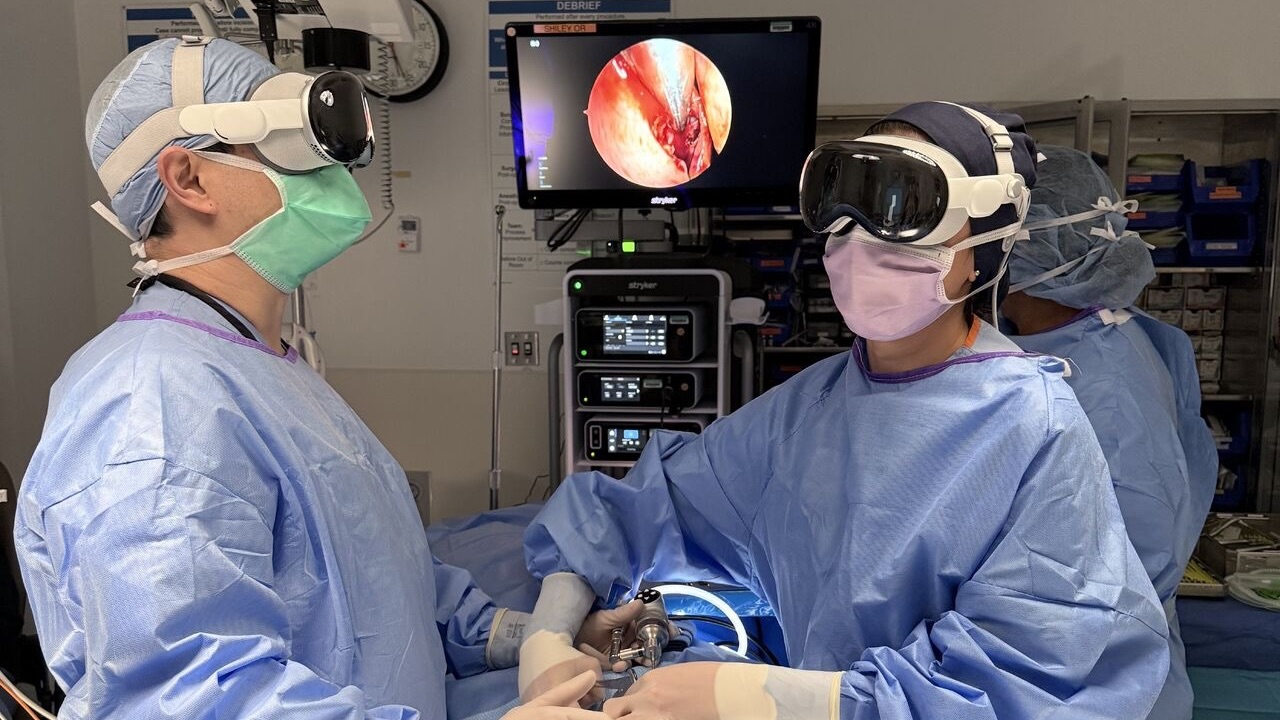
Published in the respected journal AJO International, the study, first brought to wider attention by iPhone in Canada, focused on 32 endoscopic surgeries aimed at clearing blocked tear ducts. This particular procedure, known as an endoscopic dacryocystorhinostomy (DCR), involves navigating delicate anatomical structures using a tiny camera (endoscope) to restore the natural tear drainage pathway. It requires extreme precision and a clear, real-time view of the surgical field.
To accurately assess the Vision Pro's impact, the researchers divided the 32 cases into two distinct groups. In half of the surgeries, the participating surgeons wore the Apple Vision Pro headsets. These devices streamed the endoscopic video feed directly into their line of sight, creating an immersive, high-resolution display that moved with their head. This setup allowed them to maintain a natural, forward-facing posture throughout the entire operation. The other half of the surgeries were conducted using the traditional method, where surgeons would periodically glance at a static monitor typically positioned across the operating room from the patient.
Key Findings: Speed, Safety, and Satisfaction
The results of the study were compelling and multi-faceted, highlighting several key advantages of the Vision Pro system:
- Significant Time Savings: The average operative time for surgeries performed with the Vision Pro was 34.4 minutes. In stark contrast, operations utilizing the traditional monitor setup averaged 42.7 minutes. This represents an 8.3-minute reduction per surgery, or a nearly 20% increase in efficiency. For busy operating rooms, this kind of time saving can translate into more procedures being performed, ultimately benefiting more patients.
- Unaltered Safety and Efficacy: Crucially, the study reported that every single case in both groups was successful, and there were no complications whatsoever. This finding is paramount, as any new technology introduced into surgery must first and foremost ensure patient safety is maintained, if not improved. The Vision Pro demonstrated that its use did not compromise the quality or safety of the surgical outcomes.
- Overwhelming Surgeon Preference: All five surgeons who participated in the study unanimously reported a preference for operating with the Vision Pro headset. This indicates a high level of acceptance and satisfaction among the practitioners, which is a critical factor for the adoption of any new medical technology.
- Reduced Workload: Beyond preference, the surgeons also reported a lower physical and mental workload when using the Vision Pro. This is a significant benefit, as surgical procedures can be incredibly demanding, leading to fatigue and burnout. Minimizing strain can help surgeons maintain focus, extend their careers, and potentially reduce the risk of errors associated with exhaustion.
- Cost and Size Efficiency: The researchers also noted that the Vision Pro setup was not only smaller but also cheaper than the traditional monitor system it replaced. While the individual cost of a Vision Pro headset might be a consideration, the overall system cost, including the display, mounting, and associated peripherals, proved to be more economical. This offers a practical advantage for healthcare institutions looking to modernize their equipment while managing budgets.
It's important to acknowledge, as the researchers themselves cautioned, that this was a small and preliminary study. While the results are highly promising, larger, multi-center trials will be necessary to confirm these findings across a broader range of surgical scenarios and diverse patient populations.
Why the Vision Pro Made a Difference: The Power of Spatial Computing
The dramatic improvement in surgical efficiency and surgeon well-being can be attributed to several key features and ergonomic advantages offered by the Apple Vision Pro and its spatial computing capabilities.
Enhanced Ergonomics and Natural Posture
One of the most significant advantages highlighted by the study was the ability for surgeons to maintain a "natural forward-facing posture." In traditional endoscopic surgery, the surgeon often has to divide their attention between the patient on the operating table and a monitor placed a few feet away. This constant shifting of gaze and head position can lead to:
- Neck Strain: Repeatedly turning the head to view the monitor puts strain on the neck and cervical spine over long periods.
- Eye Fatigue: Constantly adjusting focus between the close-up surgical field (even when magnified through the endoscope) and a distant monitor can cause eye strain.
- Disrupted Concentration: Breaking eye contact with the primary surgical area, even for a moment, can disrupt concentration and flow.
With the Vision Pro, the high-resolution video feed from the endoscope is projected directly into the surgeon's field of view, appearing as a large, vibrant screen that moves with their head. This means the surgeon can look straight ahead, focusing their attention precisely where it needs to be – on the patient and the instruments. This head-up display capability reduces unnecessary head and neck movements, leading to a much more comfortable and less physically demanding experience.
Immersive Focus and Reduced Distraction
The immersive nature of the Vision Pro creates a dedicated visual environment for the surgeon. Unlike an external monitor which is subject to reflections, ambient light, and other visual distractions in the operating room, the Vision Pro delivers a private, high-contrast, and stable display. This singular focus can help surgeons:
- Improve Concentration: By minimizing external visual noise, surgeons can dedicate their cognitive resources more effectively to the intricate task at hand.
- Process Information Faster: Having critical visual information directly in their line of sight, without needing to re-orient their gaze, can lead to quicker interpretation and reaction times.
- Enhance Precision: A more stable and focused visual field can contribute to finer motor control and greater precision during delicate surgical maneuvers.
The Potential for Spatial Information Overlay
While this particular study focused on using the Vision Pro as a primary display for live video feed, the true power of spatial computing lies in its ability to overlay digital information onto the real world. In future applications, this could mean:
- Patient Data: Displaying real-time vital signs, patient history, or pre-operative imaging (like CT or MRI scans) directly within the surgeon's view, contextually relevant to the anatomy they are operating on.
- Surgical Planning: Overlaying 3D models of organs or pathological structures, created from pre-operative scans, onto the actual patient during surgery, providing a sort of "X-ray vision."
- Procedural Guides: Displaying step-by-step instructions or anatomical labels to assist less experienced surgeons or guide complex procedures.
These advanced capabilities, even if not fully explored in the UC San Diego study, underscore the immense potential of the Vision Pro to not just speed up surgery but to fundamentally augment a surgeon's cognitive and technical abilities.
Broader Implications and Future Potential in Healthcare
The findings of this study open a window into a future where spatial computing devices like the Apple Vision Pro become indispensable tools in modern medicine. The implications extend far beyond tear duct surgeries.
For Surgeons and Medical Staff
- Reduced Burnout: Less physical and mental strain can significantly reduce the risk of burnout among surgeons, a growing concern in the medical community. This can lead to longer, healthier careers.
- Enhanced Training: Medical students and residents could train in highly realistic simulated environments or receive real-time guidance during live surgeries, vastly accelerating their learning curve and skill development.
- Remote Collaboration: Experts could remotely "teleport" into an operating room via a Vision Pro to guide a surgeon in a distant location, offering real-time advice and visual cues during complex procedures. This could be particularly impactful for rural hospitals or crisis situations.
For Patients
- Shorter Procedures: As demonstrated by the study, shorter operative times can mean less time under anesthesia, which is beneficial for patient recovery and reduces potential risks associated with prolonged sedation.
- Improved Outcomes: While not directly measured in this study, reduced surgeon fatigue and improved focus could indirectly lead to more precise surgeries and fewer complications.
- Increased Access to Care: More efficient operating rooms mean hospitals can perform more procedures, potentially reducing waiting lists and increasing access to critical surgical care.
For Hospitals and Healthcare Systems
- Operational Efficiency: The ability to perform more surgeries in the same amount of time can significantly boost a hospital's throughput and financial health.
- Cost Savings: If the Vision Pro setup proves consistently cheaper and more efficient than traditional equipment, it could lead to long-term cost reductions for healthcare providers.
- Technological Leadership: Adopting cutting-edge technology can attract top medical talent and position hospitals at the forefront of medical innovation.
- Data Integration: The Vision Pro could serve as a central hub for integrating various streams of patient data, imaging, and procedural guidance directly into the surgeon's workflow, streamlining information access.
Challenges and Considerations for Widespread Adoption
While the prospects are exciting, it's crucial to address the challenges and considerations that accompany the integration of such advanced technology into highly regulated environments like operating rooms.
- Scalability and Larger Trials: The UC San Diego study, while compelling, involved a relatively small sample size of 32 surgeries and five surgeons. For widespread adoption, larger, multi-center clinical trials involving more diverse surgical procedures and a greater number of practitioners will be essential to validate these initial findings and establish broad applicability.
- Regulatory Hurdles: Medical devices, especially those used during surgery, are subject to stringent regulatory approval processes by bodies like the FDA. The Vision Pro, or any customized medical version thereof, would need to undergo rigorous testing and certification to ensure it meets safety and efficacy standards for clinical use.
- Integration with Existing Systems: Hospitals operate with complex, interconnected IT and imaging systems. Seamlessly integrating the Vision Pro into these existing workflows, ensuring compatibility, data security, and interoperability, will be a significant technical challenge.
- Sterilization and Hygiene: Operating rooms demand sterile environments. The Vision Pro headset would need to be designed with materials and methods that allow for easy and thorough sterilization to prevent infection risks.
- Learning Curve and Training: While the surgeons in this study reported preferring the Vision Pro, there will inevitably be a learning curve for new users. Comprehensive training programs would be necessary to ensure all surgeons can proficiently and safely use the device.
- Cost of Device and Maintenance: While the study suggested the Vision Pro setup was cheaper than a traditional monitor *setup*, the upfront cost of individual Vision Pro units can still be substantial. Hospitals will need to weigh these costs against the potential benefits and ROI. Ongoing maintenance, software updates, and potential hardware replacements will also be factors.
- Patient Data Privacy: Any device handling patient data in a medical setting must adhere to strict privacy regulations (e.g., HIPAA in the US). Ensuring the Vision Pro and its associated software meet these security standards is paramount.
The Broader Landscape of XR in Medicine
The Apple Vision Pro's success in this study is part of a larger trend of extended reality (XR) technologies (including virtual reality, augmented reality, and mixed reality) making significant inroads into healthcare. Beyond surgery, XR is being explored for:
- Medical Education: Immersive VR experiences for anatomical study, surgical simulation, and patient communication training.
- Pain Management and Therapy: VR applications to distract patients from pain, treat phobias, or assist in physical rehabilitation.
- Pre-surgical Planning: Creating 3D models from patient scans to allow surgeons to "rehearse" complex operations beforehand.
- Diagnostics: Aiding radiologists in visualizing complex 3D structures from medical scans more intuitively.
The Vision Pro, with its high-fidelity passthrough video and advanced spatial computing capabilities, represents a powerful new entrant in this burgeoning field, particularly for applications requiring a seamless blend of digital information with the real world.
Conclusion: A Glimpse into the Future of Surgery
The UC San Diego study provides compelling evidence that the Apple Vision Pro is more than just a consumer gadget; it has the potential to be a game-changer in the operating room. By significantly speeding up surgical procedures, enhancing surgeon comfort, and maintaining impeccable safety standards, the Vision Pro offers a tangible glimpse into the future of surgical practice.
While the journey from preliminary study to widespread clinical adoption is often long and complex, these initial results are incredibly encouraging. As technology continues to advance and iterative improvements are made, devices like the Vision Pro could become standard equipment, not only making surgery more efficient and less taxing for medical professionals but ultimately leading to better and more accessible care for patients worldwide. We stand at the precipice of a new era where spatial computing redefines the capabilities of medical professionals, bringing unparalleled precision, comfort, and innovation to the healing arts.
This article, "Apple Vision Pro Speeds Up Surgery by Almost 20%" first appeared on MacRumors.com
Discuss this article in our forums
from MacRumors
-via DynaSage
