
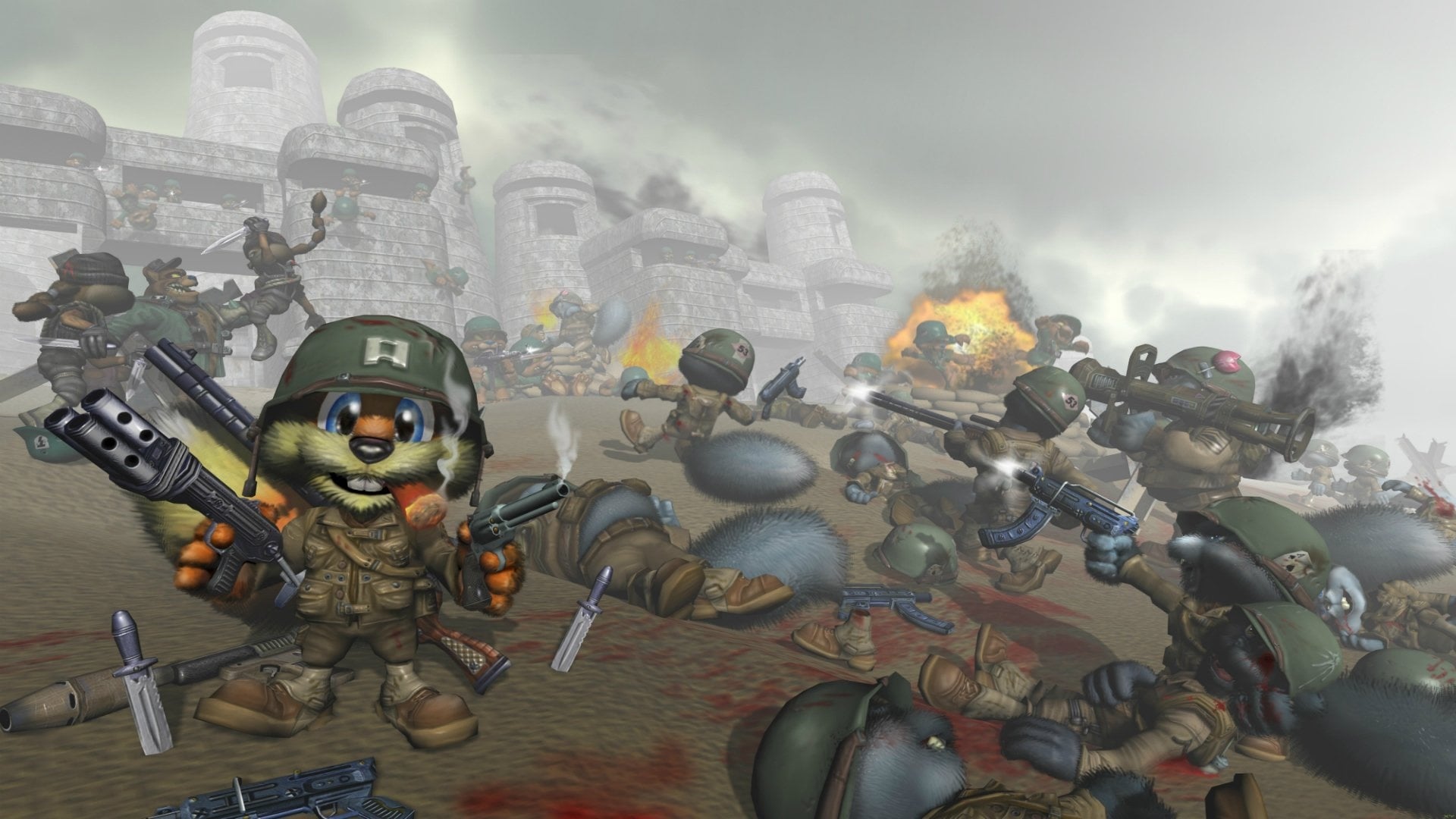
Xbox Backward Compatibility Is Coming To PC Starting With Conker: Live And Reloaded
The Dawn of a New Era: Bringing Classic Xbox Games to PC
For years, many gamers have dreamt of a world where their favorite classic console games could be played on their powerful personal computers. Now, it seems that dream is quickly becoming a reality. Microsoft has announced a significant push to bring old Xbox games to PC, clearly stating that "this is just the start" of their efforts. This isn't just a small step; it's a giant leap for game preservation and accessibility, opening up a treasure trove of gaming history to a whole new generation of players and rekindling nostalgia for veterans.
This commitment from Microsoft signals a major shift in how classic games are viewed and delivered. It suggests a long-term strategy, not just a one-off project. The company is laying the groundwork for a future where the rich library of Xbox's past can be enjoyed on the versatile PC platform, often with enhanced performance and features. This initiative holds immense potential for both players and Microsoft, promising a vibrant future for gaming history.
Why is This Happening Now? Understanding the Context
The timing of Microsoft's renewed focus on bringing old Xbox games to PC is no coincidence. Several factors have aligned to make this the perfect moment for such an ambitious undertaking:
The Rise of PC Gaming
PC gaming has seen explosive growth in recent years, with powerful hardware becoming more accessible and a vast community of players seeking diverse experiences. Microsoft already has a strong presence in this space with Windows, their operating system, and a growing catalog of first-party Xbox games launching directly on PC. Bringing older titles to this platform naturally expands their reach and caters to a massive audience.
The Success of Xbox Game Pass
Xbox Game Pass has transformed how many people access games, offering a vast library for a monthly subscription. Integrating classic Xbox titles into Game Pass for PC would significantly enhance its value proposition, attracting more subscribers and keeping existing ones engaged. It's a powerful tool for content delivery and monetisation.
The Push for Digital Preservation
As gaming moves increasingly towards digital-only formats, the need for game preservation becomes critical. Older physical games and consoles can be hard to find and maintain. By bringing these titles to PC, Microsoft is helping to digitally preserve them, ensuring that future generations can experience important pieces of gaming history without needing specific retro hardware.
Technological Advancements
Modern PC hardware and software emulation techniques have become incredibly sophisticated. What was once extremely difficult – perfectly mimicking older console hardware – is now far more achievable. This makes it technically feasible to bring a wide range of old Xbox games to PC with good performance and stability, often even surpassing their original console counterparts.
What Does "Just the Start" Mean for Players?
For gamers, Microsoft's statement is incredibly exciting, promising a wealth of benefits:
Access to a Wider, Richer Library
Many classic Xbox games, especially from the original Xbox and Xbox 360 eras, have been locked to their respective consoles. Bringing them to PC means a significantly expanded library available at players' fingertips. Imagine replaying cult classics, overlooked gems, or experiencing foundational titles that shaped modern gaming for the first time.
Enhanced Gaming Experiences
Running older games on modern PCs often comes with significant advantages. Players can expect:
- Higher Resolutions: Games designed for standard definition can be rendered in glorious 1080p, 1440p, or even 4K, making them look sharper and more detailed than ever before.
- Smoother Frame Rates: Older games often struggled to maintain 30 frames per second. On a powerful PC, many of these titles can run at a buttery-smooth 60 FPS or even higher, leading to a much more responsive and enjoyable experience.
- Faster Loading Times: Modern SSDs (Solid State Drives) can drastically reduce loading screens that plagued older console games.
- Modding Potential: PC gaming thrives on its modding community. While not guaranteed for all titles, some PC ports might open the door for community-created enhancements, fixes, and even new content, further extending the life and appeal of these classics.
Nostalgia and Discovery
For veteran gamers, this is a chance to revisit cherished memories and experience beloved titles with a fresh perspective. For newer players, it's an opportunity to discover games that are foundational to modern gaming without needing to hunt down old hardware or expensive physical copies. It bridges generational gaps in gaming history.
Cross-Platform Play (Potential)
While not explicitly confirmed for older titles, Microsoft's push for cross-play in newer games suggests a future where some classic titles might even allow PC players to connect with their friends on Xbox consoles, breathing new life into multiplayer aspects of these vintage games.
The Strategic Advantage for Microsoft
This initiative isn't just about pleasing fans; it's a smart business move for Microsoft, aligning with several key strategic goals:
Expanding the Xbox Ecosystem
Microsoft wants the Xbox brand to be more than just a console; it's an ecosystem of games, services, and community. By making more Xbox-branded content available on PC, they strengthen this ecosystem, bringing PC gamers further into the Xbox fold, even if they don't own a physical Xbox console.
Boosting Xbox Game Pass Subscriptions
As mentioned, Game Pass is central to Microsoft's gaming strategy. A steady stream of classic Xbox games on Game Pass for PC would be a significant selling point, making the subscription even more attractive and competitive against other services like Steam, Epic Games Store, or even PlayStation's own subscription offerings.
Leveraging Existing Intellectual Property (IP)
Microsoft owns a vast library of iconic game franchises. Bringing these older titles to PC allows them to continually leverage this valuable IP, keeping these brands relevant and potentially sparking interest in newer installments of those series. It's a way to monetize past successes without creating entirely new games.
Strengthening Brand Loyalty and Reputation
By actively working to preserve and enhance classic games, Microsoft builds goodwill with its audience. It shows a commitment to gaming history and player satisfaction, which can foster stronger brand loyalty and a positive public image, especially in an industry often criticized for a lack of backward compatibility or game preservation efforts.
Gaining a Competitive Edge
In the highly competitive gaming market, offering a unique value proposition is key. While Sony has its own efforts to bring older PlayStation games to PC or through its cloud service, Microsoft's deep integration with Windows and its strong PC gaming presence could give it a significant advantage in delivering a robust and comprehensive classic library.
Overcoming the Hurdles: Technical and Legal Challenges
Bringing old console games to PC is far from a simple copy-paste operation. Microsoft faces several complex challenges, both technical and legal, that require significant investment and expertise.
Technical Hurdles: The Art of Emulation and Porting
Original Xbox Games
The original Xbox used a custom Intel Pentium III processor and an NVIDIA GPU, making it somewhat PC-like in architecture. However, the custom APIs (Application Programming Interfaces) and specific hardware quirks still make direct emulation or porting tricky. Software needs to accurately mimic the console's behavior, which can be resource-intensive.
Xbox 360 Games
The Xbox 360 presents an even greater challenge due to its PowerPC-based Xenon processor. This architecture is fundamentally different from the Intel/AMD x86 processors used in most PCs. Accurately emulating a PowerPC chip and its complex three-core, six-thread design, along with its specific graphics processing unit, requires highly optimized software. Performance can be a major issue, as emulation typically demands far more processing power than the original game itself.
Porting vs. Emulation
Microsoft might use a hybrid approach. Some games might receive full PC ports, meaning their code is rewritten or adapted to run natively on Windows, potentially with modern graphical APIs like DirectX 12. This offers the best performance and enhancement opportunities. Other games, especially those that are highly complex or less popular, might be delivered via highly optimized emulation layers that effectively run the original console code on PC. Both approaches have their complexities and trade-offs in terms of development time, cost, and final quality.
DRM and Compatibility
Older Digital Rights Management (DRM) systems, specific game launchers, and compatibility with modern operating systems and hardware drivers can also create headaches. Ensuring these old titles work seamlessly on a vast array of PC configurations is a major undertaking.
Legal and Licensing Maze
Beyond the technical challenges, the legal landscape for older games can be incredibly complex. When a game was first released, the rights for various components were often negotiated only for a specific console or timeframe:
- Game IP: While Microsoft owns many key franchises, some older titles were developed by studios that are no longer active, or where IP rights have changed hands.
- Music Licenses: Many games featured licensed music tracks. These licenses were usually for a limited period and specific platforms. Re-releasing a game on PC requires re-negotiating or replacing these music licenses, which can be costly or even impossible if the rights holders are uncooperative.
- Actor Likenesses and Voice Work: Similar issues arise with the rights to use actors' voices or likenesses, which might have been granted for console releases but not for indefinite PC distribution.
- Third-Party Assets: Some games incorporated third-party middleware, engines, or assets whose licensing terms might not cover a PC re-release decades later.
Each of these legal hurdles can block or significantly delay the release of a classic title, even if the technical work is complete. This is why some beloved games may never see a modern re-release.
The Role of Xbox Game Pass and Cloud Gaming
Microsoft's efforts to bring old Xbox games to PC are intrinsically linked with its flagship services: Xbox Game Pass and Xbox Cloud Gaming.
Game Pass as the Primary Hub
It's highly likely that a significant portion, if not all, of these classic Xbox games will be available through Xbox Game Pass for PC. This strategy makes perfect sense:
- Value for Subscribers: It adds immense value to the Game Pass subscription, making it a compelling offer for both new and existing members.
- Discovery: With a curated collection within Game Pass, players are more likely to discover and try older titles they might not have considered purchasing individually.
- Simplified Distribution: Game Pass provides a unified platform for distribution, updates, and community features, streamlining the process for Microsoft.
Xbox Cloud Gaming: Play Anywhere, Anytime
Xbox Cloud Gaming (xCloud) offers another exciting avenue for these classic titles. Imagine streaming a full-fidelity Xbox 360 game directly to a low-end laptop, a tablet, or even a smartphone, without needing to download or install anything. Cloud gaming removes the hardware barrier, democratizing access to even the most demanding classic titles. This ensures that even PC users with less powerful machines can enjoy these games, further broadening their reach.
This approach also tackles some of the technical challenges. If a game runs on Microsoft's powerful cloud servers, the PC itself doesn't need to perform the heavy lifting of emulation or rendering, only stream the video feed.
A Look Back: Microsoft's History with Backward Compatibility
Microsoft is no stranger to backward compatibility. They've had a strong track record of supporting older games on newer hardware, especially within their console ecosystem:
- Xbox 360: The Xbox 360 offered backward compatibility with a limited selection of original Xbox games via emulation. While not perfect, it was a significant feature at the time.
- Xbox One: The Xbox One greatly expanded backward compatibility, supporting a vast library of both original Xbox and Xbox 360 titles, often with performance enhancements. This was a hugely popular feature and demonstrated Microsoft's commitment to game preservation.
- Xbox Series X|S: The latest generation of Xbox consoles maintains full backward compatibility with thousands of games across all previous Xbox generations, often with even further improvements like Auto HDR, FPS Boost, and faster loading times.
This established history proves that Microsoft has the expertise and the commitment to tackle the complex task of bringing older games to new platforms. The PC effort is a natural extension of this philosophy, extending the reach of their beloved catalog beyond their own console hardware.
What to Expect on the Road Ahead
Given the "just the start" declaration, we can anticipate a phased approach to the release of classic Xbox titles on PC. It won't be an overnight deluge, but rather a steady, carefully planned rollout.
Which Games Are Most Likely?
- First-Party Titles: Games owned and developed by Xbox Game Studios (e.g., Halo series, Forza Motorsport series, Gears of War series) are almost certainly top priorities. Microsoft has full control over their IP and can more easily manage technical and legal aspects.
- Iconic & Popular Titles: Games with high demand and strong fan bases will likely be prioritized to generate buzz and attract subscribers.
- Technically Feasible Games: Some games might be easier to port or emulate than others due to their original design or the technology used. Microsoft might start with these to build momentum.
- Select Third-Party Titles: If licensing can be sorted, popular third-party games from the original Xbox and Xbox 360 eras could also make their way to PC, but these will likely be fewer and further between due to the legal complexities.
The Kind of Enhancements
Beyond basic compatibility, Microsoft's backward compatibility efforts on console have shown a desire for enhancement. On PC, we could see similar or even greater improvements:
- AI Upscaling and Texture Enhancements: Advanced techniques could be used to improve the visual quality of older games, making them look sharper and more detailed on modern displays.
- Modern Control Options: Full keyboard and mouse support, along with modern controller remapping options, will be crucial for PC players.
- Widescreen Support: Many older games were designed for 4:3 aspect ratios. Proper widescreen support (16:9, 21:9) without stretching will be a welcome addition.
- Community-Driven Improvements: Microsoft might even embrace or facilitate community modding efforts for certain titles, allowing fans to contribute to the preservation and enhancement of these games.
A Sustainable Release Schedule
Expect a regular, but not overwhelming, drip-feed of titles. This allows Microsoft to manage development resources, address player feedback, and maintain consistent interest in the initiative without flooding the market. Each release will likely be a testament to dedicated engineering and legal efforts.
Conclusion: A Bright Future for Gaming History
Microsoft's declaration that bringing old Xbox games to PC is "just the start" marks a truly exciting moment for the gaming community. It signifies a robust, long-term commitment to game preservation, accessibility, and the expansion of the Xbox ecosystem. For players, it promises a future where cherished classics can be revisited, new generations can discover gaming history, and often, these games can be experienced in their best form yet.
While the technical and legal challenges are significant, Microsoft's proven track record with backward compatibility, coupled with the strategic importance of Game Pass and cloud gaming, positions them perfectly to succeed. The journey has just begun, but the destination—a vast, accessible, and enhanced library of Xbox classics on PC—is a future worth looking forward to. Prepare to dive back into history, or discover it for the very first time, on your PC.
from Kotaku
-via DynaSage
