
The Funniest Change In The Halo Remake Clears Up A Strange 25-Year-Old Fan Theory
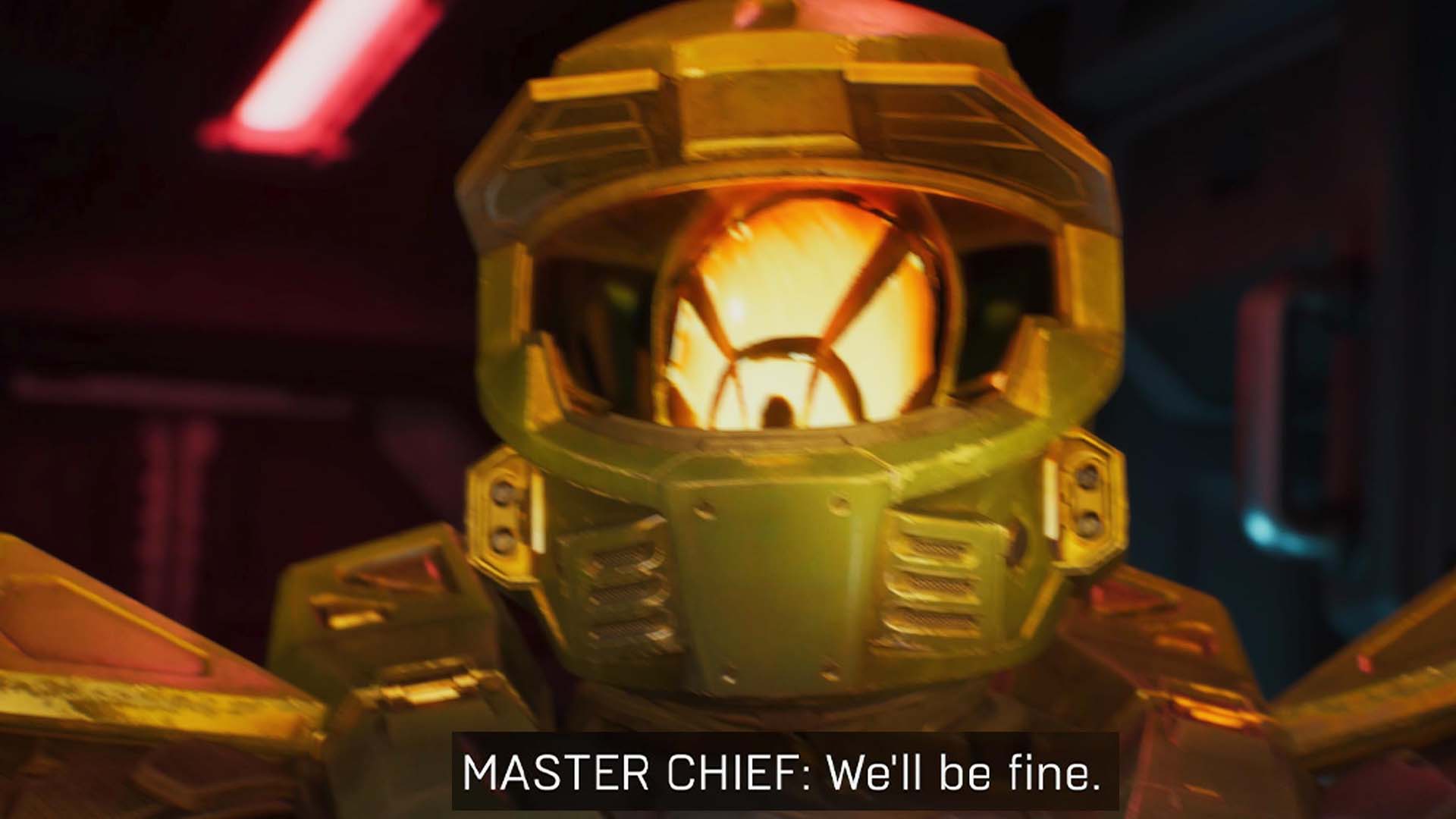
Master Chief: Debunking the Myth – Did He Harm His Allies During Escape?
The legendary Master Chief, John-117, is a figure of immense strength, unwavering loyalty, and unparalleled heroism in the vast universe of Halo. As humanity's last hope against countless alien threats, his actions are constantly scrutinized and admired. However, a peculiar question sometimes arises among players and fans: did Master Chief "pinball around the inside of a shuttle" and, even more strangely, "kill all his fellow marines" during an escape? This query likely refers to the dramatic opening sequence of the very first game, Halo: Combat Evolved. Let's delve deep into the rich lore and events of that pivotal moment to clarify what truly happened and firmly address this intriguing misunderstanding. It's crucial to understand the context of the intense battle, the true nature of Master Chief's escape, and the core values that define this iconic super-soldier.
The suggestion that Master Chief would intentionally harm allied forces is fundamentally at odds with everything we know about his character, his training, and his mission. He is the ultimate protector, a Spartan-II supersoldier created and refined for one purpose: to defend humanity at all costs. This defense extends not just to civilians but, perhaps most importantly, to his fellow soldiers on the front lines. The chaos of war, especially the kind depicted in Halo, can lead to misinterpretations or exaggerated memories, but a close examination of the canonical events paints a very clear picture. We'll explore the dire situation aboard the UNSC Pillar of Autumn, the precise details of his dramatic escape, and why such a misunderstanding might have taken root.
The Dire Situation Aboard the Pillar of Autumn
The story of Halo: Combat Evolved kicks off with humanity on the brink of disaster. The UNSC Pillar of Autumn, a Halcyon-class light cruiser commanded by the venerable Captain Jacob Keyes, is fleeing a massive Covenant fleet. The Covenant, a powerful alliance of alien races driven by religious zealotry, are intent on eradicating humanity. The Pillar of Autumn's mission was initially to escape Reach, a critical human stronghold that had just fallen to the Covenant in a devastating defeat, detailed in Halo: Reach. Instead of retreating to Earth, Captain Keyes follows a set of "Cole Protocol" directives, which dictate that no starship is to lead the Covenant directly to Earth, humanity's home world. This leads them on a blind jump through slipspace, a faster-than-light travel method, with the hope of shaking off their pursuers.
Their journey, however, brings them to an astonishing discovery: a mysterious ring-shaped artificial world orbiting a gas giant. This massive structure is designated Installation 04, or simply "Halo." Before the crew can fully comprehend their discovery, the Covenant fleet that had followed them through slipspace attacks with brutal efficiency. The Pillar of Autumn, though a formidable vessel, is quickly overwhelmed. Its shields fail, its hull is breached, and countless Covenant forces begin boarding the ship, intent on capturing or destroying everything within. It's a scene of utter chaos, desperation, and heroic sacrifice as the UNSC marines and sailors fight a losing battle against superior numbers and technology.
During this intense engagement, Master Chief Petty Officer John-117, humanity's last remaining Spartan-II supersoldier on board, is awakened from cryo-sleep. His mission is immediately clear: protect the Artificial Intelligence construct, Cortana, and ensure her safety. Cortana, housed within a data chip, holds vital information that cannot fall into Covenant hands. Her knowledge of the Covenant’s strategic objectives and the locations of human colonies makes her an invaluable asset, and a critical vulnerability if captured. The safety of Cortana and Master Chief, along with the discovery of Halo itself, quickly becomes the absolute priority for Captain Keyes, even as his ship is torn apart around him.
The Escape: What Actually Happened
Amidst the explosions, laser fire, and the screams of dying marines, Captain Keyes issues a general evacuation order for the Pillar of Autumn. The ship is doomed, and the only chance for survival is to abandon it. Many marines and crew members attempt to escape in available escape pods. However, Master Chief's escape is a very specific and unique event. He is not placed in a standard, multi-person shuttle with dozens of other marines. Instead, Captain Keyes personally ensures Master Chief's extraction in a single-occupant "lifeboat," often mistakenly referred to as a shuttle.
Here's a step-by-step breakdown of the canonical events:
- Awakening and Briefing: Master Chief is woken from cryo-sleep by Cortana. He quickly heads to the bridge of the Pillar of Autumn, where Captain Keyes briefs him on the dire situation and hands him Cortana's data chip, making her his direct responsibility.
- The Critical Mission: Keyes orders Chief to leave the ship. "I'm not leaving you," Chief replies, showcasing his characteristic loyalty. Keyes, however, emphasizes the critical importance of Chief and Cortana escaping. "You don't have a choice," Keyes states, instructing Chief to "get to a lifeboat, now." The captain's priority is the safety of the AI and the Spartan, not his own.
- The Lifeboat Launch: Master Chief makes his way to the designated lifeboat bay. He enters a small, cramped emergency escape pod. This isn't a spacious shuttle designed for troop transport; it's a bare-bones capsule for single-person emergency egress. Captain Keyes remains on the Pillar of Autumn's bridge, ensuring the pod's launch before attempting his own escape in a separate, larger lifeboat, taking with him crucial navigation data and preparing a plan to save the ship.
- A Violent Descent: The launch itself is not smooth. As the Pillar of Autumn plunges into the atmosphere of Installation 04, under heavy Covenant fire and losing structural integrity, Master Chief's lifeboat is buffeted intensely. The forces experienced within the pod are extreme, causing the pod to shake violently and spin uncontrollably. This is where the idea of "pinballing" likely originates. The pod undergoes severe atmospheric entry and impacts on the ring's surface with considerable force.
- Solo Survival: Throughout this entire sequence, Master Chief is alone inside his escape pod, save for Cortana's chip (which he inserts into his armor's neural interface). There are no other marines with him in this specific lifeboat. His focus is solely on enduring the violent descent and protecting Cortana.
- Crash Landing: The pod crashes hard into the surface of Halo, signifying the start of the game's actual gameplay. Master Chief emerges, ready to fight, and immediately begins his mission to locate other survivors and understand their new, mysterious surroundings.
It’s important to distinguish between Master Chief’s specific escape and the general evacuation of the Pillar of Autumn. While many other marines did attempt to escape in other lifeboats and shuttles, Master Chief was given a singular, critical mission in his own pod. His journey was solitary and fraught with peril, but it did not involve him harming any allied personnel.
Addressing the "Pinball" Myth
The description of Master Chief "pinballing around" inside the shuttle is an understandable, albeit exaggerated, interpretation of the intense forces he experienced during his atmospheric re-entry. The in-game cutscene and subsequent gameplay clearly show the lifeboat tumbling, shaking, and being subjected to extreme G-forces. For an ordinary human, such a ride would be instantly fatal or severely incapacitating. Their bodies would indeed be flung about like ragdolls, potentially causing significant internal and external damage.
However, Master Chief is far from an ordinary human. He is a Spartan-II. These elite super-soldiers possess significantly augmented physical capabilities. Their bones are virtually unbreakable, their muscles are incredibly strong, and their reaction times are far superior to any normal human. Crucially, he is also encased in the Mjolnir Powered Assault Armor. This legendary armor itself is a marvel of engineering. It enhances his strength and speed exponentially, provides a formidable energy shield, and features internal systems designed to help a Spartan withstand extreme impacts and G-forces. The suit effectively becomes a second skin, providing a degree of inertial dampening and structural support that would prevent Master Chief from being violently thrown around in the way a normal person would be.
So, while the escape pod's journey was undoubtedly chaotic and incredibly dangerous, Master Chief was not uncontrollably "pinballing." He was enduring the immense forces with the aid of his augmentations and his advanced Mjolnir armor. He remained conscious, focused, and in control of himself, ready to act the moment the pod landed. The "pinball" description might be a humorous way to recall the rough ride, but it doesn't accurately reflect Master Chief's experience or his ability to withstand such punishment.
Addressing the "Killing Marines" Myth
This part of the query is perhaps the most critical to debunk, as it fundamentally misrepresents Master Chief's character and purpose. The assertion that Master Chief "killed all his fellow marines" inside the shuttle or during the escape is entirely false and completely contrary to the established lore of the Halo universe. Master Chief, like all Spartans, is programmed and trained with an unwavering ethical code that prioritizes the protection of human life, especially his comrades in arms.
Here's why this idea is incorrect:
- Spartan Loyalty and Code of Conduct: Spartans are indoctrinated from a young age with an absolute commitment to the UNSC and the protection of humanity. Friendly fire, especially intentional acts against allies, is an unthinkable breach of their core programming and moral compass. Their entire existence is dedicated to defending humanity, not harming it.
- Master Chief's Actions Throughout the Saga: In every game, book, and canonical story, Master Chief consistently risks his life to save marines, civilians, and even other Spartans. He is known for his dedication to his fellow soldiers, often going above and beyond his orders to ensure their safety. This includes saving soldiers stranded on Halo, rescuing others from Covenant captivity, and constantly working alongside UNSC forces.
- The Solitary Escape: As established, Master Chief was in a single-person lifeboat. There were no "fellow marines" with him in that specific pod to be harmed. Other marines certainly died during the Pillar of Autumn's destruction and the Covenant attack, but their deaths were at the hands of the Covenant or due to the catastrophic damage to the ship, not Master Chief.
- Misinterpretation of Chaos: The chaotic nature of the Pillar of Autumn's destruction might lead to a misunderstanding. During such a frantic evacuation, many people died. It's possible that a player, witnessing the sheer destruction and loss of life, might mistakenly attribute some of that chaos to Chief's actions if not paying close attention to the narrative. However, the game's story clearly states otherwise.
- Player Experience vs. Canon: In multiplayer games, or even in campaign mode on higher difficulties, players might accidentally hit or kill friendly AI marines with grenades or stray bullets. This is a gameplay mechanic, a consequence of the player's control, and does not reflect Master Chief's canonical actions or intentions within the story. The AI marines in the game are often portrayed as brave but ultimately vulnerable soldiers, highlighting Chief's unique resilience.
To be unequivocally clear: Master Chief has never intentionally harmed or killed a fellow marine or UNSC personnel. He is the epitome of loyalty and self-sacrifice. Any suggestion to the contrary is a misunderstanding or a misremembering of the intricate events within the Halo universe.
The Hero We Know: Master Chief's True Character
Master Chief's character is built on pillars of duty, sacrifice, and an unyielding commitment to his mission. Born John, he was conscripted into the SPARTAN-II program at a young age, undergoing rigorous training and powerful augmentations that transformed him into an unparalleled super-soldier. This process, while controversial for its methods, created an elite force designed to be humanity's shield.
His bond with his fellow soldiers, particularly with his AI companion Cortana, is central to his narrative. He doesn't just fight for humanity as an abstract concept; he fights for the individual marines he stands beside, for the scientists he protects, and for the promise of a safer future for all. Moments throughout the Halo series consistently showcase his protective instincts:
- In Halo 2, he rushes to save Sergeant Johnson and his squad during the attack on Earth.
- In Halo 3, he leads UNSC forces in numerous battles, always at the forefront, protecting their advance.
- In Halo 4 and Halo 5: Guardians, his primary motivation remains the safety of Cortana and preventing galactic catastrophe, which inherently protects countless lives.
- Even in Halo Infinite, he tirelessly works to dismantle the Banished threat and protect the surviving UNSC forces on Installation 07.
These actions paint a consistent picture of a hero who prioritizes the safety and survival of his allies above all else. The very notion of him turning on his own is antithetical to his identity as John-117, the Master Chief.
Why Misinterpretations Occur
It's natural for misunderstandings to arise, especially when dealing with complex narratives and intense action sequences in video games. Several factors can contribute to why someone might remember or pose such a question about Master Chief:
- The Speed and Chaos of the Scene: The opening of Halo: Combat Evolved is a whirlwind of explosions, gunfire, and rapid-fire dialogue. It’s easy for specific details to get lost or conflated with the general sense of doom and destruction.
- Exaggeration for Effect: Players might jokingly exaggerate the violence of the escape pod's descent by using terms like "pinballing" to convey the severity, and this exaggeration might then be misinterpreted as literal.
- Player Agency vs. Lore: In many first-person shooter games, players *can* accidentally or intentionally cause friendly fire, leading to the deaths of allied NPCs. While this is a mechanic that exists across many games, it should never be confused with the canonical actions of the main character within the story. Master Chief, as a character in the lore, operates under a strict code.
- Misremembered Details: Over two decades have passed since the original game's release. Memories can fade, details can blur, and specific events can be confused with similar ones from other games or media.
- Humor and Memes: Sometimes, questions like this are posed in jest or as part of a running joke within a gaming community, which can then be picked up by others who don't understand the original ironic intent.
Understanding these factors helps us approach such questions with clarity and respect for both the questioner and the lore. It highlights the importance of revisiting source material and clarifying facts.
The Importance of Lore and Canon
The Halo universe is incredibly rich, with a deep history, intricate character backstories, and a continuous narrative spanning multiple games, novels, comics, and animated series. Adhering to the established lore, or "canon," is crucial for a coherent understanding of the story and its characters. Canonical events are those officially recognized as part of the primary storyline. When we discuss what Master Chief did or did not do, we rely on these established facts.
The events aboard the Pillar of Autumn and Master Chief's escape are foundational moments in the Halo saga. They set the stage for the entire war against the Covenant and the discovery of the Halo rings. Understanding these events accurately not only clarifies misconceptions but also deepens appreciation for the craftsmanship of the storytelling and the character development of Master Chief. Consulting official sources like Halo Waypoint, the game's in-game encyclopedias, and the various canonical novels provides the most reliable information.
Conclusion: Master Chief, Humanity's Protector
In conclusion, the answer to the question "Did the Master Chief pinball around the inside of a shuttle and kill all his fellow marines?" is a resounding no. While the escape pod's journey was indeed a violent and harrowing experience, Master Chief, bolstered by his Spartan augmentations and Mjolnir armor, endured it without "pinballing" uncontrollably or harming himself. More importantly, he was alone in that specific single-occupant lifeboat. The notion that he would intentionally kill his fellow marines is a profound misunderstanding of his character, his unwavering loyalty, and his fundamental mission as humanity's most steadfast protector.
Master Chief, John-117, stands as a symbol of hope and defiance. His actions are consistently driven by a selfless dedication to the survival of humanity and the protection of his comrades. He is the shield that defends the innocent, the spear that strikes down humanity's enemies, and the unwavering hero who would sooner sacrifice himself than betray a single ally. The initial moments of Halo: Combat Evolved perfectly establish this resolve, setting him on a path that would solidify his legacy as one of gaming's greatest heroes, a protector, never a destroyer of his own.
from Kotaku
-via DynaSage
