
Splatoon Raiders Early Concept Made The Devs Feel Like The Bad Guys: ‘Everyone Who Played The Prototype Kept Saying, “Poor Salmonids!”’
Splatoon's Hidden Truth: Are We the Raiders? Exploring the Ethics of Salmon Run
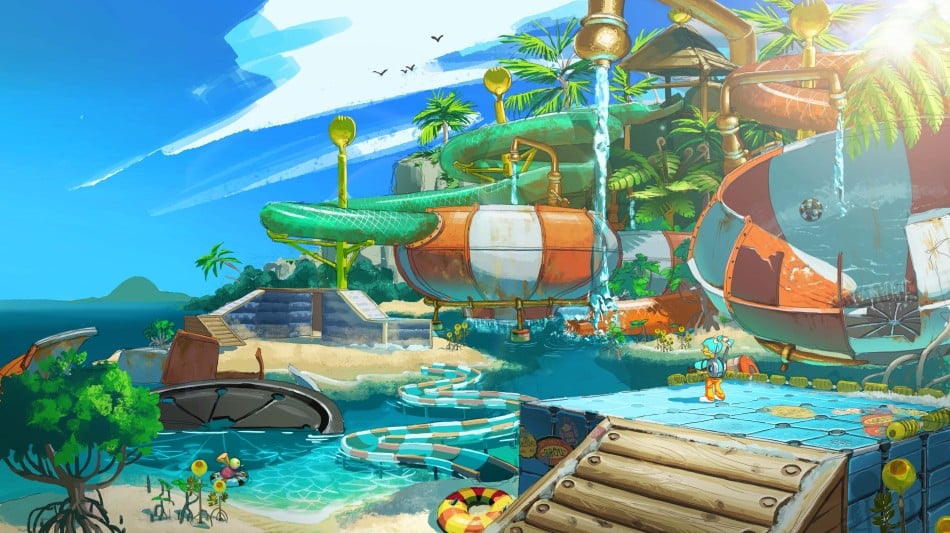
In the vibrant, ink-splattering world of Splatoon, players often embrace the role of heroic Inklings and Octolings, defending Inkopolis from the nefarious Octarians or competing in thrilling Turf Wars. Yet, there’s a particular game mode, Salmon Run, that subtly twists this perception, challenging us to look beyond the surface. A simple, yet profound quote perfectly encapsulates this shift: "It felt like we were attacking the Salmonids and taking their cherished treasures by force, and then basking in our spoils." This powerful statement, combined with intriguing concept art depicting "Splatoon Raiders," forces us to question our role. Are we truly the good guys, or are we, in fact, the unwelcome raiders in someone else's home?
This article delves deep into the fascinating duality of Salmon Run, exploring the lore, gameplay mechanics, and psychological impact of playing as treasure-hunting mercenaries. We will examine the Salmonids not just as mindless enemies but as a species with their own culture and valuable resources. By the end, you might just see your next Salmon Run shift through a very different, perhaps more complex, lens.
The Allure of Salmon Run: A High-Stakes Treasure Hunt
Salmon Run is one of Splatoon’s most distinctive cooperative multiplayer experiences. Four players, typically Inklings or Octolings, are dropped onto a dangerous, remote industrial facility or a desolate island. Their mission, orchestrated by the mysterious Grizzco Industries, is simple: defeat waves of aggressive Salmonids, collect the Golden Eggs they drop, and deposit them into a central basket before time runs out or the team is overwhelmed. The rewards are enticing, ranging from gear to cash and exclusive items, making it a highly addictive and lucrative venture for many players.
From a gameplay perspective, Salmon Run is pure adrenaline. The frantic pace, the variety of Salmonid bosses, and the constant threat of being swarmed create an intense, satisfying challenge. Players strategize, communicate, and work together, utilizing a rotating arsenal of weapons to survive increasingly difficult shifts. It's a test of skill, teamwork, and quick thinking, offering a unique contrast to the competitive nature of multiplayer battles. The objective is clear, the enemies are numerous, and the promise of reward keeps players coming back for more.
What Are These "Cherished Treasures"?
The "cherished treasures" in question are, of course, the Golden Eggs. These aren't just any eggs; they are the highly prized lifeblood of the Salmonid species. While their exact biological function is shrouded in some mystery, it's widely believed they are crucial for the Salmonids' reproduction and the continuity of their life cycle. Collecting these eggs is not just a game mechanic; it’s an act of resource extraction on a massive scale. Imagine humans having their most vital resources, say, clean water or food, aggressively taken from their homes by an invading force. The emotional weight of the Salmonids’ struggle becomes more apparent when framed this way.
The standard Power Eggs, which drop from smaller Salmonids and serve as currency in Salmon Run, also represent a form of Salmonid resource. While less critical than the Golden Eggs, their abundance suggests a thriving Salmonid ecosystem that is continually exploited. Every shift players undertake is a direct assault on the Salmonids' sustainability and way of life.
The Salmonids: More Than Just Monsters
For many players, Salmonids are simply obstacles to overcome, cannon fodder on the path to high scores and lucrative rewards. They are grotesque, aggressive fish-like creatures that emerge from the sea in overwhelming numbers, armed with various weapons and dangerous abilities. However, the lore surrounding Splatoon hints at a more complex truth about these creatures, suggesting they are a highly organized species with their own societal structure and, indeed, "cherished treasures."
Salmonids exhibit a surprisingly complex social hierarchy. From the small, swarming Smallfry to the imposing Cohocks and the specialized boss Salmonids like Steelheads, Drizzlers, and Maws, each plays a role in their collective effort to protect their eggs and territories. They coordinate attacks, adapt to changing situations, and demonstrate a fierce loyalty to their kind. This isn't random aggression; it's a coordinated defense of their homes and future.
Their Motivation: Defending Their Future
If Golden Eggs are vital for Salmonid reproduction, then the Salmonids are fighting for their very existence. Every wave of Salmonids charging towards the players isn't just an attack; it's a desperate defense. They are sacrificing themselves to protect their future generations, their legacy, and their cultural identity, all of which are tied to these precious eggs. This perspective transforms their "mindless" aggression into a primal, understandable struggle for survival.
This deepens the moral ambiguity of Salmon Run. We, as players, are paid to invade their territory, slaughter their kind, and steal what is most important to them. The Salmonids are merely reacting to an existential threat. They are not invading Inkopolis; they are defending their own. This makes our Inkling and Octoling characters not heroes, but rather, well, raiders.
Grizzco Industries: The Architect of the Raids
No discussion of Salmon Run is complete without examining Grizzco Industries and its enigmatic leader, Mr. Grizz. Mr. Grizz is the disembodied voice that guides players through their Salmon Run shifts, offering mission briefings, encouraging words, and the promise of rich rewards. He represents the corporate entity driving these "raids," a shadowy figure whose motivations are always slightly unclear but whose pursuit of Golden Eggs is relentless.
Grizzco operates outside the normal regulatory framework of Inkopolis. Its operations are covert, taking place in dangerous, remote locations. The Inklings and Octolings who sign up for Salmon Run are essentially mercenaries, hired hands performing dangerous tasks for profit. This system, where a powerful corporation exploits a natural resource (Golden Eggs) from another species, aligns perfectly with the concept of industrial raiding. Mr. Grizz isn't just offering a fun challenge; he's orchestrating a large-scale, ethically questionable enterprise.
The True Purpose of Golden Eggs
While players are told Golden Eggs are a valuable energy source, the exact nature of this value is left vague. Is it truly for Inkopolis's power grid, or does Mr. Grizz have a more sinister, or at least self-serving, purpose? Some theories suggest Mr. Grizz himself might be an ancient, colossal bear-like creature, using the eggs for his own regeneration or to restore his kind. Regardless of the exact truth, it’s clear that the motivation behind these raids is purely extractive and economic, not one of defense or necessity for Inklings/Octolings.
This corporate backdrop further solidifies the "raider" identity. We are not fighting for freedom or justice; we are fighting for Grizzco's bottom line. The thrills and rewards of Salmon Run mask a darker truth about resource exploitation and the displacement of another species.
The Psychology of the Player: Embracing the Raider
Despite the underlying ethical questions, Salmon Run remains incredibly popular and enjoyable. Why do players so readily embrace the role of the "raider"? Several psychological factors contribute to this:
- Framing as "Game Fun": Ultimately, it's a video game. Players are conditioned to accept the premise presented by the developers. The Salmonids are designed as antagonists, making it easy to disassociate from their plight. The primary goal is entertainment and challenge.
- The Thrill of the Hunt: The act of collecting a valuable resource, especially under pressure, is inherently satisfying. The frantic sprint to retrieve a Golden Egg from a defeated boss Salmonid, dodging hordes of enemies, creates a powerful sense of accomplishment.
- Teamwork and Camaraderie: Cooperative play fosters a sense of unity and shared purpose. Players are focused on working together to overcome the game's challenges, rather than contemplating the ethics of their mission.
- Reward System: The constant stream of rewards – gear, cash, scales – reinforces positive behavior (i.e., collecting eggs). This extrinsic motivation overrides any internal moral questioning.
- Lack of Direct Empathy: Salmonids, while having some lore, don't display complex emotions in a way that would trigger strong empathy from players. They are monstrous and aggressive, making them easy targets for justified violence within the game's context.
Players are, in essence, invited to become part of a thrilling, high-stakes game of cat and mouse, where the "mouse" holds valuable treasures. The narrative is carefully constructed to make the player feel powerful and effective, rather than morally compromised. We "bask in our spoils" because the game tells us we've earned them, successfully completing a dangerous job for a rewarding paycheck.
Strategic Raiding: Mastering Salmon Run
If we accept the premise that Salmon Run is a series of raids, then mastering the mode becomes about becoming a more effective raider. This involves not just shooting Salmonids, but understanding the logistics of extraction and defense.
Understanding the Landscape
Each Salmon Run stage presents unique challenges and opportunities for efficient raiding. Knowing the terrain, where Boss Salmonids typically spawn, and the quickest routes to the egg basket are crucial. High ground offers defensive advantages, while inkable walls provide quick escapes. A good raider understands their environment.
Prioritizing Targets
Not all Salmonids are created equal. Effective raiders prioritize boss Salmonids that drop Golden Eggs, especially those that are farthest from the basket. Smart teams will strategically defeat bosses closer to the basket first to minimize travel time, or lure distant bosses closer before taking them down. Managing the sheer number of smallfry and chum is also vital, as they can quickly overwhelm even the most experienced team.
Teamwork and Communication
A successful raid is a coordinated effort. Players need to communicate, not just about who's taking down which boss, but also about supporting teammates, retrieving distant eggs, and reviving fallen allies. A fragmented team is a failed raid. The "Help!" and "This Way!" pings are the raider's most important tools for coordination.
Weapon Proficiency
The rotating weapon sets in Salmon Run challenge players to adapt. A good raider understands the strengths and weaknesses of each weapon – which are best for dealing with hordes, which for specific bosses, and which for mobility and egg retrieval. Mastering the current loadout is paramount to a successful extraction.
When viewed as a "raid," Salmon Run's strategic depth shines even brighter. It's not just about survival; it's about efficient, ruthless resource acquisition against a desperate, defending force. Every tactical decision contributes to the overall success of the "heist."
The "Splatoon Raiders" Concept Art: A Glimpse into an Alternative Vision?
The existence of the "Splatoon Raiders Concept Art" is particularly compelling. It suggests that at some point in development, or perhaps as a thematic exploration, the idea of Inklings/Octolings as "raiders" was explicitly considered. This concept art could imply many things:
- Early Thematic Exploration: The developers might have explored the theme of resource extraction and the moral ambiguity of Salmon Run very early on, even if the final game doesn't explicitly frame players as villains.
- Scrapped Game Mode: Perhaps there was once a more overt "raiding" mode planned, distinct from the Salmon Run we know, focusing even more heavily on player agency in aggressive resource acquisition.
- Player Interpretation Made Visual: It could be a visual representation of how some players perceive the mode, echoing the sentiment of the quote. It gives form to the idea that we are indeed invaders.
- Future Possibilities: Could this art hint at future Splatoon content? A new game mode where the "raider" identity is more central, or even a narrative arc that explores the consequences of Grizzco's actions?
Regardless of its exact origin or purpose, the concept art reinforces the notion that the "raider" perspective is not just a fan theory but something implicitly or explicitly acknowledged within the Splatoon universe's creative process. It legitimizes the feeling that players are not merely defending, but actively taking.
Beyond the Game: Real-World Echoes
The themes explored in Salmon Run, when viewed through the "raider" lens, resonate with real-world issues. The exploitation of natural resources, often by powerful corporations from vulnerable populations or ecosystems, is a persistent global concern. The idea of one species encroaching upon another's territory and taking their vital resources for profit mirrors historical and ongoing conflicts over land, minerals, and other valuable commodities.
Splatoon, with its vibrant colors and playful aesthetic, might not seem like a game to tackle such heavy themes. Yet, by presenting a scenario where the "heroes" are effectively engaged in what could be seen as an unethical resource war, it subtly encourages players to think critically about their actions within the game's world. It’s a clever way to introduce nuanced ethical dilemmas without being preachy or heavy-handed.
This adds another layer of depth to the game, transforming it from a simple "defeat the monsters" scenario into something more thought-provoking. It’s a testament to Nintendo's subtle storytelling that a game so outwardly cheerful can harbor such complex undertones.
Conclusion: A Deeper Dive into Splatoon's World
The quote, "It felt like we were attacking the Salmonids and taking their cherished treasures by force, and then basking in our spoils," alongside the "Splatoon Raiders Concept Art," profoundly shifts our understanding of Salmon Run. It transforms our Inkling and Octoling characters from innocent participants in a fun cooperative mode into effective, if unwitting, raiders. We are agents of Grizzco Industries, systematically exploiting the Salmonids' most vital resource, their Golden Eggs, for profit.
This perspective doesn't diminish the fun or excitement of Salmon Run; rather, it enriches it. It adds a layer of depth and moral complexity that elevates Splatoon beyond a mere kid-friendly shooter. It encourages players to think about the world they inhabit, the actions they perform, and the motivations behind them, even in a fantastical setting.
So, the next time Mr. Grizz calls you for a shift, take a moment to consider. Are you a hero defending Inkopolis, or are you a skilled raider, venturing into dangerous territory to seize cherished treasures by force? The answer, perhaps, lies in the satisfying glint of those Golden Eggs and the thrill of a successful extraction, no matter whose home you've just raided.
from Kotaku
-via DynaSage
