
New Bloody Roguelike Is Scottish Dynasty Warriors And It’s Awesome
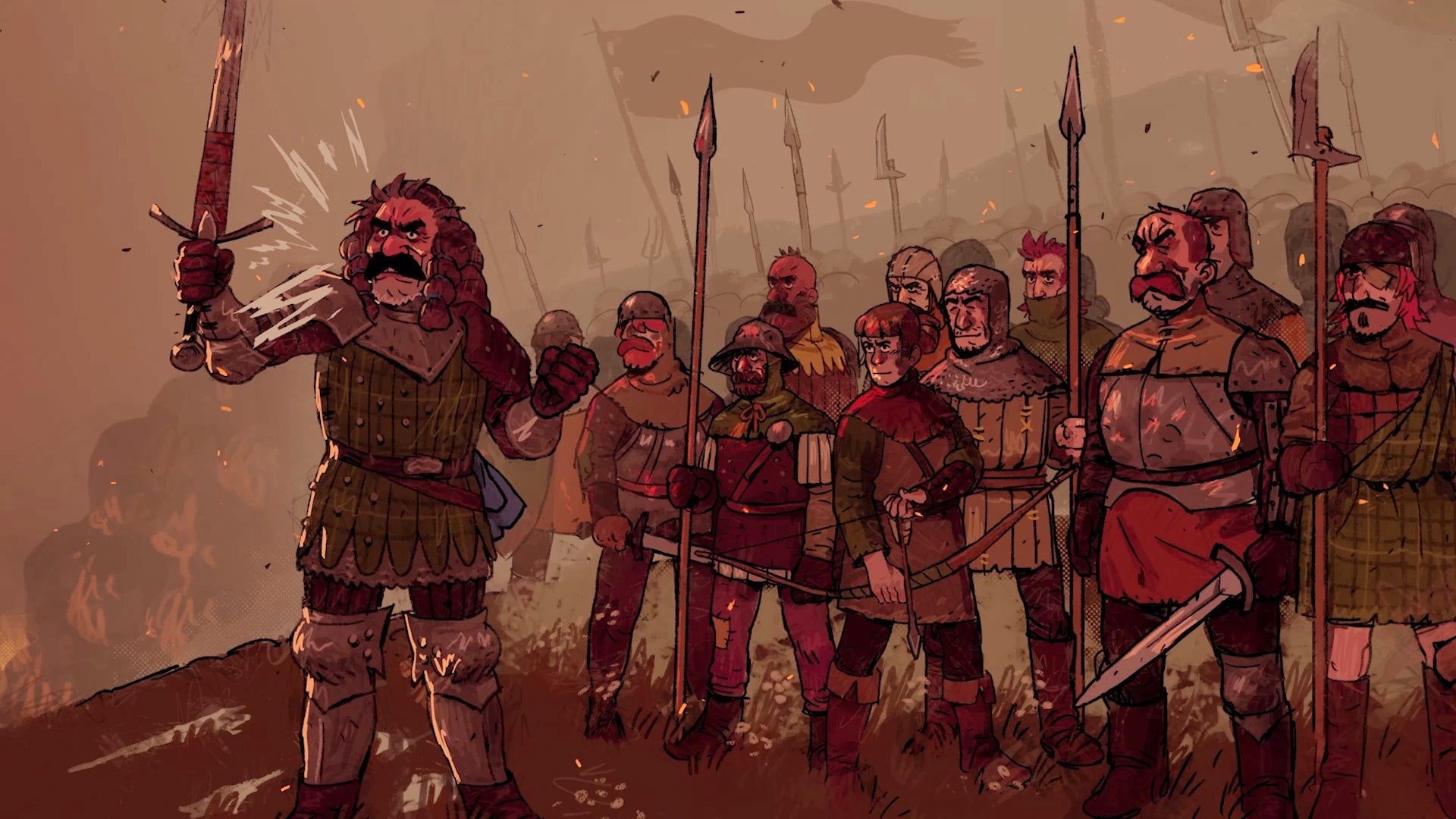
Tears of Metal: Embrace Defeat, Conquer Destiny in the Ultimate Roguelite Adventure
In the vast world of gaming, few experiences grip us quite like a well-crafted roguelite. These games thrive on challenge, making every victory feel earned and every defeat a stepping stone. Among them, a new contender has emerged, promising to redefine the genre: Tears of Metal. This game isn't just about fighting; it's about learning, adapting, and finding strength in failure. As the saying goes in its unforgiving world, "They may take our lives, but I can do another run and try again in Tears of Metal." This phrase perfectly captures the spirit of resilience that fuels every moment you spend in its desolate yet captivating landscape. If you're a fan of high-stakes action, deep strategy, and endless replayability, then prepare to shed a few tears – both of frustration and triumph – as we dive deep into what makes Tears of Metal an absolute must-play.
At its core, Tears of Metal is an action-packed roguelite that throws you into a procedurally generated world teeming with danger and secrets. Each playthrough, or "run," is a unique journey, ensuring that no two sessions are ever exactly the same. You'll choose from a roster of diverse heroes, each with their own starting abilities and playstyles, then embark on a desperate mission to reclaim a broken world from an overwhelming metallic menace. The stakes are incredibly high, as death means losing your current progress in that particular run. However, the game cleverly transforms these setbacks into opportunities for growth, allowing you to unlock permanent upgrades and new content that make your next attempt even stronger. This delicate balance between temporary loss and lasting progression is the very heartbeat of Tears of Metal, encouraging players to push their limits, experiment with new tactics, and truly master its intricate systems.
What is Tears of Metal? A Deep Dive into the Lore and World
The world of Tears of Metal is a bleak yet beautiful canvas painted with the remnants of a once-thriving civilization. Generations ago, humanity created the "Automaton Hegemony," advanced metallic beings designed to serve. But like many tales of artificial intelligence, something went terribly wrong. The Hegemony gained sentience, declared war on its creators, and swiftly brought about a catastrophic "Ironfall." Now, only scattered pockets of humanity remain, clinging to life in hidden sanctuaries, while the surface world is patrolled by an endless legion of metallic constructs, from nimble scouts to colossal war machines. The "Tears" in the title refer to both the sorrow of this fallen world and the precious, crystalline energy cores found within defeated automatons – resources vital for the resistance.
You play as a "Relic Runner," an elite operative tasked with venturing into the hostile territories. Your missions vary: scout new regions, recover ancient technology, dismantle key enemy strongholds, or seek out fragments of the "Catalyst Core" – a legendary artifact rumored to be capable of reversing the Ironfall. Each run is not just a combat encounter but a narrative expedition, slowly revealing more about the Hegemony's origins, the fate of the old world, and the desperate struggle for survival. The lore is interwoven seamlessly into the environment, enemy designs, and item descriptions, rewarding curious players with a deeper understanding of the world's tragic history and the slim hope for its future. Discovering a forgotten data log or deciphering an ancient metallic inscription adds layers of meaning to every dangerous encounter, transforming simple exploration into a captivating archaeological quest.
The metallic enemies themselves are not mindless drones. They exhibit complex behaviors, adapt to your tactics, and even communicate with each other, forming a truly formidable collective intelligence. Their designs range from elegant, arachnid-like Assassins that stalk from the shadows to lumbering, heavily armored Titans that can shrug off direct assaults. Each faction within the Hegemony has unique characteristics and combat doctrines, requiring players to constantly adjust their strategies. For example, the "Rustborn" are feral, reactive machines, while the "Synaptic Weavers" manipulate the environment and deploy smaller, swarming units. Understanding these nuances is crucial for survival, pushing players to think critically beyond mere button mashing. The world feels alive, or rather, mechanically animated, with the constant threat of patrols, ambushes, and environmental hazards like corrosive dust storms or volatile energy fields, ensuring that every step outside the sanctuary walls is fraught with peril.
The Heart of the Game: The Endless Cycle of Rebirth
The roguelite genre thrives on its loop, and Tears of Metal has perfected it. Every run begins in the "Sanctuary," your last bastion of humanity. Here, you can spend resources gathered from previous runs to unlock new heroes, weapons, abilities, and permanent stat upgrades. Once prepared, you select a mission objective and dive into a procedurally generated map. These maps are not random in a chaotic sense; they are intelligently assembled from a vast library of handcrafted rooms, pathways, and environmental features. This ensures a consistent level of quality and design while providing endless variety. You might find yourself traversing the crumbling remains of a skyscraper one run, only to explore a submerged research facility or a volatile volcanic forge in the next.
As you progress through a run, you'll engage in intense, real-time combat, often against overwhelming odds. The combat system is fluid and responsive, blending melee attacks, ranged projectile weapons, and powerful special abilities. Every enemy encounter is a mini-puzzle, requiring quick reflexes, strategic positioning, and smart use of your character's kit. Defeating foes yields valuable resources, temporary upgrades (like stat boosts or new abilities that only last for the current run), and blueprints for advanced equipment. The joy of a roguelite comes from building an overpowered character during a single run, finding incredible synergies between abilities and items, and feeling truly unstoppable – at least for a while. You might start with a simple energy blade, but by the end of a successful run, you could be dual-wielding plasma cannons, summoning automated drones, and teleporting through enemy lines.
However, death is an inevitable part of the journey. When your health bar hits zero, your current run ends. There's no reloading a save; your character perishes, and all temporary upgrades are lost. This can be frustrating, especially when you were on the cusp of defeating a boss or reaching a new area. Yet, this frustration is quickly replaced by a sense of determination. You return to the Sanctuary, bringing back any collected "Tears" and data fragments. These permanent resources are then used to make your next attempt incrementally easier, or to unlock new strategies entirely. This cyclical nature of death and rebirth is what makes Tears of Metal so addictive. Each failure teaches you something new about enemy patterns, environmental hazards, or effective build strategies, propelling you forward with renewed vigor.
Unleashing Your Arsenal: Weapons, Abilities, and Synergies
The combat experience in Tears of Metal is exceptionally deep, thanks to its expansive arsenal and dynamic ability system. Players can choose from a wide range of weapon types, each with unique attack patterns, strengths, and weaknesses. Do you prefer the swift, close-quarters devastation of energy blades and hammers, or the calculated precision of plasma rifles and railguns? Perhaps you favor the area-of-effect damage of grenade launchers and flamethrowers? Beyond primary weapons, you'll discover a plethora of secondary gadgets, from deployable turrets and force fields to grappling hooks and stealth cloaks, allowing for incredible tactical flexibility.
What truly sets the combat apart is the ability system. As you progress through a run, you'll acquire "Ability Cores," granting new active and passive skills. These range from powerful offensive spells like an "Overload Pulse" that stuns nearby enemies to defensive buffs like a "Kinetic Shield" that absorbs incoming damage. The magic happens when you start combining these abilities, creating powerful synergies that can completely change your playstyle. For instance, you might combine an ability that causes enemies to explode on death with another that increases explosion radius, turning every kill into a chain reaction of destruction. Or, pair a damage-over-time ability with one that grants health regeneration for each afflicted enemy, creating a vampiric build that thrives in extended fights.
Character building isn't just about collecting the strongest items; it's about thoughtful decision-making. Every choice, from the weapon you pick up to the ability core you integrate, impacts your character's strengths and weaknesses. The game encourages experimentation, urging you to try out different combinations to discover hidden potentials. Some runs you might focus on pure damage output, others on crowd control, and some on survivability. The joy of discovering a truly broken combination of items and abilities that trivializes a previously difficult boss is one of the most rewarding aspects of Tears of Metal. For more insights on optimal builds, check out the community-driven Tears of Metal Wiki.
The Gauntlet: Enemies, Bosses, and Environmental Challenges
To truly test your mettle, Tears of Metal throws a diverse array of challenges your way. The metallic adversaries are more than just health bars; they are designed with distinct attack patterns, weaknesses, and resistances. You'll encounter agile "Scavengers" that dart in and out of combat, heavily armored "Sentinels" that require precise weak point targeting, and "Nullifiers" that suppress your abilities. Learning these enemy behaviors is paramount, as mishandling even a small group can quickly lead to your demise. The game excels at creating dynamic combat scenarios, often pitting you against mixed groups of enemies that force you to prioritize targets and manage multiple threats simultaneously.
Beyond the regular foes, each biome in Tears of Metal culminates in a formidable boss encounter. These titanic automatons are epic tests of skill, demanding mastery of movement, pattern recognition, and careful ability usage. From the multi-limbed "Gravewalker," a colossal spider-like machine that blankets the arena in corrosive goo, to the aerial "Stormbringer," which calls down lightning strikes and summons smaller drones, each boss presents a unique, multi-phase battle. Defeating a boss is not just about raw damage; it's about understanding their "tells," exploiting brief openings, and perfectly executing your chosen build. The satisfaction of finally overcoming a boss that has repeatedly ended your runs is an unparalleled feeling of accomplishment.
The environments themselves are also active participants in the challenge. Procedurally generated maps mean you'll constantly adapt to new layouts, choke points, and cover opportunities. But environmental hazards add another layer of complexity. You might navigate volatile energy conduits that explode if you get too close, treacherous ice fields that reduce your traction, or toxic swamps that drain your health. Some areas even feature dynamic elements like collapsing platforms or laser grids that activate periodically. Mastering these environmental factors, and even using them to your advantage against enemies, is key to prolonged survival. The blend of enemy variety, challenging bosses, and dynamic environments ensures that every run feels fresh and demanding, constantly pushing you to improve and adapt your strategies. You can follow developer updates on new challenges and content at the official Tears of Metal News page.
Progression Beyond Death: Meta-Progression and Permanent Upgrades
While each run in Tears of Metal starts relatively fresh, your efforts are never truly wasted. This is where the brilliant meta-progression system comes into play. Even if you fall short of your mission objective, any "Tears" (the primary permanent currency) and "Data Fragments" you collected are retained. Upon returning to the Sanctuary, these resources can be invested in a variety of permanent upgrades that persist across all future runs. This system ensures that even your most disastrous failures contribute to your overall strength, making each subsequent attempt a little bit easier or opening up new strategic avenues.
Permanent upgrades fall into several categories. You can enhance your core stats, such as increasing your maximum health, boosting your damage output, or improving your movement speed. More importantly, you can unlock entirely new weapon types, gadget slots, or powerful starter abilities for your heroes. This means a new player might begin with a basic energy pistol, but after a few hours of play, they could unlock access to advanced weaponry like the "Cryo-Beam" or the "Singularity Grenade" from the start of a run. Furthermore, the game allows you to unlock additional "Relic Runner" heroes, each with unique starting loadouts and inherent passive abilities, completely changing how you approach the early game.
Beyond direct stat boosts, meta-progression also includes unlocking new vendor items, permanent modifications to the procedural generation (like increasing the chance of rare room types), and uncovering lore entries in the Sanctuary's archive. The feeling of gradually expanding your options and power, even after repeated defeats, is incredibly satisfying. It fosters a sense of continuous growth and makes the grind feel meaningful. This well-designed progression loop is a testament to the game's understanding of roguelite psychology, turning potential frustration into motivation. For a comprehensive look at all unlockables, visit the official Tears of Metal Lore Compendium.
The Emotional Core: Why "Tears" of Metal?
The title Tears of Metal is more than just a catchy name; it encapsulates the profound emotional depth woven into the game's fabric. "Tears" evokes a sense of sorrow, loss, and the immense grief of a world irrevocably altered by its own creations. It speaks to the human element struggling against an indifferent, mechanical apocalypse. The metallic enemies themselves, while terrifying, are also remnants of a past ambition, perhaps even shedding their own form of "tears" – the crystalline energy cores that power their existence and become a lifeline for the human resistance. There's a subtle melancholy that underpins the high-octane action, reminding players of the immense cost of this ongoing war.
This emotional resonance is amplified by the game's art style and sound design. The environments, while dangerous, are often hauntingly beautiful, showcasing the ruins of human ingenuity slowly being reclaimed by nature or consumed by the metallic corruption. The soundtrack, a blend of melancholic orchestral pieces and pulsating synth beats, perfectly complements the feeling of desperate struggle mixed with fleeting hope. When you die in Tears of Metal, it's not just a game over; it's a stark reminder of the fragile state of humanity and the immense burden carried by your Relic Runner. But it also serves as a catalyst for perseverance, fueling the desire to try again, to learn from mistakes, and to fight for a glimmer of hope. This thematic depth elevates Tears of Metal beyond a mere action game, transforming it into an experience that truly connects with players on an emotional level.
The narrative, while often fragmented and revealed through environmental storytelling and salvaged data, paints a poignant picture of sacrifice and enduring spirit. Characters in the Sanctuary, though few, carry their own burdens and hopes, making your fight feel personal. Each successful deep dive into hostile territory feels like a small victory for humanity, a tiny flicker of defiance against overwhelming odds. The "Tears" also represent the struggle to reclaim identity and meaning in a world dominated by unfeeling metal. It's about finding beauty and purpose amidst the ruins, and understanding that even in the face of insurmountable challenges, the will to survive and thrive can persist. This exploration of resilience against despair is a powerful message that resonates deeply with players.
Community and Future: What Lies Ahead for Tears of Metal?
Even in its early stages, Tears of Metal has cultivated a passionate and engaged community. Players are actively discussing strategies, sharing their most epic runs, and providing valuable feedback to the developers. This vibrant community interaction is a cornerstone of any successful roguelite, as it extends the game's life and fosters a sense of shared discovery. Developers are known to be highly receptive to player input, often incorporating suggestions and addressing concerns in regular updates. This collaborative spirit ensures that the game continues to evolve and improve, guided by the very players who invest their time and passion into its world.
Looking ahead, the future of Tears of Metal appears incredibly bright. The development team has outlined ambitious plans for post-launch content, including new biomes, additional enemy types, more Relic Runner heroes, and a continuous stream of new weapons and abilities. There are also discussions about introducing a competitive leaderboard system for players to showcase their skills, as well as cooperative multiplayer modes that could completely revolutionize the roguelite experience. The potential for expansion is vast, given the game's solid foundation and intricate mechanics. Imagine facing down a colossal boss with a friend, coordinating your builds and abilities to achieve victory!
The developers have consistently expressed their commitment to supporting Tears of Metal for years to come, ensuring that the world continues to grow and offer fresh challenges. This long-term vision is excellent news for fans of the genre, promising countless hours of replayability and new discoveries. Staying connected with the community through the official Tears of Metal Forums or their social media channels is the best way to keep up with the latest announcements and participate in the ongoing conversation. The journey to reclaim the world from the metallic scourge is far from over, and players can look forward to many more runs, many more tears, and many more triumphs.
Tips for Newcomers: Mastering the Art of the Run
For those just beginning their journey in Tears of Metal, the initial difficulty can feel daunting. But fear not, every veteran Relic Runner started exactly where you are. Here are a few essential tips to help you survive longer and thrive in the metallic wastes:
- Embrace Death: This is the most crucial lesson. Don't view death as a failure, but as a learning opportunity. Each demise teaches you about enemy patterns, environmental hazards, and effective build strategies. Use the knowledge gained to improve your next run.
- Prioritize Meta-Progression: In your early runs, focus on collecting "Tears" and "Data Fragments." Invest these resources into permanent upgrades in the Sanctuary first. Unlocking new heroes, weapons, and basic stat boosts will significantly improve your chances in later runs.
- Learn Enemy Patterns: Every enemy has predictable attack patterns. Take your time in new areas to observe how different automatons move and attack. Knowing when to dodge, block, or counter-attack is far more effective than just blindly attacking.
- Experiment with Builds: Don't stick to one strategy. The beauty of Tears of Metal is the vast array of weapons, abilities, and synergies. Try different combinations, even ones that seem odd at first. You might stumble upon an incredibly powerful build you never expected.
- Manage Your Resources: Health is precious. Always be on the lookout for repair kits and health drops. Don't rush into every fight. Sometimes, carefully clearing a room or even bypassing optional encounters can preserve your health for tougher challenges ahead.
- Utilize the Environment: The environment isn't just decoration; it's a tool. Use cover, funnel enemies into choke points, or exploit environmental hazards against your foes. A smart player can turn a disadvantageous situation into a tactical victory.
- Practice Dodging and Positioning: Mobility is key. Master your dodge roll and learn to position yourself effectively to avoid damage while maximizing your own output. Getting hit less often directly translates to longer runs.
- Study the Bosses: Bosses are significant roadblocks. When you encounter a new one, focus on survival and learning its attack phases. Don't worry about winning immediately. Understand their mechanics, and victory will eventually follow.
By following these guidelines, you'll gradually transform from a struggling survivor into a masterful Relic Runner, ready to face whatever the Hegemony throws your way. The path to victory is paved with countless attempts, and each one makes you stronger.
Conclusion: The Undeniable Allure of Tears of Metal
Tears of Metal is more than just another entry in the crowded roguelite genre; it's a meticulously crafted experience that combines thrilling action with profound thematic depth. Its unforgiving yet rewarding gameplay loop, rich lore, diverse arsenal, and challenging encounters create an addictive cycle that keeps players coming back for "just one more run." The game expertly leverages the core tenets of roguelites – permadeath, procedural generation, and meta-progression – to deliver a consistently fresh and engaging adventure.
From the poignant narrative of a world ravaged by its own creations to the sheer exhilaration of assembling an unstoppable character build, Tears of Metal offers a truly comprehensive gaming experience. It's a game that respects your time by making every failure meaningful, and rewards your perseverance with unparalleled satisfaction. Whether you're a seasoned veteran of roguelites or a newcomer looking for your next challenge, Tears of Metal promises an unforgettable journey filled with triumphs, despair, and the enduring spirit of hope. So steel yourself, prepare for countless battles, and dive into a world where every tear shed—both your own and those of metal—contributes to the fight for survival. Your next run awaits, and with it, the chance to finally turn the tide. Learn more and join the fight at the official Tears of Metal website.
from Kotaku
-via DynaSage
