
12th-Generation iPad: Everything We Know About Apple's Next Budget Tablet
Apple's most affordable tablet, the standard iPad, is a cornerstone of its product line, offering a gateway into the expansive Apple ecosystem for students, families, and everyday users. As we look towards the future, attention is already turning to the 12th-generation iPad. While major overhauls are often reserved for premium models, this upcoming version, expected to arrive around 2027, promises crucial internal upgrades that could significantly enhance its value proposition, especially with the rumored integration of Apple Intelligence. If you're currently contemplating an iPad purchase, understanding these potential changes might sway you to wait for what could be a subtly revolutionary entry-level device.
The standard iPad has always been about accessibility and utility. It's the workhorse that helps with homework, keeps kids entertained, powers basic productivity, and provides a window to the internet for millions. Its consistent popularity underscores Apple's commitment to offering a versatile tablet that doesn't break the bank. With each generation, Apple refines this formula, often bringing features from its more expensive siblings down to the mainstream. The 12th-generation model is anticipated to follow this trend, not with flashy new looks, but with powerful under-the-hood advancements that could redefine what a "budget" tablet is capable of.
Design: Familiar Look, Timeless Appeal
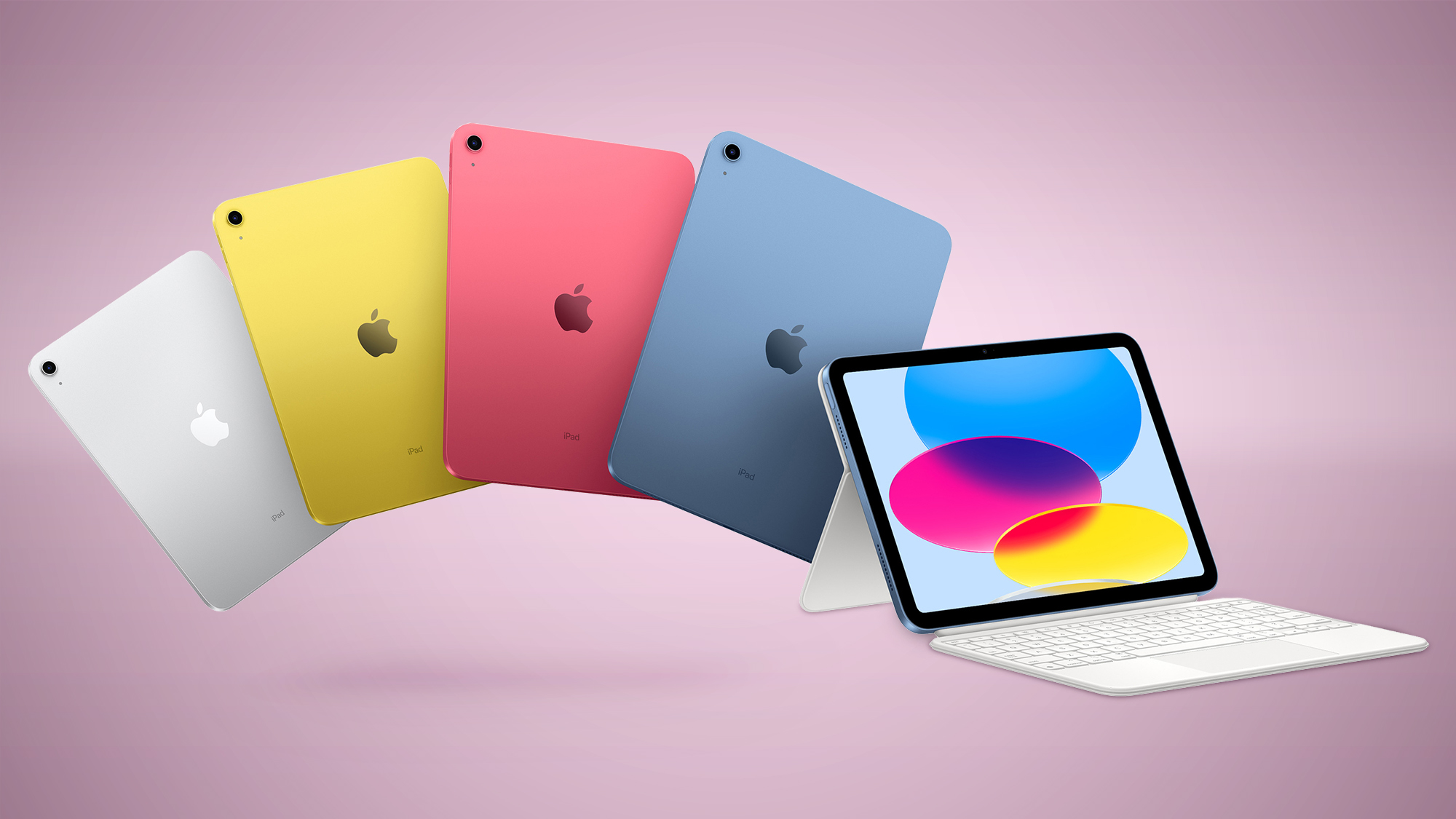
When it comes to the external appearance of the 12th-generation iPad, expectations are firmly set on continuity rather than drastic change. Current whispers suggest that Apple will likely maintain the design language introduced with the 10th-generation model. This means users can expect to see the same 11-inch edge-to-edge display, a modern aesthetic that moved away from the older home button design, mirroring the sleeker lines of the iPad Pro and iPad Air models.
The 10th-generation iPad marked a significant design shift for Apple's entry-level tablet. It brought a more contemporary look with flat edges and a larger screen, making it feel distinctly more premium than its predecessors. This refresh was widely praised for bringing consistency across the iPad family. By placing Touch ID into the power button on the side, Apple was able to expand the screen area without compromising security or convenience. For the 12th-generation, sticking to this successful formula makes sense. It allows Apple to focus its resources on internal upgrades while offering a design that has proven popular and functional.
While the design is modern, it's important to note the specific characteristics of the low-cost iPad's display and form factor. It remains Apple's thickest tablet at 7mm, a subtle difference compared to the incredibly thin Pro models, but one that contributes to its robustness and potentially larger battery capacity. The screen itself is a Retina LED display, renowned for its crispness and vibrant colors, making everything from reading e-books to watching movies a pleasant experience. However, to keep costs down, it lacks some of the advanced features found in its more expensive siblings.
For instance, the 12th-generation iPad is not expected to include ProMotion technology. ProMotion offers adaptive refresh rates up to 120Hz, resulting in incredibly smooth scrolling and more responsive interactions, particularly for drawing with the Apple Pencil. Its absence means the display will operate at a standard 60Hz. Similarly, the budget iPad typically doesn't support P3 wide color, which offers a broader spectrum of colors for more accurate and vivid imagery, crucial for professional creative work. Another common omission is full lamination, a display technology that fuses the display panel directly to the cover glass. This reduces the gap between your finger or Apple Pencil and what you see on screen, providing a more direct and immersive experience. While these features enhance the premium iPad experience, their absence on the standard iPad is a calculated decision to maintain an accessible price point, and for most everyday users, the Retina display still offers a fantastic visual experience.
Apple has a history of offering its low-cost iPad in a range of fun and expressive colors, appealing to a broader demographic, particularly younger users and those who appreciate a pop of personality. The current 11th-generation model is available in attractive shades like blue, pink, silver, and yellow. It’s quite possible that with the 12th-generation update, Apple might introduce new color variations or refresh the existing palette around 2026. This subtle change allows for renewed excitement without altering the fundamental design, offering consumers more options for personalization.
In terms of other physical aspects, no changes are anticipated for the rear camera, front camera, or the versatile USB-C port. The USB-C port is a modern standard that allows for easy charging and connection to a wide range of accessories, from external drives to monitors. Furthermore, compatibility with existing accessories like the Apple Pencil is expected to remain unchanged, which is excellent news for students and artists who rely on its precision for notes and creative tasks. This consistency ensures that current accessory investments remain valid and that the iPad continues to serve as a versatile tool for various applications.
Powering the Experience: The Next-Gen A-Series Processor
The true heart of any modern Apple device lies in its processor, and for the 12th-generation low-cost iPad, this is where the most significant upgrade is expected. Rumors strongly suggest that the device will be powered by either Apple's A18 or A19 chip. This represents a substantial leap forward, as both chips are built on an advanced 3-nanometer manufacturing process. To put this into perspective, the current 11th-generation iPad uses the A16 chip. A move to A18 or A19 means a significant boost in both speed and efficiency, translating directly into a smoother, faster, and more responsive user experience across all applications.
The 3-nanometer process refers to the size of the individual transistors on the chip. Smaller transistors mean more can be packed into the same space, leading to greater computational power and reduced energy consumption. This translates to apps launching faster, games running more smoothly, and complex tasks like video editing becoming more manageable, all while potentially extending battery life. For an affordable tablet, this kind of performance upgrade is revolutionary, allowing it to handle increasingly demanding software and multitasking with ease, bridging the gap between it and its more expensive counterparts.
Perhaps the most compelling reason to wait for the 12th-generation iPad is its potential to support Apple Intelligence. The A16 chip, which powers the 2025 model, does not have the necessary architecture or raw power to fully leverage Apple's new suite of artificial intelligence features. However, the A18 and A19 chips are designed with Apple Intelligence in mind. This means the 2026 or 2027 model should be able to offer a range of AI-powered capabilities that are simply unavailable on the previous generation, marking a major update for Apple's budget tablet line.
Apple Intelligence is poised to integrate powerful on-device and cloud-based AI functionalities seamlessly into the user experience. Imagine a more intuitive Siri that understands context better, advanced writing tools that can refine your text, personalized image generation directly on your device, or smarter organization of your photos and files. These aren't just minor tweaks; they are foundational improvements that could transform how users interact with their iPad. For instance, AI could assist with summarizing long documents, creating personalized schedules, or even enhancing video calls in real-time. This isn't just about faster processing; it's about a smarter, more proactive device that anticipates your needs and streamlines your daily tasks.
Beyond AI, the updated chips also promise significant enhancements for gaming. Both the A18 and A19 chips are expected to offer hardware-accelerated ray tracing. Ray tracing is an advanced rendering technique that simulates the physical behavior of light, producing incredibly realistic lighting, reflections, and shadows in games and other graphical applications. This technology, previously exclusive to high-end PCs and consoles, is slowly making its way to mobile devices. For iPad users, this means a dramatically more immersive and visually stunning gaming experience, positioning the budget iPad as a surprisingly capable portable gaming machine. Coupled with improved GPU performance, games will not only look better but also run at higher frame rates, providing a smoother and more enjoyable playtime.
To fully unlock the potential of Apple Intelligence, an increase in system memory (RAM) is crucial. The current 11th-generation iPad comes with 6GB of RAM. However, for Apple Intelligence features to operate efficiently and effectively, especially with on-device processing, Apple will likely need to bump that up to 8GB. More RAM allows the device to handle more applications and processes simultaneously without slowing down, which is essential for complex AI tasks that require a lot of memory. This increase in RAM, combined with the powerful A18 or A19 chip, will ensure that the 12th-generation iPad is not just capable of running Apple Intelligence, but running it smoothly and reliably, offering a truly next-gen experience even at a lower price point.
Advanced Connectivity: The N1 Chip and Beyond
Connectivity is more important than ever, and Apple has been making strides in bringing its wireless technologies in-house. A significant development in this area is the N1 chip, Apple's custom-designed Wi-Fi and Bluetooth chip. This proprietary chip first debuted in the iPhone 17 models and has since found its way into the iPad Pro. There's a strong possibility that Apple plans to integrate this advanced chip across all its future devices, including the 12th-generation iPad, starting from 2026 and beyond.
The N1 chip is not just another component; it's a strategic move by Apple to gain greater control over its device's wireless performance, efficiency, and security. By designing its own chip, Apple can optimize the hardware and software integration to a much higher degree than with third-party solutions. This could lead to more stable connections, improved battery life when using Wi-Fi or Bluetooth, and enhanced security protocols tailored to Apple's ecosystem.
One of the most exciting features of the N1 chip is its support for Wi-Fi 7 (802.11be), the latest and most advanced Wi-Fi standard. For comparison, the current 11th-generation iPad is limited to Wi-Fi 6 (802.11ax). Wi-Fi 7 brings a host of improvements, most notably significantly faster speeds, lower latency, and greater capacity for handling multiple devices on a network. It achieves this through several innovations, including broader channel bandwidths (up to 320 MHz), more efficient data encoding (4096-QAM), and Multi-Link Operation (MLO), which allows devices to use multiple frequency bands simultaneously (2.4GHz, 5GHz, and 6GHz).
The ability to connect to faster 6GHz networks is a key benefit. The 6GHz band offers a less congested "express lane" for Wi-Fi traffic, as it's less utilized by older devices. This means users with Wi-Fi 7 routers and a 12th-generation iPad could experience unprecedented wireless speeds for downloads, streaming high-resolution content, and cloud-based gaming. For students uploading large project files or families streaming multiple 4K videos simultaneously, Wi-Fi 7 would represent a dramatic improvement in network performance and reliability.
In addition to Wi-Fi 7, the N1 chip also supports Bluetooth 6. This would be a welcome upgrade from the Bluetooth 5.3 found in the current iPad. While specific details on Bluetooth 6 are still emerging, typically new Bluetooth standards bring improvements in range, speed, energy efficiency, and stability. This translates to more reliable connections with wireless headphones, keyboards, game controllers, and other Bluetooth accessories, along with potentially longer battery life for both the iPad and the connected devices.
Furthermore, the N1 chip includes support for Thread networking technology. Thread is a low-power, mesh networking protocol specifically designed for smart home devices. It creates a robust and reliable network where devices can communicate directly with each other, even if one device goes offline, without relying on a central hub (like a Wi-Fi router) as much. For users invested in Apple's HomeKit ecosystem and the broader Matter smart home standard, Thread support means more responsive and reliable control over smart lights, thermostats, locks, and other connected gadgets directly from their iPad, enhancing the smart home experience.
However, there's a caveat. Based on leaked internal code, there is a chance that Apple might reserve the N1 chip for its more premium devices, such as the iPad Pro and higher-end iPhones. Apple often uses exclusive features to differentiate its top-tier products from its more affordable offerings. If this is the case, the 12th-generation iPad might not include the N1 chip, potentially sticking with slightly older Wi-Fi and Bluetooth standards to maintain its budget-friendly price point. This would mean Wi-Fi 6E (a step up from Wi-Fi 6 but not full Wi-Fi 7) and Bluetooth 5.4, which are still excellent, but not quite the cutting edge offered by the N1. The decision here will likely depend on cost analysis and Apple's broader strategy for product segmentation.
Cellular Capabilities: Apple's Own Modem
In Apple's long-term strategy for self-reliance and tighter integration, developing its own modem chips has been a significant goal. We've already seen Apple design its C1 and C1X modem chips, which were integrated into certain iPhone and iPad models in 2025. This move away from third-party modem suppliers, primarily Qualcomm, allows Apple to have more control over the entire hardware and software stack, leading to optimized performance and efficiency.
For the upcoming 12th-generation iPad, especially the cellular models, there's a strong possibility it could also feature an Apple-designed modem chip. The benefits of such a chip are considerable. Apple's modem chips are engineered to be more power-efficient than those from competitors like Qualcomm. This means that an iPad with an Apple-designed modem could potentially offer longer battery life when using cellular data, which is a crucial advantage for users who rely on their tablet for productivity and entertainment on the go. Whether you're commuting, traveling, or simply away from Wi-Fi, extended cellular battery life significantly enhances the device's utility.
Beyond power efficiency, Apple's in-house modem designs are also expected to provide similar, if not improved, cellular performance. This includes faster download and upload speeds, more stable connections, and potentially better signal reception in challenging environments. The tight integration of the modem with Apple's A-series processors and iOS/iPadOS can lead to superior overall cellular experiences, from smoother video calls to faster app downloads over a mobile network. While the specific model of Apple's modem chip for the 12th-gen iPad remains to be seen, its inclusion would underscore Apple's commitment to vertical integration and delivering a highly optimized user experience, even for its entry-level tablet.
Pricing Strategy: Value in a Changing Market
The price of the entry-level iPad is a critical factor in its appeal, positioning it as an accessible device for a wide audience. However, recent trends have shown that even Apple's more affordable products are not immune to market pressures. We saw a notable change with Apple's June price increase, which affected the 11th-generation iPad. The starting price for the 128GB model jumped by $100, bringing it to $449 from its previous price point.
Apple publicly attributed this price adjustment to increasing costs of components, particularly RAM. Memory chips are a fundamental part of any computing device, and their pricing can fluctuate significantly based on global supply and demand. When these costs rise, manufacturers like Apple face the decision of absorbing the increase, potentially impacting their profit margins, or passing some of it on to the consumer. In this case, Apple chose the latter for the 11th-generation iPad.
Looking ahead to the 12th-generation model, there are currently no strong indications that component costs, especially for RAM, are set to decrease significantly before its anticipated launch. Given this market reality and Apple's previous pricing adjustments, it's highly likely that the 12th-generation iPad will maintain the same $449 starting price. While a price increase is never ideal for consumers, keeping it at $449 would indicate that Apple is working to absorb any further cost escalations while still delivering significant technological advancements.
At $449, the iPad remains a competitive offering in the tablet market. It provides access to Apple's robust ecosystem of apps, services, and accessories, along with a powerful operating system (iPadOS) that is continually refined. While there are cheaper Android tablets available, the iPad's long-term software support, strong resale value, and seamless integration with other Apple devices often justify its price point for many users. The value proposition for the 12th-generation iPad will hinge on how well it balances this established price with the expected performance enhancements, particularly the game-changing Apple Intelligence features and advanced connectivity. Should it deliver on these fronts, $449 would represent a compelling value for a device that offers cutting-edge AI capabilities and a significantly improved user experience.
The Waiting Game: Launch Date Expectations
The timing of new product releases is always a hot topic, and the 12th-generation iPad is no exception. Initially, industry reports from sources like Bloomberg hinted at a refresh for the standard iPad sometime in 2026. This would have aligned with Apple's typical product cycles, offering a new model roughly a year or so after its predecessor, depending on the specific line.
However, recent updates suggest a slightly delayed timeline. It now appears that the 12th-generation iPad might not receive an update until the first quarter of 2027 at the earliest. This shift in the release schedule could be influenced by several factors. Apple often times its product launches strategically, considering everything from supply chain readiness for new components (like the A18/A19 chips or N1 chip) to major software releases (like the full rollout of Apple Intelligence). Delaying the launch allows Apple more time to refine new technologies, ensure robust supply chains, and integrate new features seamlessly with the latest version of iPadOS.
A Q1 2027 launch could also align with a major software announcement or a broader push for Apple Intelligence across its product lineup. By waiting, Apple can ensure that the 12th-generation iPad is not just an incremental update but a fully realized device that can leverage its most advanced software capabilities right out of the box. This timing might also avoid direct competition with the busy holiday shopping season of late 2026, giving the new iPad a clearer launch window where it can capture maximum attention.
For prospective buyers, this delayed launch presents a clear dilemma: do you buy the current 11th-generation iPad now, or do you hold out for the 12th-generation model? Given the significant rumored upgrades, particularly the support for Apple Intelligence and potentially advanced connectivity, waiting until early 2027 could be a very worthwhile decision. The additional months of patience could reward you with a tablet that is significantly more capable, future-proof, and enjoyable to use, especially if the promise of a smarter, more intuitive iPad experience through AI comes to fruition. For many, the leap in intelligence and performance might justify the wait, making the 12th-gen iPad a truly smart upgrade for the budget-conscious consumer looking for long-term value.
Conclusion: A Smart Upgrade for the Budget-Conscious
The 12th-generation iPad, while not expected to reinvent the tablet's exterior, is poised to bring some truly transformative internal upgrades that could redefine what an "affordable" Apple tablet is capable of. From a powerful new A18 or A19 chip designed for the groundbreaking Apple Intelligence, to potential next-generation Wi-Fi 7 and Bluetooth 6 connectivity via the N1 chip, and even Apple's own efficient cellular modem, this upcoming iPad is shaping up to be far more than just a minor refresh.
For users who rely on their iPad for everyday tasks, education, light productivity, and entertainment, these enhancements promise a noticeably smoother, faster, and more intuitive experience. The ability to tap into Apple Intelligence will open up new avenues for productivity and creativity, making the iPad feel smarter and more personalized than ever before. While the price is expected to remain consistent at $449, the value proposition will be significantly boosted by these advanced features, positioning it as an excellent long-term investment.
The anticipated launch in early 2027 gives prospective buyers ample time to consider their options. If you're in the market for a new iPad and want to experience the cutting edge of Apple's technology without stepping into the Pro or Air price brackets, then holding out for the 12th-generation model appears to be a highly strategic move. It promises to deliver a powerful, intelligent, and highly connected device that will serve its users well for years to come, truly embodying the essence of accessible innovation within the Apple ecosystem.
This article, "12th-Generation iPad: Everything We Know About Apple's Next Budget Tablet" first appeared on MacRumors.com
Discuss this article in our forums
from MacRumors
-via DynaSage
