
Will Apple Launch New Hardware at WWDC Next Week?
Will Apple Launch New Hardware at WWDC 2026? A Deep Dive into Expectations
Every year, the tech world eagerly anticipates Apple's Worldwide Developers Conference (WWDC). It's a key event where Apple lays out its vision for the future, primarily through groundbreaking software updates. But one question always lingers: will we see dazzling new hardware unveiled on stage?

WWDC is, at its heart, a celebration of software. It's where Apple reveals the next major versions of its operating systems: iOS for iPhones, iPadOS for iPads, macOS for Macs, watchOS for Apple Watches, tvOS for Apple TV, and visionOS for the Apple Vision Pro. These software advancements empower developers to create innovative apps and experiences for millions of users worldwide. The focus is on providing the tools and frameworks that allow developers to push the boundaries of what's possible within Apple's vast ecosystem. However, despite this strong software emphasis, it's not unheard of for Apple to surprise everyone with new hardware announcements during this developer-focused event.
Historically, Apple has used WWDC to introduce significant products that shape its ecosystem, often hardware that empowers developers or marks a major strategic shift. Take WWDC 2017, for instance. That year, Apple gave the world its first look at the original HomePod. This wasn't just a simple speaker; it was Apple's ambitious entry into the burgeoning smart home market, promising premium audio quality combined with intelligent Siri integration. Unveiling it more than six months before its actual launch allowed developers ample time to consider how their apps could interact with this new device, how Siri commands could be integrated, and to prepare for its arrival, fostering a robust ecosystem from day one.
Other major hardware reveals at past WWDCs underscore this trend. In June 2019, Apple showcased the powerful, redesigned Mac Pro and the groundbreaking Pro Display XDR. These machines were specifically designed for professional users – video editors, 3D artists, and, crucially, software developers who demand immense processing power and pristine visual fidelity. The Mac Pro, with its modular design and extreme performance capabilities, alongside the stunning Pro Display XDR, represented Apple's commitment to empowering the most demanding creative and technical users. Announcing them at WWDC made perfect sense, as these tools are essential for the very people who build the high-performance applications that run on Apple's platforms.
More recently, WWDC 2023 was a landmark event for hardware. Apple introduced the first-ever 15-inch MacBook Air, bringing a larger, more immersive display to its popular fanless laptop line. This move expanded the appeal of the MacBook Air to users who desired more screen real estate for productivity and entertainment without compromising on portability or Apple's renowned efficiency. Alongside this, the powerful M2 Ultra chip was unveiled, making its debut in the Mac Studio. This chip represented the pinnacle of Apple Silicon at the time, offering unprecedented performance for demanding creative and computational tasks, making it a dream machine for pro users and developers alike. And perhaps most significantly, Apple completed its transition away from Intel processors by introducing the first Mac Pro powered by Apple Silicon, an eagerly awaited milestone that promised optimized performance and integration across the entire Mac lineup. These examples clearly demonstrate that while software is paramount, WWDC can indeed be a stage for significant hardware announcements, especially when those products empower developers or mark major strategic shifts for Apple's technological future.
What Can We Expect at WWDC 2026? A Look at Current Hardware Forecasts
Given this rich history, it's natural to wonder if 2026 will bring similar hardware surprises. However, the current consensus among industry insiders and analysts is that this year's WWDC is likely to be light on new hardware reveals. The main reason? Apple has already had an incredibly busy year for product launches, rolling out a slew of significant updates across its key product lines in the preceding months. This proactive release strategy means that many of the anticipated refreshes have already taken place.
Indeed, 2026 has been a remarkably active period for Apple's hardware portfolio. Earlier in the year, we saw the introduction of the AirTag 2, an enhanced version of Apple's popular item tracker. This update likely brought improved tracking capabilities, potentially longer battery life, and new features designed to help users keep tabs on their belongings more efficiently and securely within the Find My network. This was a welcome, practical update for many who rely on AirTags for peace of mind.
The iPhone lineup also received a refresh with the launch of the iPhone 17e. This new model, positioned perhaps as an "essential" or "enhanced" tier, likely featured the powerful A19 chip, offering significant performance boosts and advanced capabilities for everyday tasks, gaming, and photography. With expected improvements to MagSafe technology, it aimed to provide a compelling option for users looking for a modern iPhone experience with a focus on core features and excellent value within the broader iPhone ecosystem, making cutting-edge technology more accessible.
Tablet users weren't left out, with Apple unveiling a new iPad Air with the M4 chip. This was a major upgrade, bringing the formidable performance of Apple's M-series chips to the more accessible iPad Air line. The M4 chip, known for its incredible processing power, advanced neural engine for AI tasks, and exceptional energy efficiency, makes the iPad Air capable of handling even more demanding tasks, from advanced gaming to professional creative work and complex multitasking, further blurring the lines between tablets and traditional computers.
The Mac ecosystem also saw substantial updates. Apple refreshed its popular laptops with new M5 MacBook Air and M5 Pro/Max MacBook Pro models. The M5 chip family, as the latest iteration of Apple Silicon, delivered even greater performance, improved graphics capabilities for demanding visual tasks, and enhanced power efficiency for longer battery life. These updates ensured that both casual users and demanding professionals had access to cutting-edge laptops capable of tackling any task with speed, responsiveness, and Apple's hallmark integration.
March, in particular, proved to be a monumental month for Apple's product releases. The Studio Display XDR arrived, setting a new benchmark for professional monitors. Featuring advanced mini-LED backplane technology, it offered incredible brightness, contrast, and color accuracy, essential for creative professionals, video editors, and graphic designers. Its 120Hz refresh rate ensured ultra-smooth motion, providing an immersive and responsive visual experience for fast-paced content and demanding workflows. This display was a significant upgrade for those who demand the absolute best in visual performance and color fidelity.
Not to be outdone, the regular Studio Display also received a crucial Thunderbolt 5 upgrade. Thunderbolt 5 significantly boosts bandwidth, allowing for blazing-fast data transfer, more capable external graphics for gaming or heavy computation, and the ability to drive multiple high-resolution displays with a single, versatile cable. This upgrade made the Studio Display even more versatile and future-proof for power users and developers connecting a multitude of peripherals.
Perhaps one of the most talked-about launches was the debut of Apple's industry-disrupting $599 MacBook Neo. This entirely new product category aimed to redefine the budget laptop market. The MacBook Neo likely emphasized extreme portability, robust cloud integration, and Apple's signature intuitive user experience at an incredibly accessible price point. Designed to appeal to students, first-time laptop buyers, and those seeking a lightweight, efficient device for everyday tasks, it represented a bold strategic move by Apple to expand its reach into new demographics and compete directly with Chromebooks and entry-level Windows laptops, all while offering the seamless integration of the Apple ecosystem. Its focus on efficiency, core Apple services, and essential computing, rather than raw power, made it a compelling choice for a broad audience seeking value and reliability.
Even Apple's audio accessories received attention, with a quiet but significant update to the AirPods Max with an H2 chip. This upgrade brought enhanced audio processing, superior active noise cancellation for a more immersive listening experience, improved transparency mode for better environmental awareness, and more robust spatial audio capabilities to Apple's premium over-ear headphones, ensuring they remained at the forefront of the high-fidelity wireless audio market with smarter, more adaptive sound.
With such a comprehensive array of product releases in the first few months of 2026, it's understandable why expectations for further hardware at WWDC are tempered. Apple has already delivered a substantial refresh across many of its core product lines, leaving fewer obvious gaps for immediate hardware announcements.
The Waiting Game: Apple TV, HomePod mini, and Future Visions
Despite this flurry of spring announcements, reports suggest that Apple still has more products "in the wings." According to reliable sources, including Bloomberg's Mark Gurman, new models of the Apple TV 4K and HomePod mini are "ready to go" and have been "for months." This begs the question: why is Apple holding them back, and should we expect to see them at WWDC?
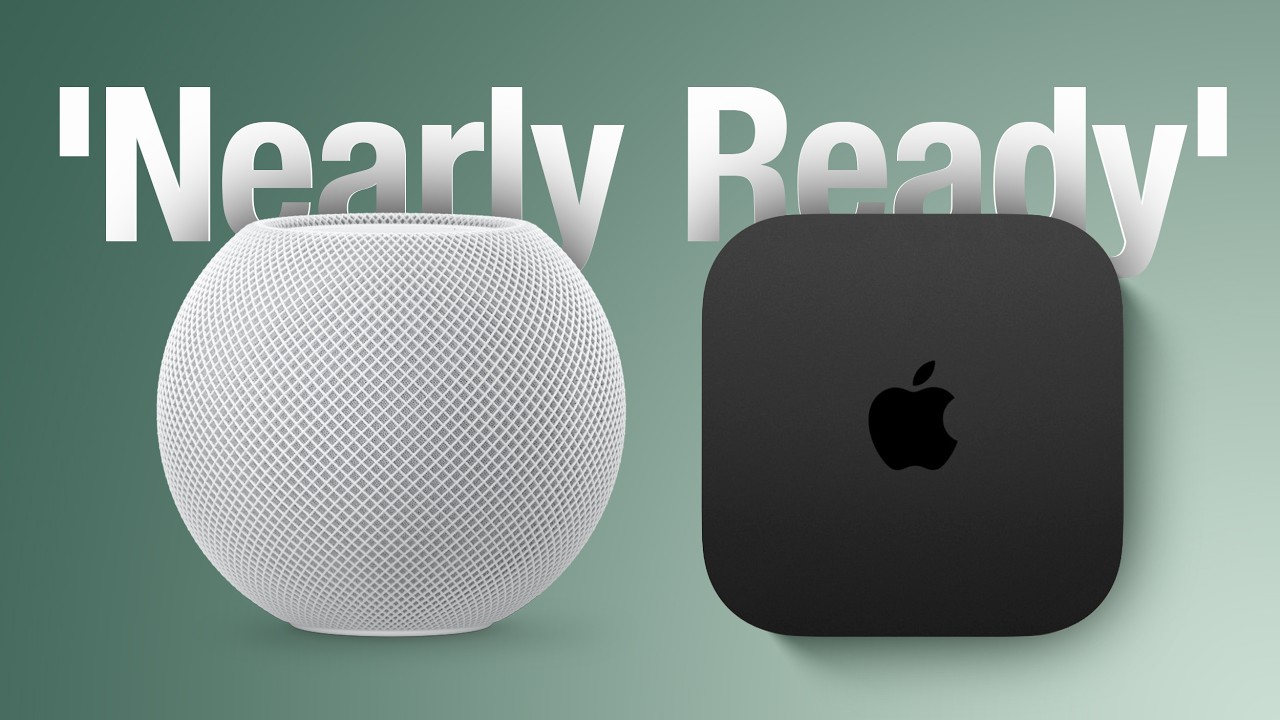
Unfortunately, it's highly improbable that either of these devices will be announced at WWDC 2026. The primary reason for this delay is strategic: Apple is reportedly waiting until its more personalized version of Siri and other groundbreaking "Apple Intelligence" upgrades are publicly released later this year. While we will undoubtedly get a sneak peek and deep dive into these transformative software features at WWDC, their full public rollout isn't expected until mid-September. It would be illogical for Apple to launch new hardware that heavily relies on these advanced AI capabilities before the software itself is available to users, as it wouldn't be able to showcase the products' full potential.
Understanding Apple Intelligence and Personalized Siri
To fully grasp why these products are on hold, it's crucial to understand what "Apple Intelligence" and "personalized Siri" truly mean for the user experience. Apple Intelligence represents Apple's ambitious leap into integrating advanced artificial intelligence directly into its operating systems and devices. This isn't just about simple voice commands; it's about making devices more intuitive, proactive, and deeply integrated with a user's personal context and data, transforming how we interact with technology.
- On-Device AI and Privacy: A key differentiator for Apple Intelligence is its emphasis on on-device processing. This means that much of the AI computation happens directly on your device, rather than sending sensitive data to the cloud. This approach significantly enhances user privacy and security, a core tenet of Apple's philosophy, ensuring your personal data stays yours.
- Contextual Awareness: Personalized Siri, powered by Apple Intelligence, goes far beyond understanding isolated commands. It will learn from your habits, preferences, and the context of your interactions across different apps and services. Imagine Siri understanding your daily routine, anticipating your needs before you even voice them, or offering suggestions based on your current location, calendar events, or even the content of your ongoing conversations.
- Proactive Assistance: Rather than just reacting to commands, the new Siri is expected to be more proactive and helpful. It could remind you of something important you discussed in a text message, suggest relevant information before you even ask for it, or help you manage complex tasks across multiple applications with natural language commands, making your digital life smoother.
- Deep Integration: Apple Intelligence aims for seamless integration across all Apple apps and services. This means that features like intelligent summarization of long documents or web pages, smart replies to messages, advanced photo editing with AI assistance, and more efficient organization of your digital life will be woven directly into the fabric of iOS, iPadOS, and macOS, making every interaction smarter and more efficient.
For devices like the Apple TV and HomePod mini, these advancements are game-changers. An Apple TV with enhanced Apple Intelligence could offer hyper-personalized content recommendations based on viewing history and mood, understand complex voice queries about movies or shows, and seamlessly control smart home devices with greater nuance and intelligence. A HomePod mini, acting as a central smart home hub, could become truly intelligent – managing complex routines, adjusting environments based on learned preferences, and providing information with an unprecedented level of contextual awareness and natural interaction. Launching these devices without the full power of Apple Intelligence would be a missed opportunity, failing to showcase their true potential and the seamless, intelligent experience Apple intends to deliver.
Other AI-Dependent Products on the Horizon
The same reasoning extends to other highly anticipated, and often rumored, Apple products that rely heavily on a deeply integrated and enhanced AI framework. These devices are less about raw specs and more about intelligent interaction:
- Smart Glasses: Rumors of Apple smart glasses have circulated for years. Such a device would likely feature advanced augmented reality (AR) capabilities, displaying contextual information, notifications, and interactive elements directly in the user's field of vision. This requires incredibly sophisticated on-device AI to process real-world data in real-time, understand user intent through gaze and gestures, and present relevant information seamlessly without distraction. Without a robust Apple Intelligence foundation, the true utility and transformative magic of such glasses would be severely limited.
- AirPods with Cameras: The idea of AirPods with built-in cameras sounds highly futuristic, and indeed it is. These could potentially offer advanced health monitoring by analyzing biometric data, environmental sensing by understanding surroundings, or even act as a subtle interface for AR applications by providing visual input. Imagine AirPods that can detect objects in your surroundings, translate languages visually, or provide real-time information based on what you're looking at. All these capabilities would hinge on powerful, low-latency AI processing to interpret visual data and deliver actionable insights or experiences discreetly and effectively.
- Smart Home Hub / "HomePad": Beyond the HomePod mini, Apple is rumored to be working on a more comprehensive smart home hub, sometimes dubbed "HomePad." This device would act as the central brain of a connected home, integrating all smart devices and services into a cohesive, intelligent network. For it to truly revolutionize the smart home, it would need Apple Intelligence to understand complex home routines, manage energy consumption intelligently based on occupancy and weather, respond to nuanced requests across multiple devices, and create personalized environments based on who is home and what their preferences are. This device is less about playing music and more about orchestrating an intelligent, autonomous living space.
The common thread across all these futuristic devices is their fundamental reliance on an enhanced Siri and a version of Apple Intelligence that truly delivers on its promises. These improvements are designed to make Apple's entire ecosystem profoundly smarter, more intuitive, and more personal. Until these core AI capabilities are publicly available and stable – likely in the fall with the next major software releases – launching hardware that depends so heavily on them would be premature. Apple's strategy appears to be to ensure the software foundation is rock-solid and fully polished before showcasing the hardware that leverages it to its fullest extent, providing a truly magical user experience from day one.
Mac Updates? Unlikely Due to Global Challenges
While the focus on AI explains the delay for certain smart home and future-leaning devices, another significant, very real-world factor is impacting the availability of other Mac products: global supply chain issues. Specifically, it's not looking good for updates to the Mac mini or Mac Studio arriving anytime soon.
The Impact of the Global Memory Chip Shortage
Apple, like many tech giants, is currently grappling with a severe global memory chip shortage. This shortage is largely driven by the explosive demand from "hyperscalar companies" – massive cloud service providers like Amazon Web Services, Google Cloud, and Microsoft Azure – who are rapidly building out colossal "AI server facilities." These facilities are essential for training and deploying large language models and other sophisticated AI applications that require immense computational power. To achieve this, they demand vast quantities of high-bandwidth memory (HBM) and other advanced memory chips, which are crucial for AI workloads.
The intense competition for these critical components has created a significant squeeze on the global supply chain, directly impacting manufacturers of consumer electronics that also rely on advanced memory. High-performance Mac models, particularly the Mac mini and Mac Studio, which are popular among developers, creative professionals, and researchers, often require significant amounts of RAM to handle demanding workloads. The shortage has created tangible, frustrating consequences for Apple's desktop Mac lineup:
- Unavailable RAM Configurations: We've already seen Apple remove certain high-capacity configurations of its desktop Macs from its online store. Mac mini models with 32GB and 64GB of RAM are no longer available for purchase, signaling a severe constraint on high-capacity memory modules. Similarly, the powerful M3 Ultra Mac Studio with 256GB RAM is also off the shelves. These high-memory configurations are absolutely crucial for professional users who run virtual machines, compile large codebases, render complex 3D scenes, or work with massive datasets – precisely the target audience for devices like the Mac Studio and higher-end Mac mini models.
- Minimum Storage Bump: Apple even went so far as to remove the Mac mini with 256GB of SSD storage, making the 512GB model the new minimum option. While this might seem like a simple upsell to a higher-margin product, it could also be a symptom of broader supply chain re-prioritization, or a way to streamline inventory amid overarching component challenges, indicating a scarcity of lower-capacity NAND flash modules as well.
- Official Confirmation of Constraints: The severity of the situation has been acknowledged at the highest levels. Apple CEO Tim Cook himself has publicly stated that the Mac mini and Mac Studio could be hard to get for months to come. Such a frank admission from Apple's CEO underscores the significant and ongoing nature of these supply constraints, making it highly unlikely they would introduce new models into an already strained production environment.
For developers attending WWDC, this is particularly relevant and potentially frustrating. Many rely on powerful desktop Macs like the Mac mini and Mac Studio for their daily work of building and testing applications. If Apple cannot consistently supply existing configurations with the memory and storage options developers need, it's highly improbable that they would introduce new models, which would only exacerbate the supply challenges and frustrate their core professional user base. The company needs to stabilize its current product availability before considering new iterations or adding to the demand with fresh hardware. Therefore, while Mac updates are always a hopeful wish at WWDC, the current economic and supply chain realities make significant new desktop Mac announcements highly improbable. Apple's focus will likely be on showcasing the software that runs on these machines, rather than introducing new hardware that would be difficult to procure or deliver to customers.
Conclusion: A Software-Focused WWDC 2026
As WWDC 2026 approaches, the safest overarching assumption is to temper expectations for hardware-based product launches. This year's conference is poised to be a return to its roots: a deep dive into software, innovation, and the future of Apple's platforms. We anticipate thrilling previews of the next generations of iOS, iPadOS, macOS, watchOS, tvOS, and visionOS. Crucially, we expect a comprehensive unveiling of Apple Intelligence and the next generation of Siri, setting the stage for Apple's AI-powered future and demonstrating how artificial intelligence will be seamlessly integrated into our daily digital lives.
The reasons for this software-centric outlook are manifold and strategically sound:
- Recent Hardware Overload: Apple has already had an extremely busy spring, refreshing numerous key product lines, from iPhones and iPads to MacBooks and displays. These recent launches satisfy much of the immediate demand for new hardware.
- AI Software Dependency: Many highly anticipated products, such as new Apple TV and HomePod mini models, along with more futuristic concepts like smart glasses and camera-equipped AirPods, are intrinsically tied to the public release and maturity of Apple Intelligence. Apple will want to launch these hardware products when their foundational AI software is fully ready and out of its "beta" phase, ensuring a polished, feature-rich experience from day one. This full public release isn't expected until the fall. Indeed, there's no sign that Siri in iOS 27 will shed its beta label anytime soon, indicating that the AI refinement process is ongoing and extensive.
- Global Supply Chain Constraints: The ongoing memory chip shortage, fueled by the immense demand for AI server infrastructure, is directly impacting the availability of high-performance Mac components. This makes it challenging for Apple to introduce new Mac mini or Mac Studio models when existing configurations are already facing significant supply limitations and extended delivery times.
Perhaps the best we can hope for in terms of hardware at WWDC 2026 is a brief conceptual preview of upcoming smart home accessories, or a glimpse at how Apple Intelligence will power future devices, serving as a tantalizing teaser rather than a full product launch. However, comprehensive product launches are unlikely until Apple's new software updates, particularly those related to its advanced AI features, mature to a point where they no longer carry the "beta" badge caveat and are fully ready for the public, seamlessly integrated and robust.
WWDC 2026 kicks off with Apple's highly anticipated keynote on Monday, June 8, at 10 a.m. Pacific Time. While hardware might take a backseat, the software announcements promise to be monumental, shaping the user experience for years to come and laying the groundwork for Apple's next generation of intelligent devices. Be sure to stay tuned here at MacRumors for comprehensive, up-to-the-minute coverage of all the exciting announcements and deep dives into Apple's future vision.
This article, "Will Apple Launch New Hardware at WWDC Next Week?" first appeared on MacRumors.com
Discuss this article in our forums
from MacRumors
-via DynaSage
