
The Legend of Zelda: Ocarina Of Time Remake Is Real, Out This Year
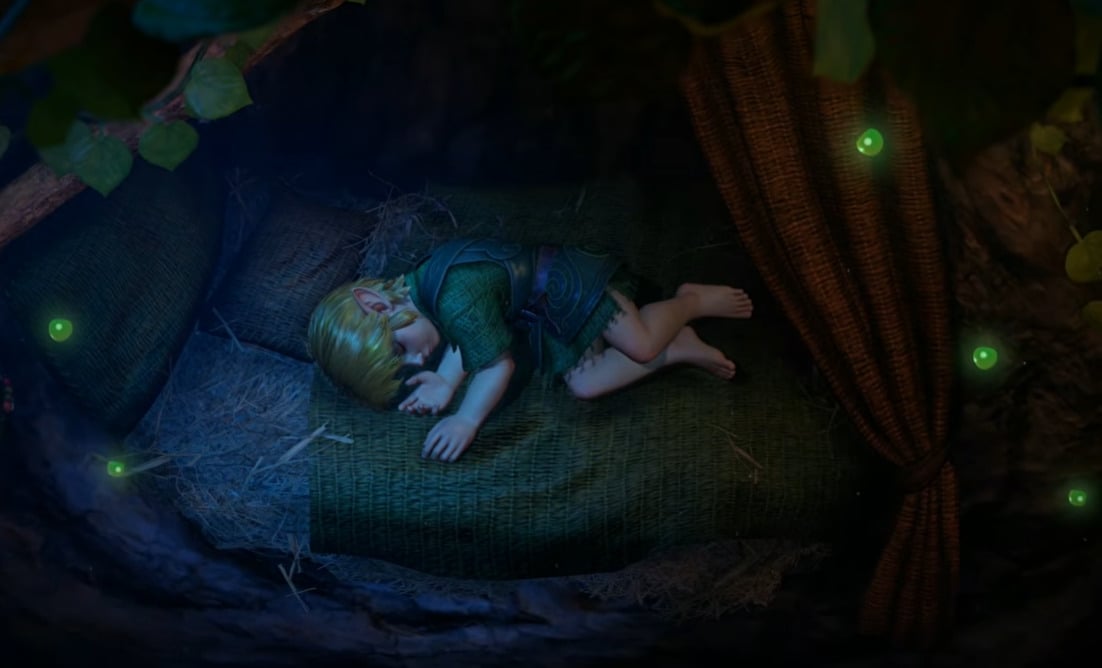
The Boy Without a Fairy: Finding Your Own Way in a World Full of Wonders
Imagine a world full of magic, hidden paths, and ancient dangers. In many of the stories and games we love, the hero often has a special companion. Think of Link and Navi in The Legend of Zelda, or Peter Pan and Tinkerbell. These companions, often magical beings like fairies, provide guidance, support, and sometimes even a little bit of sass. They help the hero navigate tricky situations, overcome fears, and understand the world around them. They are a constant presence, a beacon of hope, and a source of unique abilities. But what happens when the hero is on their own? What about the boy who ventures into the unknown without a fairy by his side? This is a tale not just of loneliness, but of extraordinary growth, self-discovery, and the kind of courage that shines brightest in the absence of easy answers.
The idea of a "fairy" doesn't always have to mean a tiny, winged magical creature. In stories, a fairy can represent any kind of consistent, magical, or deeply supportive guide. It could be a wise old wizard, a loyal talking animal, a spirit guardian, or even an internal magical power that awakens within the hero. The common thread is that this guide offers something external that helps the hero on their journey. It might be knowledge, protection, a unique skill, or simply moral support. Without such a guide, the hero faces a much steeper climb. Their journey becomes a profound testament to human spirit, resilience, and the power of finding answers from within.
The Classic Companion: Why We Love Our Guides
From ancient myths to modern video games, the hero's journey often features a strong mentor or loyal sidekick. These figures serve many purposes in storytelling. They can explain the world's lore to the audience through the hero, offer comic relief, or provide crucial information and abilities that the hero lacks. Consider some of the most famous examples:
- Navi from The Legend of Zelda: Ocarina of Time: A small, glowing fairy who constantly reminds Link, "Hey! Listen!" While sometimes annoying, Navi provides vital hints, points out weaknesses in enemies, and is Link's primary source of information in a silent protagonist's world. She's Link's connection to the mystical world of Hyrule and his constant companion.
- Tinkerbell from Peter Pan: Peter's hot-headed fairy companion, whose pixie dust allows the Lost Boys to fly. She represents magic, jealousy, and fierce loyalty, even when it leads to trouble. Her presence is synonymous with the magic of Neverland and Peter's eternal youth.
- Gandalf from The Lord of the Rings: A powerful wizard who guides Frodo and the Fellowship, offering wisdom, magical aid, and a moral compass. He is the ultimate mentor figure, shaping the destiny of Middle-earth through his quiet influence and formidable power.
- Ghosts and Spirits in RPGs: Many role-playing games feature spectral companions who offer advice, reveal backstory, or provide special powers, acting as a crucial bridge between the player and the game's deeper narrative.
These companions are more than just plot devices; they become beloved characters themselves. They embody the idea that no one has to face the world's biggest challenges completely alone. They represent hope, friendship, and the comfort of having someone to share the burden with. Their presence often makes the hero's journey feel a little less daunting, a little more magical, and certainly more accessible for both the hero and the audience.
The Burden of Independence: What It Means to Be Alone
Now, let's turn our attention to "The Boy Without a Fairy." This concept flips the traditional narrative. When a hero embarks on an adventure without a guide, the stakes immediately feel higher. The path is less clear, the dangers more pronounced, and every decision rests solely on their shoulders. This isn't just a lack of magical assistance; it's a profound sense of solitude that forces a different kind of heroism.
Without a fairy to offer hints, the boy must rely on his own wits and observations. Every puzzle becomes a personal test of logic, every hidden path a discovery earned through careful exploration. There's no voice to say, "Look out, behind you!" or "This enemy is weak to fire magic!" He must learn by doing, by failing, and by slowly building up his own understanding of the world's rules. This can be a terrifying prospect, especially in a world filled with unknown creatures and ancient mysteries.
The emotional impact is also significant. A companion often provides emotional support, a sounding board for thoughts, and a reminder of the mission's importance. Without that, the boy must grapple with fear, doubt, and loneliness on his own. He becomes a silent observer, interpreting the world through his own eyes and forming his own conclusions. This journey can be isolating, yet it also fosters incredible inner strength. He learns to trust his instincts, to find comfort in solitude, and to develop an unwavering determination.
This path of independence forces a more organic form of character development. Instead of being told what to do, the boy has to figure it out for himself. His growth isn't guided by external wisdom but forged in the crucible of his own experiences. Every victory feels more earned, every hardship a deeper lesson. He learns the hard way, which often means his understanding is more deeply ingrained and his resilience more profound. This makes him a different kind of hero—one who truly understands the weight of his choices and the depth of his own capabilities.
The Metaphorical Fairy: Guidance in Everyday Life
While we often think of fairies in fantasy settings, the concept of a "fairy" or guide extends far beyond magical realms. In our own lives, a "fairy" can be a mentor, a wise friend, a supportive family member, or even a teacher who inspires us. These are the people who offer advice, help us see solutions, and stand by us when things get tough. They provide the emotional and intellectual support that helps us navigate our personal journeys.
Think about a time you faced a difficult decision. Did you turn to someone for advice? That person acted as your guide, helping you see different perspectives and weigh your options. Or perhaps you had a moment of clarity, an "aha!" moment where an answer suddenly clicked. In a way, that insight was your own internal "fairy" speaking to you, born from your own thoughts and experiences. We all rely on these forms of guidance, both external and internal, to make sense of the world and move forward.
But what if those traditional guides aren't available? What if you're in a situation where you truly have to find your own path? This is where the story of "The Boy Without a Fairy" becomes incredibly relevant to real life. It speaks to the moments when we feel lost, when there's no clear mentor or easy answer. It highlights the importance of developing self-reliance, critical thinking, and the courage to trust our own judgment. It reminds us that sometimes, the greatest lessons are learned when we are forced to stand on our own two feet and forge our own way, without a clear map or a voice whispering directions in our ear.
The "fairy" can also represent abstract concepts: hope, dreams, a specific goal, or an ideal. When we chase a dream, that dream itself acts as a guide, pulling us forward even when the path is unclear. When we hold onto hope in difficult times, that hope becomes a guiding light. So, a "boy without a fairy" could metaphorically be someone who struggles to find purpose, lacks a clear direction, or has lost their sense of hope. Their journey then becomes about finding that internal spark, reigniting their dreams, and discovering their own guiding principles. It's about finding what truly matters to them and letting that become their inner compass, their own unique kind of fairy.
A Story Unfolds: The Journey of Elara
Let's imagine the story of such a boy, whom we'll call Elara. The image at the beginning of our post captures a moment from his journey. We see a young figure, resolute and perhaps a little weary, standing amidst what looks like ancient ruins or a place touched by forgotten magic. There's a soft, ethereal light in the background, hinting at power or mystery, yet no obvious companion at his side. This is Elara, the boy without a fairy.
Elara grew up in a small, isolated village, far from the magical academies and ancient prophecies that often mark the birth of a hero. While other children whispered tales of spirit guides and magical familiars, Elara felt no such connection. He was simply himself, observant and quiet, with a deep yearning for the unknown that lay beyond the whispering forests surrounding his home. When a creeping blight began to wither the village's sacred trees – the very source of their livelihood and peace – the elders spoke of an ancient cure hidden in the Sunken City, a place whispered about in fearful legends, said to be guarded by ancient constructs and shadowed by forgotten magic.
Traditionally, a young hero would be sent on such a quest with a guardian spirit or a wise elder's blessing, perhaps even a magical trinket that could speak to them. But for Elara, there was nothing. No glowing orb to light his way, no disembodied voice to warn him of traps, no magical animal to scout ahead. He carried only his family's worn hunting knife, a satchel of dried provisions, and a map crudely drawn from fragments of old stories. His journey was one of pure, unadulterated self-reliance.
The first challenges were simple: navigating the dense forest, finding clean water, and avoiding wild beasts. But as he ventured deeper, towards the Sunken City, the trials grew more complex. He encountered puzzles of light and shadow in ancient shrines, learned to discern false paths from true ones by the feel of the air and the subtle shift in the vegetation. He learned to read the sky for changing weather, to trust the silence as much as the sounds, and to listen to his own gut feelings when danger lurked.
He battled creatures that seemed to rise from the very earth, not with flashy magic, but with cunning, quick reflexes, and a deep understanding of their movements he gained through careful observation. There was no fairy to whisper an enemy's weakness, so Elara watched, he waited, he learned. His successes were hard-won, his failures often painful lessons that left him bruised but wiser. Each step was a testament to his own growing strength and sharp mind.
When he finally reached the outskirts of the Sunken City, a place of crumbling stone structures bathed in an unnatural, ghostly light, as depicted in the image, he felt the weight of his solitude. Yet, he also felt an immense pride. He had come this far not because of fate or divine intervention, but through his own will and perseverance. The eerie glow that surrounds him in the image might be the residual magic of the city itself, the challenge he faces, or perhaps, the light of his own burgeoning power – a power he never knew he possessed until he was forced to find it.
Inside the city, he faced its ultimate guardian: an ancient construct powered by the very blight he sought to cure. This was a battle of wits and courage, where Elara had to piece together clues from the ruins, understanding the construct's patterns not from a fairy's advice, but from observing its slow, deliberate movements and the ancient symbols carved into its form. His "fairy" in this moment was his memory, his intellect, and his unyielding will to protect his home.
Ultimately, Elara succeeded. He found the heart of the blight, a dark crystal pulsating with corrupted energy, and using knowledge gleaned from the city's ancient texts – knowledge he meticulously deciphered himself – he performed a ritual that purified it, bringing light back to the city and a slow healing to his village's trees. He returned home not with tales of a magical companion, but with the story of a boy who faced the impossible alone, and in doing so, discovered the true depth of his own courage and wisdom.
The Power of Self-Discovery: Unlocking Your Inner Magic
Elara's story is a powerful reminder that sometimes, the greatest gifts are not given to us, but discovered within. When we are stripped of external help, when the familiar guides disappear, that is often when our true potential awakens. The absence of a "fairy" forces a profound journey of self-discovery.
It teaches us to rely on our own instincts, to trust our judgment, and to develop resilience in the face of adversity. This kind of journey builds character in a way that simply following directions never could. We learn to problem-solve, to adapt, and to innovate. We become more resourceful and self-sufficient. Every challenge overcome, every obstacle navigated without assistance, adds another layer of confidence and capability.
Moreover, the boy without a fairy often develops a unique perspective. He sees the world through unfiltered eyes, making his own interpretations and forging his own moral compass. His worldview isn't colored by a guide's pre-existing knowledge or biases. This allows for genuine curiosity, independent thought, and a personal understanding of what is right and wrong. He defines his own heroism, not by following a script, but by creating his own.
This path also nurtures empathy. Having faced extreme solitude and hardship, such a hero often develops a deep understanding for others who are struggling. They know what it means to feel lost, to be without guidance, and this can make them incredibly compassionate leaders or protectors, even if they started out as lone wolves. They may not have had a fairy, but they become a fairy for others, a beacon of hope and strength built from their own hard-earned wisdom.
Ultimately, the narrative of "The Boy Without a Fairy" is an empowering one. It's a testament to the human spirit's ability to find strength, wisdom, and purpose even in the most desolate circumstances. It suggests that while external guidance can be helpful, the most potent magic often lies dormant within us, waiting to be awakened through the challenges we face alone. It is a story about becoming your own hero, your own guide, and your own source of light in a world that might otherwise seem dark and overwhelming.
Becoming Your Own Fairy
The journey of "The Boy Without a Fairy" is a powerful metaphor for life itself. We all face moments when we feel lost, when there's no clear path, and no one to tell us what to do. These are the moments when we are called upon to be our own guides, to tap into our inner wisdom, and to find the courage to forge ahead.
This doesn't mean we should reject help or mentorship. Far from it. Seeking advice and learning from others is invaluable. But it does mean recognizing that the ultimate source of strength and direction often lies within ourselves. It's about cultivating self-reliance, critical thinking, and a deep trust in our own abilities. It's about understanding that even without a glowing fairy, a wise wizard, or a talking animal by our side, we possess everything we need to navigate the complexities of life.
The image we started with, of the solitary figure in a mystical landscape, perfectly captures this spirit. It's a picture of determination, resilience, and quiet strength. It's the moment where a young individual, perhaps burdened but certainly not broken, stands ready to face whatever comes next, not because they have a magical companion, but because they have themselves.
So, the next time you find yourself wondering who your "fairy" is, remember that sometimes, the most magical companion you can have is your own unwavering spirit. It's the part of you that keeps going when things are tough, the part that solves problems, and the part that finds hope even in the darkest corners. In the end, the boy without a fairy doesn't lack magic; he simply discovers that his own magic is more profound and enduring than any external aid could ever be. He becomes his own fairy, lighting his own path forward, one courageous step at a time.
from Kotaku
-via DynaSage
