
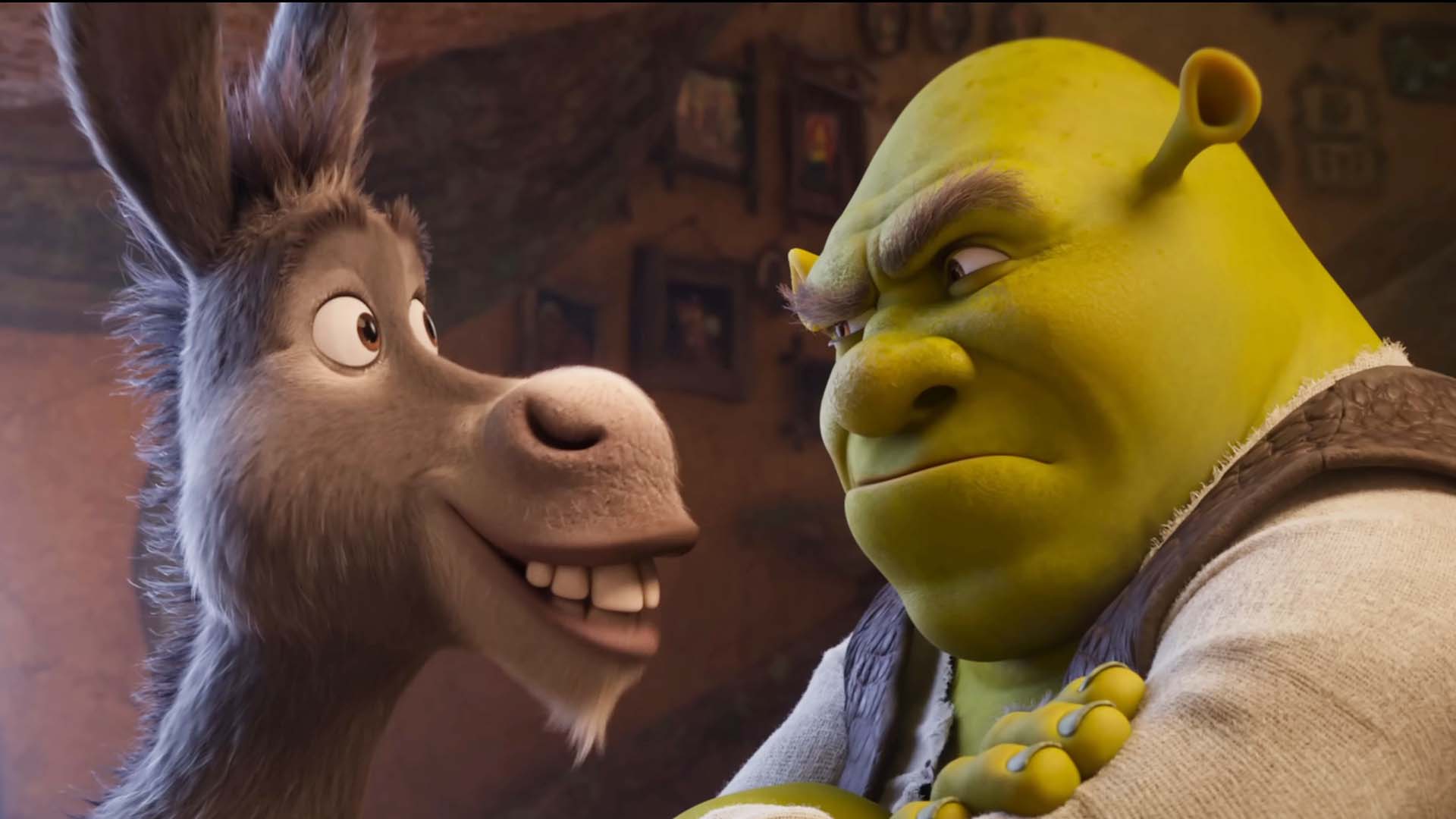
Shrek And Donkey Are So Detailed In The New Trailer And It’s Breaking My Brain
Shrek 5 and the Digital Revolution: How 15+ Years of Tech Changes Everything
The swamp's favorite ogre might be making a grand return, and it's got everyone buzzing. It's been over 15 years since we last saw Shrek, Fiona, Donkey, and Puss in Boots on the big screen, and in the world of animation, that's practically a lifetime. The original Shrek films, especially the first one, were groundbreaking for their time, pushing the boundaries of computer-generated imagery (CGI) and storytelling. But as we anticipate Shrek 5, one thing is crystal clear: technology has changed drastically since then. This isn't just about making things look a little better; it's about a complete transformation of what's possible in animation, and it promises to redefine how we experience Far Far Away.
Think about it. The first Shrek movie came out in 2001, and the last one, Shrek Forever After, was released in 2010. In those years, smartphones were just starting to become common, and high-speed internet wasn't as widespread as it is today. Flash forward to now, the mid-2020s, and we live in a world of hyper-realistic video games, virtual reality, artificial intelligence, and streaming services that deliver stunning visuals directly to our homes. These advancements aren't just for sci-fi movies; they're the new normal for animated films, and Shrek 5 stands to benefit immensely from them.
The Enduring Charm of Shrek: A Legacy Built on Innovation (for its time)
Before we dive into the future, let's appreciate the past. The Shrek series wasn't just a collection of funny fairy tale spoofs; it was a cultural phenomenon. It redefined what an animated movie could be, blending irreverent humor with genuine heart. The first film even won the very first Academy Award for Best Animated Feature in 2002, a testament to its impact.
For its era, the animation in Shrek was revolutionary. DreamWorks Animation pushed the limits, particularly with character models and environmental detail. Shrek's muddy swamp, Fiona's human and ogre forms, and Donkey's expressive face were considered highly detailed and realistic at the time. The film dared to be a bit grittier and less polished than the bright, smooth aesthetic of its competitors, and audiences loved it. It struck a balance between caricature and realism, allowing for both comedic expressions and emotional depth.
However, if you watch the original films today, you'll notice certain limitations. Things like character hair (especially Fiona's and Shrek's less defined bristles), water effects, and the overall lighting might seem a bit dated compared to modern animated blockbusters. This isn't a knock on the originals; it simply highlights how far animation technology has progressed. The tools and techniques available to animators now allow for levels of detail, realism, and immersion that were once unimaginable.
The Great Pause: Over a Decade of Digital Evolution
The 15+ year gap between Shrek Forever After and a potential Shrek 5 is monumental in the fast-paced world of tech. To put it into perspective, in 2010:
- The iPhone 4 was just released, pioneering the Retina display.
- Netflix was primarily a DVD-by-mail service, with streaming just starting to gain traction.
- 4K TVs were niche, expensive items, not standard in homes.
- Virtual reality was largely confined to labs and sci-fi concepts.
- Cloud computing was in its infancy for most businesses.
- Most animation studios relied on huge render farms that took days or weeks to process complex scenes.
Today, the landscape is entirely different. We have access to incredible computing power, sophisticated software, and innovative techniques that have transformed every stage of the animation pipeline, from initial concept to final render. This technological leap provides an unprecedented opportunity for Shrek 5 to not just entertain, but to astonish.
A Deep Dive into Modern Animation Technology: What Shrek 5 Can Leverage
The advancements in animation technology are multifaceted, impacting everything from character appearance to environmental realism and overall production efficiency. Here's a closer look at key areas:
1. Unprecedented Rendering Power and Realism
Rendering is the process of generating an image from a 2D or 3D model. Back in Shrek's day, rendering was computationally intensive and often resulted in images that, while good, lacked the subtle nuances of real life. Today:
- Ray Tracing and Path Tracing: These advanced rendering techniques simulate the way light behaves in the real world, bouncing off surfaces, creating soft shadows, and reflecting realistically. This means that light in Shrek 5 can look incredibly natural, whether it's sunlight filtering through the dense swamp trees, the glow of magical spells, or the reflections on a knight's armor. The depth and realism this adds are profound. You can learn more about this revolutionary tech in this article on ray tracing.
- Global Illumination: This refers to how light bounces indirectly within a scene, illuminating objects that aren't directly hit by a light source. Modern global illumination techniques can create rich, volumetric lighting effects, making interiors feel more lived-in and outdoor scenes more vibrant and atmospheric. Imagine the cozy warmth of Shrek's cottage or the mysterious depths of a dragon's lair brought to life with truly believable lighting.
2. Hyper-Detailed Character Models and Textures
The characters themselves will likely see the biggest upgrade:
- Advanced Hair and Fur Simulation: Shrek's bristly skin, Donkey's short fur, and Fiona's flowing red hair were impressive in their time, but they were limited by the computing power available. Modern animation can simulate millions of individual strands of hair, each reacting realistically to movement, wind, and light. Think of the intricate fur details on Puss in Boots, or the way Fiona's hair might realistically move during a battle. Films like Disney's Tangled or Pixar's Brave have showcased this beautifully, and Shrek 5 could take it even further.
- Realistic Skin Shading: Modern skin shaders can accurately mimic subsurface scattering, the phenomenon where light penetrates the skin surface, bounces around, and then exits. This makes skin look softer, more organic, and less like plastic. Shrek's green skin could gain incredible depth, showing subtle translucency and variations that make him feel truly tangible.
- Intricate Clothing and Fabric Simulation: The cloth physics in modern animation are incredibly advanced, allowing clothes to wrinkle, fold, and drape naturally. Princess Fiona's gowns, Shrek's tunic, and Donkey's saddle could all exhibit realistic weight and movement, adding another layer of visual fidelity.
- Higher Polygon Counts and Displacement Mapping: Character models can now have significantly more polygons, allowing for finer details without resorting to tricks. Displacement mapping can add actual geometric detail (like wrinkles, pores, or rough skin textures) to surfaces, making characters look incredibly tactile and detailed, even up close.
3. Immersive Environments and Dynamic Effects
Beyond characters, the world of Far Far Away and Shrek's swamp can become breathtaking:
- Volumetric Effects: Fog, smoke, clouds, and magical particles can now be rendered as true volumes, meaning light interacts with them realistically. Imagine dense, atmospheric fog in the swamp, or swirling magical effects that feel truly three-dimensional.
- Advanced Fluid Simulations: Water, mud, and other liquids can be simulated with incredible realism, showing complex splashes, ripples, and currents. Shrek's mud baths could be more delightfully gooey than ever before, and any scenes involving water could be stunningly believable.
- Lush and Dynamic Foliage: Forests can be filled with millions of individual leaves, each responding to wind and light. The swamp could be teeming with dynamically moving reeds, moss, and other plant life, creating a truly living environment.
- Destruction Physics: If there's any action or destruction, modern physics engines can simulate it with startling realism, from crumbling castles to exploding magical potions.
4. Revolutionizing Facial Animation and Performance Capture
Emotional depth is key to Shrek's appeal, and modern tech enhances this:
- Micro-Expressions: Animators can now capture and reproduce the most subtle facial muscle movements, allowing for a broader range of nuanced emotions. This means Shrek, Fiona, and especially Donkey can convey feelings with even greater realism and impact, enhancing comedic timing and dramatic moments.
- Performance Capture (Mocap): While not new, motion capture and performance capture technologies have become far more sophisticated and accessible. This allows voice actors to not just provide their voices, but also their physical performances, which can then be directly translated onto the animated characters. This ensures that the characters' movements and expressions are perfectly synchronized with the actors' delivery, bringing an unparalleled level of authenticity. Read more about its evolution in the history of motion capture.
5. Powerful Software and Real-Time Engines
The tools animators use have transformed:
- Advanced 3D Software Suites: Programs like Autodesk Maya, ZBrush, and Houdini have evolved dramatically, offering more powerful modeling, sculpting, rigging, and animation tools.
- Game Engines in Film Production: Perhaps one of the biggest shifts is the increasing use of real-time game engines like Unreal Engine and Unity. These engines allow animators to see their scenes rendered in high quality almost instantly, rather than waiting hours or days. This speeds up iteration, allows for more experimentation, and can significantly reduce production time and costs. DreamWorks Animation itself has been investing heavily in these technologies, which could mean a more agile and visually stunning production for Shrek 5.
- AI and Machine Learning: While still an emerging field, AI is starting to assist in various animation tasks, from automating repetitive movements to generating realistic textures and even helping with character rigging. This could streamline workflows and free up animators to focus on creative storytelling rather than technical minutiae.
Imagining Shrek 5: A Visual Feast
So, what does all this mean for the actual experience of watching Shrek 5? Imagine this:
- Shrek's Swamp: No longer just a backdrop, but a living, breathing ecosystem. Sunlight dappling through a canopy of individually rendered leaves, mist rising realistically from the water, and the mud looking so genuinely squishy you can almost feel it. Critters in the background could exhibit more complex behaviors, adding to the immersion.
- Character Close-ups: Shrek's rough skin pores, the subtle texture of Donkey's snout, the intricate weave of Puss in Boots' hat, and the fine strands of Fiona's hair, each rendered with breathtaking clarity. Emotional scenes could gain incredible power as every nuance of a character's expression is perfectly visible.
- Far Far Away: The kingdom could be grander and more detailed than ever. Imagine the reflective surfaces of its ornate buildings, the intricate patterns on its stained-glass windows, and the sheer scale of its bustling marketplaces, all brought to life with dynamic lighting and environmental effects.
- Action Sequences: Any fight scenes or chases could be more fluid, dynamic, and visually impactful. Smoke, fire, water, and debris would interact with characters and environments in a way that feels utterly natural and exciting.
- Magic: If magic returns, its visual representation could be truly spectacular, with ethereal glows, complex particle effects, and light interacting realistically with its surroundings, making spells feel more potent and awe-inspiring.
The goal wouldn't be to turn Shrek into a hyper-realistic drama, but to enhance the existing charm and humor with an unparalleled level of visual fidelity. The distinctive art style of Shrek could be maintained, but with a massive upgrade in detail, texture, and lighting that makes the world feel more tangible and alive than ever before.
Beyond the Pixels: Production and Storytelling Enhancements
The technological revolution isn't just about how the final movie looks; it also changes how movies are made and distributed.
- Virtual Production: Inspired by live-action productions like The Mandalorian, animation studios are increasingly using virtual production techniques. This means filmmakers can block out scenes, move virtual cameras, and make creative decisions in a real-time 3D environment, long before traditional animation begins. This streamlines the creative process, reduces costly re-dos, and allows directors to experiment more freely.
- Faster Iteration: With real-time rendering and more efficient workflows, animators can iterate on scenes much faster. This means more time for creative polish and refining performances, leading to a higher quality final product.
- Distributed Workflows: Cloud computing and advanced collaboration tools mean that animators and artists can work seamlessly from different locations around the globe. This opens up talent pools and potentially accelerates production schedules.
- Distribution and Accessibility: While theatrical releases remain important, the dominance of streaming services like Peacock (home to DreamWorks content), Netflix, and Disney+ means that Shrek 5 could reach a massive global audience almost instantly upon its release. This also influences how movies are marketed and consumed, with social media and digital platforms playing a huge role.
- Interactive Experiences: The advancements in graphics and real-time engines also pave the way for interactive tie-ins. Imagine a Shrek 5 video game that looks almost as good as the movie, or virtual reality experiences that allow fans to explore Far Far Away.
The Challenge of Evolution: Staying True to the Ogre's Heart
With all these incredible technological capabilities, there's also a challenge: balancing the new with the familiar. A Shrek 5 needs to look modern and stunning, but it also needs to feel like Shrek. Audiences expect the irreverent humor, the memorable characters, and the unique visual style that defined the original films. Here are some considerations:
- Avoiding the "Uncanny Valley": While realism is achievable, animation often thrives on caricature and stylized representation. The filmmakers must ensure that Shrek and his friends don't become so realistic that they lose their charm or fall into the "uncanny valley," where characters look almost human but just enough off to be unsettling.
- Maintaining the Distinctive Art Style: The original Shrek had a distinct aesthetic – a blend of storybook charm and slightly gritty realism. Shrek 5 needs to embrace the new technology while still honoring and evolving that core style, rather than completely abandoning it for generic photorealism.
- Story First: Ultimately, technology serves the story. The stunning visuals should enhance the narrative, the character development, and the humor, not overshadow them. A beautiful film with a weak story will always fall flat. The return of the original voice cast (Mike Myers, Eddie Murphy, Cameron Diaz) suggests a strong commitment to retaining the beloved character personalities.
- Audience Expectations: A new generation of viewers, raised on highly polished films from Pixar, Disney, and Sony, will have high expectations for visual quality. At the same time, long-time fans will want a movie that feels like a natural continuation, not a complete reboot.
The key will be for DreamWorks Animation to leverage the technology to refine and enhance the world of Shrek, making it richer and more detailed, without losing the heart, humor, and quirky aesthetic that made the franchise so beloved in the first place.
What This Means for DreamWorks and the Future of Animation
A successful, technologically advanced Shrek 5 wouldn't just be a win for the franchise; it would be a statement for DreamWorks Animation. In an increasingly competitive landscape, with studios like Pixar, Sony Pictures Animation (known for their innovative work on Spider-Verse), and even newcomers constantly pushing boundaries, DreamWorks needs to continue innovating.
This film could showcase the studio's mastery of modern animation techniques, demonstrating their ability to blend cutting-edge visuals with compelling storytelling. It could set a new benchmark for how legacy animated franchises are revived and adapted for contemporary audiences, proving that beloved characters can evolve visually while retaining their core identity.
Furthermore, the success of Shrek 5, fueled by technological advancements, could inspire further innovation across the animation industry, encouraging studios to explore new artistic styles and technical possibilities, ultimately benefiting animation fans worldwide.
Get Ready for a Technologically Advanced Shrek!
The return of Shrek after more than 15 years is exciting for many reasons, but the technological leap since his last outing is undoubtedly one of the most compelling. What was once considered top-tier animation now serves as a foundation for techniques that can bring unprecedented detail, realism, and immersion to Far Far Away. From the individual strands of Donkey's fur to the dynamic lighting of Shrek's swamp, every frame of Shrek 5 has the potential to be a visual marvel.
This isn't just about making a pretty picture; it's about making the world and its characters feel more alive, more expressive, and more engaging than ever before. It's about taking a beloved classic and giving it a modern sheen that respects its legacy while pushing the boundaries of what animated films can achieve. As we eagerly await the ogre's return, one thing is clear: Shrek 5 isn't just another sequel; it's a testament to how far technology has come, and a glimpse into the future of animation itself. Get ready to be amazed!
from Kotaku
-via DynaSage
