
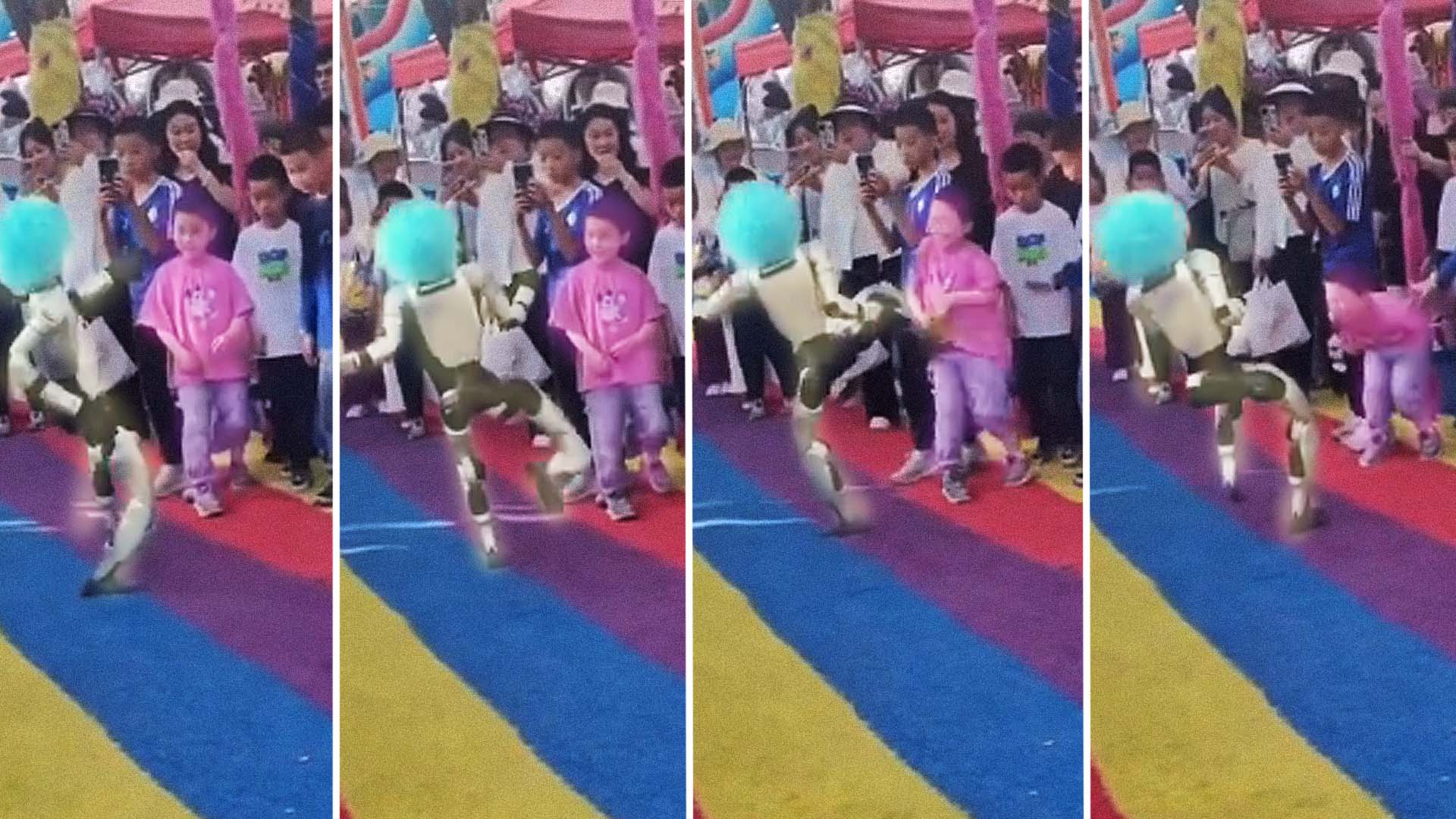
Robot Kicks Small Child In Stomach During Event
The Viral Robot Kick: Unpacking the Hype, Fear, and Future of Humanoid AI
A short video recently sent shockwaves across the internet, featuring a humanoid robot delivering a roundhouse kick to a child in China. This startling clip quickly went viral, igniting widespread debate, amusement, and considerable apprehension about the rapid advancements in robotics and artificial intelligence. While the full context of the incident often gets lost in the sensationalism of online sharing, the video serves as a powerful reminder of the complex relationship between humans and the machines we create, particularly as robots become more physically capable and integrated into our daily lives.
The immediate reaction to such a video is often a mix of fascination and fear. On one hand, it highlights the impressive agility and precision that modern robotics has achieved, showcasing movements that were once confined to science fiction. On the other hand, it triggers primal anxieties about machine control, safety, and the potential for unintended harm. This single viral moment has thrown a spotlight on critical discussions that are already ongoing among scientists, ethicists, policymakers, and the public: How do we ensure these powerful machines are safe? Who is responsible when things go wrong? And what does the future hold for human-robot interaction?
The Incident That Sparked a Thousand Conversations
The video itself, though brief, is undeniably impactful. It shows a humanoid robot, designed to mimic human form and movement, executing a swift, powerful kick. The target, a child, appears to be caught off guard, leading to immediate concern for their well-being. While details surrounding the event remain somewhat ambiguous – Was it an accident during a demonstration? A playful interaction gone awry? A controlled test? – its visual impact is undeniable. The scene, regardless of its true intent, resonates with deep-seated cultural narratives about robots, from helpful companions to menacing adversaries.
Such incidents, rare as they may be, inevitably lead to intense scrutiny. Was the robot faulty? Was its programming incomplete or misinterpreted a command? Or was it simply a highly unfortunate interaction that could have been prevented with better safety protocols or supervision? These questions are not just rhetorical; they are fundamental to how we design, deploy, and trust robotic systems moving forward. The incident underscores the urgent need for clarity and transparency from developers and operators, especially when sophisticated technology interacts with vulnerable populations like children.
Understanding Humanoid Robots: More Than Just Metal and Wires
To truly understand the implications of the viral video, it's important to grasp what humanoid robots are and what they are designed to do. Unlike industrial robots, which are typically stationary and perform repetitive tasks in controlled environments, humanoid robots are built to operate in human-centric spaces. They possess limbs, torsos, and sometimes even heads, allowing them to navigate and manipulate objects in ways similar to humans. This design makes them highly adaptable for a range of applications, from assistance in homes and hospitals to exploration in dangerous environments and even entertainment.
The technology behind these robots is incredibly advanced, integrating complex mechanics, sophisticated sensors, and cutting-edge artificial intelligence. They use advanced algorithms to perceive their surroundings, plan movements, and interact with the physical world. Developers like Boston Dynamics (though not explicitly mentioned in the original context, they are a prominent example of advanced humanoid robotics) have showcased robots that can walk, run, jump, and even perform complex parkour maneuvers. This level of physical capability, while impressive, inherently raises questions about control and potential force, especially when these machines are intended to coexist with humans.
The goal of many humanoid robot projects is to create machines that can assist humans in various capacities, easing burdens and enhancing capabilities. Imagine robots that can care for the elderly, assist in complex surgeries, perform search and rescue operations, or even teach children in engaging ways. The potential benefits are immense. However, with great power comes great responsibility, and the viral video serves as a stark reminder that the development of such powerful machines must always prioritize safety and ethical considerations.
The Crucial Role of Safety Protocols in Robotics
Safety is paramount in any field involving advanced machinery, but it takes on a particularly critical dimension when dealing with autonomous or semi-autonomous robots designed to operate alongside humans. The viral video highlights the absolute necessity of robust safety protocols, not just in the design phase but throughout the entire lifecycle of a robot, from manufacturing to deployment and operation. These protocols encompass a multitude of layers, all aimed at preventing harm.
Designing for Safety
From the ground up, humanoid robots must be designed with safety in mind. This includes using materials that minimize injury in case of impact, incorporating soft exteriors where appropriate, and ensuring that joints and moving parts are guarded or designed to reduce pinch points. Crucially, robots need to have multiple fail-safes and emergency stop mechanisms that are easily accessible to human operators. These mechanisms should be independent of the robot's primary control system, ensuring that even if the main system malfunctions, the robot can still be brought to a safe halt.
Advanced Sensing and Perception
Modern robots rely heavily on an array of sensors – cameras, lidar, ultrasonic sensors, force sensors – to perceive their environment and the presence of humans. These systems must be highly accurate and capable of real-time processing to detect obstacles, predict human movement, and avoid collisions. The ability to distinguish between a static object and a moving child, and to react appropriately and instantaneously, is a monumental engineering challenge that is continuously being refined. The incident in the video suggests that perhaps the perception system either failed, misinterpreted the situation, or its predictive capabilities were insufficient for the dynamic interaction.
Rigorous Testing and Certification
Before any robot is deployed, especially in public or sensitive environments, it must undergo extensive and rigorous testing. This involves subjecting the robot to various scenarios, including unexpected interactions and simulated malfunctions, to identify and rectify potential safety hazards. Independent certification bodies play a vital role in validating that robots meet stringent safety standards. The process is similar to how new cars or medical devices are approved, ensuring a baseline level of safety before they reach the general public. For cutting-edge technology, these standards are constantly evolving, requiring continuous research and updates from global robotics organizations.
Operator Training and Supervision
Even with the most advanced safety features, human oversight remains critical. Operators of humanoid robots must be thoroughly trained in their operation, safety features, and emergency procedures. They need to understand the robot's limitations and know when to intervene. In environments where robots interact with the public, especially children, constant supervision and clear boundaries are indispensable. The viral video serves as a potent reminder that even a brief lapse in supervision or an underestimation of a robot's capabilities can lead to unforeseen and potentially harmful outcomes.
Ethical Dilemmas and Accountability: Who Is Responsible?
Beyond immediate safety, the viral robot kick forces us to confront profound ethical questions about accountability. When a robot causes harm, who is ultimately responsible? Is it the manufacturer who designed and built the robot? The programmer who wrote its code? The operator who deployed it? Or even the user who interacted with it? These are not easy questions to answer, and legal frameworks are still catching up with the rapid pace of technological advancement.
In traditional legal terms, liability usually rests with the human agent whose negligence or deliberate action led to harm. However, with increasingly autonomous robots, the chain of responsibility becomes blurred. If a robot makes an "independent" decision that results in injury, how do we assign blame? This situation challenges existing legal precedents and necessitates new policies and regulations specifically tailored for artificial intelligence and robotics.
Ethical discussions also revolve around the very nature of human-robot interaction. What kind of emotional or psychological impact can robots have on humans, especially children, who might not fully grasp the difference between a robot and a living being? Allowing robots to interact physically with children, even playfully, demands an exceptionally high standard of care and predictable behavior. The concept of "informed consent" for robot interaction, particularly for minors, is another area that requires careful consideration. Organizations are working on ethical AI guidelines to address these complex issues.
Addressing the "Robot Uprising" Fear: Fact vs. Fiction
The viral video, for many, tapped into a deep-seated fear rooted in science fiction: the idea of machines turning against their creators. From "The Terminator" to "Skynet," popular culture has long depicted artificial intelligence as a potential threat to humanity. While these dystopian visions are compelling narratives, they often overshadow the real-world intentions and limitations of current robotics.
It's crucial to differentiate between advanced, yet programmed, robots and truly sentient, malevolent AI. Today's robots, even the most sophisticated humanoids, operate within the parameters of their programming. They do not possess consciousness, intentions, or emotions in the human sense. A robot's "malfunction" is typically a programming error, a sensor failure, or a mechanical breakdown, not a conscious decision to inflict harm. The kick in the video, while appearing aggressive, was almost certainly an error in its programming logic or a misinterpretation of its environment, rather than a deliberate act of aggression.
However, the fear is not entirely irrational. As robots become more complex and their decision-making processes more opaque (a concept known as the "black box problem" in AI), understanding why a robot acted in a certain way can become challenging. This lack of transparency, combined with the inherent power of these machines, fuels public anxiety. Therefore, fostering trust requires not only safer robots but also clear communication, explainable AI, and educational initiatives to demystify robotics for the general public.
The Bright Side: Robots as Helpers and Companions
Despite the anxieties that a viral video like this can stir, it's vital not to lose sight of the immense positive potential of humanoid robots. The goal of most robotics research is not to create threats, but to develop tools that enhance human capabilities and quality of life. Humanoid robots are uniquely positioned to offer assistance in ways that other machines cannot, precisely because of their human-like form and ability to navigate our world.
In healthcare, robots could assist nurses, help patients with mobility, or provide companionship. In disaster relief, they can access dangerous areas to search for survivors or deliver aid. In education, interactive humanoid robots could provide engaging learning experiences, particularly for children with special needs. They could even serve as personal assistants in the home, performing chores, managing schedules, and providing security.
The development of safe, ethical, and beneficial humanoid robots requires a balanced perspective. It's about acknowledging the risks and working diligently to mitigate them, while simultaneously embracing the transformative potential these machines hold. The viral video, rather than being a condemnation of robotics, should serve as a catalyst for renewed commitment to responsible innovation.
The Call for Regulation and International Collaboration
The incident also underscores the urgent need for comprehensive regulatory frameworks. While some countries and organizations have begun to develop guidelines for AI and robotics, there is no universally adopted set of standards, especially for humanoid robots interacting with the public. Such regulations should cover:
- **Design and Manufacturing Standards:** Ensuring all robots meet baseline safety and quality requirements.
- **Testing and Certification:** Mandating rigorous testing procedures and independent certification before deployment.
- **Liability and Accountability:** Clearly defining who is responsible in cases of malfunction or harm.
- **Data Privacy and Security:** Addressing concerns about data collection by robots and protecting user privacy.
- **Ethical Guidelines:** Establishing principles for human-robot interaction, particularly concerning vulnerable populations.
- **Public Education:** Promoting understanding of robot capabilities and limitations.
International collaboration is essential for creating consistent and effective regulations. As robots become globally integrated, a patchwork of national laws could hinder innovation or create unsafe loopholes. Global bodies and expert groups must work together to create harmonized standards that protect individuals while fostering responsible technological advancement. This collaborative effort is crucial for guiding the future of human-robot interaction.
Lessons Learned from the Viral Moment
The viral video, despite its unsettling nature, offers several invaluable lessons for the robotics community and society at large:
- **The Power of Perception:** A single video, taken out of context, can drastically shape public opinion about an entire technology. Transparency and proactive communication from developers are vital to counter misinformation and build trust.
- **No Room for Error:** When robots interact with humans, especially children, the tolerance for error is virtually zero. Even minor incidents can have significant consequences for public acceptance and the future of the technology.
- **Ethical Design is Not Optional:** Ethics cannot be an afterthought; they must be woven into every stage of robot development. This includes considering potential psychological impacts, issues of fairness, and ensuring human dignity.
- **Continuous Improvement:** The incident highlights that robotics is an evolving field. There's always room for improvement in sensing, programming, mechanical design, and safety protocols.
- **The Need for Dialogue:** Such events should spark constructive dialogue between experts and the public, bridging the gap between scientific advancement and societal readiness.
Ultimately, this viral moment serves as a powerful case study, urging us to approach the integration of advanced robotics into our lives with caution, foresight, and a profound commitment to human well-being.
Conclusion: Navigating the Future of Human-Robot Coexistence
The video of a humanoid robot roundhouse-kicking a kid, while concerning, is a snapshot of a much larger, ongoing story: the journey of humanity into an age of advanced artificial intelligence and robotics. It's a journey filled with incredible promise, but also significant challenges. The fear and fascination it generated underscore the deep impact these technologies will have on our lives, work, and social structures.
As we continue to push the boundaries of what robots can do, we must ensure that our ethical compass remains firmly pointed towards human safety, dignity, and flourishing. This means not only building smarter and more capable robots but also building smarter, more robust safety systems, clearer legal frameworks, and a more informed public. The future of human-robot coexistence depends not just on technological innovation, but on our collective wisdom to manage its implications responsibly. By learning from incidents like the viral kick, engaging in open dialogue, and prioritizing ethical development, we can ensure that the robots of tomorrow are indeed our helpful companions, not a source of fear or unintended harm.
from Kotaku
-via DynaSage
