
Love And Deepspace Has Brought Out My Inner Video Game Developer
From Press Passes to Polycounts: Navigating the Career Crossroads Between Journalism and 3D Rigging
In an ever-evolving professional landscape, it's not uncommon for individuals to find themselves at a crossroads, pondering significant career shifts. The sentiment, "If journalism doesn't work out for me, there's always 3D rigging," perfectly encapsulates this modern dilemma. It’s a statement that, on the surface, might seem to pit two vastly different fields against each other: the dynamic world of media reporting versus the intricate, technical artistry of digital animation. Yet, beneath this apparent contrast lies a fascinating exploration of creativity, problem-solving, and the pursuit of passion in an increasingly digital age.
This blog post delves into the profound implications of such a career consideration, drawing inspiration from the vivid imagery of a game like "Love and Deepspace" and the intriguing concept of "Lingering Lust" – themes that a journalist might cover, or an animator might bring to life. We will dissect the appeal and challenges of journalism, illuminate the complex and rewarding field of 3D rigging, and ultimately, provide a comprehensive guide for anyone contemplating a similar leap from one creative domain to another. Our goal is to clarify these paths, making the often daunting prospect of a career change seem not just manageable, but exciting.
Understanding the Allure of "Love and Deepspace" and Its Narrative Depths
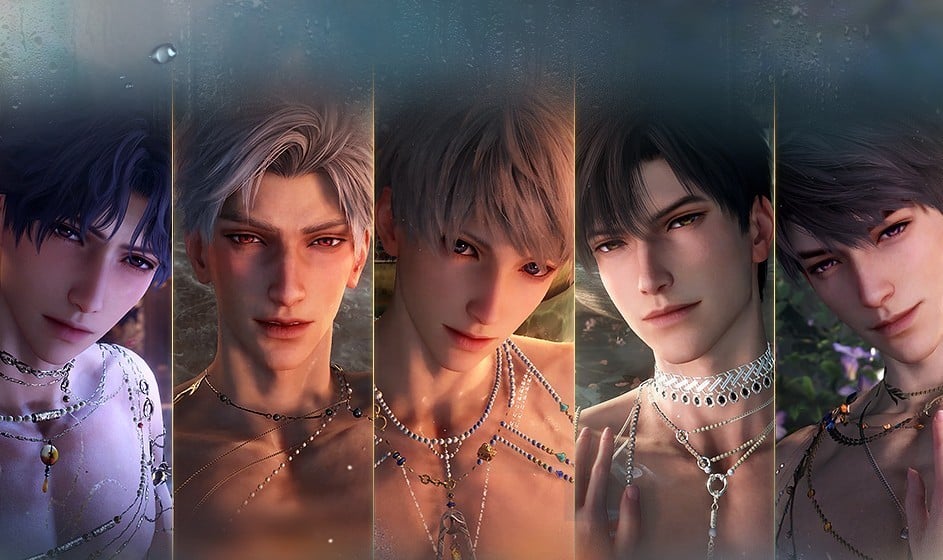
The image that sparked this discussion, titled "Love and Deepspace Lingering Lust," points to a specific genre of interactive storytelling that has captivated millions: otome games. These narrative-driven video games typically target a female audience, offering compelling stories, rich characters, and often, romantic relationships that players can explore. "Love and Deepspace" likely falls into this category, blending elements of romance with a sci-fi or fantasy backdrop, inviting players into a world where deep emotional connections are forged amidst grand adventures.
The Growing Popularity of Otome Games
Otome games have grown exponentially in popularity, particularly in Asian markets, but increasingly globally. They offer a unique blend of visual novel storytelling with interactive choices, allowing players to shape their own romantic journeys. The success of titles like "Mystic Messenger" or "Obey Me!" showcases the demand for engaging narratives that prioritize character development and emotional resonance. A journalist assigned to cover such a phenomenon would delve into its cultural impact, its psychological appeal, and the community it fosters. They might analyze how these games push boundaries in digital romance or explore themes of empowerment and agency within their narratives. For more on the rise of interactive storytelling, check out this article on interactive storytelling trends.
"Lingering Lust": A Glimpse into Deep Thematic Storytelling
The phrase "Lingering Lust" within the context of "Love and Deepspace" is particularly evocative. It suggests a narrative that isn't afraid to explore complex human emotions, desires, and perhaps even the darker, more nuanced aspects of love and attraction. This isn't just about surface-level romance; it implies a story with psychological depth, where characters grapple with their feelings, past traumas, or difficult choices. For a journalist, covering a game with such themes presents an opportunity to discuss mature storytelling in gaming, the representation of relationships, and how these narratives resonate with players on a deeper level. It's a far cry from simply reporting on game mechanics; it's about exploring the human condition through a digital lens. It highlights the kind of thought-provoking content that a journalist might find both challenging and rewarding to dissect.
Understanding the allure of games like "Love and Deepspace" is crucial because it provides a backdrop for the journalist's potential dissatisfaction or desire for a new creative outlet. Perhaps covering such rich, imaginative worlds makes the everyday grind of traditional journalism feel less fulfilling, sparking a longing to contribute to these worlds directly, not just report on them.
The Evolving Landscape of Journalism: Challenges and Rewards
Journalism, at its core, is about storytelling, investigation, and informing the public. It's a field often romanticized but equally plagued by intense pressures and rapid transformations. A career in journalism promises excitement, the chance to witness history, and the power to influence public discourse. However, it also comes with significant hurdles.
The Daily Grind and Ethical Dilemmas
Journalists are on the front lines, constantly chasing deadlines, verifying facts, and crafting narratives that are both accurate and engaging. The work can be demanding, requiring long hours, resilience under pressure, and a thick skin. From local beat reporting to international war correspondence, the range of experiences is vast. Yet, the industry faces immense challenges: declining revenues, the rise of misinformation, and the constant need to adapt to new digital platforms. Ethical dilemmas are a daily occurrence, as reporters navigate the complexities of privacy, public interest, and the potential impact of their words. It's a high-stakes profession where every story matters.
Why Journalists Seek Alternative Paths
Despite the inherent rewards of speaking truth to power, many journalists find themselves questioning their path. Factors contributing to this include:
- Job Security and Compensation: The media industry has seen widespread layoffs and budget cuts, leading to instability and often, lower pay compared to the demanding workload.
- Burnout: The relentless news cycle, emotional toll of reporting on difficult subjects, and constant pressure can lead to severe burnout.
- Loss of Autonomy: In some outlets, journalists may feel their editorial freedom is compromised by commercial interests or political pressures.
- Desire for Direct Creative Expression: While journalism is creative, it's bound by facts and impartiality. Some yearn for a different kind of creative outlet, one that allows for more direct imaginative input, such as crafting worlds and characters from scratch.
- The Digital Shift: While offering new platforms, the digital shift has also introduced challenges like clickbait culture and the need to constantly engage with analytics, which can detract from traditional journalistic values. Learn more about the challenges of modern journalism at this industry analysis site.
It’s plausible that covering a game like "Love and Deepspace," with its intricate narratives and deep character designs, might highlight to a journalist the immense creative freedom available in other digital fields. The act of reporting on someone else's imaginative creation might spark a desire to be the creator themselves.
Venturing into the World of 3D Rigging: A Blend of Art and Engineering
When considering "3D rigging" as an alternative, one steps into a highly specialized, yet incredibly creative, corner of the digital arts industry. 3D rigging is an essential part of the animation and video game development pipeline, bridging the gap between a static 3D model and a fully animatable character or object.
What Exactly is 3D Rigging?
Imagine a puppet. Before it can perform, it needs a skeleton, joints, and controls for the puppeteer to manipulate its movements. In 3D animation, a "rig" serves the same purpose for a digital model. A 3D rigger takes a finished 3D model (like a character from "Love and Deepspace") and builds a digital "skeleton" or "rig" inside it. This involves:
- Bones and Joints: Creating a hierarchical structure of "bones" that mimic a real skeleton, defining how different parts of the model can move and rotate (e.g., a character's arm, leg, finger).
- Skinning/Weighting: Attaching the 3D model's mesh (its "skin") to the underlying skeleton. This process, called "skinning" or "weight painting," determines how the mesh deforms when the bones move. It's crucial for realistic movement; poorly skinned models will look stiff or distorted.
- Controls: Creating intuitive control mechanisms (often called "controllers" or "handles") that animators use to pose and animate the model without directly manipulating the bones. These can be circles, squares, or custom shapes that overlay the model.
- Inverse Kinematics (IK) and Forward Kinematics (FK): Implementing systems that make animation easier. FK works like a real arm (rotate shoulder, then elbow, then wrist). IK works in reverse (move the hand, and the elbow and shoulder automatically adjust). Riggers create both systems and blend them for maximum flexibility.
- Deformers and Special Rigs: Adding advanced features for complex deformations (like muscle systems, soft body dynamics for clothing, or facial rigs for nuanced expressions).
In essence, riggers are the engineers of animation, creating the tools that animators use to bring characters to life. Without a good rig, even the most beautifully sculpted 3D model would remain a lifeless statue. For a visual explanation of 3D rigging, check out this introductory video.
Skills and Tools for Aspiring 3D Riggers
Becoming a proficient 3D rigger requires a unique blend of technical aptitude, artistic understanding, and problem-solving skills. Key skills include:
- Anatomy and Kinesiology: Understanding how real bodies move helps create believable digital movements.
- 3D Software Proficiency: Mastery of industry-standard software like Autodesk Maya, Blender, or 3ds Max is essential. These programs provide the environment for building rigs.
- Scripting/Programming: Many riggers use scripting languages (like Python in Maya or C# in Unity/Unreal) to automate repetitive tasks, create custom tools, and build complex procedural rigs. This is where the engineering aspect truly shines.
- Problem-Solving: Every character and project presents unique rigging challenges. Riggers must be adept at finding creative and efficient solutions.
- Attention to Detail: A small error in a rig can lead to major headaches for animators. Precision is paramount.
- Communication: Riggers work closely with modelers (who create the characters) and animators (who use the rigs), so clear communication is vital to ensure the rig meets everyone's needs.
The tools of the trade are constantly evolving, but a solid foundation in these core skills ensures a rigger remains adaptable and valuable across different studios and projects.
Career Opportunities in Digital Art and Entertainment
The demand for skilled 3D riggers is robust across several lucrative industries:
- Video Games: From realistic characters in AAA titles to stylized figures in indie games, every animatable character needs a rig.
- Film and Television: Animated features, VFX-heavy live-action films, and episodic TV all rely on riggers to bring creatures, characters, and props to life.
- Virtual Reality (VR) and Augmented Reality (AR): As these immersive technologies grow, the need for interactive, animatable 3D content increases.
- Advertising: 3D animated commercials and product visualizations frequently employ rigging techniques.
- Medical Visualization: Explaining complex biological processes often involves animated 3D models.
The field offers diverse opportunities, from working in large studios like Pixar or Naughty Dog to smaller independent teams, or even as a freelance specialist. The global entertainment industry's continuous expansion ensures a steady need for these highly specialized digital craftspeople. You can find out more about the career outlook for 3D artists at this industry resource page.
Comparing the Two Worlds: Journalism vs. 3D Rigging
The decision to pivot from journalism to 3D rigging is not a trivial one. It involves weighing different forms of creativity, job satisfaction, stability, and future prospects. Let's break down the comparison.
Creativity and Expression: Different Outlets
Both journalism and 3D rigging are inherently creative fields, but they manifest creativity in distinct ways:
- Journalism: Creative expression in journalism lies in the art of storytelling, crafting compelling narratives from facts, finding unique angles, and using language to inform and engage. It's about interpreting and presenting reality. The creativity is bound by truth and impartiality, but within those constraints, a skilled journalist can turn a dry report into a captivating exposé.
- 3D Rigging: Creativity in rigging is more akin to engineering art. It's about ingenious problem-solving, designing elegant systems, and understanding the nuances of digital anatomy to enable realistic or stylized movement. While the model itself is created by a modeler, the rigger imbues it with the potential for life. The satisfaction comes from building a perfectly functioning, animator-friendly system that allows for boundless expressive possibilities.
The journalist might find their creativity stifled by external pressures or the limitations of objective reporting, while the rigger might find immense satisfaction in contributing to the foundational mechanics of a digital performance.
Job Stability and Market Demand
The market for both professions has seen fluctuations, but their trajectories differ:
- Journalism: As mentioned, traditional journalism faces significant disruption. While digital journalism and content creation roles are emerging, the core industry is contracting in many areas, leading to increased competition and less stability for some roles. Specialized fields like investigative journalism still hold value, but overall, it's a challenging market.
- 3D Rigging: The digital entertainment industry (games, film, animation, VR/AR) is experiencing consistent growth. As long as there's a demand for animated characters and interactive experiences, there will be a need for skilled riggers. The highly specialized nature of the skill also means that while the pool of artists is large, the pool of *expert* riggers is smaller and highly sought after, often commanding good salaries and offering more stable project-based or permanent employment.
For someone seeking a more specialized and potentially more stable niche within a growing industry, 3D rigging might present a more attractive long-term outlook.
The Personal Fulfillment Factor
Ultimately, a career choice often comes down to personal fulfillment.
- Journalism: Fulfillment can come from exposing injustice, giving a voice to the voiceless, informing the public, and seeing your work have a tangible impact on society. It's a sense of purpose rooted in real-world events and public service.
- 3D Rigging: Fulfillment can stem from contributing to captivating stories and immersive worlds, seeing a character you rigged move beautifully on screen, and the intellectual satisfaction of solving complex technical puzzles. It's a sense of purpose rooted in creation and enabling digital performance.
The person pondering this shift might be searching for a different kind of impact or a different way to engage their problem-solving and creative faculties. Perhaps the thrill of building something from the ground up, rather than just reporting on it, is the underlying motivation.
Making the Leap: Navigating a Career Change
For anyone seriously considering a switch from a field like journalism to a highly technical creative role like 3D rigging, careful planning and dedication are essential. It's not just a change of job; it's often a change of mindset and skill set.
Assessing Your Skills and Passions
The first step is honest self-assessment. What transferable skills do you possess? A journalist, for instance, has excellent research skills, an eye for detail, problem-solving abilities, and often, strong communication. These can be valuable in 3D rigging, especially when troubleshooting complex rigs or collaborating with teams. What truly excites you? Is it the technical challenge, the artistic outcome, or the industry itself? Identifying these core drivers will help affirm the decision. You can take career assessment tests online to help clarify your interests, for example, at this career guidance platform.
Education and Training for a New Path
3D rigging is a specialized skill that typically requires formal training or extensive self-study.
- Formal Education: Many universities and art schools offer degrees in 3D animation, game development, or digital media, often with specialization tracks in rigging. These programs provide structured learning, industry connections, and a strong foundational understanding.
- Online Courses and Workshops: Platforms like Udemy, Coursera, Gnomon Workshop, and CGMA offer specialized courses taught by industry professionals. These can be more flexible and cost-effective, allowing individuals to learn at their own pace.
- Bootcamps and Vocational Programs: Intensive, short-term programs designed to get students job-ready quickly are also an option.
- Self-Taught: With abundant free tutorials on YouTube and forums, it's possible to self-teach, though it requires immense self-discipline and a structured approach.
Starting with a comprehensive course in 3D software fundamentals (like Blender, which is free and powerful) can provide a solid entry point without significant financial commitment.
Building a Portfolio and Networking
Unlike journalism, where clips and bylines are your currency, in 3D rigging, your portfolio is paramount.
- Showcase Your Rigs: Your portfolio should demonstrate your best work, ideally with a variety of character types and complex rigging features (facial rigs, cloth physics, quadruped rigs, etc.). Include breakdown videos showing the rig's functionality and clean wireframes.
- Collaboration: Seek opportunities to collaborate with 3D modelers and animators. This not only provides portfolio pieces but also valuable team experience.
- Personal Projects: Create your own characters or take existing models and rig them. Passion projects often demonstrate initiative and unique skills.
- Networking: Attend industry events, join online communities (like ArtStation, LinkedIn groups for 3D artists), and connect with professionals. Networking can lead to mentorship opportunities, feedback, and job leads. Building a strong online presence is key. Check out these tips for building a strong 3D art portfolio.
The journey from a blank slate to a professional rigger can take time, often a year or two of dedicated learning and practice, but the investment can yield a deeply satisfying and in-demand career.
The Future of Work and Converging Creative Industries
The contemplation of moving from journalism to 3D rigging isn't an isolated incident; it's emblematic of broader trends in the modern workforce. Traditional industries are being disrupted, while digital and creative sectors are booming. The lines between once-disparate fields are blurring, creating new hybrid roles and opportunities.
We are increasingly seeing the convergence of storytelling and technology. Journalists are now expected to be adept at multimedia production, including basic animation or interactive graphics. Conversely, digital artists and developers are increasingly involved in narrative design and world-building, touching upon skills traditionally associated with writers and reporters. The "metaverse" and the proliferation of virtual production techniques further highlight this convergence, where real-time animation and immersive experiences become the new canvases for storytelling.
For professionals like our hypothetical journalist, this landscape offers both challenges and immense potential. The ability to adapt, to continuously learn new skills, and to apply existing strengths to novel problems is more valuable than ever. A background in understanding human stories and conveying information, honed in journalism, could actually be a unique asset in creating believable characters and compelling narratives within interactive digital worlds. It’s about leveraging your unique blend of experiences to carve out a distinct and valuable niche.
Conclusion: Embracing Change and Forging a New Path
The statement "If journalism doesn't work out for me, there's always 3D rigging" is far more than a throwaway line; it's a profound reflection on career satisfaction, the evolving nature of work, and the courage to pursue new creative endeavors. Whether the motivation stems from the captivating narratives of games like "Love and Deepspace" or the demanding realities of the newsroom, the journey from reporting on stories to building the frameworks for new digital worlds is a testament to human adaptability and the enduring quest for fulfillment.
Both journalism and 3D rigging offer unique rewards and challenges. Journalism provides the vital role of informing society and shaping public discourse, while 3D rigging contributes to the magic of digital entertainment and the boundless possibilities of virtual experiences. The choice between them, or any two seemingly disparate careers, ultimately comes down to an individual's core passions, their aptitude for learning, and their vision for their own creative contribution to the world.
Embracing a career change, especially one as significant as this, requires dedication, resilience, and a willingness to step into the unknown. But for those who make the leap, the reward can be a deeply satisfying professional life that aligns more closely with their evolving interests and capabilities. The world of 3D rigging, with its blend of technical prowess and artistic vision, stands ready to welcome those who are prepared to build, innovate, and bring the next generation of digital dreams to life. What truly matters is finding the path where your skills and passions can flourish, allowing you to contribute meaningfully to the ever-expanding tapestry of human expression.
from Kotaku
-via DynaSage
