
It’s Finally Time For Guild Wars 3
Guild Wars Arrives on Console: A New Era for Tyria and Beyond!
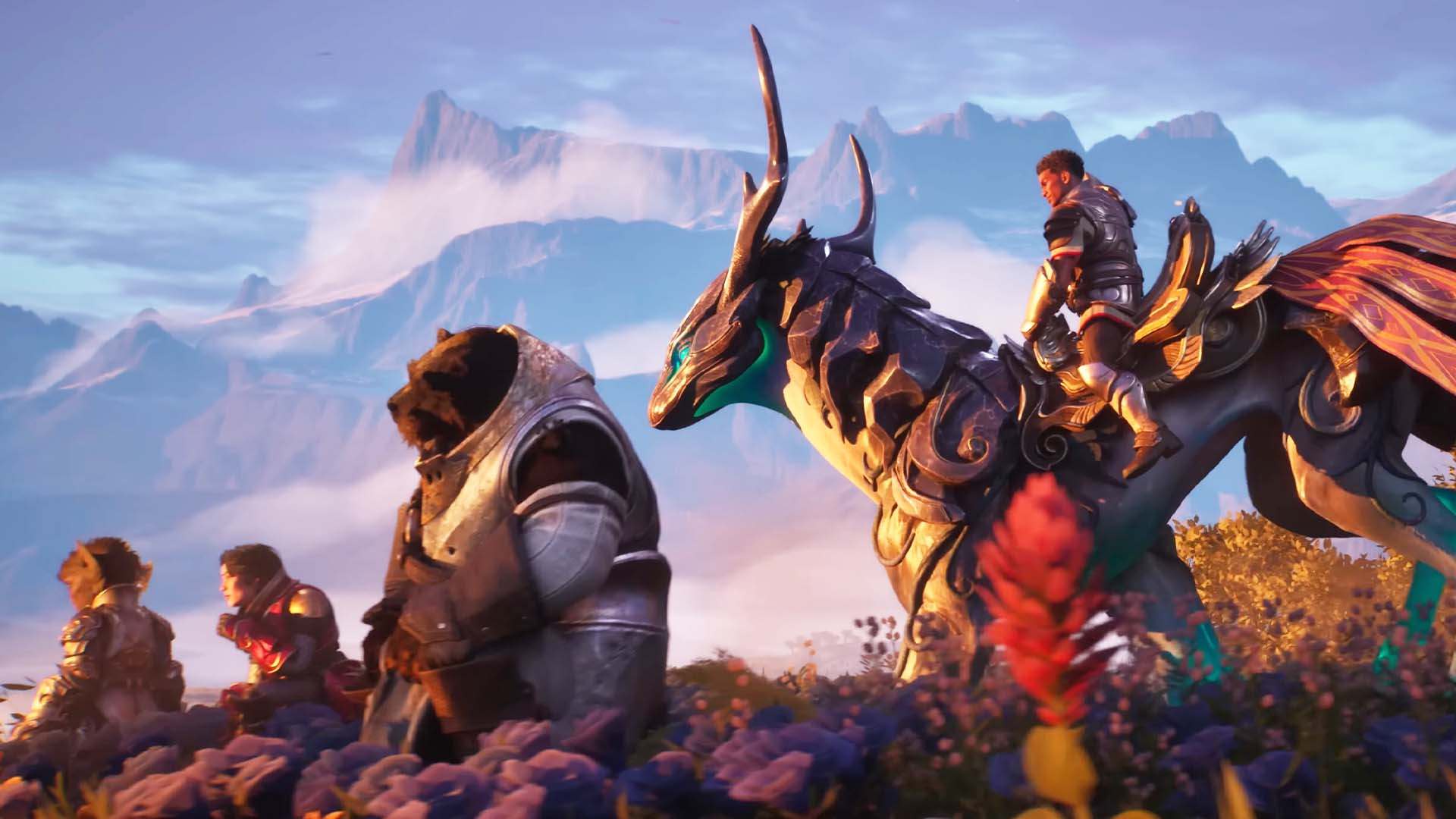
For years, the vast and vibrant world of Tyria, home to the beloved Guild Wars franchise, has been an exclusive playground for PC gamers. Its rich lore, innovative gameplay, and vibrant community have thrived on desktops around the globe. But today, the digital gates are swinging open wider than ever before, inviting an entirely new legion of adventurers: Guild Wars is officially making its debut on console! This isn't just a port; it's a momentous occasion that promises to reshape the landscape of console MMORPGs and introduce millions to one of the genre's most unique and cherished experiences.
The news sends ripples of excitement through both veteran players and newcomers alike. For those who have always heard tales of Guild Wars' legendary status but were tied to their consoles, this is the moment they've been waiting for. For existing fans, it represents a massive expansion of the community, potential cross-play opportunities, and a revitalized future for their favorite game. The journey of Guild Wars onto console platforms is more than just a technical feat; it’s a testament to the enduring appeal of its world and the persistent demand for quality massively multiplayer online role-playing games on home entertainment systems. This expansion is poised to be a game-changer, not just for ArenaNet, but for the entire console gaming ecosystem.
What is Guild Wars? A Legacy of Innovation
To fully appreciate the significance of Guild Wars arriving on console, it's essential to understand its roots and why it stands out in a crowded genre. The original Guild Wars, released in 2005, broke conventions by offering a "corridor" or "instanced" MMORPG experience. Unlike traditional open-world MMOs where players constantly see others, Guild Wars focused on smaller, instanced zones for questing and exploration, bringing players together in bustling hub cities. This design minimized grind, emphasized tactical combat, and allowed for a rich, story-driven progression.
Its most groundbreaking feature was the "no subscription fee" model, a revolutionary concept at the time that challenged the industry standard set by games like World of Warcraft. Players bought the game once and had access to all its content, with expansions purchased separately. This model proved incredibly popular, demonstrating that a successful MMORPG didn't need recurring monthly payments to thrive. Combat was another highlight, featuring a unique dual-profession system and a vast array of skills that encouraged deep build customization and strategic play, often compared to collectible card games in its depth. Players could create incredibly diverse character builds, mixing and matching abilities from two chosen professions to create truly unique combat styles.
The Evolution to Guild Wars 2: A Persistent World
Building on the success of the original, Guild Wars 2 launched in 2012, taking the franchise in a bold new direction. While retaining the no-subscription model and deep build customization, GW2 embraced a more traditional open-world MMORPG design. It introduced a dynamic event system that replaced static quests, encouraging players to naturally participate in world events as they unfolded. This system fostered a sense of community and spontaneous cooperation, as players would frequently band together to tackle emergent challenges, often without needing to be in the same party.
The game's art style is breathtaking, with a vibrant, painterly aesthetic that sets it apart. Its personal story is reactive to player choices, and the endgame offers a diverse mix of activities, from challenging Fractals and Raids to massive World vs. World (WvW) combat and structured Player vs. Player (PvP) arenas. Guild Wars 2 has continuously evolved over the past decade with regular content updates, multiple expansions (Heart of Thorns, Path of Fire, End of Dragons, Secrets of the Obscure), and a consistent commitment to its free-to-play core game model. Its innovative mechanics, stunning world, and commitment to player choice have garnered numerous awards and a dedicated player base, making it a prime candidate to bring its unique flavor to the console market.
Why Now? The Console Transition and Market Readiness
The decision to bring Guild Wars to console isn't a sudden whim; it's likely the result of careful consideration of market trends, technological advancements, and the maturing console MMORPG landscape. For years, MMORPGs struggled on consoles due to control scheme limitations, the perceived need for a keyboard and mouse, and the challenges of patching and maintaining a live service game on closed platforms. However, the times have changed dramatically.
Modern consoles boast powerful hardware capable of rendering vast open worlds and supporting complex online interactions. Developers have also become much more adept at designing intuitive controller interfaces for complex games, evidenced by the success of titles like Final Fantasy XIV, Elder Scrolls Online, and even Diablo 4. Furthermore, the console market is hungry for persistent online worlds that offer deep progression and social interaction beyond traditional multiplayer shooters. There's a clear demand for games that can offer hundreds, if not thousands, of hours of content without demanding constant new game purchases. Guild Wars 2, with its rich history, established content, and successful free-to-play model, is perfectly positioned to capitalize on this growing console appetite. The technological hurdles are largely overcome, and the market is more receptive than ever.
Overcoming the Console Challenge: UI, Controls, and Performance
Bringing a deep PC MMORPG to console is no small feat. It requires significant development work to adapt the game's core systems to a new input method and hardware environment. ArenaNet will undoubtedly have invested heavily in optimizing three key areas: user interface (UI), control schemes, and performance.
The original Guild Wars and Guild Wars 2 UIs are designed for keyboards, mice, and large monitors, featuring numerous skill bars, chat windows, and inventory management screens. Adapting this to a controller and a TV screen requires a complete overhaul. Expect a streamlined, context-sensitive UI that prioritizes essential information and allows for quick navigation using controller inputs. Radial menus, smart cursor systems, and simplified inventory management are likely to be implemented, ensuring that players can efficiently interact with the game world without feeling overwhelmed or hampered by a clunky interface. The goal will be to make the game feel native to a controller, not merely a compromise.
The control scheme is perhaps the biggest hurdle. Guild Wars 2's action-oriented combat, with its numerous skills, dodging, and targeting, demands precision. Developers will need to craft an intuitive controller layout that maps skills, movement, and camera control effectively. This might involve modifier buttons for additional skill bars, advanced targeting assistance (like soft-locks or improved tab-targeting), and perhaps even some degree of auto-aim for non-player characters to reduce frustration. Success here will largely determine the game's appeal and accessibility on console. A poorly implemented control scheme can quickly alienate players, whereas a well-crafted one can make the game feel natural and engaging. We might see an evolution of schemes already proven in other successful console MMOs, perhaps with unique Guild Wars twists.
Finally, performance is paramount. Guild Wars 2, especially in large-scale events like World vs. World or busy cities, can be quite demanding on PC hardware. Consoles have fixed specifications, meaning the game needs to be exceptionally well-optimized to run smoothly, maintaining a consistent frame rate, especially during intense combat scenarios with many players and effects. This will involve careful asset optimization, dynamic scaling of visual effects, and potentially even some backend server architecture adjustments to handle the influx of console players. While native 4K resolution and 60 FPS might be aspirational goals, a stable and enjoyable experience across all console platforms will be the priority, ensuring visual fidelity doesn't come at the cost of playability.
What to Expect from Guild Wars on Console
The console version of Guild Wars, likely Guild Wars 2, won't just be a simple port. We can anticipate several adaptations and new features designed to cater to the console audience while retaining the core Guild Wars experience.
A Refined New Player Experience
For many console players, Guild Wars 2 will be their first foray into Tyria. The onboarding process will be critical. Expect a more guided tutorial, perhaps even an interactive prologue specifically designed to introduce controller mechanics and core MMORPG concepts. The early game progression might be tweaked slightly to ensure players don't feel overwhelmed by the sheer amount of content and systems available. ArenaNet has a history of iterating on its new player experience, and this console launch provides a perfect opportunity to refine it further, making it as welcoming as possible to a fresh audience.
Innovative Control Scheme and Interface
As discussed, the control scheme will be a highlight. Expect deeply customizable controller mappings, allowing players to tailor their experience. Perhaps even support for keyboard and mouse on consoles, catering to those who prefer the traditional PC input while still offering a robust controller option. The UI will likely feature radial menus for quick access to skills, inventory, and social features, along with a dynamic HUD that scales and adapts based on the player's current activity, minimizing screen clutter while maximizing crucial information. Voice chat integration, a staple of console multiplayer, will also be seamlessly incorporated, making group content and social interaction more fluid than ever before.
Visual Enhancements and Performance Optimization
While maintaining the game's iconic art style, the console version may boast specific visual enhancements to leverage the power of modern consoles. This could include improved texture filtering, higher resolution assets, better shadow quality, and potentially even ray tracing support on high-end consoles, enhancing the already stunning world of Tyria. Performance optimization will be paramount, ensuring a smooth and consistent frame rate across various scenarios, from solo exploration to large-scale World vs. World battles. This is crucial for maintaining the fast-paced, action-oriented combat that defines Guild Wars 2.
Content Adaptation and Cross-Play Potential
The console launch will likely include the base game and potentially an initial expansion, offering a vast amount of content from day one. Future expansions and updates will undoubtedly launch simultaneously across PC and console, maintaining parity. The big question mark is cross-play. While technically challenging, allowing PC and console players to adventure together would be a monumental step, fostering a truly unified community. Even if full cross-play isn't available at launch, cross-progression (allowing players to use their account on both PC and console) would be a highly desired feature, offering flexibility and convenience. Guild Wars 2's structure, with its instanced content and dynamic events, lends itself well to cross-platform integration, as the core experience doesn't rely on strict server segregation like some other MMOs.
Impact on the Guild Wars Community: A United Tyria?
The console launch has profound implications for the existing Guild Wars community. For long-time players, it signifies a massive influx of new blood, revitalizing the game, populating older zones, and potentially shortening queue times for various activities. New players often bring fresh perspectives, contributing to meta shifts, new build discoveries, and an overall boost in engagement.
The prospect of cross-play is particularly exciting. Imagine PC and console players fighting side-by-side in World vs. World, tackling challenging raids, or simply exploring the world together. This would create a truly unified Tyria, breaking down barriers and fostering a larger, more diverse community. Even without full cross-play, the sheer volume of new players will inject a vibrant energy into the game, extending its lifespan and encouraging ArenaNet to continue its robust development cycle. The console release could be the catalyst for Guild Wars 2 to reach an even wider audience and cement its place as a truly evergreen MMORPG.
Impact on the Console MMORPG Landscape
Guild Wars' arrival on console is also a significant event for the broader console MMORPG genre. With its unique free-to-play model (after the initial purchase for base content, with expansions and gem store items being optional), action combat, and dynamic world, it offers a distinct alternative to existing titles like Final Fantasy XIV and Elder Scrolls Online. It brings a fresh perspective to a market that is increasingly open to deep, long-term gaming experiences.
The success of Guild Wars on console could pave the way for other PC-centric MMORPGs to make the leap, further diversifying the options available to console players. It could raise the bar for UI and control scheme adaptations, pushing other developers to innovate in how they bring complex PC interfaces to gamepads. By demonstrating that a successful free-to-play, non-subscription MMORPG can thrive on consoles, Guild Wars could truly shake up the current pricing and monetization models prevalent in the console space, offering a high-quality experience without the recurring monthly fees that deter many potential players. This move by ArenaNet is a bold statement, potentially setting a new standard for accessibility and value in the console MMORPG market.
Potential Pitfalls and Concerns
While the excitement is palpable, it's also important to acknowledge potential challenges. The monetization model, while successful on PC, might need careful communication on console. While the base game is free to play, the expansions and a gem store for cosmetic items and convenience items are present. Ensuring that console players understand this model and don't feel pressured into purchases will be key. Performance optimization will also be an ongoing battle; new content releases will need to maintain stability across all platforms. Bugs and glitches, unfortunately, are a reality of large game launches, and console players expect a polished experience.
Furthermore, balancing the game for two potentially distinct player bases (PC with mouse/keyboard versus console with controller) could present difficulties, particularly in competitive PvP environments. ArenaNet will need to be vigilant in monitoring player feedback from both camps and swiftly addressing any issues that arise. Communication with the community will be more important than ever to manage expectations and foster a positive experience across all platforms. The integration process of a decade-old game onto new hardware also implies significant technical hurdles, and ensuring a smooth launch free of major server issues or game-breaking bugs will be a top priority for ArenaNet.
The Road Ahead: Speculation and Excitement
The console launch of Guild Wars represents a pivotal moment for the franchise. It's an opportunity to reach a vast, untapped audience and inject new life into an already thriving game. The journey promises to be filled with new adventures, new challenges, and a renewed sense of community. We eagerly await further details on specific features, release dates, and expansion plans for console players. Will we see platform-exclusive cosmetics? Special bundles? The possibilities are as vast as Tyria itself.
As the countdown begins, the anticipation grows. Guild Wars has always been about forging your own path, exploring a rich world, and fighting alongside friends. Now, those experiences are finally expanding to console, inviting a new generation of heroes to answer the call of Tyria. Get ready to embark on an epic journey, because Guild Wars is coming to a console near you, and it’s going to be glorious.
Stay tuned for more updates and prepare to dive into a legendary world like never before. Welcome to Tyria, console adventurers!
from Kotaku
-via DynaSage
