
iOS 27 Revamps App Icons With Sharper Liquid Glass Layers
The Big Picture: Apple's iOS 27 App Icon Overhaul with Sharper Liquid Glass
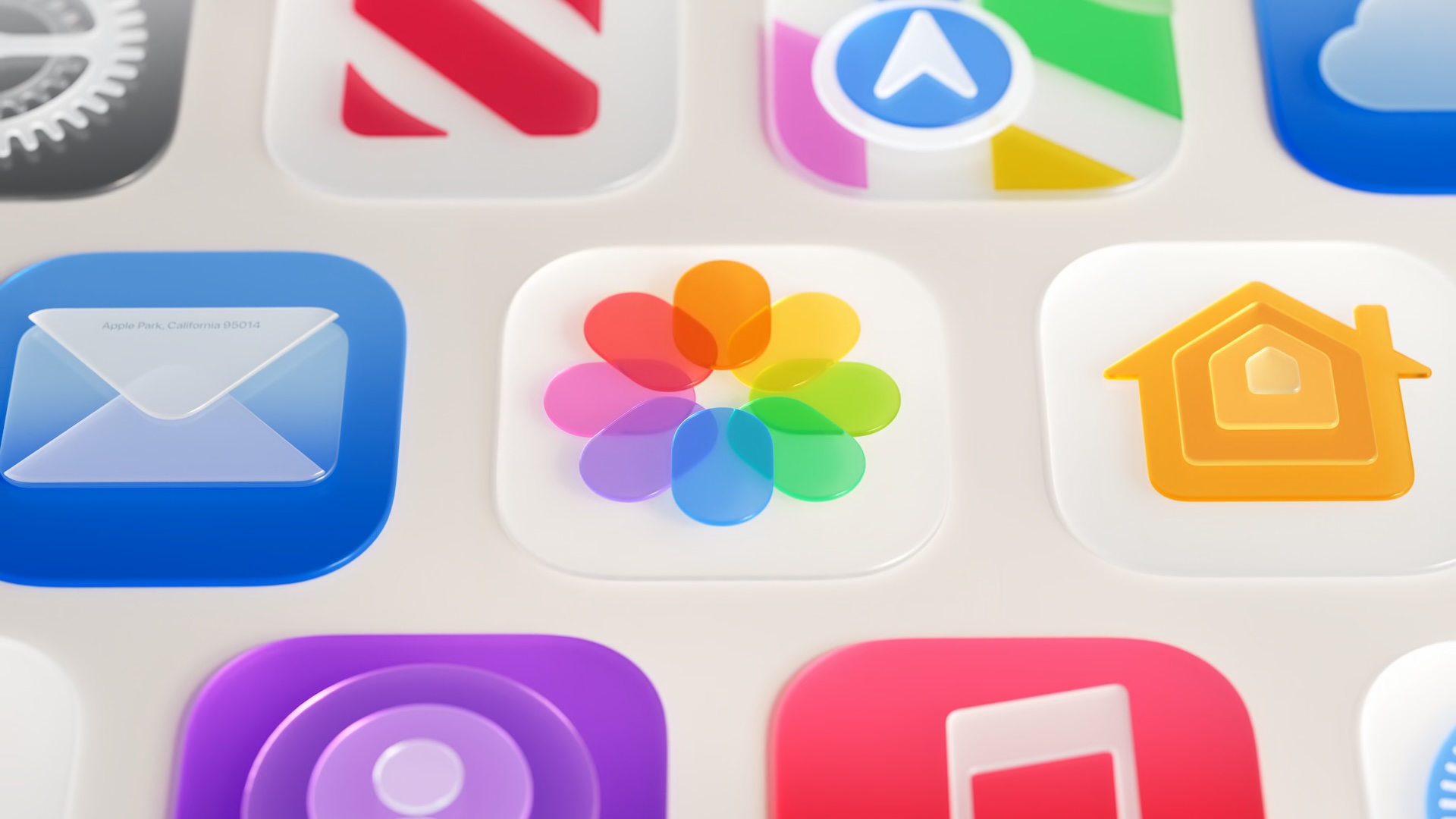
Apple devices are known for their sleek design, intuitive interfaces, and meticulous attention to detail. A crucial part of this experience lies in the app icons that adorn our home screens. These small visual representations are often the first point of interaction with an application, serving as both a functional launch point and a branding statement. For the second consecutive year, Apple has embarked on a significant redesign of its first-party app icons, with iOS 27 specifically addressing and resolving the visual issues that arose from the iOS 26 icon refresh. This latest iteration tackles earlier complaints about blurriness and visual distortion head-on, by ingeniously integrating additional, distinct layers of Apple's innovative Liquid Glass technology directly into the icon artwork itself.
This commitment to continuous refinement underscores Apple's dedication to perfecting the user experience. While the previous year's attempt introduced an exciting new visual language, it inadvertently created some unforeseen challenges. The new approach in iOS 27 isn't about rolling back the innovation; it's about pushing it forward with greater precision and a deeper understanding of how these visual elements impact daily interaction. By embedding Liquid Glass more thoughtfully, Apple aims to deliver icons that are not only visually striking but also functionally superior, ensuring clarity and detail remain paramount.
Revisiting iOS 26 and the Liquid Glass Experiment
The Promise of Depth and Realism
Last year, with the introduction of Liquid Glass alongside iOS 26, Apple ushered in a new era for its app icon design. The core idea was ambitious and exciting: to give the entire lineup of first-party app icons a layered glass look, imbuing them with a subtle yet palpable sense of depth and realism. This wasn't just a cosmetic change; it was a philosophical shift aimed at making the digital interface feel more tangible and interactive. The concept promised icons that would subtly reflect light, seemingly existing within a three-dimensional space on your screen, responding dynamically to your device's orientation.
The vision was clear: to move beyond flat, static imagery towards something more dynamic and engaging. By simulating the properties of glass – its reflections, refractions, and ability to create visual layers – Apple sought to add a new dimension of polish and sophistication to the iOS interface. This design language was intended to enhance the aesthetic appeal, making icons pop with a vibrant, almost tactile quality that distinguished them from previous iterations and from competitors.
The Unintended Consequences: Blurriness and the "Washed-Out" Look
Despite the innovative intent, the initial implementation of Liquid Glass in iOS 26 was met with a mixed reception, and in some cases, outright criticism. Many users, discerning in their aesthetic judgment, quickly pointed out several issues that detracted from the desired effect. A significant complaint revolved around the perceived blurriness of the icons. Rather than adding clarity, the uniform application of a thick glass overlay seemed to soften the intricate details of the underlying artwork, making icons appear less sharp than their predecessors. This visual degradation was particularly noticeable on high-resolution Retina displays, where crispness is expected and any compromise is immediately apparent.
Compounding the blurriness, a heavy specular sheen – an intense, mirror-like highlight – often sat conspicuously over the icon artwork. This reflective layer, while aiming to simulate the glint of real glass, frequently obscured crucial details, making it difficult to discern the fine elements within the icon. For many, this resulted in a "washed-out" appearance, where colors seemed muted and the overall vibrancy of the icon was diminished. The contrast was lowered, and the strong highlights often competed with the core design elements, rather than enhancing them. This unintended consequence not only frustrated users but also undermined the functional aspect of icons: quick and clear recognition.
The Peculiar Tilting Illusion
Perhaps one of the most widely reported and peculiar side effects of the iOS 26 Liquid Glass implementation was the shimmering motion effect. Designed to animate icons dynamically as the device was tilted, this gyroscopic specular highlight effect created an optical illusion that many found disorienting. Asymmetric highlights in the corners of icons, shifting with the slightest movement of the iPhone, tricked the eye into perceiving the icons as subtly slanted or tilted, even when viewed head-on. This wasn't a static defect but a dynamic one, constantly altering the visual perception of the icons based on how the device was held.
This illusion, while perhaps an interesting technical feat, proved to be a practical nuisance for users. It introduced an element of visual instability where clarity and predictability were desired. An interface element that constantly appears to shift or slant, even subtly, can be distracting and undermine the sense of precision that Apple's design language typically embodies. For some, it was merely an aesthetic oddity; for others, it contributed to a general sense of visual discomfort, making the home screen feel less grounded and organized. With iOS 27, Apple is not simply retreating from Liquid Glass but advancing it, learning from these early experiences and addressing them directly.
iOS 27: A Deeper Dive into the New Icon Design Philosophy
Understanding the feedback and the visual challenges posed by iOS 26, Apple has gone back to the drawing board, not to discard Liquid Glass, but to fundamentally reimagine its application. The approach with iOS 27 demonstrates a maturity in design thinking, where initial innovation is followed by thoughtful refinement based on real-world usage. This year's iteration focuses on integration and subtlety, moving away from a blanket application to a more nuanced, layered approach.
Integrating Liquid Glass Layers Directly into Artwork
The most pivotal change in how app icons are constructed for iOS 27 lies in the addition of multiple, distinct Liquid Glass layers built directly into each icon's artwork. This represents a significant departure from the iOS 26 method, where a thick, uniform glass look was often applied over the top of the entire icon as a singular overlay. In contrast, iOS 27 treats Liquid Glass not as an external filter but as an inherent component of the icon's design, woven into its very fabric.
Apple explains that this new rendering pipeline adds far greater visual separation between these integrated layers. Imagine an icon as a miniature diorama, where different elements – a clock face, a gear, a paintbrush – are each rendered on their own transparent pane. When these panes are stacked with Liquid Glass properties applied to their surfaces and edges, the result is a much more sophisticated depth effect. This granular control means that designers can precisely define which parts of the icon exhibit glassy qualities, how light refracts through them, and where reflections appear. The difference is akin to applying a global blur filter versus meticulously sharpening individual elements within an image; the latter offers precision and clarity that the former cannot.
This architectural shift is critical because it allows the glass effect to enhance, rather than obscure, the underlying graphics. Instead of a monolithic glass slab sitting on top, the Liquid Glass elements become intrinsic parts of the icon's composition, contributing to its depth without sacrificing its clarity. This advanced integration is key to achieving the sharper edges and more defined refractions that Apple is touting for iOS 27.
Not totally sold on the dark specular highlights, but overall it's a huge upgrade for Apple's app icons. pic.twitter.com/W5hEkGh6sd
— Andreas Storm (@avstorm) June 10, 2026
The Visual Impact: Sharper, Clearer, More Defined
The practical implications of this redesigned approach are immediately visible and profoundly positive. With Liquid Glass now integrated on a per-layer basis, the artwork within each icon is considerably more visible and detailed. The visual fidelity that was somewhat compromised in iOS 26 is fully restored and, in many cases, enhanced. Users will notice higher contrast, allowing individual elements within an icon to stand out more prominently against their backgrounds and from each other. The greater definition means that intricate textures, subtle gradients, and fine lines are rendered with pristine clarity, free from the blurring effect that plagued the previous iteration.
Crucially, the glass look in iOS 27 now functions as a refined finish rather than a dominant overlay. It adds a premium aesthetic without overshadowing the core design. Think of it less like looking through a thick pane of frosted glass and more like observing a beautifully crafted object through a perfectly polished lens – the glass enhances the object, it doesn't mask it. The subtle refractions and reflections now play a supportive role, contributing to the icon's depth and realism without drawing undue attention to themselves or obscuring the primary visual information.
Furthermore, the refraction effects between layers are now selectively applied. This means that designers have precise control over where and how light bends, creating more intentional and aesthetically pleasing visual effects. An icon for a music app might have a different refraction pattern than an icon for a weather app, allowing each to convey its specific character more effectively through these nuanced visual cues. This level of control ensures that the Liquid Glass effect is always purposeful, serving to elevate the icon's design rather than simply existing as a generic overlay.
Saying Goodbye to the Tilting Shimmer
One of the most welcome changes for many users will be the significant rework of the motion-based shimmer effect. The gyroscopic specular highlight effect, which created the illusion of tilting in iOS 26, appears to have been entirely removed in the first iOS 27 developer beta. This decision directly addresses the widespread feedback regarding the distracting and disorienting nature of the dynamic highlights. Apple has clearly prioritized visual stability and clarity over an effect that, while technically impressive, proved to be an aesthetic hindrance.
However, this doesn't mean icons are completely devoid of highlights. Icons in iOS 27 still feature subtle highlights around their edges, now positioned consistently at the top and bottom. The key difference is that these highlights no longer shift with device movement. They are static, carefully placed elements that contribute to the icon's perceived depth and form without introducing any optical illusions. These new highlights are also much subtler overall, blending more harmoniously with the icon's design rather than competing for attention. The result is a home screen that feels stable, composed, and free from the visual trickery that sometimes made icons feel off-kilter. This change underscores Apple's commitment to a refined, distraction-free user experience.
Why Icon Design Matters: More Than Just Pretty Pictures
In the vast landscape of digital interfaces, app icons play a far more critical role than merely being decorative elements. They are the visual shorthand for entire applications, performing multiple functions simultaneously. Firstly, they act as immediate recognition cues. In a split second, a user scanning their home screen needs to identify the desired app among dozens. A well-designed, distinct icon ensures rapid identification, streamlining the user journey and reducing cognitive load. Imagine trying to find an app if all icons looked similar or were blurry; the frustration would be immense.
Secondly, icons are powerful branding tools. They are often the first visual representation a user encounters for an app, influencing first impressions and conveying the app's purpose, quality, and personality. A high-quality, polished icon suggests a high-quality, polished app. Conversely, a poorly designed or blurry icon can inadvertently communicate sloppiness or a lack of attention to detail, potentially deterring users even before they launch the application.
Thirdly, icons contribute significantly to the overall aesthetic and coherence of an operating system. Apple's meticulously curated design language, from hardware to software, relies on consistency. When first-party app icons lead the way with innovative yet refined design, they set a standard for third-party developers and contribute to a unified, premium user experience. The journey from skeuomorphism to flat design, and now to a nuanced blend of depth and clarity with Liquid Glass, reflects Apple's continuous pursuit of an interface that is both beautiful and functional. Icons are at the forefront of this evolution, serving as tiny canvases that reflect the broader artistic and technical ambitions of the platform.
The Technical Underpinnings: Icon Composer and Developer Enablement
Empowering Developers with Advanced Tools
The success of any new design paradigm within an ecosystem as vast as Apple's relies heavily on the tools provided to developers. Recognizing this, Apple has significantly updated Icon Composer, its dedicated application icon design tool, to fully support the new multi-layered Liquid Glass architecture. This update is crucial for ensuring that third-party apps can seamlessly adopt the new design language and integrate their icons into the iOS 27 aesthetic without compromise.
The updated Icon Composer now allows developers to build icons from multiple layers of Liquid Glass, giving them the same granular control that Apple's internal design teams utilize. This means developers aren't just applying a pre-set filter; they are actively constructing their icons with distinct glass components. New annotation features within the tool let developers precisely define where and how refraction effects should occur. They can fine-tune content effects, specifying which layers interact with light in certain ways, how reflections fall, and the exact interplay between transparency and opacity.
A key enhancement for the developer workflow is the interactive preview function. As developers design and refine their icons, they can see in real-time how the designed icon will render on actual devices. This instant feedback loop is invaluable for iteration, allowing designers to quickly assess the visual impact of their choices – how a particular refraction affects legibility, or whether a specific highlight enhances or detracts from the icon's clarity. This level of technical support ensures that the transition to the new Liquid Glass icons is as smooth as possible for the broader developer community, paving the way for a consistent and visually stunning app experience across the entire iOS ecosystem.
The Broader Context: Liquid Glass Across iOS 27
System-Wide Refinements
The enhancements to app icons in iOS 27 are not isolated changes; they are part of a much broader suite of Liquid Glass refinements that Apple announced at WWDC 2026. This indicates that Liquid Glass is evolving into a foundational element of Apple's overall design language, extending its influence beyond just app icons to various parts of the operating system interface. These system-wide improvements suggest a cohesive vision for how users will interact with and perceive their devices.
Among these broader refinements is the introduction of a new system-wide transparency slider. This feature likely grants users more control over the level of transparency in UI elements, such as widgets, control centers, and notification banners. Greater control over transparency can lead to improved personalization options, allowing users to balance aesthetic preference with readability requirements. For instance, some users might prefer a more opaque interface for better text legibility, while others might appreciate a higher degree of transparency to better integrate UI elements with their wallpaper.
Additionally, Apple has announced improved material diffusion for better readability. Material diffusion refers to how light interacts with the surfaces of UI elements, influencing their perceived texture, depth, and clarity. By refining this aspect, Apple aims to make on-screen text and graphics more legible, especially in varying lighting conditions or against complex backgrounds. This improvement is crucial for accessibility and overall user comfort, reducing eye strain and making information easier to digest at a glance. Together, these system-wide Liquid Glass enhancements, including the sharpened app icons, collectively work towards creating an iOS 27 experience that is more visually harmonious, more intuitive, and ultimately, more enjoyable for every user.
For a full breakdown of all the Liquid Glass changes in iOS 27, readers are encouraged to consult our dedicated article on the subject.
Apple's Design Evolution: From Skeuomorphism to Modern Realism
Apple's approach to interface design has seen several significant shifts over its history, each reflecting the prevailing design philosophies and technological capabilities of its era. Understanding these shifts provides valuable context for the current evolution of Liquid Glass icons in iOS 27.
In its early days, particularly during the initial iPhone era, Apple embraced skeuomorphism. This design trend aimed to make digital interfaces resemble their real-world counterparts. Icons for notes looked like yellow legal pads, contacts had a leather-bound address book appearance, and podcast apps had a reel-to-reel tape recorder motif. The goal was to make new digital interactions immediately understandable by leveraging familiar visual metaphors. While charming and intuitive for early smartphone adopters, skeuomorphism eventually began to feel cluttered and dated as users became more digitally literate and screens became more sophisticated.
The paradigm shifted dramatically with iOS 7, which introduced a radical move towards flat design. This minimalist approach stripped away ornate textures, drop shadows, and simulated depth, favoring clean lines, vibrant colors, and simplified shapes. Icons became two-dimensional, focusing on clarity and functionality. This era championed a streamlined, efficient aesthetic that felt fresh and modern, aligning with a broader industry trend towards minimalism. However, some argued that while flat design was clean, it sometimes lacked the warmth and tactile feel that a touch interface could benefit from.
The current evolution, culminating in the refined Liquid Glass of iOS 27, can be seen as a thoughtful synthesis of these past approaches. It moves beyond pure flatness by reintroducing depth and realism, but does so in a sophisticated, non-skeuomorphic way. It’s not about mimicking real-world objects exactly, but rather about leveraging the properties of light and material (like glass) to create an interface that feels rich, dynamic, and responsive, without sacrificing clarity or modern aesthetics. This is modern realism – leveraging advanced rendering capabilities to create a sense of tangibility and polish that enhances the user experience, rather than distracting from it. The journey of Apple's app icons is a microcosm of this larger design philosophy: constant innovation, learning from past iterations, and relentlessly pursuing an ideal balance of form and function.
Experiencing the Change: What Users Can Expect
For the average iPhone or iPad user, the updated app icons in iOS 27 will bring about a noticeable, yet often subtle, improvement to their daily interaction with their device. The most immediate benefit will be enhanced visual clarity. Icons will appear sharper, with their intricate details more pronounced, making app identification quicker and more effortless. This reduction in blurriness and the removal of the heavy specular sheen mean that the true artistic intent of each icon's design will shine through, unhindered.
Users will also appreciate the sense of stability that comes from the absence of the tilting illusion. No longer will icons appear to subtly shift or lean as the device moves, contributing to a more grounded and predictable home screen experience. The new, static edge highlights add a premium touch without any distracting dynamism. This refinement fosters a greater sense of visual comfort and reduces any potential for disorientation, allowing users to focus on their tasks rather than being drawn into peculiar optical effects.
Overall, the iOS 27 icon redesign will contribute to a more polished and coherent visual environment. The Liquid Glass effect, now integrated with precision, will add a sophisticated layer of depth and realism that feels inherent to the icons, rather than an applied filter. This nuanced approach will make the entire interface feel more refined and responsive, reinforcing the premium feel of Apple's ecosystem. It's an upgrade that enhances both the aesthetic pleasure and the functional efficiency of using an iOS device, proving that even the smallest details, like app icons, play a critical role in the overall user experience.
The Future of Apple's User Interface: A Glimpse Ahead
The advancements in Liquid Glass with iOS 27, particularly the sophisticated layering and refined light interactions in app icons, offer tantalizing hints about the future direction of Apple's user interface design. This isn't just an isolated update; it suggests a broader strategic pivot towards a more dynamic, material-aware interface that bridges the gap between digital and tactile experiences.
We can anticipate seeing the principles of multi-layered Liquid Glass extend beyond app icons to other core UI elements. Imagine control center toggles that exhibit individual depth, notifications that refract light based on their content, or widgets that blend seamlessly into the background while maintaining crisp legibility through intelligent use of transparency and diffusion. This advanced material system could lead to interfaces that are not only visually stunning but also more contextually aware, subtly conveying information through their visual properties.
Furthermore, these refinements in rendering and material science position Apple well for advancements in augmented reality (AR) and virtual reality (VR). As digital objects are increasingly overlaid onto the real world, or as users immerse themselves in virtual environments, the ability to render incredibly realistic, depth-aware, and light-interacting elements will be paramount. Liquid Glass, with its focus on simulated physics and material properties, could become a cornerstone technology for creating truly immersive and believable AR/VR experiences. The precision and control offered by the updated Icon Composer for developers could translate into robust tools for designing spatially aware UI elements in future mixed-reality platforms. Thus, the iOS 27 icon redesign, while seemingly a small detail, is indicative of Apple's long-term vision for creating interfaces that are deeply integrated with the physical world and intuitively responsive to user interaction, pushing the boundaries of what digital experiences can feel like.
Conclusion: A Clearer, More Polished Future
Apple's redesign of its first-party app icons for iOS 27 marks a significant step forward in the evolution of its Liquid Glass design language. Addressing the feedback from iOS 26 head-on, this latest iteration demonstrates a profound commitment to refining the user experience. By integrating multiple, distinct layers of Liquid Glass directly into the icon artwork, Apple has successfully resolved issues of blurriness and visual obscurity, delivering icons that are sharper, more detailed, and boast higher contrast.
The removal of the distracting motion-based shimmer effect, which previously caused icons to appear slanted, further enhances visual stability and clarity, contributing to a more predictable and comfortable home screen environment. These changes, coupled with updates to developer tools like Icon Composer and broader system-wide Liquid Glass refinements, underscore Apple's holistic approach to interface design. The result is an iOS 27 experience where app icons are not just functional elements but exquisite miniature pieces of art, embodying a modern realism that is both visually striking and intuitively clear. This refinement ensures that every tap, every glance, and every interaction with your Apple device feels premium, polished, and perfectly precise, paving the way for a more harmonious and visually rich digital future.
This article, "iOS 27 Revamps App Icons With Sharper Liquid Glass Layers" first appeared on MacRumors.com
Discuss this article in our forums
from MacRumors
-via DynaSage
