
I Hope Kratos Doesn’t Show Up Anymore In God of War Laufey
Begone, Kratos: Charting the Future of God of War Beyond the Ghost of Sparta
For decades, one name has been synonymous with brutal combat, epic storytelling, and mythological grandeur in the gaming world: Kratos, the Ghost of Sparta. From his vengeful rampage across ancient Greece to his more measured, paternal journey through the Norse realms, Kratos has been the unwavering heart of the God of War series. His story is one of raw power, profound loss, and, ultimately, a complex path towards redemption. Yet, as the Norse saga concluded with God of War Ragnarök, a provocative idea has begun to echo among fans and perhaps even developers: "Begone, Kratos."
This phrase isn't a dismissal of Kratos's incredible legacy but rather an acknowledgment of its completeness. After two critically acclaimed entries in the Norse mythology storyline, Kratos's arc as a father seeking to protect his son, Atreus, and break the cycle of violence, feels deeply satisfying. It raises a crucial question for Santa Monica Studio: what comes next for the God of War universe? Can the series thrive, or even be reimagined, with a new protagonist at its helm? This extensive exploration dives deep into the possibilities, from the inevitable rise of Atreus to the intriguing potential of delving into the past with characters like Laufey, and even venturing into entirely new mythological landscapes.
The Unforgettable Legacy of Kratos: A Journey Through Rage and Redemption
Kratos is more than just a video game character; he's an icon. His journey began in the original God of War games as a Spartan warrior consumed by rage and vengeance after being tricked into killing his own family by the Greek God of War, Ares. His path was a bloody testament to pure, unadulterated fury, as he systematically dismantled the entire Greek pantheon, leaving a trail of destruction in his wake. These early games were defined by their intense combat, colossal boss battles, and a narrative driven by Kratos's insatiable desire for retribution.
However, the 2018 soft reboot of God of War redefined Kratos. Moving from Greek mythology to the frosty landscapes of the Norse realms, players were introduced to an older, more subdued Kratos. He was a father, a mentor, and a man trying desperately to escape his past and teach his son, Atreus, to be better than he was. This transformation captivated players, showcasing a depth and vulnerability previously unseen. His struggle to control his inner rage, to connect with his son, and to navigate a world full of new gods and monsters made him one of the most compelling characters in gaming history. The success of this new direction solidified Kratos's place as a legend, proving that even a character known for relentless violence could evolve and resonate on a deeply emotional level. His story in the Norse saga, culminating in Ragnarök, brought a powerful sense of closure to his personal journey, setting the stage for what could be a new era for the franchise.
The Norse Saga's Grand Conclusion: What's Next for the Realms?
The Norse mythology arc, encompassing God of War (2018) and God of War Ragnarök, provided an epic, emotional, and satisfying conclusion to Kratos's time as the central protagonist. Over these two games, we witnessed Kratos grapple with his past, mentor Atreus, and ultimately confront and overcome the prophecies of his death. The narrative themes were rich: fatherhood, destiny, breaking cycles of violence, and finding peace. Kratos’s character development reached its peak as he learned to trust, to love openly, and to truly embrace his role as a protector and guide, rather than solely a destroyer.
Ragnarök, in particular, provided a fitting send-off. The final battles were monumental, the emotional stakes were incredibly high, and the resolutions for key characters felt earned. Atreus came into his own, accepting his destiny as Loki and embarking on his own quest to find the Giants. Kratos, surprisingly, found a new purpose: not just to protect, but to inspire hope. The narrative threads for both characters were thoughtfully concluded, leaving players with a sense of completion for Kratos's personal journey while simultaneously opening a vast new chapter for Atreus. This sense of a definitive ending for Kratos’s story within this particular context is precisely what fuels the "Begone, Kratos" sentiment – not out of disrespect, but out of a desire for the franchise to continue evolving rather than retreading familiar ground.
"Begone, Kratos": A Bold Vision for a New Era
The phrase "Begone, Kratos" is more than just a playful suggestion; it's a profound statement about the future direction of one of gaming's most celebrated franchises. It signifies a potential handing of the torch, a necessary evolution to keep the series fresh and relevant. After more than two decades, Kratos has achieved everything imaginable within his narrative arcs. His story of vengeance, atonement, and finally, peace, has been told with remarkable depth and consistency. To continue forcing him into new conflicts might risk diluting the powerful conclusion of the Norse sagas and making his journey feel less impactful.
This isn't an uncommon phenomenon in long-running series. Iconic characters often reach a point where their stories are complete, and the best way forward is to allow new heroes to emerge. It opens up creative avenues that would otherwise be impossible. A world without Kratos at its absolute center allows for different tones, different gameplay styles, and the exploration of new perspectives. It provides an opportunity to challenge the very definition of what a "God of War" game can be. Will the next protagonist share Kratos's strength but temper it with different virtues? Will they face new kinds of threats that require more than just brute force? Embracing the idea of Kratos stepping aside is not just about moving on from a character, but about embracing the immense storytelling potential that lies within the rich universe Santa Monica Studio has meticulously crafted.
The Rise of Atreus: The Natural Successor
If Kratos is to step aside, the most logical and anticipated successor is undoubtedly his son, Atreus. Throughout the Norse saga, we witnessed Atreus transform from a naive boy into a capable warrior and a burgeoning God with immense power and a destiny tied to Loki. His journey in God of War (2018) and Ragnarök served as a comprehensive training arc, preparing him for the monumental task of carrying the franchise forward.
Atreus offers a distinctly different play experience compared to Kratos. His combat style is more agile, relying on bow and arrow, magical abilities, and quick, decisive movements rather than Kratos's raw, heavy-hitting power. This opens up possibilities for new gameplay mechanics, focusing on ranged combat, strategic elemental attacks, and perhaps even stealth or puzzle-solving elements. Narratively, Atreus is driven by curiosity, compassion, and a desire to understand his place in the world, particularly his identity as Loki and his connection to the Giants. His story would be one of discovery, diplomacy, and potentially uniting disparate factions, offering a stark contrast to Kratos's destructive path. The challenges for Atreus would be immense: living up to his father's legacy while forging his own, navigating complex mythological politics, and perhaps even exploring his powers of shapeshifting and illusion in innovative ways. His unique perspective could introduce a fresh narrative voice to the series, exploring themes of identity, diplomacy, and the burden of a multifaceted heritage.
Exploring Other Paths: The Mystery of Laufey (Faye)
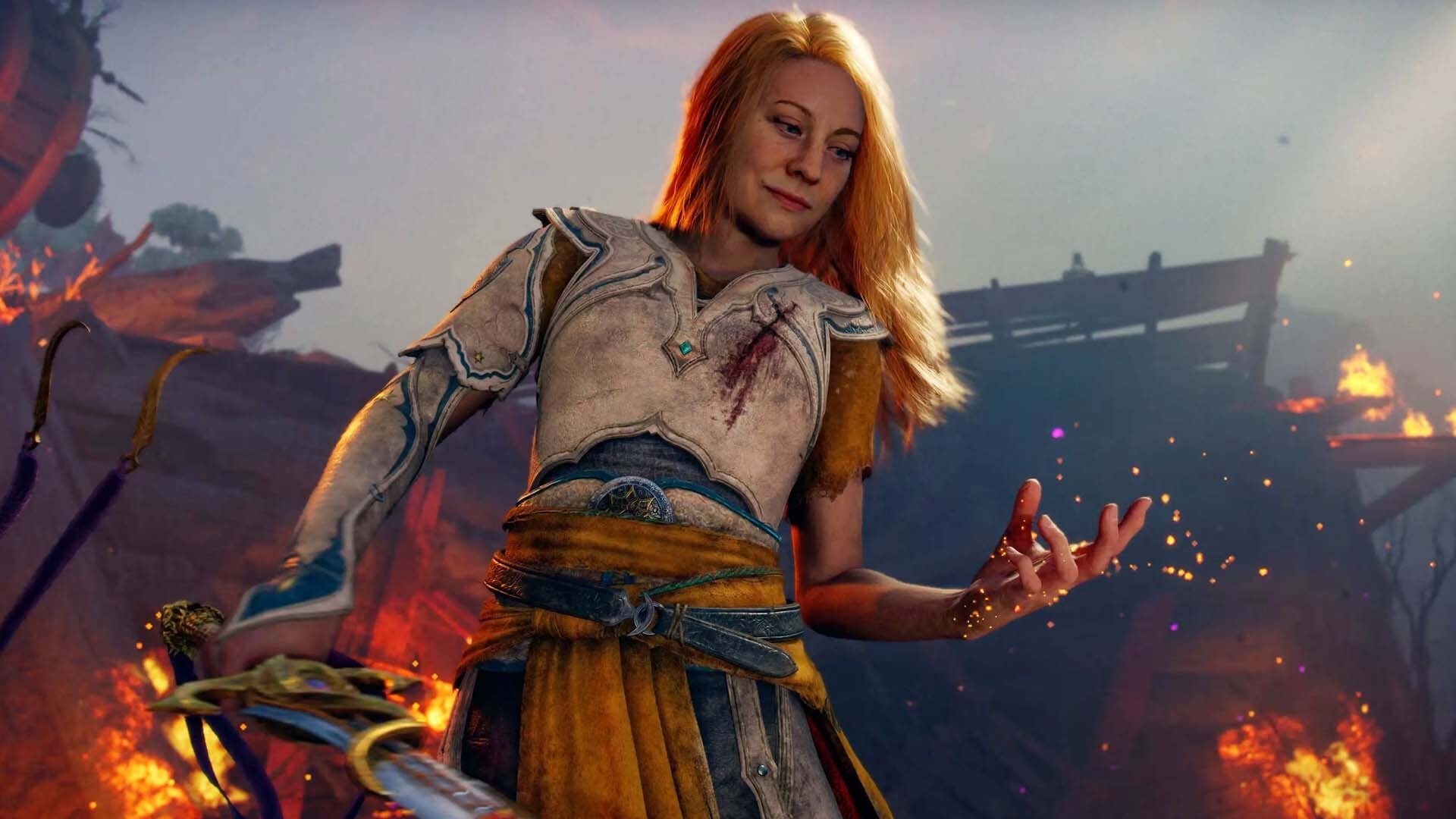
While Atreus is the obvious choice for the future, the "god of war laufey" alt text in the image provides a fascinating alternative: exploring the past through Kratos's late wife and Atreus's mother, Laufey, also known as Faye. Her character is shrouded in mystery, depicted as a fierce warrior, a giantess, and a key figure whose actions set in motion many events in the Norse saga, even after her death. A prequel game focusing on Laufey could be a groundbreaking way to expand the lore and offer a completely fresh perspective.
Imagine a game where players control Laufey, experiencing the Norse realms through her eyes before Kratos's arrival. This would allow Santa Monica Studio to delve deeper into Giant culture, explore her relationships with other mythological figures, and showcase her skills as a warrior and strategist. What kind of challenges did she face? What battles did she fight? How did she earn the respect and fear that characterized her legacy? Her gameplay could blend powerful giant abilities with cunning tactical approaches, reflecting her intelligence and warrior spirit. A game centered around Laufey could explore themes of fate, prophecy, the struggle for freedom for her people, and her eventual meeting and relationship with Kratos from a deeply personal viewpoint. This would not only enrich the existing narrative but also provide a powerful female protagonist, offering a unique take on the "God of War" title itself, perhaps as a "Giantess of War" or a "Protector of the Realms." It’s an intriguing prospect that could unlock untold stories and redefine what we thought we knew about the universe Kratos inhabited.
Venturing Beyond Norse Mythology: A Universe of Possibilities
Beyond Kratos and even the established Norse characters, the "Begone, Kratos" sentiment truly opens the door to the vast potential of the God of War franchise to explore entirely new mythological pantheons. The beauty of the series lies not just in its characters, but in its ability to adapt and reinterpret ancient myths with a brutal, emotional, and epic flair. Having conquered Greek and Norse mythologies, where could the next adventure take us?
The possibilities are endless and exciting. Imagine a "God of War" game set in ancient Egypt, battling gods like Ra, Anubis, and Set amidst the pyramids and the desert sands. Or perhaps a journey to the mystical lands of Japanese mythology, encountering Susanoo, Amaterasu, and terrifying Yokai. Mayan, Aztec, Celtic, or even African mythologies offer incredibly rich and diverse pantheons, each with unique creatures, gods, and compelling narratives waiting to be explored. A new mythology would bring fresh enemies, distinct architectural styles, innovative combat mechanics tailored to the culture's legends, and entirely new philosophical questions. It would allow the developers to completely refresh the visual and gameplay experience, ensuring the series remains vibrant and surprising. The challenge would be introducing a new "God of War" figure (whether Atreus or an entirely new character) into these settings in a way that feels organic and respectful to the established lore of the new pantheon while retaining the core essence of what makes a God of War game great: epic scale, profound character development, and visceral, satisfying combat.
The Developer's Dilemma: Santa Monica Studio's Creative Path
For Santa Monica Studio, the decision of whether to move on from Kratos is a monumental one, fraught with both exciting opportunities and significant challenges. Kratos is synonymous with the brand, a household name in gaming. Changing the protagonist of such an iconic series requires immense courage and a clear creative vision. There's the risk of alienating a segment of the fanbase who are deeply attached to Kratos, or the challenge of convincing new players that the series can maintain its high quality without its original star.
However, the studio has already proven its ability to reinvent the franchise with the 2018 reboot. They successfully transformed Kratos from a one-dimensional agent of chaos into a complex, relatable father figure. This track record suggests they are not afraid of bold decisions. Moving beyond Kratos could be seen as an act of creative liberation, allowing the developers to explore different narrative tones, introduce new gameplay systems that deviate from Kratos's established moveset, and tackle themes that might not fit Kratos's specific character arc. The success of games like Marvel's Spider-Man: Miles Morales shows that introducing a new protagonist into an established universe can be incredibly successful, revitalizing the franchise and attracting new players while retaining the core appeal. Santa Monica Studio's talent for storytelling and world-building indicates they are more than capable of navigating this transition and delivering an experience that honors the past while boldly forging a new future for God of War.
The Call for Innovation: What Fans Might Truly Desire
While the prospect of Kratos stepping down might initially cause some apprehension among long-time fans, many also recognize the importance of innovation and evolution in a long-running series. What fans truly desire, at its core, is a continuation of the high-quality storytelling, breathtaking visuals, engaging combat, and emotional depth that has defined the God of War franchise.
If a new protagonist takes the lead, fans would likely hope for:
- Compelling Character Arc: A new hero (or anti-hero) who undergoes significant growth and whose motivations are complex and relatable.
- Unique Gameplay Identity: Combat and exploration mechanics that feel distinct from Kratos's but are equally satisfying and challenging. This could involve more magic, different weapon types, or even greater emphasis on environmental interaction.
- Rich World-Building: Whether it's a new mythology or a deeper dive into existing lore, the world should feel vast, alive, and full of secrets to uncover.
- Emotional Resonance: The series is known for its powerful narratives. A new protagonist should carry a similar emotional weight, whether it's dealing with personal demons, the weight of destiny, or complex familial relationships.
- Epic Scale: Retaining the sense of grand adventure and colossal battles that are a hallmark of God of War.
The "Begone, Kratos" sentiment isn't a rejection of quality; it's a call for Santa Monica Studio to continue pushing boundaries, to surprise and delight players with fresh ideas while upholding the revered standards the series has set. It's about ensuring the God of War name remains synonymous with cutting-edge gaming experiences for years to come.
Speculation on the Next God of War Game
With Kratos's Norse saga complete, the speculation around the next God of War game is already rampant. While no official announcements have been made, the paths laid out by Ragnarök strongly hint at several exciting directions. The most prominent direction points squarely to Atreus. His solo journey to find the remaining Giants, understand his identity as Loki, and potentially avert a larger, unknown catastrophe presents a ready-made storyline.
A game starring Atreus could see a shift in tone. While still epic, it might focus more on diplomacy, problem-solving, and exploration, with combat that is quicker and more magical. We could see him venturing into entirely new realms, encountering different mythological figures, and perhaps even recruiting allies. Alternatively, the idea of a Laufey prequel, as discussed, could offer a deep dive into the Norse world before Kratos, exploring the Giant's perspective and her critical role in the prophecies. This would be a self-contained story, rich with lore and offering a unique combat style. A third, more ambitious, path would be to fully embrace a new mythology, introducing a brand new "God of War" or an entirely new character into an untouched pantheon like Egypt or Japan. This would represent the biggest creative leap but also offers the greatest potential for reinvention.
Regardless of the direction, the next God of War game will undoubtedly be one of the most anticipated titles in gaming. It will need to balance honoring the legacy of Kratos with establishing a compelling new identity. The future of the franchise is wide open, promising to deliver the same blend of visceral action and profound storytelling that has defined it, even if the Ghost of Sparta himself takes a well-deserved rest from the spotlight.
Conclusion: The Enduring Legacy and a Bright Future
The journey of Kratos through the Greek and Norse sagas has been nothing short of legendary. He has been a symbol of vengeance, power, and, in his later years, redemption and fatherly love. The phrase "Begone, Kratos" is not a farewell in sorrow, but a recognition of a complete and masterful character arc. It's a testament to the fact that great stories know when to conclude a chapter, making way for new narratives to flourish.
The God of War universe is vast and rich, filled with countless stories yet to be told. Whether it's through the maturing eyes of Atreus, the historical power of Laufey, or the complete reimagining within a new mythological pantheon, the future of the franchise burns bright. Santa Monica Studio has consistently demonstrated its ability to innovate, to tell emotionally resonant stories, and to deliver unparalleled gaming experiences. Kratos may step back from the forefront, but his enduring legacy will undoubtedly serve as a guiding star for whatever comes next. The spirit of God of War – epic, brutal, and deeply personal – is poised to continue, captivating new generations of players and reminding us that even without the Ghost of Sparta leading the charge, the saga of gods and warriors is far from over.
from Kotaku
-via DynaSage
