
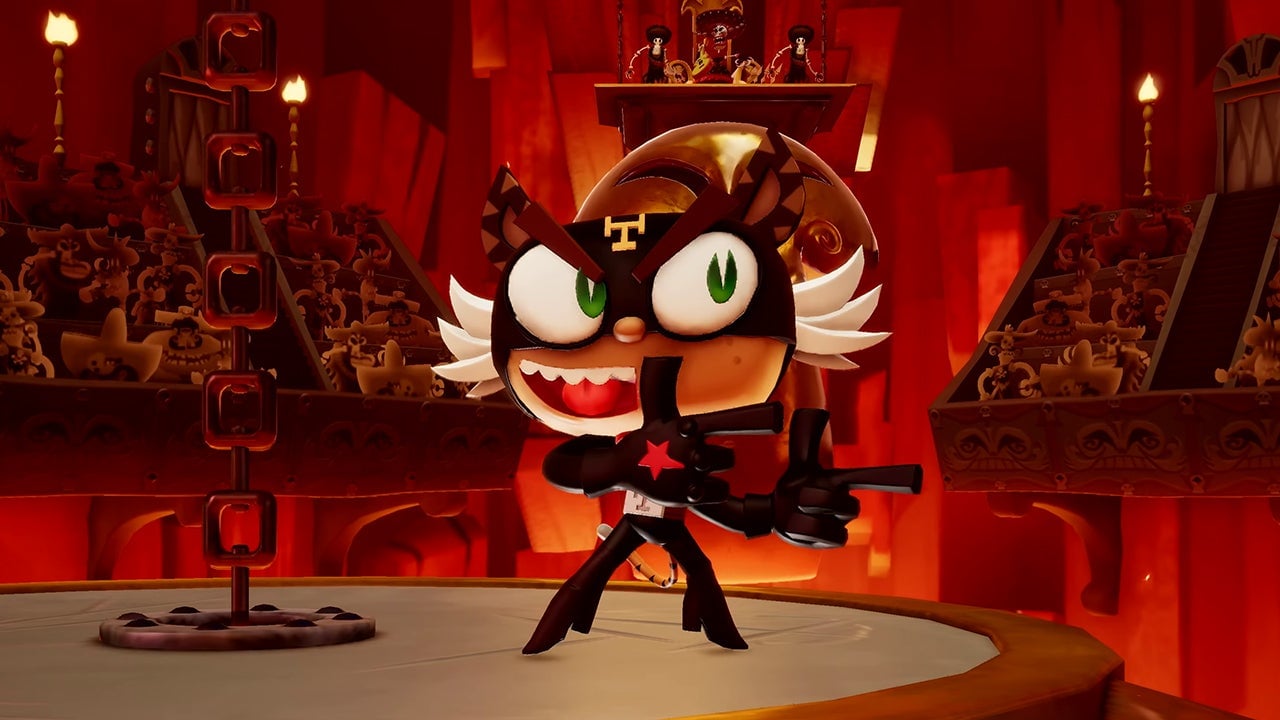
El Tigre Creator Backs Away From AI Amazon Cartoon After One Day Of Guillermo Del Toro Subtweets
The AI Animation Revolution: Unpacking the 'Punky Duck' Controversy and the Future of Creative Storytelling
The world of animation is buzzing, but not always with excitement. Lately, much of the conversation revolves around the increasing role of Artificial Intelligence (AI) in creative processes, a topic that has sparked both fascination and fierce debate. At the heart of this discussion are groundbreaking projects like Amazon's 'Punky Duck,' an AI-generated cartoon that has already stirred up considerable controversy. But 'Punky Duck' is just one part of a larger trend, sitting alongside a trio of similar AI experiments that are collectively challenging our understanding of artistry, ownership, and the very future of digital content creation.
This deep dive explores the current landscape of AI-generated animation, focusing on the specific concerns raised by 'Punky Duck' and its peers. We'll examine the technology driving these innovations, the ethical dilemmas they present, and the potential impact on human artists and the animation industry as a whole. As AI rapidly evolves from a futuristic concept to a practical tool, understanding these shifts is crucial for creators, consumers, and anyone interested in the intersection of technology and art.
The Dawn of AI in Animation: A New Creative Frontier
For decades, animation has been a labor-intensive craft, demanding immense skill in drawing, storytelling, and technical execution. From the hand-drawn cells of classic Disney films to the sophisticated 3D models of Pixar, every frame traditionally required human ingenuity. However, recent advancements in AI, particularly in machine learning and generative adversarial networks (GANs), are changing this paradigm. AI can now assist with, and even autonomously create, various elements of animation.
Imagine AI helping writers brainstorm plotlines or generate character dialogue. Picture AI designing unique character models or suggesting background art styles based on specific themes. The technology is rapidly progressing to a point where it can automate the laborious process of in-betweening (creating frames between key poses), generate realistic movements, synthesize voiceovers, and even compose soundtracks. These capabilities promise to significantly reduce production times and costs, making animation more accessible and potentially allowing for a greater volume of content.
Companies like Amazon are naturally attracted to these efficiencies. For a giant content provider, the ability to produce animated series faster and cheaper offers a significant competitive edge. This commercial drive is a major factor behind the emergence of projects like 'Punky Duck,' which serve as early, high-profile tests of AI's capabilities in mainstream entertainment.
'Punky Duck' and the Ruffled Feathers: What's the Fuss About?
'Punky Duck' quickly became a talking point, not just for its novelty but for the significant backlash it received. The core of the controversy stems from several key areas that touch upon the integrity of creative work and the livelihoods of human artists. While the specifics of the "trio" of AI-generated cartoons might not always be publicly detailed, the criticisms leveled against 'Punky Duck' are representative of broader concerns impacting all such projects.
Concerns Over Artistic Integrity and Originality
One of the primary objections is philosophical: Can something created by an algorithm truly possess artistic merit or originality? Critics argue that AI, by its nature, is trained on existing human-created data. This means its outputs are often seen as derivative, a recombination of existing styles and tropes, rather than genuinely novel creations. For many, art is an expression of human experience, emotion, and intention – qualities that AI currently lacks.
With 'Punky Duck,' questions arose about the unique "voice" or "style" of the cartoon. If an AI generates the story, characters, and animation, whose creative vision is being expressed? Is it the programmers who wrote the algorithms, the artists whose work was used for training, or a soulless amalgamation of both? This debate highlights a fundamental tension between efficiency and artistry.
The Ghost in the Machine: Job Displacement Fears
Perhaps the most visceral reaction to AI-generated content comes from the threat it poses to creative jobs. Animators, illustrators, concept artists, scriptwriters, and voice actors worldwide fear that their skills could be devalued or even rendered obsolete by increasingly sophisticated AI tools. The idea that a machine could perform tasks that once required years of training and dedication is a genuine source of anxiety within the industry.
The ‘Punky Duck’ project, as a high-profile example from a major studio like Amazon, amplified these fears. It's seen by some as a harbinger of a future where fewer human hands are needed in the animation pipeline, leading to widespread job losses. This isn't just about economic hardship; it's about the erosion of a passionate, vibrant community of artists who have dedicated their lives to bringing stories to life.
Ethical Sourcing of Training Data and Copyright Issues
A significant, often legally complex, aspect of the controversy surrounds the data used to train these AI models. Generative AI systems learn by analyzing vast datasets of existing images, videos, scripts, and audio. The crucial question is: Where does this data come from, and were the original creators compensated or even consulted?
Many AI models are trained on publicly available data scraped from the internet, which often includes copyrighted works. Artists argue that their creations are being used without permission or payment to build tools that could ultimately replace them. This raises serious copyright infringement concerns and forms a major point of contention in ongoing legal battles and industry discussions.
For 'Punky Duck' and other similar projects, transparency around their training data sources is paramount. Without it, accusations of exploitation and unfair practice will continue to "ruffle feathers" among the creative community.
The Trio of AI-Generated Cartoons: A Broader Trend
While 'Punky Duck' might be a prominent example, it exists within a growing landscape of AI experiments in animation. The "trio" mentioned suggests that Amazon is not alone, and indeed, many studios and tech companies are exploring AI's potential, often quietly or in early stages. These projects collectively highlight common challenges and opportunities:
- Early-Stage Explorations: Many AI animation projects are still in experimental phases, used for concept art, storyboarding, or generating short clips. They act as proof-of-concept for larger-scale integration.
- Focus on Efficiency: A common driver for all these projects is the desire to streamline production workflows, cut costs, and accelerate content delivery. This is particularly appealing in a competitive streaming landscape.
- Mixed Public Reception: Beyond the professional art community, public opinion on AI-generated content is also divided. Some find it fascinating and futuristic, while others are put off by a perceived lack of "soul" or authenticity.
- Technological Learning Curves: Each project helps developers understand the strengths and weaknesses of current AI models, pushing the boundaries of what's possible and identifying areas for improvement.
These early ventures, despite the controversies, are laying the groundwork for how AI might integrate into the creative industries in the coming years. They force a critical examination of what we value in art and storytelling.
Understanding the Technology: How AI Creates Animation
To fully grasp the implications, it's helpful to understand the basic technologies powering AI-generated cartoons:
Generative Adversarial Networks (GANs)
GANs consist of two neural networks: a generator and a discriminator. The generator creates new data (e.g., character designs, background elements, animation frames) while the discriminator tries to determine if the generated data is real or fake. Through this adversarial process, the generator learns to produce increasingly realistic and convincing outputs.
Diffusion Models
More recently, diffusion models have gained prominence. These models learn to remove "noise" from an image to gradually reveal a coherent picture. In reverse, they can start from random noise and progressively add detail to generate new images, or even sequences of images for animation, based on text prompts or existing styles.
Large Language Models (LLMs)
For scriptwriting, dialogue generation, and storyboarding, Large Language Models (LLMs) like GPT (Generative Pre-trained Transformer) are invaluable. They can process and generate human-like text, turning simple prompts into complex narratives, character backstories, or even full screenplays.
AI for Motion and Voice
Beyond static images, AI can also analyze and synthesize motion capture data to animate characters more realistically, or generate unique voice performances from text, complete with emotional nuances. These tools dramatically reduce the need for manual keyframe animation or hiring multiple voice actors.
The combination of these technologies allows for a holistic approach to animation creation, from initial concept to final render, all with significant AI assistance or even autonomy.
The Ethical Tightrope: Navigating AI's Impact on Creativity
The conversation around AI in animation extends far beyond mere technological capability; it delves into profound ethical and societal questions. How we choose to integrate these tools will define the future of creative industries.
Maintaining Human Creativity and Vision
One of the biggest fears is that over-reliance on AI could stifle human creativity. If machines handle the heavy lifting of creation, will artists lose the skills and innovative drive that define their craft? Advocates for human oversight argue that AI should be seen as a sophisticated tool – like a paintbrush or a digital tablet – that enhances human potential rather than replaces it. The challenge is to define a collaborative framework where AI empowers artists, allowing them to explore new ideas and reduce tedious tasks, rather than dictating the creative output.
Fair Compensation and Royalties for Artists
As AI models are trained on vast amounts of existing art, there's a growing call for mechanisms to fairly compensate the original artists whose work contributes to the AI's learning. Industry groups and artists are pushing for new regulations and payment structures that acknowledge the intellectual property used in AI training data. This includes discussions around opt-out clauses for artists who don't want their work used, and new forms of royalties for the use of their styles or creations by AI.
The Definition of Authorship and Ownership
Who owns the copyright to an AI-generated cartoon? Is it the company that developed the AI, the user who prompted it, or the original creators whose data trained it? These questions are currently being grappled with by legal systems worldwide. Clear definitions of authorship and ownership are essential for the healthy development of AI in creative fields, ensuring that innovation doesn't come at the expense of creators' rights.
Combating Bias and Promoting Diversity
AI models are only as unbiased as the data they are trained on. If an AI is trained primarily on content featuring a narrow demographic or artistic style, its outputs will reflect those biases. This could lead to a lack of diversity in characters, storylines, and cultural representation in AI-generated cartoons. Developers and users must actively work to curate diverse training datasets and implement measures to mitigate bias, ensuring that AI contributes to a richer, more inclusive creative landscape.
The Future of Animation: Collaboration or Replacement?
Looking ahead, the path for AI in animation appears to branch in two main directions: either as a collaborative partner or a wholesale replacement. Most industry experts believe a collaborative model is not only more desirable but also more sustainable in the long run.
AI as a Powerful Assistant
In this vision, AI becomes an incredibly powerful assistant, handling the repetitive, time-consuming aspects of animation. Imagine an artist sketching a few key frames, and AI automatically filling in the hundreds of frames in between. Or a writer providing a story outline, and AI generating multiple dialogue options for characters. This frees up human artists to focus on high-level creative decisions, emotional depth, and unique storytelling that only human intuition can provide.
This approach could democratize animation, allowing smaller studios or individual creators with limited budgets to produce high-quality content that would have been impossible before. It could also lead to entirely new forms of animation, combining human artistic direction with AI's generative capabilities in ways we haven't even imagined yet.
Adapting Roles for Human Artists
The roles of human artists would undoubtedly evolve. Instead of being solely animators or illustrators, many might become "AI wranglers" or "prompt engineers," skilled in directing AI tools to achieve specific artistic visions. Others might focus on concept development, refining AI outputs, or adding the crucial human touch that elevates a good AI-generated piece to a truly great work of art.
Training and education in these new AI-centric workflows will be crucial for the next generation of animators. Universities and art schools are already beginning to integrate AI tools into their curricula, preparing students for a hybrid creative environment.
The Unavoidable Integration
Regardless of the debates, it's clear that AI is not going away. Its integration into various industries, including entertainment, is an inevitable progression of technology. The key will be to manage this transition thoughtfully, with a focus on ethical development, fair practices, and fostering a symbiotic relationship between human and artificial intelligence.
Public Perception and Industry Response
The public's reception of AI-generated content is a significant factor in its long-term success. While some consumers might not care how their entertainment is produced, a growing segment values human artistry and authenticity. If AI-generated shows consistently lack the charm, nuance, or depth of human-created content, audience engagement could suffer. The controversy around 'Punky Duck' is a clear indicator that audiences are paying attention.
Industry unions and guilds, representing writers, actors, and animators, are actively engaging in discussions and negotiations regarding AI's use. They are advocating for protections for their members, including consent for using their likeness or voice for AI training, fair compensation, and clear stipulations about human involvement in productions. These collective efforts are vital in shaping the regulatory and ethical framework for AI in animation.
Policymakers, too, are starting to recognize the need for legislation around AI, especially concerning copyright, intellectual property, and labor rights. This will be a slow but necessary process to establish a legal landscape that can address the complex challenges posed by generative AI.
Conclusion: Embracing the Future with Caution and Creativity
The advent of AI in animation, exemplified by projects like Amazon's 'Punky Duck' and the emerging "trio" of AI-generated cartoons, marks a pivotal moment for the creative industries. While the technology offers unprecedented opportunities for efficiency, accessibility, and innovation, it also presents serious challenges related to artistic integrity, job security, and ethical considerations regarding data usage and ownership.
The "ruffled feathers" surrounding 'Punky Duck' are a powerful reminder that technology does not operate in a vacuum. Its implementation has profound human implications that must be addressed with care and foresight. For AI to truly enrich the world of animation, it must do so in a way that respects human creativity, supports artists, and maintains the soulful essence that makes storytelling so powerful.
The future of animation likely lies in a hybrid model: a collaboration where AI serves as a powerful co-pilot, enhancing and expanding the capabilities of human artists, rather than replacing them entirely. By fostering open dialogue, establishing ethical guidelines, and pushing for fair compensation models, we can navigate this exciting yet uncertain landscape, ensuring that the magic of animation continues to thrive for generations to come, crafted by the ingenuity of both human and artificial intelligence.
from Kotaku
-via DynaSage
