
Apple Seemingly Discontinuing Vision Pro Travel Case Around the World
Apple's Vision Pro Travel Case Disappears: A Sign of Shifting Strategies in the World of Spatial Computing
In a subtle yet significant move, Apple appears to be quietly pulling the Apple Vision Pro Travel Case from its online stores in many international markets. This accessory, priced at $199, is essential for protecting the sophisticated Vision Pro headset. Its disappearance signals a broader re-evaluation of Apple's ambitious journey into spatial computing and the future of its mixed-reality device.
The Vision Pro, Apple's groundbreaking entry into the mixed-reality space, was introduced with much fanfare, promising a revolutionary way to interact with digital content and the real world. For a device designed to offer "spatial computing" – a blend of augmented and virtual reality – portability and protection are paramount. The Travel Case was conceived as the ideal companion for users wanting to carry their Vision Pro safely, whether for daily commutes or longer trips.
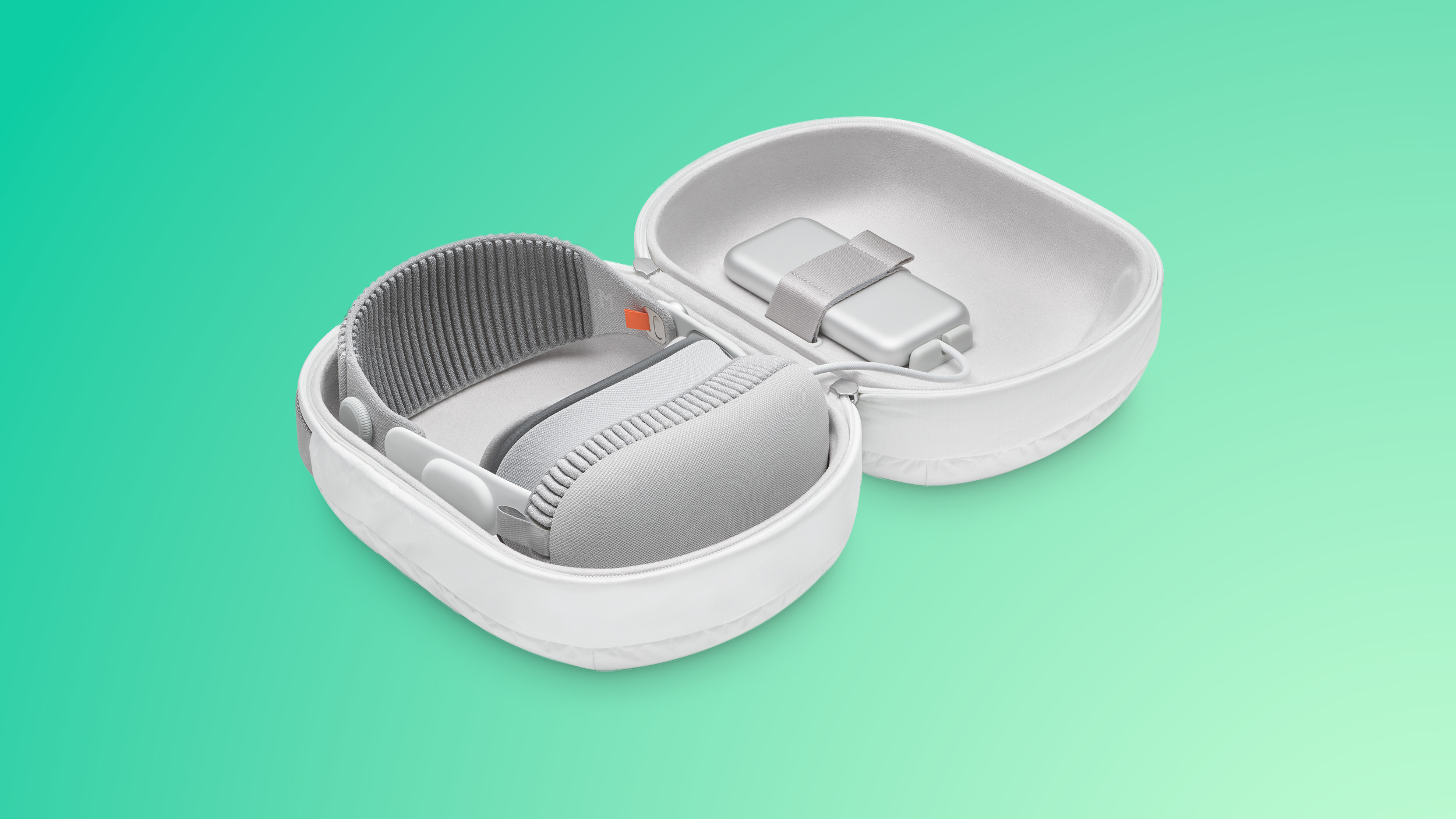 A look at the Apple Vision Pro Travel Case, an accessory now disappearing from international markets.
The Quiet Discontinuation: Where Did the Case Go?
Reports from various sources confirm that the official Apple Vision Pro Travel Case is no longer available on Apple's online storefronts across a significant portion of the globe. Countries such as the UK, Japan, Germany, France, Ireland, and Hong Kong have seen the product vanish completely. Not only is the case absent from the Apple Vision Pro accessories page in these regions, but the dedicated web pages for the product have also been entirely removed. This deep-seated removal often indicates a full discontinuation, suggesting Apple has no immediate plans to reintroduce the product in these areas.
However, the situation is slightly different in other regions. In China and Australia, the Travel Case listings remain visible online, but the product is "grayed out" and cannot be purchased. This status typically means the item is out of stock with no clear indication of when, or if, it will return. Interestingly, the case continues to be sold without any issues in the U.S., Canada, and the UAE. The exact timing of these changes remains unclear, but they appear to have been implemented very recently, catching many off guard.
Why is a Travel Case So Important for Vision Pro?
For a premium device like the Apple Vision Pro, which commands a price tag of $3,499, proper protection is not just a luxury; it's a necessity. The headset, with its intricate array of cameras, sensors, and delicate displays, is not built to withstand the rigors of everyday travel without a robust case. A travel case typically provides:
- Physical Protection: Guarding against bumps, scratches, and drops that can occur during transit.
- Dust and Debris Shield: Keeping sensitive optical components clean.
- Organized Storage: Space for the headset, battery pack, charging cables, and other small accessories.
- Enhanced Portability: Making it easier and safer to transport the device.
The sudden removal of Apple's official, purpose-built travel case for international customers leaves a void. It raises questions about Apple's commitment to supporting the product globally and the user experience for those who invested heavily in the device.
The Belkin Alternative: A Stopgap or a New Direction?
In response to the disappearing official case, customers in international markets still have an option: the Belkin Travel Bag for Apple Vision Pro. This third-party accessory remains available, serving as an alternative for those seeking protection for their device. While Belkin is a reputable brand known for its Apple-compatible accessories, the reliance on a third-party solution for such a critical accessory for a first-party device is unusual for Apple.
Apple typically offers a complete ecosystem of accessories for its flagship products, ensuring a seamless experience. The decision to step back from providing its own travel case internationally, while still offering the device itself (though availability varies), could indicate several things:
- Shifting Focus: Apple might be reallocating resources away from accessory development for a product line that isn't meeting expectations.
- Inventory Management: It could be a way to offload inventory or streamline supply chains for lower-demand products in certain regions.
- Testing the Waters: Perhaps Apple is exploring if third-party manufacturers can adequately fill accessory gaps, allowing Apple to focus on core hardware and software.
Regardless of the reason, the move means international Vision Pro owners are now directed towards a non-Apple branded solution for a key accessory. This contrasts with the situation in the U.S., Canada, and the UAE, where Apple's own case remains readily available.
The Bigger Picture: Apple Vision Pro's Challenging Journey
The discontinuation of the Vision Pro Travel Case is more than just an accessory shuffle; it appears to be a ripple effect of Apple scaling back its overall ambitions for the Vision Pro. The headset, despite its technological marvels, has faced an uphill battle since its launch.
The M5 Refresh: A Missed Opportunity?
According to reports, an M5 chip refresh for the Vision Pro, which reportedly occurred in October 2025 (within the article's given timeline), failed to generate significant renewed consumer interest. Typically, an Apple Silicon chip upgrade, like moving from an M2 (which the initial Vision Pro used) to an M5, would bring substantial improvements in performance, efficiency, and potentially new capabilities. However, even with this significant internal upgrade, the $3,499 price tag remained unchanged, proving to be a persistent barrier for most consumers.
The high price point, combined with a relatively nascent app ecosystem and questions surrounding its daily utility, meant that even a powerful chip upgrade couldn't overcome fundamental challenges. Consumers likely looked for more than just raw processing power; they sought comfort, a wider range of compelling content, and a clearer use case that justified the premium investment.
Disappointing Sales and High Return Rates
Industry estimates suggest that Apple has sold around 600,000 Vision Pro units in total. While this number might seem substantial for a niche, ultra-premium device, it's relatively modest by Apple's usual standards for new product categories. More concerning, however, are reports of an unusually high rate of returns compared to any other recent Apple product. High return rates can be attributed to several factors:
- Discomfort: The Vision Pro is a relatively heavy device, and some users reported discomfort during extended use.
- Motion Sickness: For some individuals, the immersive experience led to motion sickness or disorientation.
- Lack of "Killer Apps": While impressive, the initial software and content library might not have provided enough compelling experiences to justify the cost for many.
- Setup and Friction: The process of adapting to "spatial computing" and integrating it into daily life proved to have a higher learning curve than anticipated for some.
- Buyer's Remorse: The significant financial outlay likely led to higher expectations that the product, in its first iteration, couldn't consistently meet for every user.
These challenges collectively paint a picture of a product struggling to find its footing and a broad market beyond early adopters and tech enthusiasts.
Organizational Restructuring: A Major Pivot
Following the M5 model's underwhelming reception, a more definitive sign of Apple's shifting strategy emerged: the Vision Pro team was reportedly disbanded. Its members were redistributed across other projects within Apple. This is a dramatic move for Apple, which typically maintains dedicated teams for major product lines for years, even decades. It signals a significant de-prioritization of the current Vision Pro hardware and its immediate successor.
Further reinforcing this shift, Mike Rockwell, who led the Vision Products Group, reportedly moved to lead Apple's Siri team since March 2025. Such a leadership change from a nascent, high-profile product category to an established, but evolving, software service underscores Apple's reallocation of its top talent towards different strategic areas, particularly artificial intelligence.
"Vision Air" Scrapped: An Accessible Future Postponed
Adding to the list of changes, plans for a cheaper, lighter headset, informally dubbed "Vision Air," were reportedly scrapped in October 2025. The Vision Air was widely anticipated as Apple's attempt to make spatial computing more accessible to a broader audience, addressing the bulk and cost issues of the original Vision Pro. Its cancellation is a strong indicator that Apple is not pursuing a mass-market version of its mixed-reality headset in the immediate future.
This decision suggests that Apple has either realized the technology isn't ready for a mass-market price point without significant compromises, or that the current form factor for an immersive headset isn't the right approach for widespread adoption. It implies a fundamental rethinking of how Apple intends to deliver augmented and virtual experiences to its users.
Analyst Insights: A Longer Road Ahead for Apple's Mixed Reality
The sentiment from leading industry analysts further solidifies the view that Apple's mixed-reality strategy is undergoing a substantial transformation.
Ming-Chi Kuo's Predictions: A Shift to Smart Glasses
According to supply chain analyst Ming-Chi Kuo, a notable authority on Apple's supply chain, Apple is making a decisive pivot. Kuo reported that incoming Apple CEO John Ternus (as per the article's timeline) approved the cancellation of both a second-generation Vision Pro and the aforementioned Vision Air. This cancellation underscores a complete re-evaluation of the company's immediate product roadmap for high-end mixed-reality headsets.
Instead, Kuo suggests that Apple's focus has now shifted to smart glasses. This is a crucial distinction. While the Vision Pro is an immersive headset, smart glasses are typically designed for more subtle, always-on interaction with digital information overlaid onto the real world. Kuo outlined two main products currently in development:
- AI-Equipped Glasses (Expected 2027): These glasses are anticipated to rival products like Meta's Ray-Ban smart glasses. They would likely focus heavily on artificial intelligence features, potentially offering advanced voice assistance (Siri integration), real-time translation, contextual information overlays, and camera-based functionalities for capturing photos and videos. The emphasis here is on integrated intelligence and subtle augmentation rather than full immersion.
- Display-Equipped AR Glasses (Not Before 2029): This second product represents Apple's longer-term vision for true augmented reality. These glasses would feature advanced displays capable of projecting detailed digital content directly into the user's field of view, seamlessly blending virtual objects with the physical world. This is a far more ambitious technological endeavor, requiring significant advancements in miniaturization, battery life, and display technology, hence the later estimated arrival.
Kuo's analysis suggests Apple is taking a phased approach: first, simpler AI-driven wearables, then more sophisticated AR displays, rather than iterating on the complex, high-cost Vision Pro headset immediately.
Mark Gurman's Perspective: A Long Wait for a New Headset
Bloomberg's Mark Gurman, another highly respected Apple insider, echoed similar sentiments. He stated that if a new headset from Apple does eventually materialize, he wouldn't expect it for "around two more years at least" (from May 2026, according to the article's timeline). This delay is largely attributed to the fact that the majority of Apple's mixed-reality hardware talent has been reallocated to other projects, indicating a significant pause in dedicated headset development.
However, Gurman did leave the door open for a long-term possibility: a slimmer, cheaper Vision Pro. While distinct from the cancelled "Vision Air" or a direct "second Vision Pro," this suggests Apple might revisit a headset form factor in the distant future, perhaps in late 2028 or 2029 at the earliest, after significant technological breakthroughs make it more viable for a wider audience. This would likely be a completely re-engineered device, learning from the first generation's challenges.
What Does This Mean for Apple and the Future of Spatial Computing?
The apparent phasing out of the Apple Vision Pro Travel Case, especially in international markets, serves as a tangible manifestation of the device's uncertain future. Whether it signals a complete discontinuation of current Vision Pro accessories or merely a quiet inventory wind-down, it is difficult to detach it from the broader narrative of Apple's evolving strategy in the mixed-reality space.
For early adopters of the Vision Pro, particularly those outside the U.S., Canada, and UAE, this development might be concerning. It implies a potential lack of long-term accessory support for a very expensive first-generation product. It also underscores Apple's pragmatic approach to new product categories. While Apple is known for its patience and long-term vision, it is also willing to pivot and re-evaluate when a product doesn't gain the expected traction or faces significant market hurdles.
The shift towards smart glasses and AI-equipped wearables, as highlighted by analysts, suggests Apple is adjusting its strategy from "all-in" on immersive, high-end mixed reality to a more gradual, integrated approach focusing on augmented intelligence. Instead of expecting users to strap on a large headset for deep immersion, Apple might be aiming for more seamless, everyday integrations of AI and AR through a more discreet form factor.
The journey of Apple Vision Pro highlights the complexities and challenges of introducing truly revolutionary technology. While the concept of spatial computing remains incredibly compelling, the practicalities of price, comfort, content, and everyday utility are formidable. The disappearance of its travel case is a small detail, but it speaks volumes about the significant strategic recalculations happening behind the scenes at Apple as it navigates the exciting yet demanding frontier of augmented and virtual reality.
The future of spatial computing from Apple is not dead, but it is undeniably evolving. It appears the path forward might be less about an immediate, all-encompassing headset and more about a phased introduction of intelligent, augmented experiences that gradually blend digital information with our physical world, starting with less intrusive form factors.
Thanks, Ben!
This article, "Apple Seemingly Discontinuing Vision Pro Travel Case Around the World" first appeared on MacRumors.com
Discuss this article in our forums
from MacRumors
-via DynaSage
