
5 Things to Watch for During Apple's WWDC 2026 Keynote Today
WWDC 2026 is Here: What to Expect from Apple's Big Event
The moment developers and Apple enthusiasts worldwide have been waiting for has finally arrived! WWDC 2026, Apple's annual Worldwide Developers Conference, is officially underway. The excitement is palpable as Apple prepares to kick off its opening keynote speech today at 10 a.m. Pacific Time. This highly anticipated event is where Apple traditionally unveils its latest advancements in software, offering a glimpse into the future of its vast ecosystem.
While the primary focus of WWDC is always on software, with new versions of core operating systems like iPadOS 27, macOS 27, watchOS 27, tvOS 27, and visionOS 27 set to be announced, there's always a lingering question: could Apple surprise us with a new piece of hardware or an unexpected announcement? Historically, WWDC has been a software-centric event, but Apple has occasionally used the platform to introduce groundbreaking new devices or significant updates to existing ones, blurring the lines between developer tools and consumer products.
The keynote address is much more than just a list of new features; it's a strategic presentation that sets the tone for Apple's product direction for the coming year. It inspires developers to create innovative applications that leverage these new capabilities and excites users about what's next for their favorite Apple devices. This year, given the significant shifts anticipated in areas like artificial intelligence and the ongoing transition to Apple's custom silicon, the stakes feel even higher. The entire tech world will be watching closely to see what Cupertino has in store.
As the countdown to the keynote begins, speculation is running wild. Below, we've broken down five key topics and talking points that are generating the most buzz and will be crucial to watch during WWDC 2026.
1. New Hardware: A Tantalizing Possibility Amidst Cautious Optimism
One of the perennial questions leading up to any Apple event, especially WWDC, is whether new hardware will be unveiled. This year, the whispers of new devices are louder than usual, with reports suggesting Apple might even have a couple of new gadgets "ready to go." However, it’s wise for us to keep our expectations in check. While the idea of shiny new Apple hardware is always exciting, there are compelling reasons why Apple might choose to hold back on major product announcements until later in the year.
Historically, WWDC has predominantly been a software-focused conference, aimed at providing developers with the tools and APIs (Application Programming Interfaces) they need to build the next generation of apps for Apple's platforms. Hardware introductions, when they do occur, often serve to showcase new software capabilities or address specific developer needs. For instance, the original Mac Pro and the Pro Display XDR were introduced at WWDC, signaling Apple's commitment to professional users and high-performance computing, which directly impacts developer workflows. More recently, the groundbreaking Apple Vision Pro headset made its debut at WWDC, fundamentally redefining the future of spatial computing and giving developers an early start on creating experiences for this entirely new platform.
This year, however, the landscape is complicated by a couple of significant factors. Apple is believed to be strategically holding back new additions to its hardware lineup, particularly Macs, until the highly anticipated new version of Siri and other significant Apple Intelligence upgrades are fully ready for the general public. The synergy between powerful, intelligent software and the hardware designed to run it is crucial for Apple. Releasing new Macs that are *meant* to showcase advanced AI features without those features being fully polished and available could dilute the impact. Apple prefers a seamless, "it just works" experience, and that often means ensuring both hardware and software are perfectly aligned at launch. This approach allows them to present a cohesive vision of the future, where the hardware's capabilities are immediately demonstrable through compelling software experiences.
Furthermore, the global memory shortage continues to be a persistent challenge for the tech industry, including Apple. Memory components, such as DRAM and NAND flash, are essential for nearly all modern electronic devices, from iPhones to Macs. Supply chain disruptions, increased demand, and production constraints can lead to scarcity and higher prices, making it difficult for manufacturers to ramp up production of new devices. This shortage directly impacts Apple's ability to mass-produce new Macs, making major hardware upgrades less likely for the immediate future. Rather than launching new models with limited availability, Apple might opt to focus on optimizing existing hardware with new software updates, ensuring a smoother rollout for consumers when the supply chain stabilizes.
So, while the possibility of new hardware is always present, it’s more probable that if any hardware is announced, it might be smaller, more incremental updates or accessories, rather than entirely new product lines or significant Mac overhauls. Things like updated peripherals, or perhaps even a subtle refresh of an existing product line that doesn't rely heavily on brand-new, cutting-edge components, could make an appearance. The big-ticket items, particularly those that are deeply intertwined with the next generation of Apple Intelligence, are likely being reserved for a later, dedicated event where they can receive the full spotlight they deserve, free from supply constraints and in perfect harmony with fully mature software.
2. Siri's Evolution: A Beta Journey and the Prospect of a Waitlist
The evolution of Siri, Apple's intelligent assistant, has been a topic of intense discussion and anticipation for years. This year, the spotlight is firmly on Siri again, with significant changes expected to be unveiled as part of iOS 27. However, early indications suggest that Apple may gate access to these new Siri features via a waitlist when iOS 27 makes its public debut in September. This strategy would echo the initial launch of the broader Apple Intelligence platform two years ago, which also saw a staggered rollout to manage demand and gather focused feedback.
The fact that Apple is still internally labeling the long-delayed, revamped Siri as a "beta" offers crucial insight into its development status. This suggests that even with all the anticipated improvements, Apple itself does not yet consider the new Siri a fully finished, polished product ready for unconstrained public release. The term "beta" typically implies that the software is still undergoing rigorous testing, fine-tuning, and bug fixing. For an advanced artificial intelligence system like Siri, a "beta" status can also mean that its underlying models are still learning, its capabilities are being expanded, and its performance is being optimized through real-world usage data. Deploying a new AI on a global scale presents immense technical and logistical challenges, from ensuring robust performance across diverse devices and network conditions to managing the vast computational resources required to power sophisticated AI models.
The decision to implement a waitlist, as seen with the initial rollout of the Apple Intelligence platform a couple of years prior, is a pragmatic approach to managing such a complex deployment. When Apple Intelligence first launched, it introduced a suite of advanced AI capabilities that were computationally intensive and required careful monitoring. A waitlist allowed Apple to gradually onboard users, ensuring server stability, gathering specific feedback, and making real-time adjustments without overwhelming their infrastructure or compromising the user experience for everyone. It's a controlled release strategy that prioritizes quality and stability over immediate, widespread availability. For Siri, which is deeply integrated into the user experience and is expected to handle a much broader array of tasks and queries, a similar phased rollout would allow Apple to refine its performance, improve accuracy, and address any unforeseen issues as they arise, based on actual user interactions.
This approach also manages user expectations. By explicitly labeling the new Siri as a "beta" and using a waitlist, Apple is communicating that the technology is cutting-edge but still evolving. It implies that users who gain early access are, in a sense, participants in the development process, contributing to its refinement. The keynote preview of the software today should provide much-needed clarity on what specific features are new, how they are expected to function, and critically, what aspects of Siri's intelligence and conversational abilities still require further development and refinement. It will also likely shed light on the criteria for joining the waitlist and the eventual timeline for broader availability. While some users might be disappointed by a staggered rollout, it ultimately reflects Apple's commitment to delivering a high-quality, reliable, and powerful AI experience, even if it means taking a more measured approach to its public debut.
3. macOS 27: The Dawn of an Apple Silicon-Exclusive Era
A pivotal announcement from last year's WWDC continues to resonate strongly this year: macOS 26 Tahoe was declared the final major macOS version to support Intel-based Macs. This strategic decision marks a significant milestone in Apple's transition away from Intel processors and signals the complete embrace of its custom-designed Apple silicon. Consequently, macOS 27 will only be compatible with Macs powered by Apple's M-series chips or the intriguing new MacBook Neo, which is expected to feature an A18 Pro chip. This means that if you own an older Intel-based Mac, you will not be able to install the latest software update, marking the end of an era for those machines.
The move to an Apple silicon-exclusive macOS is not merely a technical formality; it's a profound strategic shift that unlocks unprecedented potential for innovation. Apple first began its transition from Intel to its custom-designed M-series chips in 2020, promising superior performance, incredible power efficiency, and a unified memory architecture that allows the CPU, GPU, and Neural Engine to access the same pool of high-bandwidth, low-latency memory. This architectural advantage enables developers to create more powerful and efficient applications, particularly those involving machine learning, professional video editing, and advanced graphics. By fully severing ties with Intel-era hardware, Apple can now focus all its engineering efforts on optimizing macOS exclusively for its own silicon. This eliminates the need to maintain compatibility with two fundamentally different processor architectures, freeing up valuable resources and allowing Apple to push the boundaries of what's possible on the Mac.
What does "focus on honing new features exclusively for Apple silicon" truly mean for the future of macOS? It means that future versions of the operating system can be designed from the ground up to take full advantage of the M-series chips' unique capabilities. We can expect to see significantly advanced AI features deeply integrated into the system, leveraging the Neural Engine for tasks like real-time image processing, advanced speech recognition, and intelligent system optimization, all without the performance compromises that might be necessary for Intel chips. Graphics performance could see substantial leaps, enabling more immersive gaming experiences and faster rendering in professional applications. Power efficiency improvements will continue to extend battery life on MacBooks and reduce power consumption for desktops. Developers will also benefit from a more streamlined development environment, as they no longer need to ensure their apps run optimally on both Intel and Apple Silicon Macs, allowing them to fully exploit the latter's power.
For users with older Intel Macs, this announcement necessitates a difficult decision regarding their upgrade path. While macOS 26 Tahoe will likely continue to receive security updates for a period, it will no longer get major feature updates. This effectively sets a natural obsolescence timeline for these machines in terms of cutting-edge software. It encourages users to migrate to the M-series or A-series Macs to continue benefiting from the latest software innovations and advancements in security and performance. The mention of a "MacBook Neo with an A18 Pro chip" is particularly intriguing. This suggests a potential expansion of the Mac lineup, perhaps blurring the lines further between traditional MacBooks and more portable, ARM-based devices that leverage the same powerful chips found in the latest iPhones and iPads. This could herald a new class of ultra-portable, always-connected Macs, further solidifying Apple's integrated hardware and software ecosystem.
Ultimately, macOS 27 represents a definitive leap forward, solidifying Apple's long-term vision for the Mac. It marks a bold step towards a future where every element of the hardware and software stack is meticulously designed and optimized in tandem, promising an unparalleled computing experience that is both powerful and seamlessly integrated.
4. Tim Cook's Farewell Keynote: A Transition of Leadership and Vision
WWDC 2026 carries a particularly poignant significance this year, as it is widely anticipated to be Apple CEO Tim Cook's last as the keynote speaker. For over a decade, since 2012, Cook has graced the WWDC stage, guiding developers and the world through Apple's annual software revelations and strategic directions. His presence has become synonymous with the opening of WWDC, making this year's address a historic moment as he prepares to step down from his role as Apple's chief executive officer.
The transition of leadership is set for September 1, when John Ternus, Apple's highly respected hardware engineering chief, is slated to take over the helm. Tim Cook's tenure as CEO has been marked by unprecedented growth, diversification, and an unwavering commitment to operational excellence. He successfully expanded Apple's services division into a multi-billion-dollar business, oversaw the launch of new product categories like the Apple Watch and Apple Vision Pro, and masterfully navigated complex global supply chains. His keynotes at WWDC have often reflected his strategic acumen, emphasizing user privacy, accessibility, and the importance of Apple's global developer community. His departure as keynote speaker marks the end of an era, but also signals a thoughtful succession plan within Apple, known for its deep bench of leadership talent.
According to Bloomberg's Mark Gurman, a reliable source for Apple insights, Tim Cook is expected to kick off the keynote, providing a familiar and reassuring opening to the event. This would be a fitting way for him to bid farewell to the WWDC stage, reflecting on past achievements and setting the initial tone. However, the majority of the presentation, particularly the segments introducing the new, AI-centric features, is anticipated to be led by Craig Federighi, Apple's beloved Senior Vice President of Software Engineering. Federighi, known for his charismatic stage presence, flowing hair, and deep technical expertise, has become a fan favorite and a central figure in Apple's software presentations. His prominence in this keynote underscores the critical importance of AI to Apple's future strategy.
John Ternus, the incoming CEO, comes from a hardware engineering background, having played a crucial role in the development of many of Apple's iconic products, including the iPhone, iPad, and Mac. His ascension to the CEO role signals Apple's continued commitment to hardware innovation as a core differentiator, even as software and services grow in importance. His leadership is expected to maintain Apple's high standards for product quality and design, while also pushing boundaries in new and emerging hardware categories. While Ternus may not be a prominent speaker at this particular WWDC keynote, his presence behind the scenes, shaping the future of Apple, will be keenly felt.
This WWDC keynote, therefore, represents more than just a product unveiling; it's a symbolic passing of the torch. It's a moment to appreciate Tim Cook's immense contributions, to recognize Craig Federighi's pivotal role in shaping Apple's software future, and to look forward to the new era under John Ternus. It highlights Apple's unique ability to combine stable, long-term leadership with continuous innovation, ensuring that the company remains at the forefront of the technology landscape for years to come. The emphasis on AI during Federighi's segments will likely set the technological agenda for Ternus's early years as CEO, demonstrating a clear strategic direction for the company's next chapter.
5. macOS 27: Name Speculation and the Return of Little Finder Guy
The annual reveal of the macOS operating system name is always a moment of playful speculation and excitement among Apple enthusiasts. Following Apple's tradition of naming its Mac operating systems after iconic California landmarks, this year, macOS Emerald and macOS Big Bear have emerged as two speculative possibilities for macOS 27. Apple has a knack for keeping these names under wraps until the last possible moment, building anticipation right up to the keynote reveal.
The naming convention dates back to macOS X 10.9 Mavericks, when Apple shifted from big cats to locations within its home state. Each name carries a certain mystique and often subtly hints at the OS's characteristics or visual themes. Emerald, for instance, could evoke images of lush green landscapes, vibrant natural beauty, or perhaps even a precious jewel, suggesting a refined and visually stunning update. Big Bear, referring to the popular mountain resort town and lake in Southern California, might imply ruggedness, robustness, or a sense of adventure, possibly hinting at powerful new features or enhanced stability. The reveal of the name is often accompanied by a visual branding, with wallpapers and iconography that reflect the chosen landmark, and it adds a distinct personality to each iteration of the Mac's operating system.
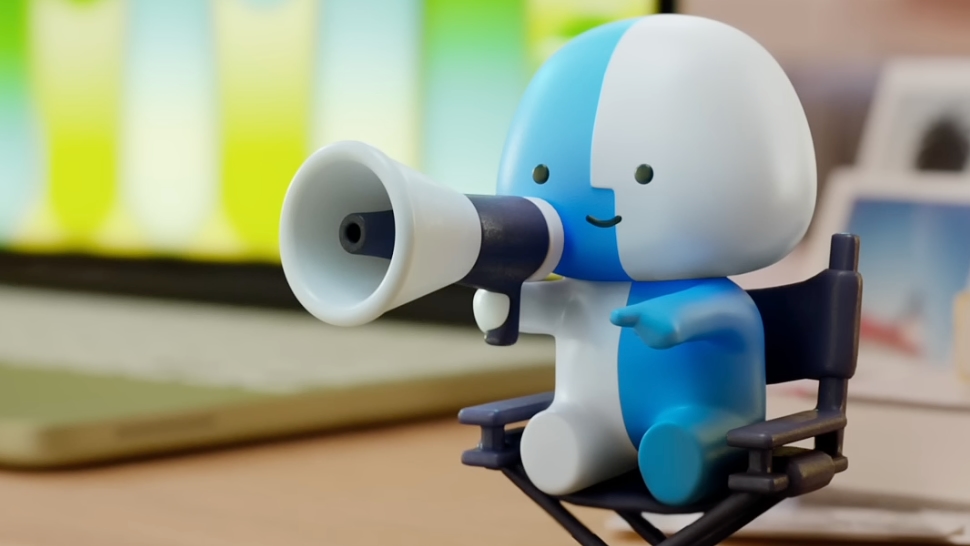
Adding another layer of charm and anticipation to this year's WWDC is the delightful re-appearance of the "Little Finder Guy." This tiny, anthropomorphized version of the classic Mac Finder icon first went viral earlier this year after featuring prominently in Apple's MacBook Neo marketing campaign, particularly on platforms like TikTok. His quirky, endearing personality quickly captured the hearts of fans, becoming an unexpected mascot for Apple's creative marketing efforts. Now, the Little Finder Guy has made a triumphant return, popping up this time in WWDC swag bags, further solidifying his status as a beloved unofficial emblem of the event.
The question on everyone's mind is: could we see this charming character return during the macOS 27 preview itself? Fingers crossed! Apple often uses visual storytelling and engaging characters to introduce new features and make complex technologies more accessible and fun. The Little Finder Guy would be a perfect fit to guide viewers through the new functionalities of macOS 27, perhaps acting as a visual representation of system processes, a guide for new user interface elements, or even a humorous companion demonstrating improved file management or search capabilities. His playful demeanor could lighten the technical presentations, making them more memorable and enjoyable for both developers and general users alike. His appearance could also signal a renewed focus on the Mac's identity, connecting with its rich history while looking forward to its future.
The phenomenon of the Little Finder Guy also highlights Apple's evolving marketing strategies, embracing viral trends and social media to connect with a broader audience. His popularity demonstrates that even small, seemingly minor details can have a significant cultural impact and become talking points that generate immense excitement for upcoming products. Whether he's simply a fun easter egg or plays a more integral role in the macOS 27 presentation, the Little Finder Guy has undeniably added an extra layer of anticipation and personality to WWDC 2026, making the reveal of the new macOS name and its features even more eagerly awaited.
Conclusion: The Future of Apple Unfolds
As the curtains rise on WWDC 2026, the stage is set for a series of announcements that will undoubtedly shape the future of Apple's ecosystem for the coming year and beyond. From the highly anticipated software updates across all major platforms—iPadOS 27, macOS 27, watchOS 27, tvOS 27, and visionOS 27—to the intriguing possibilities of new hardware, the focus on a revamped, albeit beta, Siri, the monumental shift to Apple Silicon-exclusive Macs, and the emotional farewell of Tim Cook from the keynote stage, this WWDC promises to be one for the history books.
The themes emerging from these talking points are clear: a profound emphasis on advanced artificial intelligence, a complete integration of Apple's custom silicon across its hardware and software, and a strategic evolution of its leadership. These elements combine to paint a picture of an Apple that is not just refining its existing products but is actively laying the groundwork for entirely new user experiences and capabilities, powered by its unique blend of hardware, software, and services.
We encourage you to stay tuned for our in-depth coverage of all of Apple's announcements throughout today and the rest of WWDC 2026. Our team will be breaking down every detail, analyzing the implications for developers and users, and providing expert insights into what these revelations mean for the broader tech landscape. Don't miss a moment of the action!
If you're eager to watch the keynote live as it happens, we also have a comprehensive guide explaining all the ways you can watch Apple's WWDC 2026 Keynote. Join us as we witness Apple unveil its next chapter.
This article, "5 Things to Watch for During Apple's WWDC 2026 Keynote Today" first appeared on MacRumors.com
Discuss this article in our forums
from MacRumors
-via DynaSage
