
Zelda 2 Deserves Better
Revisiting Zelda II: Why The Adventure of Link Deserves More Than Its Difficult Reputation
In the vast and legendary world of video games, few series are as beloved and respected as The Legend of Zelda. From its groundbreaking first game to its revolutionary open-world adventures, each entry is often praised for being new and exciting, with complex puzzles and a timeless feeling of adventure. However, among these celebrated games, one often stands out, frequently misunderstood and unfairly criticized: Zelda II: The Adventure of Link. Released in 1987 (1988 in North America), this direct follow-up to the original NES classic has often been labeled as an incredibly difficult failure, a black sheep in an otherwise perfect family of games. But is this judgment truly fair, or has time made us forget the unique brilliance and bold risks that truly define this often-overlooked game?
This article aims to challenge the common view of Zelda II. We will look closely at what made this game so different, explore the reasons for its mixed reactions, and ultimately argue why it deserves a more thoughtful appreciation. Far from being just a mistake, The Adventure of Link was a brave evolution, pushing boundaries and offering a distinct gaming experience that, while tough, was also incredibly rewarding and influential in its own way. It's time to look past the frustrations and uncover the true legacy of one of gaming's most talked-about sequels.
The Shadow of the Original: Why Zelda II Gained Its Reputation
To understand why Zelda II faced criticism, we first need to remember the huge success of the game before it. The original Legend of Zelda was a revelation, setting new standards for action-adventure games with its open world, non-linear progress, and memorable puzzles involving items. Players explored Hyrule from a top-down view, deciding their own path and finding secrets at every turn. When Zelda II arrived, people naturally had very high hopes for a game that continued this beloved style.
However, what players got was something strikingly different. The most immediate and noticeable change was moving from the familiar top-down view to a side-scrolling perspective for combat and interactions in towns. While the overworld map kept the classic top-down look, stepping into a fight or a new area turned the game into a mix of platforming, action, and RPG elements. This drastic change disappointed many fans who expected a direct evolution of the first game's mechanics. It wasn't just a change in how you saw the game; it was a fundamental shift in how the game was played.
The Challenge of Difficulty: A True NES Hard Game
Besides the change in genre, the main complaint against Zelda II was its brutal, unyielding difficulty. This was an era often called "NES Hard," a time when games were designed to be incredibly challenging, often to make them last longer or simply because developers enjoyed pushing players to their limits. Zelda II fully embraced this idea. Enemies hit hard, often with patterns that were hard to predict without a lot of practice. Bottomless pits were common, and environmental dangers were everywhere.
Adding to this was the game's harsh 'Game Over' system. Dying meant being sent back to the title screen, losing all experience points (EXP) gained for the current level, and having to restart from the beginning of the Hyrule overworld map. This severe punishment for failure made every fight, every jump, and every boss battle a high-stakes event. Unlike the more forgiving checkpoint systems of modern games, Zelda II demanded near-perfection and punished mistakes severely. Many players found this level of challenge too frustrating, leading to broken controllers and unfinished games.
Hidden Clues and Confusing Progress
Another common criticism came from the game's often cryptic nature. Staying true to its NES roots, Zelda II offered very little guidance. Important quest items, character locations, and dungeon entrances were often hidden or hinted at with vague phrases from non-player characters (NPCs) who spoke in short, often confusing sentences. "I am Error" became a legendary, though unhelpful, line that perfectly captured the game's sometimes bewildering approach to storytelling and giving directions.
Players were expected to explore every corner of Hyrule, talk to every villager, and try out every item. This trial-and-error approach, while rewarding for determined adventurers, was a major obstacle for others. Without the internet and easy-to-find guides, navigating Zelda II's more obscure puzzles and progression paths was a real test of patience and problem-solving, adding to its reputation as an unapproachable and confusing experience.
A Daring Departure: What Made Zelda II So Unique
While often seen as a black sheep, Zelda II's uniqueness is precisely what makes it so interesting. It wasn't merely a difficult game; it was a bold experiment in mixing genres, creating a path that no other Zelda game has ever fully followed. To truly appreciate Zelda II, one must look past the initial shock of its differences and understand the intricate systems it introduced.
The Action-RPG Hybrid: A Pioneer of its Time
Zelda II stands as a fascinating early example of the action-RPG genre. It introduced a strong experience point (EXP) and leveling system, a feature completely absent from its predecessor and largely unique within the early Zelda series. Players could put EXP into three key stats: Attack, Magic, and Life. Increasing Attack made Link's sword hits more powerful, Magic increased the capacity and effectiveness of spells, and Life boosted Link's health points. This choice allowed for some player customization and strategy, enabling different ways to play the game.
This RPG progression wasn't just for show; it was essential for survival. Grinding for EXP to level up Link became a core part of the gameplay loop, preparing players for increasingly difficult challenges. The mix of real-time side-scrolling combat with these lasting character upgrades created a dynamic where player skill and character growth were equally important, a concept that would later become a foundation for many successful action-RPGs.
Mastering the Sword: A Detailed Combat System
The side-scrolling combat, though surprising at first, was surprisingly deep and detailed. Link wasn't just a character swinging a sword; he had a versatile set of moves that required precision and timing. His basic forward thrust was effective, but true mastery came from learning the "Down Thrust" and "Up Thrust" techniques. The Down Thrust allowed Link to hit enemies below him while jumping, which was often crucial for attacking flying foes or enemies with low hitboxes. The Up Thrust, learned later in the game, provided a vital defense against airborne attackers and allowed Link to hit enemies above his head.
Furthermore, Link could block projectiles and enemy attacks with his shield, adding a defensive layer to the combat. The sword fighting in Zelda II was less about mashing buttons and more about careful positioning, observing enemy patterns, and precise execution of Link's unique moves. Once mastered, the combat became incredibly satisfying, turning seemingly impossible encounters into rhythmic dances of dodging and attacking. This system rewarded patience and skill, a hallmark of excellent action game design.
The Magic System: Expanding Link's Toolkit
Beyond his trusty sword, Link used a variety of magic spells, adding another strategic layer to the gameplay. Spells like "Shield" reduced damage, "Jump" allowed Link to reach new heights, "Life" healed him, and "Fire" provided an offensive long-range attack. These spells were crucial for navigating dungeons, solving environmental puzzles, and surviving tough boss battles. Managing Link's magic meter and knowing when to use which spell became an important part of the game's challenge.
Getting new spells often involved completing side quests or finding hidden areas, encouraging exploration and interaction with the game world. This early implementation of a strong magic system contributed significantly to the feeling of Link evolving from a simple adventurer into a powerful hero, with an expanding set of abilities at his disposal.
The "NES Hard" Context: Re-evaluating Difficulty
It's impossible to discuss Zelda II's difficulty without placing it firmly within the context of the Nintendo Entertainment System era. Many classic NES titles, from Castlevania to Mega Man, were famous for their demanding difficulty. This wasn't always due to poor design; it was often a deliberate choice rooted in the arcade experience, where difficulty served to make playtime longer and encourage mastery.
Zelda II perfectly embodies this "NES Hard" philosophy. Its challenge isn't inherently unfair, but it demands respect, patience, and a willingness to learn from mistakes. Each death, though frustrating, serves as a lesson. Players learn enemy attack patterns, memorize dangerous platforming sections, and discover optimal strategies through repetition. This process of learning through trial and error was a core part of gaming in the late 80s, creating a sense of immense accomplishment when a difficult boss was finally defeated or a complex dungeon navigated.
Beyond the Frustration: The Reward of Mastery
For those willing to endure the initial steep learning curve, Zelda II reveals itself as a deeply satisfying experience. The feeling of finally mastering Link's combat, navigating a treacherous palace without losing a life, or deciphering a cryptic hint to uncover a vital item is incredibly rewarding. It's a game that doesn't guide you; it throws you into the deep end and expects you to swim. This approach, while off-putting to some, fosters a profound sense of achievement that modern, more forgiving games sometimes lack.
Moreover, the game's vast world, filled with secrets and hidden passages, rewards diligent exploration. Finding a secret cave with an extra life or a hidden town containing a crucial spell feels earned. The difficulty, therefore, is not an arbitrary barrier but an integral part of the adventure, making every triumph feel significant.
Innovation and Lasting Influence
Despite its mixed reception, Zelda II introduced several elements that, directly or indirectly, influenced not only future Zelda titles but also the broader gaming landscape. Its willingness to experiment paved the way for more diverse gameplay mechanics within established franchises.
Expanding the Lore of Hyrule
Zelda II significantly expanded the story and background of Hyrule, introducing new ideas and characters that enriched the series' mythology. It introduced the concept of the "sleep spell" cast upon Princess Zelda and Link's quest to awaken her, a more personal and character-driven story than the first game's simple rescue mission. We see more towns, interact with more named NPCs, and learn about different regions of Hyrule.
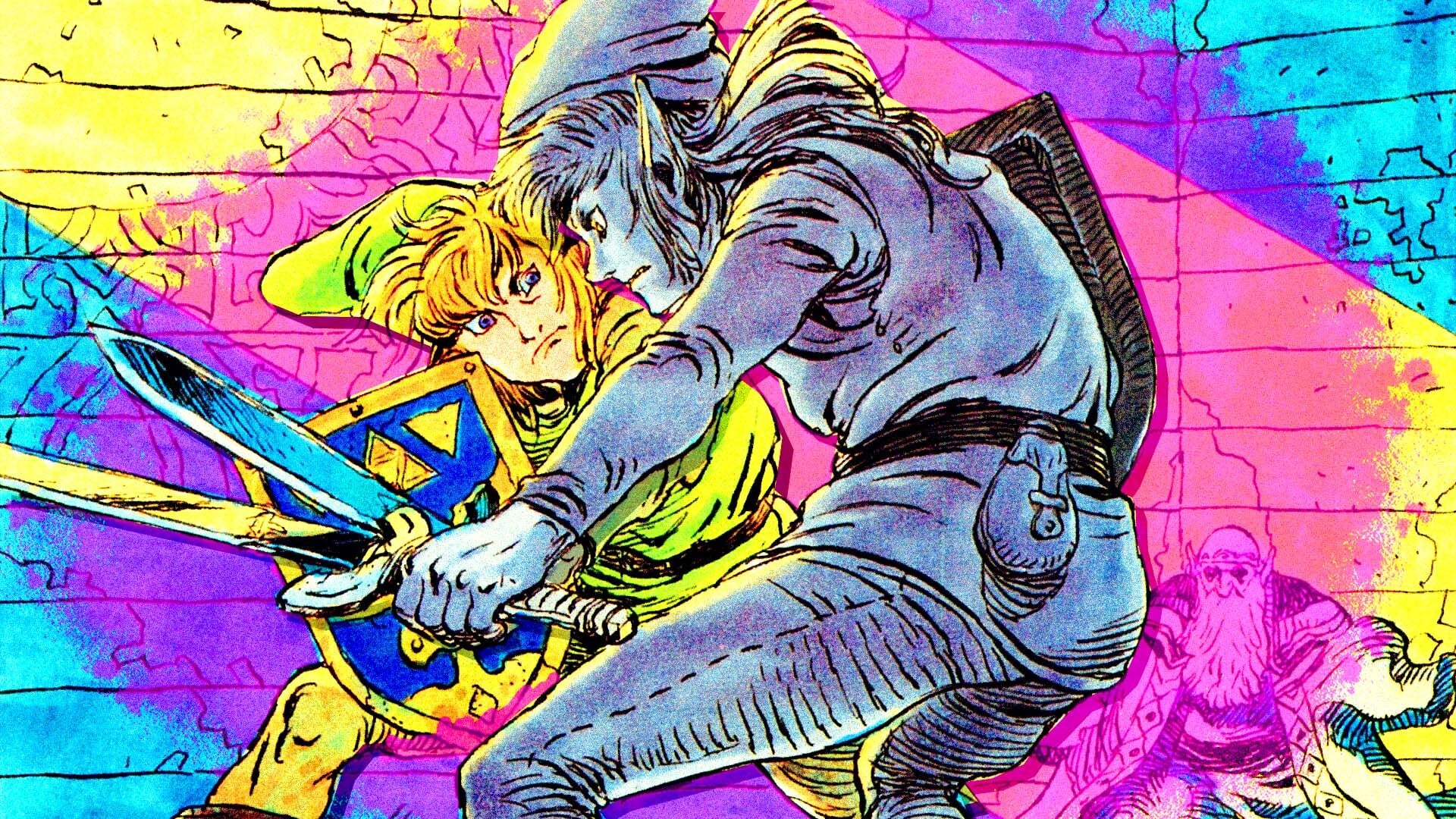
Perhaps most famously, Zelda II is credited with introducing Dark Link, a formidable shadow doppelganger that became a recurring and iconic antagonist in later Zelda games, notably in Ocarina of Time. These narrative and character developments showcased Nintendo's desire to build a deeper, more intricate world for the Zelda franchise.
A Precursor to Action-RPGs and Metroidvanias
While not a pure RPG, Zelda II's inclusion of EXP, leveling, and distinct character stats was ahead of its time for a console action game. It blurred the lines between adventure, action, and role-playing, influencing a generation of developers who would go on to create some of the most beloved action-RPGs. The side-scrolling exploration, coupled with the need to acquire new abilities (like the Down Thrust or specific spells) to access previously unreachable areas, also bears a striking resemblance to mechanics seen in later Metroidvania games.
Even if later Zelda games largely went back to the top-down perspective or embraced 3D, the spirit of experimentation seen in Zelda II undoubtedly fueled the developers' willingness to innovate. It proved that the Zelda formula wasn't rigid, laying the groundwork for future radical departures like Majora's Mask or Breath of the Wild.
Why Zelda II Deserves a Second Chance
Given its unique mix of features, historical context, and undeniable influence, Zelda II: The Adventure of Link is ready for a new appreciation. It's a game that suffered from being too different for its time, but one that offers a genuinely rewarding experience for modern players willing to approach it with an open mind.
A Unique Flavor in the Zelda Pantheon
Every Zelda game has its own identity, but Zelda II truly stands alone. It doesn't try to copy the original, nor does it perfectly set the stage for A Link to the Past. Instead, it carves its own special place, offering a blend of intense action, strategic RPG elements, and classic adventure that you won't find anywhere else in the series. For fans who have explored every corner of Hyrule across countless games, Zelda II provides a fresh, though challenging, perspective on what a Zelda game can be.
Its darker tone, the presence of actual townsfolk (not just cryptic old men), and the emphasis on direct combat make it feel distinct. It's a testament to Nintendo's early commitment to trying new things, even if those experiments didn't always resonate universally at the time of their release.
The Satisfaction of Overcoming a True Challenge
In an era where games often prioritize easy access and instant rewards, the raw challenge of Zelda II can be a refreshing change. It forces players to sharpen their skills, learn from their mistakes, and keep going through difficulties. The sense of accomplishment from finally defeating a tough boss, navigating a complex palace, or uncovering a hidden secret in Zelda II is profound and deeply satisfying. It's a reminder of an older time in gaming where mastery was earned, not simply given.
For gamers who enjoy titles like Dark Souls or Hollow Knight for their challenging but fair gameplay, Zelda II offers a similar, though 8-bit, journey of growth and triumph.
Accessible in the Modern Era
While the original NES experience might have been daunting, modern conveniences make revisiting Zelda II much more approachable. The game is readily available on Nintendo Switch Online, often bundled with save state features that can lessen some of the harshness of its 'Game Over' mechanic. Additionally, the internet is full of guides, walkthroughs, and community discussions that can help new players navigate its more cryptic elements without completely spoiling the sense of discovery.
These tools allow players to experience the core brilliance of Zelda II without necessarily being overwhelmed by its original, uncompromising difficulty. It provides an opportunity to appreciate its innovative design, compelling world, and surprisingly deep combat without the same level of frustration that might have deterred players in the 80s.
Conclusion: A Legacy Reclaimed
Zelda II: The Adventure of Link is much more than an "impossibly difficult failure." It is a groundbreaking, experimental game that dared to challenge expectations and redefine what a sequel could be. Its blend of side-scrolling action, RPG mechanics, and overhead exploration was innovative for its time, and its detailed combat system rewarded skill and perseverance.
While its brutal difficulty and cryptic nature alienated many upon release, these elements are also key to its unique charm and the profound sense of accomplishment it offers. It expanded the rich lore of Hyrule, introduced iconic characters like Dark Link, and laid groundwork for future genre developments.
It's time for Zelda II to shed its undeserved reputation and be recognized for what it truly is: a bold and ambitious entry in one of gaming's greatest franchises. We encourage both seasoned Zelda veterans and newcomers alike to revisit The Adventure of Link with an open mind. You might just discover a challenging, rewarding, and deeply satisfying experience that stands as a testament to Nintendo's willingness to innovate, even if it meant taking a path less traveled. Give Link's second adventure the respect it deserves; you might be surprised by the hero you find within its challenging depths.
from Kotaku
-via DynaSage
