
Valve’s New $100 Steam Controller Sells Out Instantly As Scalpers Try To Flip Them For Up To $300 [Update]
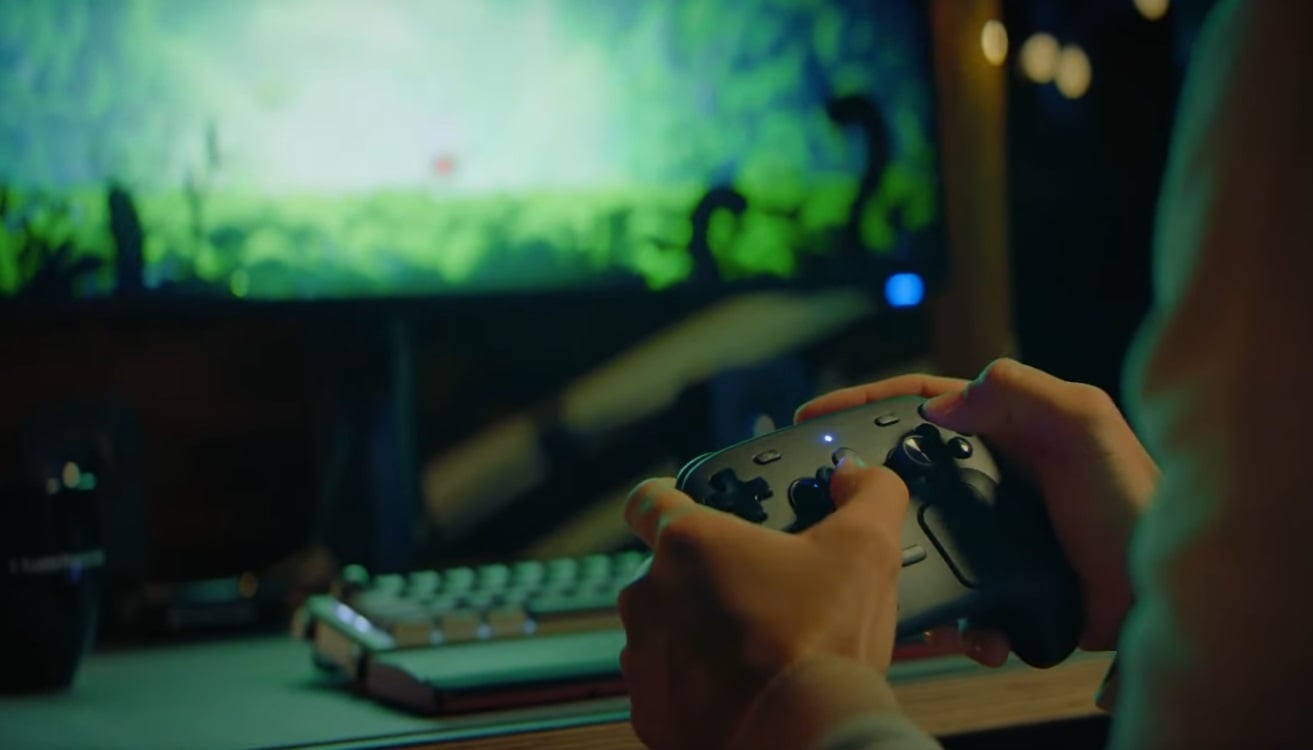
The Eternal Question: Why Is PC Gaming So Complicated (Yet So Rewarding)?
We’ve all been there. You just want to relax, dive into your favorite PC game, and enjoy a seamless experience. But often, it feels like there’s always something that gets in the way. Whether it’s a tricky installation, a driver update, or trying to get a new controller to work just right, the question echoes: “Why does it always have to be this way?” This feeling is especially true when we look at innovative, yet sometimes challenging, pieces of hardware like the Steam Controller. It represents both the incredible potential and the occasional headaches of PC gaming.
PC gaming is a unique world. It offers unparalleled freedom, stunning graphics, and access to a vast library of games that often aren't available on consoles. But with this freedom comes complexity. Unlike the plug-and-play simplicity of a game console, a PC setup can demand a bit more from its user. From choosing the right components for your gaming PC to figuring out the best settings for each game, it's a journey. And when it comes to how you actually play – the input device – the choices are vast, and sometimes, overwhelming.
For decades, the keyboard and mouse have been the kings of PC gaming, especially for genres like first-person shooters and strategy games. Their precision and speed are unmatched for many tasks. However, as PC gaming evolved, many players started yearning for the comfort and intuitive feel of a game controller, particularly for action games, racing simulations, and platformers. This desire led to a boom in controller support for PC games and the rise of unique solutions to bridge the gap between console comfort and PC power.
The Dream of Couch Gaming on PC: A Comfort Revolution
Imagine this: you've got a powerful gaming rig, capable of running the latest games at incredible resolutions. But instead of hunching over a desk, you're lounging on your sofa, game displayed on a big TV, just like a console. This dream, often called "couch gaming" or "big picture gaming," fueled a significant shift in how many people wanted to experience PC games. It promised the best of both worlds: the performance and game selection of a PC combined with the relaxed setup of a console.
However, simply connecting a standard console controller to a PC didn't always cut it. While modern controllers from Xbox and PlayStation are now widely supported, there were still games—especially those designed purely for keyboard and mouse—that felt awkward or impossible to play with a traditional gamepad. This is where the challenge began. How do you bring the precision of a mouse and the versatility of a keyboard to a handheld controller, all while maintaining that comfortable couch experience? This challenge became a breeding ground for innovation, and Valve, the company behind the popular Steam platform, decided to tackle it head-on.
Valve’s vision extended beyond just selling games. They wanted to create an entire ecosystem that made PC gaming more accessible and enjoyable in any setting. This included their Steam Machines, specialized mini-PCs designed for living rooms, and crucially, a unique input device that could truly unlock the potential of PC games from the comfort of your couch. They aimed to solve the problem of playing strategy games, point-and-click adventures, and even some first-person shooters with controller-like comfort, something no other controller had successfully achieved before.
Enter the Steam Controller: A Bold Experiment in Input
In 2015, Valve unveiled the Steam Controller, a device unlike anything else on the market. It wasn't just another gamepad; it was a radical rethinking of how we interact with PC games. The core idea was to offer the precision of a mouse and the broad functionality of a keyboard within a controller form factor. Its most striking features were its two large, clickable trackpads, which replaced the traditional analog sticks found on other controllers.
These trackpads were designed to mimic a mouse, offering fine-tuned control that was supposed to be perfect for aiming in shooters or navigating complex menus in strategy games. Alongside the trackpads, it featured a traditional D-pad, four face buttons, two triggers, two shoulder buttons, and uniquely, two back paddles. But what truly set the Steam Controller apart was its incredible level of customization. Every single button, trackpad, and even the gyroscopic sensors inside the controller could be remapped and configured to perform almost any action, allowing users to tailor their experience game by game.
Valve presented it as the ultimate solution for PC gamers. It promised to make thousands of keyboard-and-mouse-only games playable from the couch, without sacrificing precision. This was a huge promise, and for many, it represented a potential revolution in PC gaming input. The idea was compelling: one controller to rule them all, adaptable to any genre or game, no matter how complex its original control scheme. It was a testament to Valve's willingness to experiment and push boundaries in the gaming hardware space, even if the path forward wasn't entirely clear.
The Promise and the Puzzles: Why Innovation Can Be Hard
The arrival of the Steam Controller was met with a mix of excitement and skepticism. On one hand, many appreciated Valve’s ambition to solve a real problem for PC gamers. The potential to play your entire Steam library, from complex strategy games like Civilization to classic adventure titles, all from the comfort of a sofa, was incredibly appealing. For those who dedicated time to understanding it, the controller truly shone, offering control schemes previously impossible on a gamepad.
However, the biggest hurdle for the Steam Controller was its steep learning curve. Unlike a traditional controller where you generally know what to expect, the trackpads required a completely different kind of muscle memory. Many users found it awkward at first, struggling to achieve the same level of accuracy they had with a mouse or the intuitive feel of an analog stick. Getting the most out of the Steam Controller meant diving deep into its extensive configuration options, creating custom profiles for each game, and tweaking settings like sensitivity, haptic feedback, and dead zones.
This level of required effort was a double-edged sword. For some, the endless customization was a godsend, allowing them to craft the perfect control scheme. For others, it was a source of frustration. They didn't want to spend hours fiddling with settings; they just wanted to play. This led to that familiar PC gaming lament: "Why does it always have to be this way?" The Steam Controller, despite its innovative design, sometimes felt like a puzzle you had to solve before you could even start the game. The very thing that made it powerful – its flexibility – also made it intimidating for a casual audience.
Despite these challenges, a dedicated community grew around the Steam Controller. Users shared their custom configurations, offered tips and tricks, and tirelessly worked to make the controller work for a wider range of games. This community effort highlighted both the controller's potential and the fact that its true power often lay in the hands of its most committed users. It was a device that demanded engagement, and while it rewarded those who put in the time, it alienated many who sought instant gratification.
The Unspoken Frustration: "Why Does It Always Have to Be This Way?"
The question “Why does it always have to be this way?” often arises from the inherent friction between the desire for a smooth, effortless gaming experience and the reality of PC gaming's open, flexible, and sometimes complex nature. With the Steam Controller, this frustration manifested in several key areas. Imagine buying a new game, excited to jump in, only to spend the first hour or more just configuring your input device. This wasn't a rare occurrence for Steam Controller users.
Specific pains included:
- Profile Management: Each game often needed its own unique configuration profile. While the Steam community shared many excellent ones, finding the perfect one or tweaking it to your liking was still a time investment.
- Incompatible Games: Despite its versatility, some games simply didn't play well with the Steam Controller, requiring awkward workarounds or forcing players back to the keyboard and mouse.
- Switching Input Modes: For some games, you might need the precision of the trackpad for aiming but the quick button presses of a traditional controller for menu navigation, leading to constant mode switching.
- Muscle Memory Reset: Moving between the Steam Controller and a standard gamepad or keyboard/mouse required a significant mental adjustment, breaking immersion and fluidity.
This struggle isn't unique to the Steam Controller; it’s a microcosm of the broader PC gaming experience. PC gamers often embrace a level of troubleshooting and customization that console gamers rarely encounter. We install drivers, tweak graphics settings, manage background processes, and yes, sometimes spend hours perfecting our control schemes. The underlying tension is between the vast possibilities that PC gaming offers and the effort required to unlock them. We want the freedom and power, but sometimes we long for the elegant simplicity of a console.
The "why" behind this frustration often boils down to a desire for plug-and-play ease. While many cherish the deep customization, others simply want to power on, pick up a controller, and play. The Steam Controller, in its attempt to offer ultimate flexibility, sometimes overlooked this fundamental user desire for immediate accessibility. It asked players to adapt to it, rather than adapting seamlessly to the player.
Beyond the Steam Controller: The Evolution of PC Gaming Inputs
While the Steam Controller didn't become the mainstream success Valve might have hoped for, its existence undoubtedly influenced the PC gaming landscape. The period around its launch saw a renewed focus on PC gaming peripherals and the standardization of controller support. Today, the most popular choices for PC gamers looking for a gamepad experience are often standard console controllers.
Microsoft's Xbox controllers, with their excellent PC compatibility and robust drivers, have become a de facto standard for many games. PlayStation controllers, particularly the DualShock 4 and DualSense, also offer strong PC support, often through Steam's own input configurator, which has evolved greatly since the Steam Controller's release. These controllers provide a familiar, intuitive experience that requires far less setup for most modern games. This rise of standardized controllers has, in a way, sidelined the need for such a radically different device as the Steam Controller for many gamers.
Yet, the keyboard and mouse remain paramount for certain genres. Competitive esports titles, real-time strategy games, and many first-person shooters still thrive on the precision and rapid input offered by a quality gaming keyboard and mouse. Beyond these common inputs, the PC ecosystem also supports a diverse range of niche controllers: high-end joysticks for flight simulators, racing wheels and pedals for driving games, and even specialized VR controllers for immersive virtual experiences. The pursuit of the "perfect" input device is an ongoing journey, constantly pushing the boundaries of technology and user experience.
This continuous evolution shows that there's no single "best" way to play PC games. It depends on the game, the player's preference, and what kind of experience they're seeking. The Steam Controller tried to be everything to everyone, and in doing so, created a niche that was too demanding for the average player, but incredibly rewarding for a dedicated few. Its legacy lies not in mass market adoption, but in showing what was possible and pushing the conversation forward.
The Legacy of Innovation: What We Learned
Even though Valve eventually stopped manufacturing the Steam Controller in 2019, its impact on the gaming world cannot be overlooked. It might not have achieved widespread market dominance, but it served as a powerful proof-of-concept and a testament to Valve's adventurous spirit. What did we truly learn from this ambitious experiment?
Firstly, it proved there was a strong desire among PC gamers for a more versatile and comfortable way to play games from the couch. While the Steam Controller's specific approach might have been too niche, the underlying need for accessible living-room PC gaming remains. Secondly, it pushed the boundaries of controller customization. The depth of its configuration options was unprecedented, influencing how other input devices and even software platforms (like Steam's own Big Picture Mode) handle controller mapping and user profiles today. Its intuitive configuration system, which allowed users to share and download community profiles, was a pioneering feature.
The Steam Controller showed that haptic feedback could be used for more than just rumble; it could simulate the feeling of a trackball or the click of a mouse. It championed the idea that a controller could be truly universal, adapting to any game's control scheme rather than forcing games to adapt to a fixed controller. While this ideal was difficult to achieve in practice for the average user, the ambition itself was commendable. It demonstrated that innovation in gaming input isn't just about making things faster or more responsive, but also about making them more adaptable and personalized.
Ultimately, the Steam Controller encouraged players and developers alike to think differently about input. It sparked conversations about precision on gamepads, the viability of trackpads, and the power of user-generated configurations. Its influence can be subtly seen in the continued development of Steam Input, which now supports a wide array of controllers with similar deep customization options, allowing players to tailor almost any gamepad for any game. This is a direct legacy of the Steam Controller's pioneering spirit, making PC gaming more flexible for everyone.
Finding Your Gaming Zen: Tips for a Smoother Experience
Given the occasional complexities, how can PC gamers find their "zen" – that perfect balance of power, flexibility, and ease of use? It's about making informed choices and embracing the aspects of PC gaming that suit your style. Here are a few tips:
- Understand Your Games' Needs: Before diving in, consider what kind of input a game is truly designed for. A fast-paced FPS might still be best with a keyboard and mouse, while a sprawling RPG could be fantastic with a controller.
- Embrace Customization (When You're Ready): If a game doesn't feel right with default controls, don't be afraid to tweak them. Steam's Big Picture Mode and its robust input configurator allow you to customize almost any controller. Tools like reWASD offer even more advanced options for non-Steam games.
- Invest in Quality Peripherals: A good gaming mouse, a comfortable keyboard, and a reliable controller can make a huge difference. Ergonomics and responsiveness matter.
- Utilize Community Resources: Don't reinvent the wheel! For controllers like the Steam Controller (if you still own one) or even standard gamepads, look for community-shared profiles and guides online. Chances are, someone has already figured out an optimal setup.
- Balance Innovation with Familiarity: While it’s exciting to try new input devices, sometimes sticking with what you know best (or what works reliably) can prevent frustration. The journey of finding the perfect setup is part of the PC gaming experience for many.
- Keep Drivers Updated: A simple step, but crucial for smooth performance. Ensure your graphics drivers and peripheral drivers are always up to date for the best compatibility and performance.
The goal isn't necessarily to eliminate all challenges but to understand them and equip yourself with the knowledge to overcome them. That's the beauty and the beast of PC gaming – it demands a little more, but it often gives back so much more in return.
The Future of Gaming Controls: What's Next?
The evolution of gaming controls is a never-ending story. Just as the Steam Controller pushed boundaries, future technologies will continue to redefine how we interact with our digital worlds. Virtual Reality (VR) and Augmented Reality (AR) gaming are already driving innovation in motion controllers, haptic feedback suits, and even eye-tracking technology. These immersive experiences demand intuitive and seamless input that transcends traditional buttons and sticks.
We're also seeing increasing interest in adaptive technologies, making gaming more accessible to players with disabilities. This includes specialized controllers, voice commands, and customizable interfaces. The lessons learned from devices like the Steam Controller – particularly regarding deep customization and remappable inputs – are invaluable in this field, ensuring that more people can enjoy the rich world of PC gaming.
Furthermore, the integration of AI and machine learning could lead to even smarter input devices that learn your playstyle and adapt controls on the fly, or even predict your actions to offer assistive guidance. Imagine a controller that dynamically adjusts sensitivity based on whether you're sniping or driving, without you having to touch a setting. The quest for ultimate immersion and effortless control continues, fueled by both technological advancements and the enduring desire for a perfect gaming experience.
Concluding Thoughts: Embracing the Journey
So, why does it always have to be this way? Perhaps it doesn't "have to," but in the world of PC gaming, the complexity is often a byproduct of its greatest strength: freedom. The freedom to customize, to upgrade, to choose from an endless array of games and peripherals. The Steam Controller was a magnificent, albeit challenging, example of this freedom in action. It tried to solve a problem that many PC gamers faced, and in doing so, it highlighted both the potential and the pitfalls of truly innovative hardware.
The journey of a PC gamer is rarely just about pressing play. It's about building your machine, curating your library, optimizing your settings, and finding the perfect way to interact with your games. It's about overcoming those small frustrations to unlock immense satisfaction. The question "Why does it always have to be this way?" isn't a complaint; it's a recognition of the unique, often demanding, but ultimately rewarding path we choose as PC gamers. And in that journey, every piece of hardware, every software update, and every moment of tinkering contributes to the rich, dynamic tapestry of our gaming lives.
from Kotaku
-via DynaSage
