
Subnautica 2 Has A Violence Problem, And It’s Not Coming From The Players
Diving into the Deep: Why Subnautica Needs Stronger Defenses Against Its Aggressive Ocean Dwellers
Subnautica is a game unlike any other. It plunges players into the mysterious, breathtaking, and utterly terrifying depths of an alien ocean world. From vibrant coral reefs teeming with life to crushing, abyssal trenches, Planet 4546B captivates with its beauty and challenges with its harsh survival demands. You crash-land, alone, with nothing but a fabricator and a burning desire to survive and escape. But beneath the serene surface and mesmerizing bioluminescence lurks a constant, primal threat: the aggressive creatures that call these waters home.
While the game masterfully balances exploration, crafting, and a compelling story, one area often highlighted by players for potential improvement is the ability to defend oneself against the ocean's more hostile inhabitants. The current tools often feel more like temporary deterrents or last-ditch evasive maneuvers rather than effective defensive strategies. For a game that thrives on tension and the feeling of vulnerability, providing players with more robust and creative ways to defend themselves could enhance the experience without sacrificing the essential fear factor. Future updates could greatly benefit from introducing better methods of defense against these relentless "fishies," transforming moments of panic into opportunities for tactical survival.
The Allure and Terror of Planet 4546B
Subnautica’s success lies in its unique blend of exploration, crafting, and psychological horror. The sheer scale of the underwater world is immense, offering countless biomes to discover, each with its own ecosystem, resources, and dangers. Players spend hours gathering materials, building intricate underwater bases, and piloting advanced submersibles, all while unraveling the planet's secrets. This journey is punctuated by moments of serene beauty – schools of glittering fish, bioluminescent plants illuminating dark caves, and vast, open expanses of ocean that stretch into the unknown.
However, this beauty is consistently undercut by a pervasive sense of dread. The silence of the deep is often broken by the guttural roar of an unseen leviathan, the metallic screech of a stalker, or the sudden, terrifying lunge of a creature from the gloom. This constant tension is a cornerstone of the Subnautica experience, reminding players that they are not at the top of the food chain. This vulnerability is thrilling, but when it leads to repeated, unavoidable deaths or the constant loss of hard-earned vehicles, it can also become frustrating. The desire for more effective defense isn't about removing the fear, but about giving players more agency in facing it.
Understanding the Threat: Subnautica's "Aggressive Fishies"
The term "aggressive fishies" might sound cute, but in Subnautica, it refers to a spectrum of terrifying creatures, from small nuisances to colossal leviathans capable of crushing your submarine in a single bite. Each type presents a unique challenge and contributes to the game's stressful atmosphere.
The Nuisances and Harassers
These creatures, while not typically game-ending on their own, can quickly become overwhelming or pave the way for bigger threats. Take the Stalkers, for instance. They're intelligent, pack-hunting creatures that will snatch your tools and tear chunks out of your Seamoth, often in critical early-game areas. Crashfish explode on contact, dealing significant damage and causing jumpscares in tight cave systems. Even the Gasopods, while passive unless provoked, leave behind toxic gas clouds that can quickly deplete your health or damage your equipment. Dealing with these smaller, persistent threats often involves evasion or a quick knife swipe, which feels less like a strategic defense and more like a frantic reaction.
The Mid-Tier Menace
Moving up the food chain, creatures like the Bone Sharks and Ampeels pose a more significant danger, particularly to your vehicles. Bone Sharks are relentless, often pursuing your Seamoth for long distances, inflicting steady damage. Ampeels electrify their surroundings, making navigation dangerous and direct engagement risky. These creatures often guard valuable resource zones or critical path locations, forcing players into uncomfortable encounters where their primary option is still to outrun or outmaneuver the threat, often at great cost to their vehicle's integrity or precious oxygen supply. While the Seamoth's Perimeter Defense System offers a brief reprieve, it's a reactive tool with a cooldown, not a proactive defense.
The Apex Predators: True Leviathans of the Deep
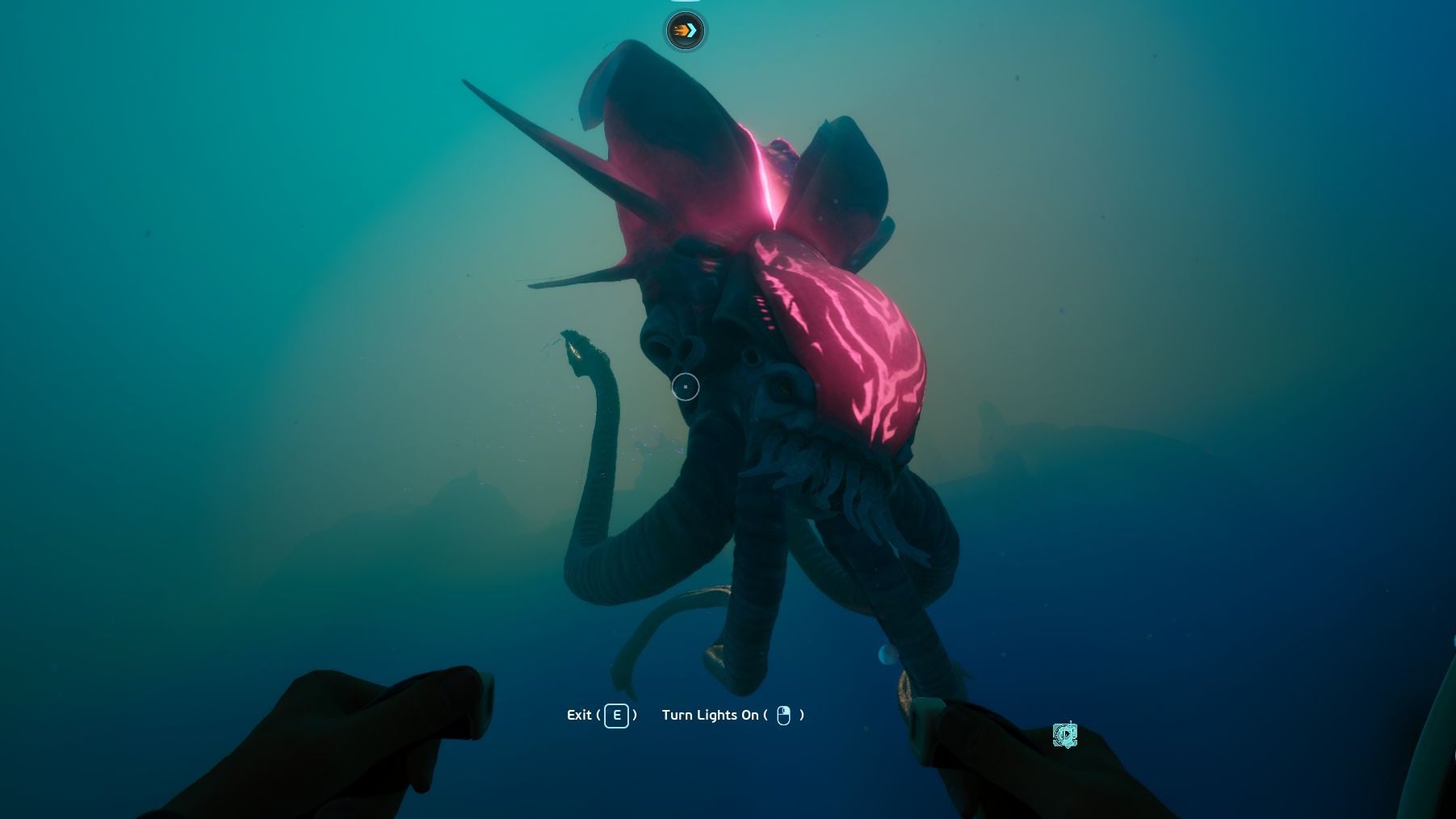
Then there are the leviathans: the Reaper Leviathan, the Ghost Leviathan, and the Sea Dragon Leviathan. These are the undisputed rulers of their respective biomes, and encountering them is designed to induce sheer terror. Their roars alone can send shivers down your spine. They can grab your Seamoth, crush your Prawn Suit, or even slowly tear apart your massive Cyclops submarine. Against these titans, the player's options are extremely limited. The Stasis Rifle can temporarily freeze them, offering a brief window for escape or a few futile knife slashes, but it feels like a band-aid on a gaping wound. The Cyclops's shield offers temporary invulnerability but drains power rapidly. The fear these creatures inspire is core to Subnautica's identity, but the lack of meaningful countermeasures can often tip the balance from exhilarating fear to frustrating helplessness.
Current Defensive Measures: A Look at What We Have (and What's Lacking)
Subnautica isn't entirely devoid of defensive options, but they often feel insufficient, especially when facing the larger, more aggressive creatures. The emphasis is heavily on evasion and mitigation rather than direct engagement or proactive deterrence.
Evasion and Escape: Running for Your Life
For most encounters, the primary defense is simply to run. The Seamoth's speed and maneuverability, especially with upgrades, allow players to outpace many threats. The Prawn Suit's grapple arm can be used for quick escapes. The Cyclops, while slow, has a "silent running" mode and a temporary shield generator that can help it escape detection or withstand a few hits. However, evasion is not always possible, especially in tight spaces or when ambushed. Relying solely on escape can also lead to frustrating situations where valuable time and resources are spent simply fleeing rather than exploring or completing objectives.
Passive Protection: Fortifying Your Home and Rides
Players can reinforce their bases with stronger materials, increasing their hull integrity. Vehicles can also receive hull reinforcement upgrades, making them more resilient to damage. These are crucial for long-term survival, especially for deep bases or extended expeditions. However, these are passive defenses. They don't actively deter creatures; they merely allow your structures and vehicles to withstand more punishment before breaking. A reinforced Cyclops is still vulnerable to a persistent leviathan attack, and a fortified base won't stop a leviathan from circling menacingly outside your moonpool.
Limited Offense: The Meager Weapons
The game offers very few offensive tools. The standard knife is effective against smaller, non-aggressive fish for food but is practically useless against anything larger than a Stalker. The Thermoblade offers slightly more damage and cooks fish, but its combat utility remains minimal against threats. The Repulsion Cannon can push creatures away, but its range and effectiveness are limited, often feeling more like a temporary inconvenience to an attacker than a true defense. The Stasis Rifle is perhaps the most effective "weapon," allowing players to freeze creatures in place. This is invaluable for scanning dangerous fauna or creating an escape window, but it's a temporary effect, not a means of permanent deterrence or elimination. This lack of robust offensive options against truly dangerous threats contributes significantly to the feeling of helplessness.
The Case for Enhanced Defenses: Empowering the Explorer
The call for better defense isn't a plea to turn Subnautica into a first-person shooter. It's about enriching the survival experience by offering more strategic depth and player agency. A well-implemented defense system can actually enhance the core experience rather than detract from it.
Increasing Player Agency
Currently, against leviathans, players often feel like they are simply spectators to their own impending doom. More robust defensive options would give players a sense of control. Instead of just running, they could choose to deploy a specific deterrent, activate a specialized defense system, or even set up a temporary perimeter. This choice empowers the player, making encounters feel less like random misfortunes and more like challenges that can be overcome with preparation and skill.
Mitigating Frustration, Not Fear
The goal isn't to remove the fear that Subnautica so expertly cultivates. The sound design, sudden appearances, and sheer scale of the leviathans will always be terrifying. However, when fear consistently leads to unavoidable destruction of valuable vehicles or repeated deaths in deep, distant biomes, it crosses the line from thrilling terror into genuine frustration. Imagine building a Cyclops, spending hours gathering materials, only to lose it in moments to a leviathan with no real counterplay. Better defenses would help mitigate these frustrating elements, allowing players to recover from an attack or even survive one through skillful use of their tools, rather than relying solely on luck or a speedy escape.
Expanding Gameplay Horizons
Introducing new defensive mechanics would open up entirely new avenues for gameplay. This could include new crafting recipes for defensive modules, research trees for advanced security systems, new base modules dedicated to perimeter defense, and even new strategic considerations for base placement. Players would have more objectives to pursue, more blueprints to discover, and more ways to customize their survival experience, adding significant depth to the mid-to-late game.
Blueprint for Survival: Ideas for New Defensive Tools and Strategies
So, what kind of defenses could Subnautica implement without turning into an action game? The key is to make defenses costly, strategic, and often temporary, maintaining the survival-horror tension.
Advanced Vehicle Upgrades
Our trusty submersibles are our lifelines. Enhancing their defensive capabilities would be a natural fit.
Seamoth Enhancements
- Sonic Pinger: A deployable module that emits a high-frequency sound, temporarily scaring away smaller predators like Stalkers and Bone Sharks in a radius. It could have a cooldown or consume significant power.
- Decoy Launcher: A module that deploys an inflatable, power-intensive decoy that mimics the Seamoth's signature, attracting aggressive creatures away from the player for a short duration.
- Reinforced Sonar: An upgrade that not only detects creatures but also shows their aggression level, allowing for better evasion planning.
Prawn Suit Combat & Defense
- Mounted Harpoon: A less powerful, non-lethal harpoon attachment for the Prawn Suit's arm, capable of temporarily stunning or grappling onto large creatures to redirect them or create distance. It would require special ammunition.
- Energy Shield Emitter: A temporary personal shield for the Prawn Suit that can absorb a few hits from a leviathan before needing to recharge, allowing a window for escape.
- Mine Dispenser: A module that drops proximity mines, dealing concussive damage to creatures that pass over them, designed more for deterrence than destruction, perhaps stunning or disorienting.
Cyclops Fortress Modules
- Automated Perimeter Turrets: Small, retractable energy turrets that can be mounted on the Cyclops hull, automatically firing sonic pulses or low-power lasers at nearby aggressive fauna. They would draw significant power and could be damaged.
- Advanced Decoy System: An enhanced version of the Seamoth's decoy, capable of generating a more convincing signature to draw away even leviathans, but with high energy costs and a long cooldown.
- Reinforced Hull Plating II: An upgrade beyond current hull reinforcements, offering significantly higher resistance to damage but perhaps reducing speed or maneuverability.
- Bio-Luminescent Cloaking Field: A system that projects a bio-luminescent pattern matching the local environment, making the Cyclops harder to detect by vision-based predators for a limited time, with significant power drain.
Base Fortification & Security Systems
Your base should feel like a true sanctuary, not just a temporary reprieve from danger. Expanding base defense would reinforce this feeling.
- Perimeter Defense Turrets: Stationary turrets that can be placed around bases, operating on base power, capable of emitting sonic pulses or light flashes to deter aggressive creatures within a certain range. They could be targeted and destroyed by larger leviathans.
- Acoustic Buoys: Deployable floating buoys that emit specific frequencies to keep certain types of creatures away from a designated area, perhaps requiring specific energy sources or periodic maintenance.
- Reinforced Moonpool Shields: Upgrades for moonpools that project an energy barrier, making it harder for creatures to damage vehicles docked inside or even prevent creature entry into the moonpool area.
- Exterior Sensor Arrays: Systems that provide early warning of large creature approaches, displaying their location on a base monitor and sounding an alarm, giving players precious time to prepare.
Personal Survival Gear
Even outside vehicles and bases, players could use more personal defensive options.
- Enhanced Stasis Grenades: Consumable grenades that create a wider, shorter-duration stasis field, useful for escaping multiple smaller threats.
- Shock Baton: A melee weapon with a short-range electrical discharge, more effective than the knife against mid-tier creatures for stunning or deterring.
- Underwater Flare Gun: A tool that fires bright, intensely hot flares, capable of temporarily disorienting or scaring off visually sensitive creatures, similar to the existing flares but with greater potency against aggressive fauna.
Environmental Manipulation
Using the environment itself for defense could add a layer of strategic depth.
- Deterrent Flora Cultivation: The ability to plant specific types of alien flora around bases or important pathways that naturally deter certain aggressive creatures through smell, sound, or bioluminescence. This would be a long-term, passive defense.
- Lure Pods: Deployable pods that release chemicals or emit sounds to attract non-aggressive fauna, potentially drawing attention away from the player during evasion.
The Delicate Balance: Maintaining Subnautica's Core Identity
The introduction of new defensive mechanics must be carefully balanced to avoid transforming Subnautica into a different game. The feeling of being an alien in a hostile world, vulnerable and alone, is paramount. The goal is not to make players invincible, but to give them intelligent, resource-intensive ways to increase their chances of survival.
Resource Costs and Energy Consumption
Any new defensive tool or upgrade should come with a significant cost. Rare materials should be required for crafting, and energy consumption for active defenses should be high. This ensures that players make strategic decisions about what defenses to build and when to use them, preventing them from spamming invulnerability.
Progressive Unlocks and Skill-Based Defense
Defenses should not be available from the start. They should be unlocked through exploration, scanning, and story progression, mirroring the current system for vehicles and tools. Furthermore, effective use of these defenses should require skill and timing. A well-timed stasis grenade or a strategically placed turret could be life-saving, but sloppy execution should still lead to consequences.
The Ever-Present Threat: Defenses as Tools, Not Invincibility
Leviathans and other apex predators should remain terrifying. New defenses should offer a fighting chance or a better escape, not a guaranteed victory. A Cyclops with turrets might deter smaller creatures, but a Sea Dragon Leviathan should still be able to eventually overwhelm it if the player isn't careful. The fear of what lurks in the deep should always be present, but with the added satisfaction that comes from cleverly avoiding or mitigating its threats.
How Future Updates Can Implement These Changes
Integrating these new defensive elements into Subnautica wouldn't require a complete overhaul. They could be introduced through:
- New Blueprints and Data Pads: Players could discover blueprints for new defensive modules and tools in wrecks, abandoned bases, or through scanning unique fauna/flora.
- Research Trees: A new "Defense" or "Security" tab in the fabricator or a dedicated research station could allow players to unlock increasingly advanced defensive technologies.
- Story Integration: The discovery of alien defensive technologies or notes from previous inhabitants could provide context and justification for the new tools.
- Module Expansion: Existing crafting stations and vehicle upgrade consoles could simply have new slots or options for defensive modules.
The Enhanced Player Experience
Ultimately, providing better means of defense would lead to a richer, more nuanced player experience. It would add more layers to base building, vehicle customization, and expedition planning. Players would be able to tailor their approach to different biomes and creature types, fostering a deeper sense of strategic engagement. The relief of successfully fending off a leviathan attack, knowing you utilized your resources and skills effectively, would be immensely satisfying. It would transform moments of pure panic into thrilling challenges of survival and ingenuity.
Conclusion: Charting a Course for a Safer, Deeper Dive
Subnautica is a masterpiece of underwater exploration and survival. Its terrifying creature encounters are a core part of its charm and challenge. However, as players delve deeper into the mysteries of Planet 4546B, the existing defensive options can sometimes feel inadequate, leading to frustration rather than exhilarating fear. By introducing more robust, strategic, and resource-intensive defensive measures – from advanced vehicle upgrades and base fortifications to personal survival gear and environmental manipulation – future updates could significantly enhance the player experience. The goal is not to remove the fear of the deep, but to empower players with the tools to confront that fear, making every encounter a test of skill and preparation, rather than a lottery of survival. With thoughtful implementation, Subnautica can continue to be a game that both inspires awe and strikes terror, now with even more engaging ways to fight for your life beneath the waves.
from Kotaku
-via DynaSage
