
Report: Intel is Testing Production of Some iPhone, iPad, and Mac Chips
Apple's Chip Strategy Shift: Intel Steps Up as TSMC's Exclusive Reign Nears an End
For nearly a decade, since 2016, Apple has relied exclusively on Taiwan Semiconductor Manufacturing Company (TSMC) to produce the powerful custom-designed chips that power its iPhones, iPads, and Macs. This singular partnership has been a cornerstone of Apple's success in controlling its hardware ecosystem, ensuring cutting-edge performance and efficiency. However, a significant shift is on the horizon, one that could reshape the semiconductor industry and Apple's supply chain strategy. The era of TSMC's exclusive supply for Apple's system-on-a-chip (SoC) might be drawing to a close, as a new player, Intel, emerges as a potential manufacturing partner.
This monumental development comes to light through the insights of a highly respected voice in the Apple supply chain community. Apple supply chain analyst Ming-Chi Kuo today said that Intel has initiated small-scale testing for the fabrication of chips destined for lower-end iPhone, iPad, and Mac models. This isn't just a rumor; it's an indication that a profound strategic diversification by Apple is actively in motion. While these initial tests are modest, the expectation is for production to significantly ramp up throughout 2027 and 2028, signaling a long-term commitment and a new chapter in the complex relationship between Apple and its chip suppliers.
The news is particularly noteworthy given the historical context. Apple transitioned away from using Intel-designed processors in its Macs starting in 2020, opting instead for its own ARM-based Apple Silicon. Now, for Intel to re-enter Apple's ecosystem, albeit in a different capacity as a foundry rather than a designer, marks a significant turnaround for both companies.
The Decade of TSMC Dominance: A Partnership of Innovation
To fully grasp the magnitude of this potential shift, it's essential to understand the history of Apple's relationship with TSMC. The partnership, which solidified into exclusivity around 2016, was built on TSMC's unparalleled technological leadership and manufacturing prowess. Before TSMC became the sole supplier, Apple had also utilized Samsung for its chip fabrication. However, TSMC's ability to consistently deliver smaller, more efficient, and more powerful process nodes gave it a decisive edge.
TSMC's advanced manufacturing capabilities allowed Apple to push the boundaries of what was possible in mobile and desktop computing. From the A10 Fusion chip in the iPhone 7, through the groundbreaking A-series chips that continually set industry benchmarks, to the revolutionary M-series chips that transformed the Mac lineup, TSMC has been the silent engine behind Apple's silicon innovations. Their tight collaboration meant Apple could design highly optimized chips, confident that TSMC could bring them to life with industry-leading transistor density, power efficiency, and yield rates.
The benefits of this exclusive partnership for Apple were numerous. It simplified the supply chain, allowing for deeper collaboration on process technology development and more streamlined production schedules. This close alignment meant Apple could dictate its terms and leverage TSMC's massive research and development budget directly for its own custom silicon needs. For TSMC, securing Apple as its anchor customer provided massive, consistent revenue and pushed its own technological roadmap forward at an accelerated pace, often giving it a competitive advantage over other foundries.
However, relying on a single supplier, even one as robust and reliable as TSMC, always carries inherent risks. Geopolitical tensions, natural disasters, or unexpected manufacturing issues could potentially cripple Apple's production lines. Furthermore, a lack of competitive tension among suppliers could, over time, limit Apple's leverage in negotiating pricing and securing capacity, especially during periods of high demand or global chip shortages. This backdrop sets the stage for Apple's strategic reassessment.
Intel's Resurgence and Apple's Strategic Diversification
Ming-Chi Kuo's Insights: The Catalyst for Change
The report from Ming-Chi Kuo is significant because he has a long-standing track record of accurate predictions regarding Apple's product roadmap and supply chain movements. His ability to tap into the intricate network of suppliers, manufacturers, and logistics providers gives his analysis considerable weight. When Kuo states that Intel has "kicked off" small-scale testing, it indicates a tangible, active step in Apple's diversification strategy, moving beyond mere discussions or preliminary evaluations.
Kuo's report doesn't specify exactly which of Apple's A-series or M-series chips would be manufactured by Intel. However, the phrasing "lower-end iPhone, iPad, and Mac chip fabrication" provides a crucial hint. This suggests that Apple might not immediately hand over production of its flagship, highest-performance chips (like the latest Pro Max iPhone A-series chips or the most powerful M-series for Mac Studio/Pro) to Intel. Instead, it might start with chips for devices such such as the iPhone SE, entry-level iPad models, or MacBook Air variants, or perhaps even older generation chips that are still being produced for repair or less demanding product lines. This approach allows Apple to test Intel's capabilities, quality, and supply chain integration without risking its most critical, high-volume products.
Intel's Advanced Process Technology: The 18A Node
A key detail from Kuo's report is Apple's utilization of Intel's 18A process for these chips, alongside an evaluation of Intel's other advanced-node technologies. The "18A" process is central to Intel's ambitious roadmap and its efforts to reclaim leadership in semiconductor manufacturing. In the world of chipmaking, a smaller "node" number generally signifies more advanced technology, allowing for denser transistors, improved performance, and lower power consumption. Intel's "A" stands for Angstrom, a unit of measurement equal to one-tenth of a nanometer, indicating their push beyond the nanometer scale used by most competitors.
Intel has been aggressively investing in its foundry services, known as Intel Foundry Services (IFS), under the leadership of CEO Pat Gelsinger. The 18A process is projected to be one of the industry's most advanced by the time it reaches full production readiness, positioning Intel to compete directly with TSMC's most cutting-edge nodes. For Apple to be testing its chips on Intel's 18A process is a major validation for Intel's technology and its roadmap. It signals that Apple believes Intel can deliver the precision, efficiency, and scale required for its demanding chip designs.
The timeline for production ramp-up, expected throughout 2027 and 2028, is also telling. Chip fabrication is an incredibly complex and time-consuming process, requiring billions of dollars in investment, years of research and development, and meticulous calibration. A ramp-up in 2027-2028 means that while testing is happening now, it will take several years for Intel to move from small-scale prototyping to high-volume manufacturing that can meet Apple's stringent demands. This long lead time is typical for the semiconductor industry and highlights the strategic, long-term nature of this potential partnership.
Why Dual-Sourcing Makes Sense: Cost, Resilience, and Geopolitics
Apple's decision to explore a second chip supplier is driven by a powerful confluence of economic, logistical, and geopolitical factors. It's a strategic move designed to bolster the company's long-term stability and profitability.
Negotiating Power and Cost Reduction
The most straightforward benefit of having two suppliers is increased negotiation power. When TSMC was Apple's sole advanced chip manufacturer, it held significant leverage over pricing and capacity allocation. By introducing Intel as a viable alternative, Apple can create competitive tension between the two giants. This competition can drive down manufacturing costs for Apple's chips, directly improving its profit margins on billions of devices sold annually. Even a small percentage reduction in per-chip cost can translate into hundreds of millions, if not billions, of dollars in savings for Apple over time.
Bolstering Supply Chain Resilience
The COVID-19 pandemic, coupled with various geopolitical tensions and natural disasters, vividly exposed the vulnerabilities of global supply chains, especially in the semiconductor industry. A fire at a single factory, an earthquake in a key manufacturing region, or even political instability in a country housing critical suppliers could severely disrupt production for months. Relying solely on TSMC, with much of its advanced manufacturing concentrated in Taiwan, presents a significant single point of failure for Apple.
By diversifying its chip manufacturing to include Intel, especially with Intel's significant fabrication facilities in the United States, Apple significantly enhances its supply chain resilience. If one supplier faces an issue, the other can potentially pick up some of the slack, minimizing disruptions to Apple's product launches and sales. This "two-source" strategy is a fundamental risk management practice for large global corporations, and Apple, despite its size, is not immune to these risks.
Favorable Geopolitical Climate: "Made in USA" Imperative
The geopolitical dimension of this move is perhaps one of the most compelling. The original text specifically mentions that "Apple rekindling a partnership with Intel could win it favor with the Trump administration, which wants more U.S. manufacturing." While specific administrations come and go, the overarching push for increased domestic semiconductor manufacturing in the United States is a bipartisan priority that extends beyond any single presidency.
The U.S. government has, through initiatives like the CHIPS and Science Act, committed tens of billions of dollars to incentivize semiconductor companies to build and expand fabrication plants within the United States. The goal is to reduce reliance on foreign manufacturing, particularly from regions with geopolitical risks, and to bolster national security through domestic control over critical technologies. For Apple, one of America's most iconic and valuable companies, aligning with this national objective offers substantial political goodwill.
Manufacturing chips in the U.S. could open doors to potential subsidies, tax breaks, and a more favorable regulatory environment. It also addresses concerns about supply chain security at a national level. Furthermore, having "Made in USA" components, even if they are just the chips, can be a powerful marketing tool for certain segments and could potentially be a requirement for future government contracts or specific enterprise deployments. By partnering with Intel for U.S.-based fabrication, Apple positions itself as a company contributing to American job creation and technological independence, a narrative that resonates deeply with policymakers and a segment of the public.
The Nuances of Intel's Role: Fabrication, Not Design
It is crucial to clarify the exact nature of Intel's expected involvement. The report explicitly states, "There is no indication that Intel would play a role in designing the iPhone chips, with its involvement expected to be strictly limited to fabrication." This is a fundamental distinction that separates this new partnership from Apple's previous reliance on Intel.
A Clear Divide: Apple Designs, Intel Manufactures
When Apple used Intel processors in its Mac computers from 2006 to 2020, Intel was responsible for both the design of the x86 architecture processors and their manufacturing. Apple essentially bought an off-the-shelf component (albeit highly customized for its needs) from Intel and integrated it into its Macs. This meant Apple's control over the core performance, power efficiency, and feature set of its Mac's central processing unit was limited by Intel's roadmap and capabilities.
The current situation is entirely different. Apple will continue to design its own custom A-series and M-series chips, utilizing its highly specialized teams and intellectual property that have led to the industry-leading performance of Apple Silicon. Intel, in this new capacity, will act purely as a "foundry" – a contract manufacturer that takes Apple's finalized chip designs (known as "tape-outs") and turns them into physical silicon wafers, which are then cut into individual chips. This model is exactly how Apple currently works with TSMC. Intel will be a service provider, not a design partner.
This "foundry" model is a testament to Apple's commitment to its in-house chip design strategy, which has proven immensely successful since the transition away from Intel processors for Macs. Apple gains the benefits of dual-sourcing for manufacturing without compromising its architectural control or design philosophy.
Why TSMC Will Retain Dominance (For Now)
Despite Intel's entry, Ming-Chi Kuo's report emphasizes that "Taiwan's TSMC will remain responsible for more than 90% of Apple's chip supply." This indicates that while Intel is a valuable addition, it's unlikely to immediately supplant TSMC as Apple's primary chip manufacturer. Several reasons contribute to this projected continued dominance by TSMC:
- **Established Relationship and Capacity:** TSMC has a long-standing, deeply integrated relationship with Apple. Its vast production capacity, refined over years of dedicated service to Apple, is immense and difficult to replicate quickly.
- **Technological Leadership:** While Intel is aggressively catching up, TSMC has consistently been at the forefront of advanced process node technology, often being the first to mass-produce chips on the newest nodes (e.g., 3nm, 2nm). For Apple's most demanding, high-performance chips, TSMC might still offer an edge in terms of bleeding-edge density and power efficiency.
- **Risk Mitigation:** Even with Intel coming online, completely shifting a large portion of supply from a proven partner like TSMC to a newer one carries its own risks. Apple will likely want to gradually increase Intel's share as it gains confidence in its reliability and scalability for its specific chip designs.
- **Global Footprint:** While U.S. manufacturing is a priority, TSMC also has plans for global expansion, including new fabs in Arizona and Japan, which will also contribute to supply diversification, albeit still under the TSMC umbrella.
Therefore, Intel's role initially will likely be supplementary, focusing on specific segments of Apple's chip needs, particularly those where a balance of cost, supply resilience, and U.S. manufacturing appeal are paramount. It's a strategic backup and a source of competitive tension rather than an outright replacement.
The Future Landscape: Implications for All Players
This potential strategic pivot by Apple carries significant implications, not just for Apple and Intel, but for TSMC and the broader semiconductor industry.
For Apple: Enhanced Control and Resilience
For Apple, the benefits are clear: enhanced negotiating power, significantly improved supply chain resilience, and a strengthened political position, particularly in the U.S. This move ensures that Apple can continue to innovate with its custom silicon, secure in the knowledge that its manufacturing backbone is robust and diversified. It de-risks its future product launches from potential geopolitical tremors or manufacturing bottlenecks that could affect a single supplier. Ultimately, it gives Apple even greater control over its destiny in the fiercely competitive tech landscape.
For Intel: A Monumental Validation and Revenue Boost
For Intel, securing even a fraction of Apple's chip manufacturing business is a monumental win. It serves as a powerful validation of its "IDM 2.0" strategy and its aggressive roadmap for Intel Foundry Services. Having Apple, one of the most demanding and technologically advanced customers in the world, choose Intel's 18A process sends a strong signal to other potential foundry customers. It signifies that Intel is back in the game, capable of delivering cutting-edge manufacturing technology at scale.
Beyond the prestige, Apple's business will provide a substantial revenue stream for IFS, helping to fund further investments in research and development and expand its manufacturing capacity. This partnership could be a crucial stepping stone for Intel to establish itself as a major, competitive player in the pure-play foundry market, challenging TSMC and Samsung more directly.
For TSMC: Competitive Pressure and Adaptation
While TSMC will undoubtedly remain Apple's dominant chip supplier, Intel's entry introduces a new layer of competitive pressure. TSMC will need to remain vigilant, continuing to innovate, maintain competitive pricing, and potentially offer even more flexible terms to retain Apple's substantial business. This could spur further investment by TSMC in its own global expansion plans, including its U.S. facilities, to align with the domestic manufacturing trends. Ultimately, competition often leads to innovation, and TSMC's position as a market leader is likely to remain strong, but it will need to adapt to a more dynamic competitive environment.
For the Semiconductor Industry: A Healthier Ecosystem
More broadly, this development contributes to a healthier, more robust global semiconductor ecosystem. Increased competition among foundries fosters innovation and drives down costs across the board. It also contributes to a more geographically diversified manufacturing base, which is beneficial for the entire tech industry's resilience against future disruptions. The world's reliance on a few concentrated manufacturing hubs has been a growing concern, and Apple's move, if it inspires other large tech companies, could accelerate the trend towards more distributed and secure supply chains.
Conclusion: A Strategic Pivot in the Making
The potential return of Intel to Apple's supply chain, this time as a foundry for Apple-designed chips, marks a pivotal moment. After a decade of exclusive partnership with TSMC, Apple is making a calculated move to diversify its manufacturing base, driven by a desire for greater cost control, enhanced supply chain resilience, and alignment with critical geopolitical objectives centered around U.S. manufacturing.
While an official announcement is still pending, with the signs pointing strongly to this strategic shift reported by numerous sources, the implications are profound. For Apple, it represents a mature evolution of its supply chain management, safeguarding its future operations. For Intel, it is a significant endorsement of its revitalized foundry efforts and a critical step towards reclaiming its stature in advanced semiconductor manufacturing. And for TSMC, it signals a new era of intensified competition in the high-stakes world of chip fabrication.
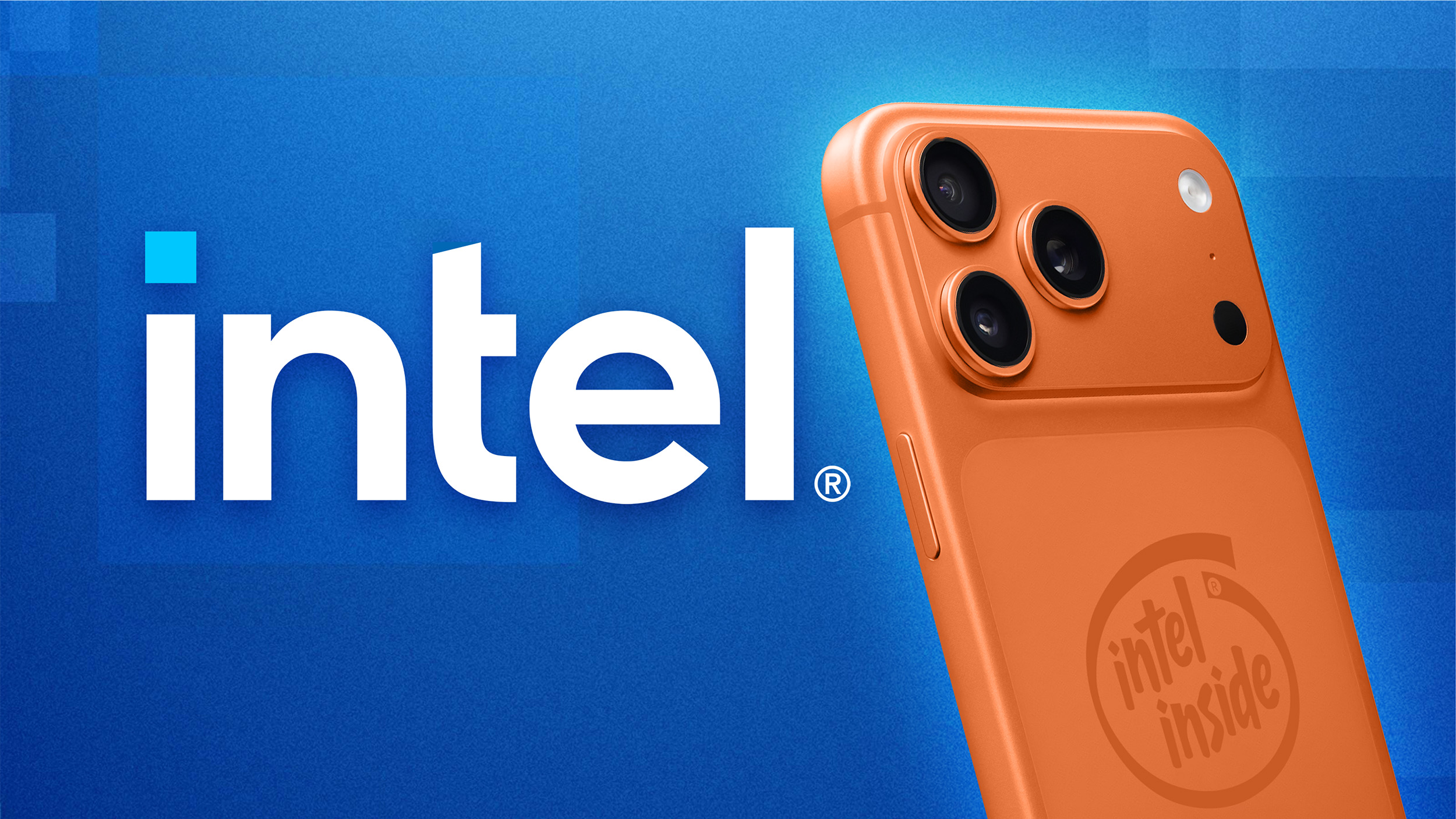
As the expected production ramp-up nears in 2027 and 2028, the industry will watch closely to see how this renewed partnership unfolds, shaping the future of silicon and the devices that power our digital lives. The "Intel Inside" logo may not appear on iPhones or iPads, but Intel's silicon will very likely be powering them from within.
This article, "Report: Intel is Testing Production of Some iPhone, iPad, and Mac Chips" first appeared on MacRumors.com
Discuss this article in our forums
from MacRumors
-via DynaSage
