
PlayStation Boss Embraces AI At Every Level: ‘AI Brings More Choices To Players Than Ever’
The Future is Smart: How PlayStation's AI Vision Will Change Gaming Forever
Imagine a game world so alive, so responsive, that every choice you make truly matters, and every character feels like a real individual. This isn't just a distant dream; it's the ambitious vision being championed by Hideaki Nishino, the CEO of Sony Interactive Entertainment (SIE). Nishino recently shared Sony's exciting plans for artificial intelligence (AI) in gaming, promising a future where our virtual experiences are more immersive, personalized, and breathtakingly dynamic than ever before. This bold step forward aims to redefine what games can be, pushing the boundaries of interactive entertainment through smart technology.
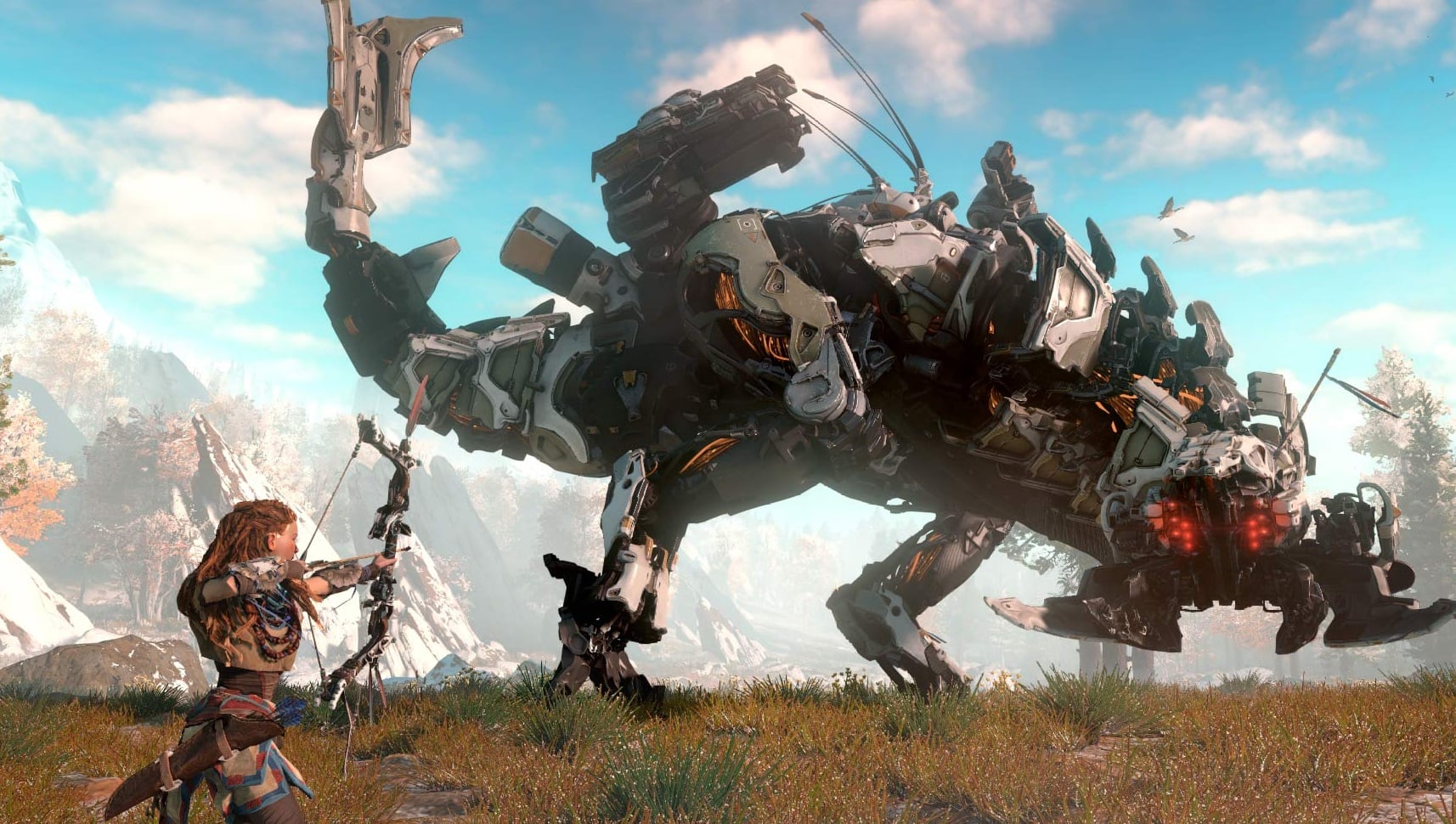
For decades, AI in games has mostly meant predictable enemy patterns or simple character routines. While impressive at times, it often leaves players wanting more. Nishino's vision moves beyond these basic applications. It's about integrating AI deeply into the very fabric of game design, from how worlds are built to how stories unfold and how players interact with their virtual environments. This shift will not only enhance the player experience but also revolutionize the way games are developed, opening up new possibilities for creativity and immersion. The image above, featuring Aloy from the critically acclaimed *Horizon* series, already showcases a glimpse of advanced character and machine AI, hinting at the sophisticated interactions we can expect in the future.
What AI Means for Games Today: A Foundation for the Future
Before diving into Nishino's grand plans, it's helpful to understand where AI in gaming stands right now. Most of the AI we encounter in modern video games is focused on making non-player characters (NPCs) behave in a believable way. This includes enemy combat tactics, allies following instructions, and crowds moving realistically through a city. For example, in open-world games like *Grand Theft Auto* or *The Witcher 3*, NPCs have routines; they might go to work, interact with others, or react to events around them. This level of AI helps build a more convincing game world and provides a degree of challenge and interaction.
Current AI also powers complex pathfinding, allowing characters to navigate intricate environments without getting stuck. It manages game systems, too, such as resource management in strategy games or balancing challenges based on player actions. Even the adaptive difficulty settings in some titles use basic AI to adjust how hard a game is. However, this traditional AI is often script-based. This means characters follow a pre-written set of rules and responses. While clever, these scripts can sometimes feel repetitive or predictable once players learn their patterns. For instance, an enemy might always flank from the left or a companion might repeat the same dialogue line too often. While sophisticated, it still represents a largely static form of intelligence.
Despite these limitations, today's AI has made huge strides in creating engaging experiences. Games like *Horizon Forbidden West*, from which the image of Aloy battling a machine likely comes, demonstrate highly advanced enemy AI. The robotic creatures in the game have distinct behaviors, weaknesses, and attack patterns, making each encounter a tactical challenge. Aloy herself, while controlled by the player, navigates a world filled with impressive environmental interactions and dynamic challenges. This foundational work is crucial because it provides the stepping stone for the truly transformative AI that Hideaki Nishino envisions for PlayStation.
Hideaki Nishino's Vision: Beyond Scripted Realities
Hideaki Nishino's ambitious vision for AI in gaming is all about pushing past these current limitations to create deeply dynamic and personalized experiences. He believes that AI can move beyond simple scripting to enable games that genuinely learn, adapt, and evolve alongside the player. This isn't just about making NPCs smarter; it's about infusing intelligence into every aspect of the game world, creating an unparalleled sense of immersion and unique storytelling opportunities. The core idea is to transform games from static experiences into living, breathing ecosystems where every decision and interaction holds real weight.
Dynamic Difficulty and Personalized Experiences
One key aspect of Nishino's vision is the concept of truly dynamic difficulty. Imagine a game that doesn't just offer "easy, medium, hard" settings, but one that continuously monitors your play style, strengths, and weaknesses. If you're struggling with a particular boss, the AI might subtly adjust its patterns or provide a hidden advantage. If you're breezing through, it could introduce new challenges or unexpected enemy reinforcements. This adaptive AI would ensure that every player, regardless of their skill level, experiences a perfectly balanced and engaging challenge, avoiding frustration and boredom.
Beyond difficulty, AI could personalize the entire game experience. Nishino sees a future where games understand your preferences. Do you enjoy exploration, combat, or narrative? The AI could subtly steer you towards quests, areas, or characters that align with your interests, making each playthrough feel uniquely tailored. This personalization could extend to visual elements, sound design, and even the emotional tone of the game, creating an experience that resonates deeply with each individual player. Think of an AI that learns your preferred weapon type, your tactical approach, or even your favorite in-game music genre, and subtly weaves these elements into the unfolding narrative.
NPC Evolution and Reactive Worlds
Another exciting part of Nishino's vision involves NPCs that are more than just walking quest givers. He envisions characters with genuine memory and learning capabilities. Imagine an NPC who remembers a past interaction with you, good or bad, and whose behavior changes accordingly. A merchant you've always helped might offer you better deals, while a character you wronged might harbor a grudge and seek revenge. This level of emotional AI and persistent memory would create incredibly rich and believable character relationships, making the game world feel genuinely alive and responsive to your actions.
This reactive quality would extend to the game world itself. AI could manage complex environmental systems, making weather patterns, natural disasters, or even social unrest within a game city feel organic and unpredictable. Imagine an AI that observes your play style and dynamically generates new events or challenges to keep you on your toes. If you spend too much time in one area, the AI might introduce a new threat or a unique discovery to encourage further exploration. This constant, subtle evolution of the game world, driven by AI, would ensure that no two playthroughs are ever exactly alike, providing endless replayability and emergent gameplay moments.
Key Pillars of Sony's AI Strategy for PlayStation
To bring this ambitious vision to life, Sony Interactive Entertainment is likely focusing on several key areas of AI development. These pillars represent the foundational technologies and design philosophies that will underpin the next generation of PlayStation titles, making them smarter, more dynamic, and ultimately, more captivating.
Intelligent NPCs and Companions: Beyond Simple Algorithms
The first pillar revolves around dramatically enhancing the intelligence and believability of non-player characters and companions. Current NPCs often feel robotic, following predictable paths or repeating limited dialogue. Nishino's vision calls for NPCs that exhibit genuine understanding of their environment, the player's actions, and even their own motivations. This means AI characters that can:
- Learn and Adapt: NPCs that observe your combat tactics and adjust their own strategies accordingly. An enemy boss might learn to counter your favorite move, or a friendly companion might anticipate your needs in battle.
- Remember and React: Characters with long-term memory, recalling past interactions, conversations, and even your reputation within the game world. Their reactions to you would be shaped by this history, creating dynamic relationships that feel authentic.
- Exhibit Emotional Depth: AI that can simulate emotions, reacting with fear, joy, anger, or surprise in believable ways. This would make narrative moments more impactful and character interactions much richer. Imagine a companion expressing genuine distress when you're in danger, or celebrating your triumphs with heartfelt enthusiasm.
- Engage in Dynamic Dialogue: Moving beyond pre-recorded lines to AI-driven conversations that adapt to the context, your choices, and the NPC's own evolving personality. This could lead to genuinely emergent storytelling and surprising exchanges.
This advancement in NPC AI would not only make game worlds more believable but also foster deeper emotional connections between players and their virtual counterparts, blurring the lines between game and reality.
Procedural Content Generation (PCG) with AI: Infinite Worlds
Another crucial pillar is the integration of AI with procedural content generation (PCG). PCG is already used to create large game worlds, but AI can take this to an entirely new level. Instead of simply generating random terrain, AI-driven PCG can create meaningful, aesthetically pleasing, and narratively coherent environments on the fly. This means:
- Vast, Unique Worlds: AI could generate entire planets, sprawling cities, or intricate dungeon systems that are unique for every player, offering endless exploration without massive manual development effort.
- Dynamic Level Design: Beyond just terrain, AI could design entire levels, puzzles, and challenges that adapt to the player's skill and preferences, ensuring fresh experiences in every playthrough.
- Emergent Quests and Lore: AI could generate compelling side quests, discoverable lore, and unique encounters based on the player's actions and the current state of the game world, making every adventure feel truly personal.
- Reducing Development Burden: By automating significant portions of content creation, AI allows developers to focus on refining core mechanics, storytelling, and ensuring a high level of polish, while still delivering enormous amounts of unique content.
This pillar promises to unlock game worlds of unprecedented scale and variety, making each player's journey genuinely distinct and surprising.
Adaptive Player Experiences: Your Game, Your Way
Nishino's vision heavily emphasizes making games truly responsive to the individual player. AI will act as an intelligent "game master," constantly observing and adapting the experience in real-time. This includes:
- Tailored Challenges and Pacing: AI that can dynamically adjust enemy types, encounter frequency, puzzle complexity, and narrative pacing to match your play style and desired level of challenge. If you prefer stealth, the AI might present more stealth opportunities; if you love action, expect more intense combat.
- Personalized Narrative Paths: AI could subtly alter story branches, character motivations, and world events based on your choices, moral alignments, and even how you interact with specific NPCs, leading to truly divergent narratives.
- Enhanced Accessibility: AI can be a powerful tool for accessibility, automatically adjusting controls, interface elements, visual cues, or even audio cues to cater to players with different needs and abilities, ensuring everyone can enjoy the game.
- Real-time Feedback and Analytics: Beyond the player, AI can provide invaluable data to developers by analyzing player behavior, identifying pain points, and suggesting improvements, leading to more refined and enjoyable games in future updates or sequels.
The goal here is to make every interaction feel meaningful, with the game continuously evolving to provide the most engaging and suitable experience for you, the player.
Advanced Graphics and Physics Simulation with AI
Finally, AI will play a significant role in pushing the boundaries of visual fidelity and physical realism. While traditionally handled by complex algorithms and manual animation, AI offers new avenues for achieving unparalleled immersion:
- Realistic Animation and Facial Expressions: AI can generate incredibly lifelike character animations and nuanced facial expressions in real-time, responding to dialogue and emotional states, making characters feel more human than ever before.
- Dynamic Environmental Reactions: Imagine an AI that simulates how a forest fire spreads realistically based on wind and terrain, or how debris scatters differently with every explosion. AI can manage complex physics simulations to make environmental destruction and interaction profoundly realistic and varied.
- Optimized Rendering: AI can optimize how games are rendered, dynamically adjusting graphical detail in areas the player isn't actively focusing on, allowing for breathtaking visuals without sacrificing performance.
- Intelligent Asset Creation: AI tools could assist artists in generating highly detailed textures, 3D models, and environmental assets more efficiently, freeing up creative time for unique designs.
These advancements will ensure that the future of PlayStation games not only plays smarter but also looks and feels incredibly real, blurring the line between the virtual and the physical.
Challenges and Ethical Considerations on the Horizon
While Hideaki Nishino's vision for AI in gaming is incredibly exciting, it's also important to acknowledge the significant challenges and ethical considerations that come with such advanced technology. Building games with truly intelligent AI is no simple feat, and ensuring it enhances rather than detracts from the experience requires careful navigation.
One major challenge is the sheer **computational power** required. Running sophisticated AI models that learn, adapt, and generate content in real-time demands immense processing capabilities. This pushes the limits of console hardware and cloud computing. Sony, with its PlayStation platforms, will need to continue innovating in hardware design and potentially leverage cloud technologies to fully realize this vision.
Another hurdle lies in **managing complexity**. As AI systems become more intricate, game development becomes less about writing fixed scripts and more about designing, training, and overseeing complex intelligent agents. Ensuring these AI systems behave as intended, without introducing unforeseen bugs or breaking the game's core experience, will be a monumental task. There's a delicate balance to strike between giving AI creative freedom and maintaining the developer's artistic vision and control.
Ethical considerations are also paramount. How do developers ensure that AI-driven personalization doesn't become manipulative, subtly guiding players towards microtransactions or addictive gameplay loops? There are concerns about **player privacy** if AI gathers extensive data on individual play styles and preferences. Additionally, as AI becomes more central to content creation, there's a debate to be had about the **authenticity and soul** of games. Can an AI truly create art, or will it always lack the human touch?
Sony and other industry leaders will need to establish clear guidelines and best practices to ensure that AI is used responsibly, ethically, and always with the player's best interest at heart. The goal is to enhance human creativity, not replace it, using AI as a powerful tool to unlock new forms of interactive storytelling and gameplay.
The Future Impact on Game Development
Nishino's vision for AI won't just change how we play games; it will fundamentally transform how games are made. Game development studios, including Sony's renowned first-party teams, will need to adapt their workflows, tools, and skill sets to embrace this new era of intelligent design.
Developers will increasingly work with AI as a co-creator and an assistant. Instead of manually placing every tree or designing every minor NPC dialogue line, artists and designers might train AI models to generate vast, believable environments or create dynamic, context-aware conversations. This shift means a reduced emphasis on repetitive manual asset creation and a greater focus on AI supervision, data curation, and the fine-tuning of AI algorithms. Game designers will become more like architects of intelligent systems, defining the rules and parameters within which AI can operate creatively.
This could lead to **accelerated innovation** and enable smaller teams to create games of unprecedented scope and complexity. Imagine an indie studio being able to generate a sprawling, unique open world with a fraction of the resources traditionally required. It opens the door for more diverse voices and experimental ideas to reach a broader audience, as the technical hurdles of content creation are lowered by AI assistance.
Furthermore, AI will become an indispensable tool for **quality assurance and testing**. Intelligent agents could play through games thousands of times, identifying bugs, balance issues, and areas of frustration long before human testers can, leading to more polished and enjoyable releases. The very process of game making will become more efficient, creative, and data-driven, paving the way for experiences that were once unimaginable.
The Player Experience: What Does This Mean for You?
Ultimately, all these advancements in AI are designed with one core purpose: to deliver an unparalleled player experience. So, what exactly can you, the gamer, expect from a PlayStation future powered by Hideaki Nishino's AI vision?
Firstly, prepare for **unprecedented immersion**. Game worlds will feel genuinely alive, responsive, and dynamic. NPCs will feel like real people with memories and motivations, environments will react realistically to your actions, and stories will weave themselves around your choices in a way that feels deeply personal. The lines between virtual and reality will blur further, drawing you deeper into the game's narrative and challenges.
Secondly, expect games that truly **surprise and challenge** you. Gone are the days of predictable enemy patterns or repetitive quest structures. AI will ensure that every playthrough offers fresh encounters, emergent gameplay moments, and dynamic challenges that adapt to your skill and play style. You’ll never quite know what’s around the corner, keeping you constantly engaged and on the edge of your seat.
Thirdly, every game will become **your unique journey**. With personalized content generation, adaptive narratives, and evolving game worlds, your experience will be distinct from anyone else's. This leads to profound **replayability**, as returning to a game might feel like stepping into an entirely new adventure. You might discover different quests, encounter new characters, or see events unfold in ways you never expected, even in a game you thought you knew inside out.
Finally, these intelligent systems will foster **deeper emotional connections**. When characters remember your kindness or betrayal, when the world reacts specifically to your presence, your emotional investment in the game's story and its inhabitants will soar. Games will no longer just be a form of entertainment; they will be highly interactive, personal narratives that resonate on a profound level.
The Dawn of a New Era in Gaming
Hideaki Nishino's outline of Sony's ambitious vision for AI in gaming marks a pivotal moment in the evolution of interactive entertainment. It's a commitment to pushing technological boundaries not just for the sake of it, but to unlock new levels of immersion, personalization, and storytelling that have long been the dream of game creators and players alike. From intelligent NPCs that learn and remember, to dynamically generated worlds that adapt to your every move, the future of PlayStation is poised to be smarter, more responsive, and more engaging than anything we've experienced before.
As AI continues to advance, we stand on the cusp of a new era where games aren't just played; they are lived. This future promises not only to make our virtual worlds more believable but also to create deeply personal and endlessly surprising adventures for every single player. The excitement is palpable, and as Sony Interactive Entertainment leads the charge, the gaming landscape is about to become a much more intelligent, vibrant, and thrilling place. Get ready to experience games in a way you never thought possible.
from Kotaku
-via DynaSage
