
More All-Black Apple Vision Pro Parts Surface Online
The Mystery of the All-Black Apple Vision Pro: Leaks and Apple's Shifting Future
The world of Apple product development is often shrouded in secrecy, yet every now and then, glimpses of unreleased or prototype hardware emerge, sparking excitement and speculation. The latest whispers come in the form of leaked images showing what appears to be an all-black version of parts designed for Apple's groundbreaking Vision headset. These images, shared by the X account @LusiRoy8, have ignited discussions about what Apple might have planned – or previously considered – for its ambitious spatial computing device. Could an elegant, stealthy black Vision Pro have been in the works? Let's dive into the details of this intriguing leak and what it tells us about the ever-evolving landscape of Apple's augmented and virtual reality ambitions.
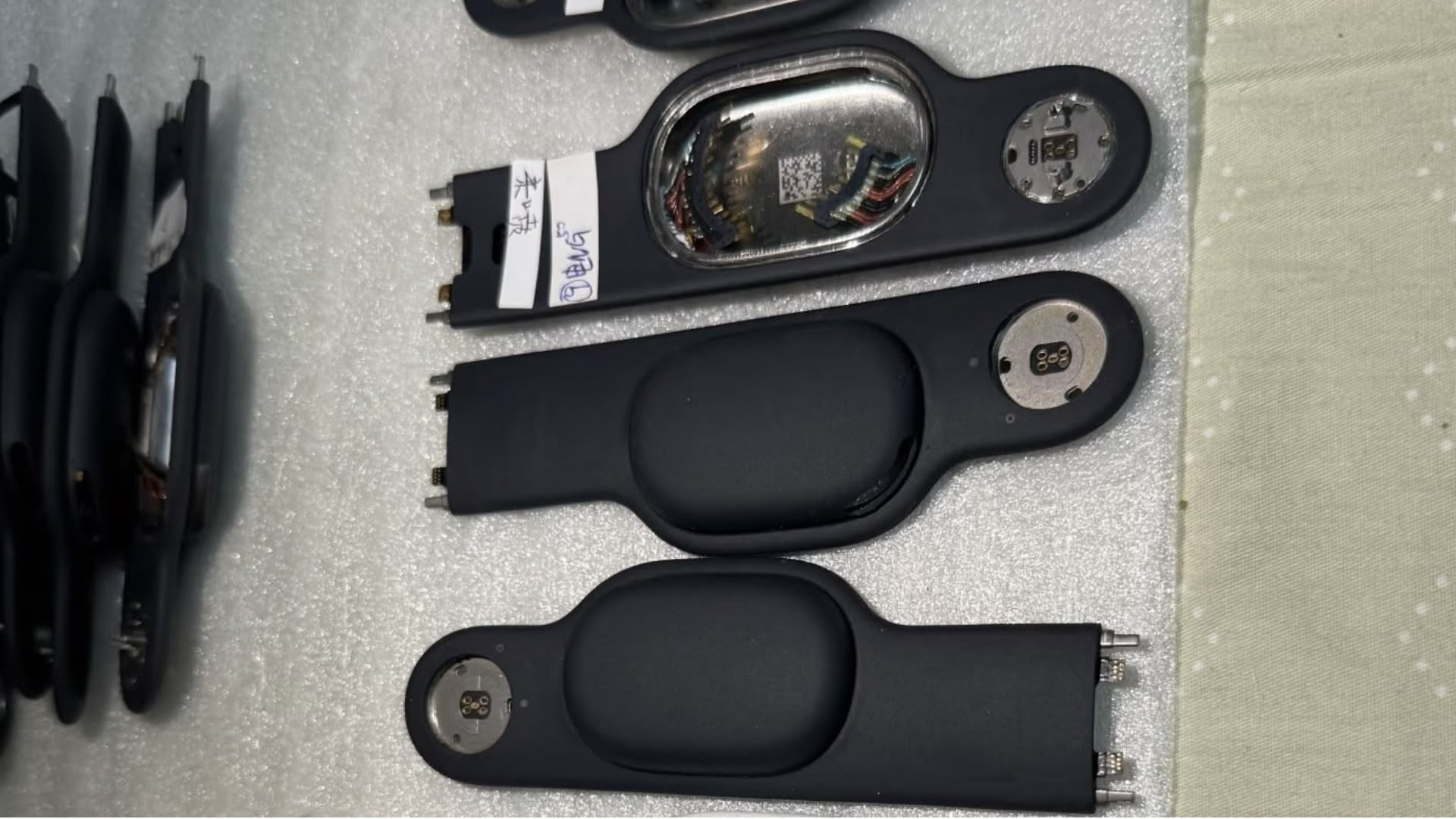
A Glimpse into the Dark: The Latest Black Vision Pro Parts Leak
The leaked image reveals two distinct components: a power strap and an audio pod. For anyone familiar with the currently available Apple Vision Pro, these parts are instantly recognizable in their design and form factor. However, the striking difference is their color: a deep, dark finish that starkly contrasts with the white and silver aesthetic of the commercial Vision Pro. These parts look identical in shape and attachment mechanisms to the existing hardware, suggesting they are not for a radically redesigned device but rather a variant or a prototype of the current generation or a direct successor.
The source of the leak, @LusiRoy8, accompanied the image with a claim that these parts belong to an "upcoming" second-generation Apple Vision Pro, specifically in a black colorway. This instantly raises questions. Is Apple planning to introduce color options for its premium headset? Or are these remnants of a design phase that has since been altered or shelved? Apple's design language often favors a minimalist approach, and while the current Vision Pro is undeniably sleek, an all-black version would offer a dramatically different aesthetic – perhaps one seen as more professional, stealthy, or simply more appealing to a segment of the market that prefers darker shades for their high-tech gadgets.
The choice of black for premium electronics is not new for Apple. From the original black iPods to the Space Gray MacBooks and iPhones, dark finishes often convey a sense of sophistication, power, and understated elegance. For a device as visually prominent as the Vision Pro, which users wear on their heads, a black option could offer a more discreet or, conversely, a more assertive statement than the current lighter design. This leak, therefore, isn't just about a color; it's about the potential for Apple to expand its design philosophy for its most futuristic product.
Echoes from the Past: Black Vision Pro Rumors Are Nothing New
Interestingly, this isn't the first time we've encountered rumors and images of black Apple Vision hardware. Similar parts surfaced last year, pointing to a consistent thread in Apple's internal design considerations. Those earlier leaks offered even more intriguing details, suggesting that Apple had been testing a separate, more lightweight mixed-reality headset internally dubbed "Vision Air." This "Vision Air" was rumored to feature a "Midnight-colored" exterior and achieve significant weight reduction by switching several structural components and even the battery enclosure to titanium. The use of titanium, a material known for its strength-to-weight ratio, further emphasizes Apple's pursuit of comfort and portability for its wearable devices.
The concept of a "Vision Air" is significant. Just as Apple offers MacBook Air and iPad Air alongside their "Pro" counterparts, a "Vision Air" would imply a more accessible, perhaps less powerful, but critically, a more comfortable and lightweight version of the Vision Pro. The original Vision Pro, while technologically advanced, has been noted for its weight, which can become noticeable during extended use. A "Vision Air" with a titanium build and a "Midnight" finish would represent a clear effort to address these concerns, potentially broadening the appeal of Apple's spatial computing vision to a wider consumer base.
These persistent leaks of black and "Midnight-colored" parts suggest that an alternative design, focusing on both aesthetics and ergonomics, has been a recurring theme within Apple's development labs. Whether these were early prototypes for the current Vision Pro, an abandoned "Vision Air" project, or indeed, a look at what a second-generation Vision Pro might offer, the consistent appearance of these darker components hints at a strategic design direction that Apple has clearly explored in depth.
<Apple vison pro 2 upcoming black color pic.twitter.com/bCxtI7Yq5b
— pipfix (@LusiRoy8) May 26, 2026
The Shifting Sands of Apple's Headset Strategy: From AR/VR to AI Glasses
While leaks of exciting new designs fuel our imagination, it's crucial to contextualize them within Apple's broader strategic movements. For a period, it was widely anticipated that Apple would launch not only a lower-cost headset, tentatively named "Vision Air," but also a more advanced, redesigned second-generation Vision Pro. This strategy mirrored Apple's tiered product lines across its other categories, offering options for different budgets and performance needs.
However, the narrative took a significant turn in October, when reliable Bloomberg reporter Mark Gurman dropped a bombshell. According to Gurman, Apple had reportedly paused the development of all new Vision headsets – both the lower-cost "Vision Air" and the second-generation Vision Pro – to redirect its formidable resources. The new, urgent focus? Accelerating work on AI-powered smart glasses.
Decoding "Paused Development": Not an Abandonment, But a Shift
This report naturally led to widespread speculation that Apple was abandoning its ambitious Vision Pro project entirely. However, Gurman recently resisted reports suggesting such a complete withdrawal. He clarified that while Apple hasn't fully abandoned the Vision Pro, anyone hoping for a successor will likely be waiting at least two more years. This distinction is critical: "paused development" for new models doesn't mean the current product is dead, nor does it mean future iterations are impossible. It signifies a strategic re-prioritization, a refocusing of engineering talent and financial investment towards what Apple perceives as its next major frontier: artificial intelligence integrated into everyday wearables.
Why this shift? The current Vision Pro, while technically impressive, faces challenges in mass market adoption, partly due to its high price point and the inherent limitations of current mixed-reality technology for daily, casual use. AI-powered smart glasses, on the other hand, promise a more subtle, integrated approach to technology, potentially offering contextual information, hands-free interaction, and seamless digital assistance without the immersive, often isolating, experience of a full headset. This pivot aligns with a broader industry trend towards more ambient and integrated AI, where technology serves us unobtrusively in the background.
The Rise of AI: Apple's New Frontier in Wearables
The implications of this strategic shift are profound. Apple's smart glasses project is now the clear focus. Gurman's reports indicate that members of the Vision Products Group, the team responsible for the Vision Pro, have been reassigned to this new AI-focused team. This internal restructuring highlights the seriousness and urgency with which Apple is pursuing AI, viewing it as the foundational technology for its next generation of products.
Beyond Smart Glasses: A Broader AI Wearable Ecosystem
The AI push isn't limited to smart glasses. Apple is also reportedly busy working on other AI wearables designed to integrate artificial intelligence seamlessly into daily life. These include highly anticipated AirPods with cameras, which could offer context-aware information, real-time translations, or even subtle health monitoring without requiring a screen. Another rumored device is a planned AI pendant – a small, discreet wearable that could act as a personal AI assistant, offering proactive insights, controlling smart home devices, or providing quick access to information through voice commands. These concepts push the boundaries of traditional wearable technology, moving beyond mere data tracking to intelligent, context-aware assistance.
Central to this AI strategy is the significant effort to shore up Apple's Siri chatbot development. Siri, Apple's long-standing virtual assistant, has faced criticism for lagging behind competitors in terms of intelligence and capabilities. A rejuvenated, more powerful Siri is essential for making AI-powered smart glasses, AirPods, and pendants truly useful and indispensable. This involves not just better natural language understanding but also proactive intelligence, allowing Siri to anticipate user needs and provide relevant information or actions without explicit prompts.
These AI-centric wearables represent Apple's vision for a future where technology is always present but never intrusive, anticipating user needs and augmenting reality in subtle, helpful ways. It's a stark contrast to the immersive, high-bandwidth experience of the Vision Pro, suggesting that Apple sees different roles for different types of spatial and AI computing devices.
The Current Vision Pro: An M5 Chip Update and Its Place in the Strategy
Amidst all the shifting priorities and future visions, it's important to remember the existing product. Apple refreshed the Vision Pro in October 2025 with an updated model featuring an M5 chip. This detail from the original text is crucial because it confirms that while "new Vision headset models" might be paused, iterative updates to the existing hardware can still occur. The M5 chip likely brought improved performance, efficiency, and perhaps new capabilities to the Vision Pro, extending its lifespan and keeping it competitive in the interim.
This update suggests that Apple intends to support and evolve the current Vision Pro platform even as it diverts its primary development resources towards AI smart glasses. The M5 refresh could be seen as a commitment to its early adopters and developers, ensuring the Vision Pro remains a powerful tool for spatial computing while the company figures out its next big move in the broader wearable space. It also provides a stable platform for developers to continue building spatial apps, which could eventually transition to future, more accessible devices.
What Does This Mean for the Future of Apple's Spatial Computing?
The journey of the Apple Vision Pro, from its highly anticipated reveal to the current strategic pivot, has been a fascinating case study in product development and market dynamics. The leaks of black Vision Pro parts serve as a tantalizing reminder of design avenues explored, hinting at a desire for variety and perhaps a more premium or versatile aesthetic. Simultaneously, Apple's confirmed shift towards AI-powered smart glasses and other intelligent wearables signals a profound re-evaluation of how technology integrates into our lives.
While a second-generation Vision Pro might be two years away, the foundational work done on spatial computing and mixed reality is unlikely to be wasted. The insights gained from the Vision Pro's development and market reception will undoubtedly inform the design and functionality of future AI smart glasses and other wearables. The goal remains the same: to create seamless, intuitive experiences that enhance our interaction with the digital world, whether through immersive virtual environments or subtle, context-aware AI assistance.
Conclusion: A Future Both Black and Bright
The leaked images of all-black Apple Vision Pro parts offer a captivating look at what could have been or what might still be in a distant future. They remind us that Apple is constantly experimenting, iterating, and exploring new design territories. Coupled with the strategic shift towards AI-powered smart glasses, these leaks paint a picture of an Apple that is agile and responsive, willing to adapt its roadmap to pursue what it believes is the next major technological wave.
Whether we ultimately see an all-black Vision Pro or not, the underlying story is one of innovation and evolution. Apple is not just building products; it's shaping the future of human-computer interaction. The journey from immersive headsets to ambient AI wearables is a complex one, but with its immense resources and talent, Apple is poised to lead the charge, offering us glimpses of that future, sometimes in striking black, along the way.
This article, "More All-Black Apple Vision Pro Parts Surface Online" first appeared on MacRumors.com
Discuss this article in our forums
from MacRumors
-via DynaSage
