
Maryland Lawmakers Press Apple Over Decision to Close Unionized Store
Apple's Towson Store Closure: Lawmakers, Union, and Employee Rights at the Forefront
In a significant development that has drawn the attention of both labor advocates and political figures, Apple's decision to permanently close its unionized retail store in Towson, Maryland, has sparked considerable debate. This closure, effective June 20, 2026, has become a focal point for discussions around corporate responsibility, employee rights, and the future of retail unions in the tech industry. The controversy deepened when nine members of the U.S. Congress from Maryland formally challenged Apple's rationale, expressing "serious concern" about the lack of plans for a replacement store in the Baltimore region.
The core of the dispute lies not just in the closure itself, but in the differing treatment of employees at the unionized Towson store compared to those at other Apple locations also slated for closure. This disparity has led to allegations of unfair labor practices, raising questions about the implications for workers who choose to unionize. This blog post aims to simplify and clarify the intricate details surrounding this event, offering a comprehensive look at the perspectives of all involved parties and the broader implications for the retail sector.
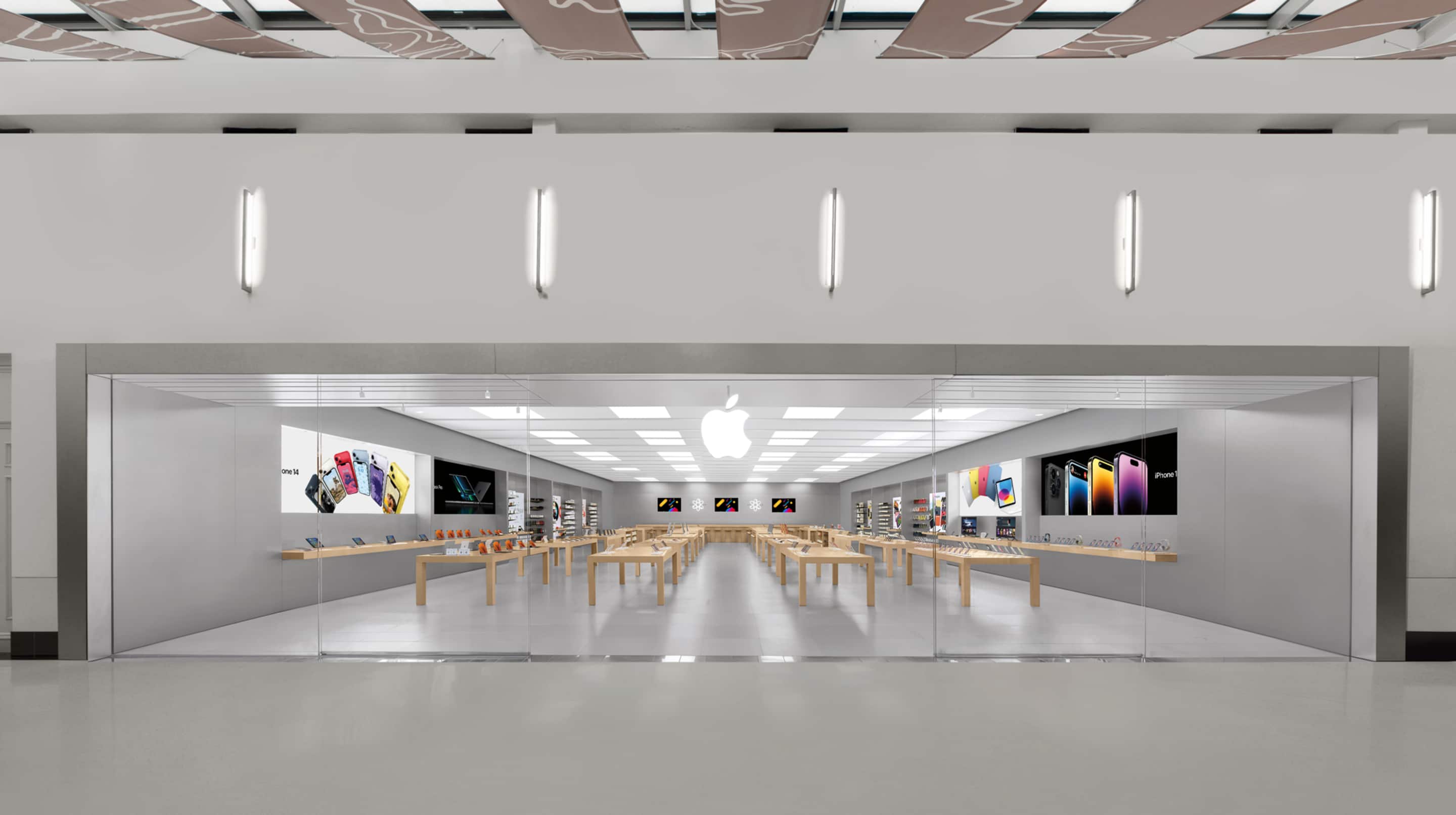 Apple Towson Town Center
The Unexpected Closure and Apple's Stated Reasons
Last month, Apple announced its intention to permanently close three of its U.S. retail stores in June 2026. Beyond the Apple Towson Town Center location, the other affected stores include Apple Trumbull in Trumbull, Connecticut, and Apple North County in Escondido, California. These closures represent a significant shift for a company known for its extensive and highly successful retail footprint.
Apple attributed these "difficult decisions" to a common factor across all three locations: "the departure of several retailers" and "declining conditions" within the respective shopping malls. This explanation points to broader economic trends affecting brick-and-mortar retail, where shifts in consumer behavior, the rise of e-commerce, and changes in mall tenancy can profoundly impact a store's viability. While individual stores may perform well, the overall health of the shopping center can dictate their long-term sustainability. This is a common challenge faced by many retailers today, as traditional malls struggle to adapt to modern shopping habits.
For the Towson location, specifically, the lawmakers acknowledged that decisions of this magnitude often involve "complex business considerations." However, local news reports have indeed highlighted a potential decline at the Towson Town Center, noting the departure of several major retailers such as Tommy Bahama, Banana Republic, and Madewell. These reports lend some credence to Apple's general explanation regarding the deteriorating conditions of the shopping environments.
The Significance of the Apple Towson Store: A Unionized Pioneer
What makes the closure of the Apple Towson store particularly noteworthy is its unique status within Apple's vast retail empire. In 2022, the staff at the Towson store made history by becoming Apple's first retail employees in the U.S. to successfully unionize. This landmark achievement was a significant moment for labor movements within the tech industry, a sector traditionally resistant to unionization efforts.
The employees at the Towson store are represented by the Coalition of Organized Retail Employees (IAM CORE), which is part of the larger International Association of Machinists and Aerospace Workers (IAM) union. Following their successful union vote, these employees engaged in extensive negotiations with Apple, eventually signing their first collective bargaining agreement in 2024. A collective bargaining agreement is a legally binding contract between an employer and a union, outlining the terms and conditions of employment, including wages, benefits, working hours, and dispute resolution processes. This agreement is crucial because it provides a framework for how employment-related issues, such as store closures, are handled.
The unionization of the Towson store was seen by many as a potential catalyst for broader unionization efforts across Apple's retail operations and even within the broader tech sector. It demonstrated that even in highly profitable and seemingly progressive companies, employees felt the need for collective representation to advocate for their interests and secure better working conditions. This context makes the closure of this particular store more than just a routine business decision; it carries symbolic weight regarding employee power and corporate accountability.
Maryland Lawmakers Step In: Demanding Answers and Solutions
The closure decision did not go unnoticed by political leaders. In a letter addressed to Apple's CEO Tim Cook and hardware engineering chief John Ternus, nine members of the U.S. Congress from Maryland voiced their "serious concern." This delegation included two senators and seven representatives, all from the Democratic Party, underscoring the bipartisan concern within the state's political landscape regarding the economic impact of such a move.
The lawmakers emphasized several key points in their communication. Firstly, they highlighted the significant impact the store's closure would have on residents and small businesses across the Baltimore region. The Towson store, according to their understanding, has been "a strong-performing location," suggesting that its closure might not solely be attributed to underperformance. More critically, they pointed to the approximately 90 employees who would be directly affected by the closure, expressing worry about job losses and the disruption to their livelihoods.
Beyond the immediate economic concerns, the letter conveyed a deeper message about corporate responsibility and community engagement. "Maryland residents value employers who invest in their workforce and demonstrate a sustained commitment to the communities they serve," the lawmakers wrote. This statement serves as a reminder that large corporations like Apple are not just economic entities but also social stakeholders with obligations to the communities where they operate. The lawmakers urged Apple to "reconsider whether there are viable paths forward that would preserve jobs and maintain a retail presence in the region," suggesting alternatives such as relocating the store or exploring other operational adjustments.
Their proactive engagement, offering to "engage constructively with Apple to better understand this decision and to explore potential solutions," indicates a desire for dialogue and a collaborative approach to mitigate the negative consequences of the closure. This legislative intervention underscores the importance of local economies and the role of elected officials in advocating for their constituents when major employers make decisions that impact jobs and community welfare.
The Union's Strong Opposition: Allegations of Unfair Labor Practice
The International Association of Machinists and Aerospace Workers (IAM) union, representing the Towson employees, has vehemently opposed Apple's handling of the closure. Their concern goes beyond mere disappointment, escalating to an official challenge. Last month, the IAM union filed an unfair labor practice charge with the National Labor Relations Board (NLRB). This serious legal action signals a belief that Apple's actions are not just difficult business decisions, but potentially unlawful under U.S. labor law.
An unfair labor practice (ULP) charge is filed when an employer or union is believed to have violated the National Labor Relations Act (NLRA), which protects employees' rights to organize, form, join, or assist a union, or to refrain from such activities. The core of the IAM's charge against Apple centers on an alleged "discriminatory treatment against unionized workers" at the Towson store. This allegation stems from a critical difference in how Apple is treating employees at the closing unionized store compared to those at the two other non-union stores.
Apple stated that employees at the Trumbull and North County stores would "continue their roles" at the company's nearby stores in each area, explicitly guaranteeing transfer eligibility for those workers. This means that employees in these non-unionized locations have a clear path to retaining their employment with Apple, albeit at a different location. In contrast, Apple's communication regarding Towson employees was markedly different: they would be "eligible to apply for open roles at Apple in accordance with their collective bargaining agreement." The crucial distinction here is "eligible to apply," which does not constitute a guarantee of transfer or re-employment. The union rightly pointed out that "it is unclear if everyone who applies will successfully secure a new position at the company," creating a sense of uncertainty and vulnerability for the Towson staff.
This stark contrast in treatment led the IAM to express "serious concerns that this closure is a cynical attempt to bust the union." Union busting refers to a range of legal and illegal activities undertaken by employers to prevent employees from joining a union, or to undermine an existing union. While Apple denies these allegations, the union's perspective is that by denying guaranteed transfers to unionized workers while offering them to non-unionized workers, Apple is sending a punitive message to employees who choose to organize, thereby discouraging future unionization efforts. This perception, whether accurate or not, is at the heart of the unfair labor practice charge.
IAM Union International President Brian Bryant applauded the Maryland congressional delegation, stating, "We praise the Maryland congressional delegation for having these workers' backs and demanding answers from Apple." He further emphasized the broader implications, asserting, "These workers made history by exercising their right to organize for a voice on the job. Walking away from them now sends a dangerous message to working people everywhere." This highlights the significant precedent that the resolution of this dispute could set for labor relations within the tech industry.
Apple's Stance: Adherence to the Collective Bargaining Agreement
In response to the accusations of unfair labor practices and the concerns raised by lawmakers, Apple has maintained a firm position: it is simply respecting the terms of the collective bargaining agreement that was negotiated and agreed upon with the union.
According to Apple, the contract explicitly addresses scenarios involving store closures. The agreement reportedly states that in the event of a store closure, Apple would commit to transferring or rehiring employees *only if* the company opened a new store within 50 miles of the current Towson Town Center location. In any other circumstance, such as the current one where no new store is planned, the union negotiated for employees to receive severance. Severance pay is a compensation package paid to an employee upon termination of employment, often based on years of service and designed to help bridge the financial gap until new employment is secured.
Apple emphasizes that it currently has no plans to open a new store in the Baltimore area. However, the agreement also includes a provision for a "right of first refusal" if Apple were to open a new store within the next 18 months. This means that affected Towson employees would have priority consideration for positions at any new Apple store opened in the region within that timeframe. While this provides some potential for future employment, it still falls short of the guaranteed transfers offered to employees at the other closing stores.
An Apple spokesperson firmly articulated the company's position: "We strongly disagree with the claims made, and we will continue to abide by the agreement that was negotiated and agreed with the union. We look forward to presenting all of the facts to the NLRB." This statement underscores Apple's belief that it is acting lawfully and ethically by adhering to the terms of the contract that the union itself helped negotiate and sign. The company is essentially arguing that the union, by agreeing to these specific terms in the collective bargaining agreement, implicitly accepted the conditions under which transfers might not be guaranteed during a store closure.
Comparing Transfer Policies: Unionized vs. Non-Unionized Stores
The stark difference in transfer policies between the unionized Towson store and the non-unionized Trumbull and North County stores is the crux of the dispute. For employees at Trumbull and North County, Apple explicitly guaranteed that they would "continue their roles" at nearby stores, ensuring a seamless transition and continuity of employment. This gesture is often seen as a standard practice for responsible employers during store consolidations, aiming to retain talent and minimize disruption for their workforce.
However, for the Towson employees, the path is less certain. Their eligibility to "apply for open roles" is dependent on their collective bargaining agreement. While Apple asserts it is following the contract, the union views this as a punitive measure. The very existence of a collective bargaining agreement is meant to provide *more* security and better terms for workers, not fewer, than those offered to non-unionized counterparts. The union's argument hinges on the idea that if Apple can offer guaranteed transfers to non-union workers, it should arguably be able to do the same, or better, for its unionized employees, especially given their historical status.
This situation raises critical questions about the value proposition of unionization. If unionized workers end up with less favorable terms during a crisis like a store closure, it could deter others from organizing. Conversely, Apple's position highlights the importance of precise language in collective bargaining agreements. The company maintains that the negotiated terms were clear and that it is simply upholding its end of the bargain. The interpretation of these terms and the spirit in which they were agreed upon will likely be central to the NLRB's investigation.
The Role of the National Labor Relations Board (NLRB)
The National Labor Relations Board (NLRB) is an independent federal agency tasked with enforcing the National Labor Relations Act (NLRA). Its primary function is to protect the rights of employees to organize and to prevent and remedy unfair labor practices committed by employers and labor organizations. When an unfair labor practice charge is filed, the NLRB's process typically involves an investigation to gather facts and evidence from both sides. If the investigation finds merit in the charge, the NLRB may attempt to facilitate a settlement between the parties. If a settlement isn't reached, a formal hearing may be conducted before an administrative law judge.
The NLRB has the authority to issue various remedies if a ULP is found, including ordering the employer to cease and desist from unlawful practices, reinstate employees with back pay, or even renegotiate terms with the union. In this specific case, the NLRB will evaluate whether Apple's differentiated treatment of unionized employees regarding transfers constitutes discrimination designed to discourage union activity, or if it is a legitimate application of a mutually agreed-upon contract. The outcome of this investigation will have significant implications for both Apple and the broader labor movement.
Broader Implications: Retail Unionization and Corporate Responsibility
The Apple Towson store closure and the subsequent dispute resonate far beyond the immediate parties involved, touching upon several critical themes in contemporary labor relations and corporate governance.
The Shifting Landscape of Retail Unions
The unionization of the Apple Towson store was a milestone, part of a broader trend of increased organizing activity in the retail and service sectors, particularly among large, often non-unionized, corporations like Starbucks, Amazon, and Google. Workers in these companies are increasingly seeking greater voice, better pay, improved benefits, and more secure working conditions. The outcome of the Apple Towson dispute could influence future unionization efforts, either by emboldening workers and unions or by creating a chilling effect if the perception of punitive action against unionized employees prevails.
The Economics of Retail Store Closures
Apple's stated reason for the closures—declining mall conditions and the departure of other retailers—highlights the ongoing challenges faced by traditional brick-and-mortar retail. The rise of e-commerce, changing consumer preferences, and economic downturns have pushed many shopping centers into decline. While Apple is a highly profitable company, even it is not immune to these broader market forces. However, the question remains whether these economic factors are the sole motivators, or if the union status of the Towson store played an unspoken role, as the union alleges.
Corporate Social Responsibility vs. Business Decisions
Apple, as one of the world's most valuable and recognized brands, often projects an image of social responsibility and progressive values. Decisions like store closures, especially those impacting unionized workforces, test the authenticity of these commitments. The Maryland lawmakers' appeal to Apple's "sustained commitment to the communities they serve" underscores the public expectation that large corporations consider their broader social impact alongside their financial bottom line. The tension between profit-driven business decisions and the ethical treatment of employees and communities is a constant challenge for global companies.
The Power and Limitations of Collective Bargaining Agreements
The dispute also highlights the critical importance of collective bargaining agreements. While these contracts are designed to protect workers and provide clarity, their effectiveness hinges on the precision of their language and the good faith with which they are implemented. The Towson situation demonstrates how different interpretations of contractual clauses—specifically regarding transfer eligibility versus severance—can lead to significant conflicts and legal challenges. It serves as a reminder that even after a contract is signed, vigilance and clear communication are essential.
Impact on the Local Community
Beyond the employees, the closure will affect the Towson community. A prominent Apple store often serves as an anchor tenant, drawing foot traffic that benefits other local businesses. Its departure can leave a void, impacting local employment indirectly and potentially contributing to a further decline in the vitality of the Towson Town Center. The concerns raised by the Maryland congressional delegation reflect these broader community impacts, emphasizing the interconnectedness of large retailers with the local economic ecosystem.
Conclusion: An Unfolding Saga with Wide-Ranging Implications
The closure of the Apple Towson store is more than just a local business story; it is a complex saga with profound implications for labor rights, corporate ethics, and the future of retail. Maryland lawmakers have made a clear appeal for reconsideration and transparency, while the IAM union has escalated the matter to a federal agency, alleging discriminatory practices. Apple, in turn, stands firm on its position, citing strict adherence to the collective bargaining agreement.
As the National Labor Relations Board begins its investigation, the spotlight remains firmly on Apple's actions. The outcome will not only determine the fate of approximately 90 employees in Towson but could also set a precedent for how large tech companies engage with unionized workforces in the future. It will also be a test of the efficacy of collective bargaining agreements in protecting workers during periods of corporate restructuring.
The questions raised by this situation—about job security, fair treatment, and the balance of power between corporations and their employees—are fundamental to the ongoing national conversation about the future of work. As this story unfolds, it will continue to be a crucial case study for anyone interested in labor relations, corporate governance, and the evolving landscape of the American economy.
This article, "Maryland Lawmakers Press Apple Over Decision to Close Unionized Store" first appeared on MacRumors.com
Discuss this article in our forums
from MacRumors
-via DynaSage
