
Hit Romance Gacha Game Love And Deepspace Circumvents Strict NSFW Laws By Using Stick Figures For Horny Scenes
The Surprising Saga of Censorship in Love and Deepspace: When Even Stick Figures Aren't Safe!
In the vast and ever-evolving world of mobile gaming, certain titles manage to capture the hearts and imaginations of millions. One such game is Love and Deepspace, a popular 3D romance otome game that has garnered significant attention for its stunning graphics, engaging storylines, and deep character interactions. Players step into a futuristic world, solving mysteries alongside charming male leads, all while navigating complex relationships and thrilling combat. It’s a game designed to sweep players off their feet, offering an immersive escape into a universe where love and danger intertwine.
However, even a game celebrated for its romantic allure and innovative gameplay isn't immune to controversy, particularly when it comes to content. What makes the case of Love and Deepspace particularly striking, and frankly, a bit bewildering, is the level of scrutiny its promotional materials have faced. We're not talking about explicit images or controversial political statements. Instead, the focus of contention has been something far more innocuous, something one would expect to be universally harmless: stick figures. Yes, you read that right. In a surprising turn of events that highlights the complex and often perplexing landscape of content moderation in gaming, the stick figure trailers for Love and Deepspace were reportedly censored.
This revelation, captured vividly in the phrase "And, if you can believe it, the stick figure trailers for the game were subsequently censored too," immediately raises questions. How could simple stick figures, typically symbols of basic representation and often humor, be deemed problematic enough to warrant censorship? This article will delve into the phenomenon of Love and Deepspace, explore the implications of this unusual censorship event, and discuss the broader context of content standards and creative freedom in the global gaming industry. We'll unpack why even the most stripped-down visual representations can trigger alarm bells in an increasingly regulated digital space.
What Makes Love and Deepspace So Special?
Before we dive deeper into the censorship controversy, it's essential to understand the appeal of Love and Deepspace. Developed by Infold Games, this title belongs to the "otome" genre, which primarily targets a female audience, placing them in a narrative where they interact with multiple attractive male characters and pursue romantic relationships. What sets Love and Deepspace apart from many of its predecessors is its commitment to high-fidelity 3D graphics, bringing characters and environments to life in a way that feels cinematic and deeply immersive.
Immersive Storytelling and Engaging Gameplay
Players take on the role of a female protagonist with a unique power, navigating a world filled with "Evolvers" – individuals with extraordinary abilities. The game blends elements of sci-fi, romance, and action, as players uncover a hidden truth about their world while fostering deep connections with the male leads. Each character has a distinct personality, backstory, and voice actor, contributing to a rich and varied romantic experience. The game boasts intricate date scenarios, heartfelt dialogue, and even combat sequences that require strategic thinking. This combination of engaging narrative and interactive elements ensures that players are not just passive observers but active participants in their romantic journey.
The Power of Visuals and Character Design
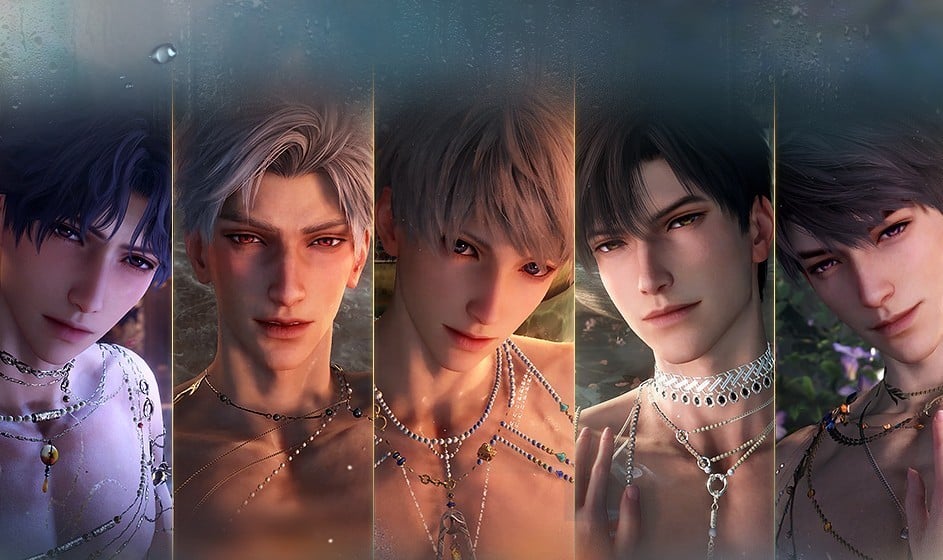
A significant draw of Love and Deepspace is its exceptional character design. The male leads are meticulously crafted, embodying various archetypes that appeal to different tastes, from the mysterious and aloof to the warm and protective. The 3D models allow for dynamic expressions and movements, making interactions feel incredibly lifelike. This visual quality is crucial for an otome game, where player immersion and emotional connection to the characters are paramount. The promotional art, such as the one featured with this article ("Love And Deepspace Lingering Lust"), often hints at the passionate and intimate nature of these relationships, setting expectations for a mature romantic experience.
The Unexpected Censorship: Stick Figures Under Scrutiny
Now, let's address the elephant in the room: the censorship of stick figure trailers. For many, the idea of censoring stick figures seems absurd. Stick figures are the most basic form of human representation, stripped of detail, emotion, and explicit features. They are commonly used for demonstrations, humor, or to convey simple actions. So, how could they possibly trigger censorship?
What Were These Stick Figure Trailers Likely Depicting?
While the exact content of the censored stick figure trailers isn't fully detailed in the prompt, we can infer their likely nature given the context of Love and Deepspace. Otome games, especially those popular in regions with varying content standards, often use suggestive marketing to hint at the romantic depth and potential intimacy within the game without showing anything explicit. These stick figure trailers were likely a creative and humorous way to:
- Hint at Romantic Scenarios: Showing stick figures in poses that imply closeness, affection, or even intimate moments between characters, but in a non-explicit, stylized manner.
- Convey Mature Themes Playfully: Using the simplicity of stick figures to lighten potentially suggestive situations, making them palatable for a wider audience while still conveying the underlying romantic tension.
- Generate Buzz: The novelty of stick figure animations for a high-fidelity game could attract attention and curiosity, leading players to wonder about the "real" content.
The irony is that developers might choose stick figures precisely to *avoid* censorship, thinking their abstract nature would bypass strict content filters. The fact that even these simplified representations were censored suggests an extremely rigid interpretation of content guidelines, focusing more on the *implied meaning* or *potential suggestion* rather than explicit visual content. It's a testament to how sensitive certain themes can be in promotional materials, even when presented in the most basic form.
The Impact on Players and Community
Such a bizarre act of censorship would undoubtedly generate significant discussion within the gaming community. Players who are eager for a game like Love and Deepspace would likely be confused and perhaps even frustrated. The censorship of stick figures could be seen as:
- Overreach: A sign that content regulators are being overly strict and stifling creativity.
- Inconsistency: If stick figures are problematic, where does the line get drawn? It creates uncertainty for both developers and players.
- Humorous but Concerning: While initially laughable, it points to a deeper issue regarding creative freedom and the challenges of global publishing.
This kind of event can fuel online discussions, petitions, and even player backlash, as communities debate the fairness and logic behind such decisions. It becomes a talking point that inadvertently draws more attention to the very themes regulators might be trying to downplay.
Why Censor Stick Figures? Unpacking the Reasons Behind the Decision
To understand why stick figure trailers for a game like Love and Deepspace might face censorship, we need to consider various factors, ranging from regional content regulations to the nuanced interpretation of "suggestive" material. It’s rarely a straightforward process and often involves a complex interplay of cultural norms, legal frameworks, and corporate caution.
1. Regional Content Standards and Regulations
One of the most significant factors is the divergence in content standards across different countries and regions. A game published globally must contend with a patchwork of rules regarding sexuality, violence, political themes, and more.
- Strict Regulatory Bodies: Certain regions, particularly in Asia (e.g., China's National Radio and Television Administration, South Korea's Game Rating and Administration Committee), have notoriously strict censorship policies. These policies often aim to "protect" minors or uphold what are considered public moral standards. Even if Love and Deepspace targets an adult audience, promotional materials might fall under broader guidelines that apply to general media consumption.
- Cultural Sensitivities: What is considered perfectly acceptable or even tame in one culture might be seen as highly provocative or inappropriate in another. While stick figures are universal, the *actions* they portray, even in a highly abstract manner, could cross a cultural line if they imply intimacy or sexual situations that are deemed taboo for public consumption or for a particular age rating.
2. The Power of Implication and Suggestion
This is perhaps the most crucial point. The censorship wasn't about explicit nudity or graphically depicted sex. It was about what the stick figures *implied*.
- Reading Between the Lines: Regulators and platforms often look beyond the literal image to assess its underlying message or potential impact. If a stick figure trailer, through context, poses, or accompanying text/audio, clearly suggested romantic intimacy or sexual undertones, even without showing any detail, it could be flagged. The "Lingering Lust" in the alt text of the image provided already hints at the suggestive nature of the game's marketing.
- Preventative Measures: Censors might operate on a preventative principle, arguing that even subtle suggestions can lead to "undesirable" thoughts or expectations, especially in games marketed to younger audiences (even if the game itself is rated for adults, trailers can reach wider audiences).
- "Slippery Slope" Argument: Some might argue that allowing suggestive stick figures opens the door to more explicit content in the future, establishing a precedent that regulators want to avoid.
3. Platform Guidelines and Self-Censorship
Beyond national laws, mobile game developers must adhere to the stringent guidelines of app stores like Apple's App Store and Google Play Store, as well as various social media platforms where trailers are hosted (e.g., YouTube, TikTok).
- App Store Rules: These platforms have their own rules regarding content, often aimed at maintaining a "family-friendly" environment or avoiding controversy. A trailer, regardless of its content, must comply. Failure to do so can result in the trailer being taken down, the app being rejected, or even the developer's account being penalized.
- Developer Caution/Self-Censorship: To avoid potential bans or delays, developers might proactively remove or alter content that they anticipate could be problematic. This "self-censorship" is a common practice in the industry, especially when entering new markets with stricter rules. It's often a pragmatic business decision to ensure market access. In the case of Love and Deepspace, the developers might have been asked by a platform or regulator to remove the trailers, or they might have done so pre-emptively.
- Advertising Standards: Advertising campaigns also have specific standards. An ad promoting a game must often meet different, sometimes stricter, criteria than the game itself.
4. Public Perception and Brand Image
Gaming companies are also conscious of their public image and brand reputation.
- Avoiding Negative Publicity: Being associated with "controversial" content, even if minor, can lead to negative press, boycotts, or public outrage, especially from parent groups or conservative organizations. Removing stick figure trailers, no matter how illogical it seems, might be a way to quickly defuse potential criticism.
- Target Audience Considerations: While otome games target adults, the broader perception of mobile gaming often includes younger audiences. Companies might try to avoid any marketing that could be perceived as inappropriate for a general audience, even if their specific game is rated for mature players.
In essence, the censorship of stick figure trailers for Love and Deepspace, while initially baffling, reveals the complex layers of content control in the global digital landscape. It demonstrates that regulators and platforms are not just looking at explicit visuals but are also keenly attuned to implication, suggestion, and the broader cultural context within which media is consumed.
The Broader Landscape of Game Censorship: Love and Deepspace as a Case Study
The censorship of stick figure trailers, as peculiar as it sounds, is not an isolated incident but rather a microcosm of a much larger, ongoing debate about censorship in the video game industry. Games, as a form of media, have always been subject to scrutiny, but the digital age and global market have intensified these challenges. Love and Deepspace, with its seemingly innocent stick figures becoming a point of contention, highlights several key issues prevalent across the industry.
Historical and Ongoing Censorship in Gaming
Censorship in games is not new. From the moral panic surrounding games like Mortal Kombat in the early 90s (leading to the creation of the ESRB) to bans of games for political content, violence, or sexual themes, the industry has a long history of grappling with external and internal pressures.
- Violence: Many countries have strict rules against excessive gore or realistic violence, often leading to games being heavily edited or banned (e.g., Germany's historical stance on blood in games, Australia's past issues with certain violent titles).
- Sexuality and Nudity: This is a constant battleground. While some games embrace adult themes, others are forced to dial back character outfits, romantic scenes, or suggestive dialogue to enter specific markets (e.g., changes to character designs in Genshin Impact for certain regions, or altered scenes in Japanese games for Western release).
- Political and Historical Themes: Games dealing with sensitive historical events (like WWII symbols) or contemporary political issues often face challenges.
- Gambling Elements: The rise of loot boxes and gacha mechanics has led to discussions about their similarity to gambling, resulting in regulations or outright bans in some countries (e.g., Belgium and Netherlands' stance on loot boxes).
What makes the Love and Deepspace case stand out is that it concerns content so far removed from traditionally "controversial" elements. It underscores a shift towards pre-emptive or ultra-sensitive censorship where the *potential* for suggestion is enough to warrant removal.
The Impact on Developers: Creative Freedom vs. Commercial Viability
For game developers, censorship presents a significant dilemma:
- Stifled Creativity: The constant fear of censorship can make developers hesitant to explore bold or nuanced themes, leading to safer, more homogenized content. This is particularly damaging for genres like otome games that thrive on emotional depth and character relationships, which often include mature themes.
- Development Costs: Adapting games for different regional content standards requires additional resources, time, and budget. Creating separate versions, altering assets, or re-recording dialogue can significantly increase development costs and complexity.
- Market Access: While frustrating, adhering to censorship demands is often a necessary evil for developers who want their games to reach a global audience, especially lucrative markets like China or South Korea. Companies must weigh the artistic integrity of their product against the commercial imperative of wide distribution.
The Impact on Players: Restricted Access and Diluted Experiences
Players, too, are affected by censorship.
- Incomplete Experiences: When content is removed or altered, players in censored regions receive a version of the game that might be less complete or engaging than the original vision. This can diminish the emotional impact or narrative coherence.
- Frustration and Disconnect: Players often feel frustrated when they realize their version of a game is different due to external pressures. It can lead to a sense of being treated as less capable of handling mature themes or feeling disconnected from the global gaming community discussing the uncensored version.
- The Search for Uncensored Content: Censorship often leads to players actively seeking out ways to access uncensored versions, such as through VPNs, importing physical copies, or relying on fan-made patches, which can introduce security risks or legal ambiguities.
The Role of Rating Systems
Rating systems like the ESRB (North America), PEGI (Europe), CERO (Japan), and GRAC (South Korea) are designed to provide consumers with information about game content, helping them make informed purchasing decisions. However, censorship often goes beyond these rating systems. A game might receive a "Mature" or "Adults Only" rating, yet still face demands for content alteration from platform holders or national regulators. The Love and Deepspace stick figure incident exemplifies this, as basic promotional material, not even the game itself, faced scrutiny that seems to bypass conventional rating logic.
In essence, the Love and Deepspace stick figure censorship serves as a powerful reminder that the fight for creative expression in gaming is ongoing. It forces us to question the boundaries of what is considered "appropriate" and by whom, and at what cost to artistic vision and player experience.
Love and Deepspace: A Microcosm of Modern Gaming Challenges
The bizarre case of Love and Deepspace's stick figure trailers being censored isn't just an isolated anecdote; it's a poignant illustration of several intricate challenges facing the modern gaming industry. It reflects the tension between artistic freedom, commercial ambition, and the ever-present gaze of global content moderation.
Navigating a Fragmented Global Market
Developers today aim for global reach. A game like Love and Deepspace, with its universal themes of romance and adventure, is designed to appeal to players across continents. However, achieving this means navigating a fragmented regulatory landscape where what's permissible in one country is strictly forbidden in another. This forces developers into a constant balancing act:
- Localization vs. Censorship: While localization typically means adapting language and cultural references, censorship involves altering core content. The stick figure incident blurs this line, suggesting that even abstract representations require "localization" of their implied meaning to fit diverse cultural sensibilities.
- One Game, Many Versions: The practical outcome is often multiple versions of the same game, or at least its promotional materials. This adds layers of complexity and cost, and can lead to player dissatisfaction when differences are discovered.
The Delicate Balance of Otome Games
Otome games, by their very nature, often explore themes of intimacy, desire, and mature romance. They are designed to evoke strong emotional and romantic connections with virtual characters. This genre walks a fine line:
- Suggestive but Not Explicit: Most otome games aim for "suggestive" rather than "explicit" content, relying on dialogue, character expressions, and implied situations to create romantic tension without crossing into pornography. This ambiguity, however, can be their downfall when strict censors interpret suggestion as explicit intent.
- Fan Expectations: The target audience for otome games often expects a certain level of romantic intensity and mature themes. Censoring even subtle hints of this can alienate the core fanbase who seek these experiences. The "Lingering Lust" in the image alt text isn't an accident; it's part of the game's appeal.
The Power of Platforms and Public Opinion
In the mobile gaming space, platform holders (Apple, Google) wield immense power. Their guidelines often dictate what can and cannot be advertised or even appear in-game. This creates a system where developers might censor themselves or their marketing materials not because of a direct government order, but out of fear of being de-listed or having their reach severely limited by these gatekeepers. Furthermore, social media platforms, where many game trailers go viral, also have their own content policies, adding another layer of potential censorship.
Public opinion, amplified by social media, also plays a significant role. Even minor perceived infractions can erupt into major controversies, prompting quick reactions from companies eager to protect their brand. The stick figure censorship, while seemingly trivial, could have been a preemptive measure against a potential future backlash, however unlikely.
Love and Deepspace, therefore, becomes a mirror reflecting the broader challenges: the struggle for creative expression in a highly regulated digital ecosystem, the economic pressures of global expansion, and the constant negotiation between developer intent, platform policies, and diverse cultural expectations. It reminds us that in the age of global digital content, even the simplest drawings can carry complex implications.
The Future of Content in Otome Games and Beyond
The censorship of stick figure trailers for Love and Deepspace prompts us to ponder the future of content creation and consumption in the gaming industry, particularly for niche genres like otome games. Will this incident set a precedent for even more stringent content policing, or will it spark a greater conversation about the nuances of artistic expression?
Navigating the Regulatory Maze
Developers of otome games and other narrative-driven titles will likely face an increasingly complex regulatory environment.
- Early Content Planning: Companies might need to integrate content compliance into the very early stages of game design and marketing strategy, anticipating potential issues across various markets.
- Regional Adaptations: The practice of creating regionally specific versions of games and promotional materials will likely become even more commonplace, leading to "default" safe versions for broad release and more daring versions for specific, tolerant markets.
- Transparency: There might be a greater demand for transparency from players regarding what content has been altered and why, although companies are often reluctant to disclose such details.
The Demand for Diverse and Mature Themes
Despite the censorship challenges, there is a clear and growing demand for games that explore diverse and mature themes, including complex romantic relationships.
- Niche Markets Thrive: While mainstream games might lean towards safer content, dedicated communities for genres like otome games will continue to seek out titles that push boundaries and offer deep, mature experiences.
- Indie Development as a Haven: Independent game developers might find more freedom to explore sensitive topics without the same corporate or platform pressures faced by larger studios, potentially becoming a haven for uncensored artistic expression.
- Player Empowerment: Organized player communities can exert pressure on developers and platforms. Strong reactions to censorship events can sometimes lead to companies reconsidering their stances or at least engaging in dialogue.
The Ongoing Debate: Art vs. Commerce
The incident with Love and Deepspace reinforces the perennial debate between artistic integrity and commercial necessity. For a game to succeed globally, it must generate revenue, which often means reaching as many markets as possible. This commercial imperative frequently clashes with the desire to create an uncompromised artistic vision. The challenge for developers will be to find innovative ways to convey mature themes and romantic tension without running afoul of increasingly sensitive content filters. Perhaps future "stick figure" trailers will evolve to be even more abstract, testing the limits of implication.
The story of Love and Deepspace's censored stick figures is a quirky yet telling indicator of the current state of the global gaming landscape. It serves as a reminder that content moderation is not always logical or consistent, and that creators, platforms, and players must continuously navigate a complex web of rules, expectations, and cultural sensitivities. As games continue to mature as an art form, so too must the conversations around what is permissible, what is artistic, and what truly needs protection.
Conclusion: A Sign of the Times
The tale of Love and Deepspace, a captivating otome game with beautiful 3D graphics and intricate romance, took an unexpected turn with the censorship of its stick figure trailers. This peculiar event, where even the most basic and innocent form of visual representation was deemed too suggestive or inappropriate, has highlighted the perplexing reality of content moderation in the global gaming industry. It challenges our perceptions of what constitutes "problematic" content and underscores the intricate web of regional regulations, platform guidelines, and cultural sensitivities that developers must navigate.
This incident serves as a striking case study, demonstrating that censorship is not just about explicit violence or nudity, but can extend to the most subtle implications. It reflects a growing trend where the *suggestion* of a theme can be as potent a trigger for removal as its outright depiction. For developers, this means a constant struggle to balance creative freedom with the commercial necessity of reaching diverse markets. For players, it often translates into frustration over altered experiences and a desire for greater transparency.
As the gaming world continues to expand and diversify, the debate around censorship will undoubtedly intensify. The saga of Love and Deepspace and its censored stick figures, while perhaps amusing on the surface, carries a deeper message about the challenges of artistic expression in a globally connected yet culturally fractured digital age. It's a call for ongoing discussion, understanding, and perhaps, a re-evaluation of what truly warrants censorship in a medium that continues to evolve and push creative boundaries.
from Kotaku
-via DynaSage
