
Google's First AI Smart Glasses Launching This Fall With iPhone Support
The world of technology is constantly evolving, bringing us closer to a future where our devices seamlessly integrate into our daily lives. Google, a pioneer in innovation, is taking a monumental leap in this direction with its first "intelligent eyewear" product, set to launch this fall. This isn't just another gadget; it represents a bold step towards ambient computing, where technology anticipates our needs and assists us without demanding our full attention.
Teaming up with powerhouse brands like Samsung and renowned eyewear manufacturers Gentle Monster and Warby Parker, Google is preparing to introduce new AI audio glasses. This collaboration signals a strategic move to blend cutting-edge technology with desirable fashion, ensuring these devices are not only smart but also stylish and comfortable to wear. The anticipation around this launch is palpable, as it promises to redefine how we interact with the digital world, moving beyond screens and into a more intuitive, voice-first experience.
These glasses are designed to be an extension of your senses, powered by advanced artificial intelligence and a dedicated operating system. They are poised to offer a fresh perspective on personal technology, emphasizing utility and ease of use over complex visual interfaces. As we delve deeper, we'll explore the groundbreaking features, the technology that makes them tick, and the potential impact these intelligent spectacles could have on our everyday routines.
Unveiling Google's New AI Audio Glasses: A Glimpse into the Future
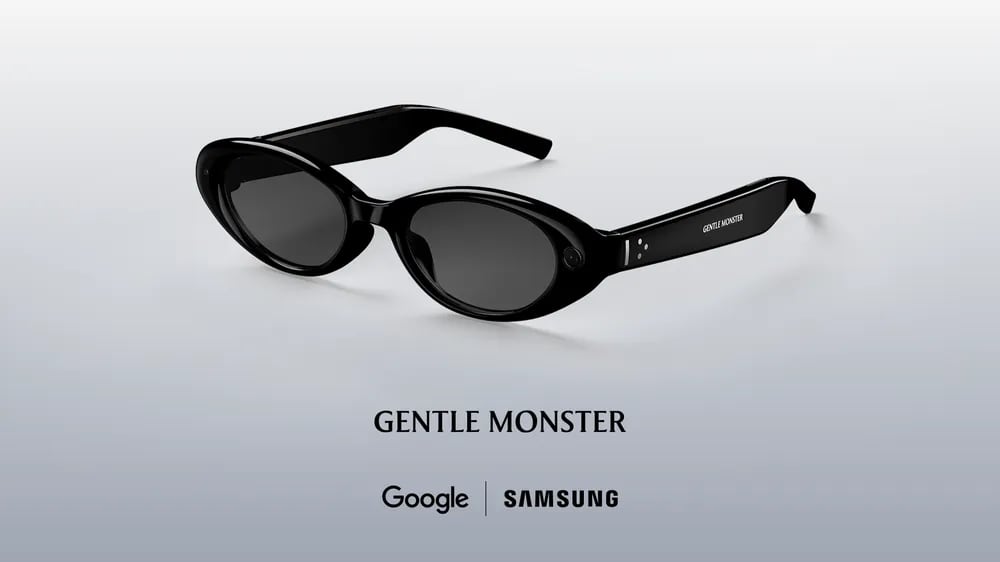
The arrival of Google's new AI audio glasses this fall marks a pivotal moment in wearable technology. What makes this launch particularly exciting is Google's strategic approach to partnerships. By joining forces with Samsung, a global leader in consumer electronics, and two titans of the fashion eyewear industry, Gentle Monster and Warby Parker, Google is clearly aiming for broad appeal and a seamless integration of style and substance.
Gentle Monster, known for its avant-garde designs and unique aesthetic, and Warby Parker, celebrated for making stylish eyewear accessible, bring invaluable expertise in design, comfort, and market reach. These collaborations ensure that the AI glasses won't just be functional devices but also fashionable accessories that people will genuinely want to wear. Google has even previewed two distinct designs from these partners, hinting at a range of aesthetic options, with "full collections" expected to be available at launch. This emphasis on design is crucial, as the primary barrier for many previous smart glasses has been their often bulky or unappealing appearance.
But what exactly are "AI audio glasses"? The key distinction here is the "audio" focus. Unlike many conceptual smart glasses that promise immersive visual displays, Google's initial offering takes a different route. These glasses prioritize auditory feedback and interaction. While they are equipped with cameras, speakers, and microphones—essential components for understanding the environment and communicating with the user—there is a crucial absence of a display in the lenses themselves. This design choice has significant implications for user experience, battery life, and cost, likely making the initial product more practical and less visually intrusive. Instead of seeing information overlaid onto the world, users will receive prompts, answers, and directions through subtle audio cues and natural language responses directly to their ears, making the technology feel less like a screen and more like an intelligent assistant by their side.
This "audio-first" approach is a deliberate and smart move. It sidesteps many of the technical challenges and potential user discomforts associated with augmented reality displays, such as bulk, limited field of view, and battery drain. By focusing on audio, Google can deliver a powerful AI experience in a more lightweight, socially acceptable, and accessible form factor. The aim is to augment your reality with helpful information and assistance without distracting you with a screen, allowing you to stay present in your environment while still connected to the digital world. It’s about discreet, contextual assistance that enhances your natural interactions rather than replacing them.
Powered by Android XR and Gemini AI: The Brains Behind the Brawn

At the heart of Google's intelligent eyewear lies a sophisticated technological core. These glasses are built upon Android XR, Google's dedicated platform for smart glasses and augmented reality/virtual reality (AR/VR) headsets. Android XR provides a robust and flexible operating system environment, ensuring that the glasses can handle complex tasks, integrate seamlessly with other Android devices, and support a wide range of future applications. This platform is a testament to Google's long-term vision for extended reality, laying the groundwork for more immersive and visually-oriented devices down the line, but first focusing on a solid, stable foundation for the current audio-centric model. Its presence guarantees a familiar development ecosystem, potentially attracting a multitude of developers to create innovative experiences for these new wearables.
The hardware itself is thoughtfully designed to facilitate the audio-first, AI-driven experience. The glasses incorporate a suite of sensors, including cameras that can perceive the wearer's surroundings. These cameras are not for displaying images to the wearer, but rather for feeding visual information to the AI, allowing it to understand context and identify objects, signs, or landmarks. High-quality speakers are integrated discreetly into the frames, delivering clear audio directly to the user's ears, whether it's Gemini's responses, music, or phone calls. Multiple microphones are strategically placed to capture the user's voice commands accurately and also to pick up ambient sounds, which can further inform Gemini's contextual understanding, making interactions smooth and natural even in noisy environments. The absence of a lens display means less power consumption and a more conventional look, which is a significant selling point for everyday wear.
The true "intelligence" of these glasses comes from their deep integration with Gemini AI. Gemini is Google's powerful and versatile large language model, designed to understand, reason, and generate human-like text across various modalities. By embedding Gemini directly into the glasses, Google is bringing the full power of conversational AI to your daily life, in a truly hands-free manner. Users can activate Gemini with a simple voice command, "Hey Google," or by a discrete tap on the side of the frame. This intuitive interaction method ensures that access to information and assistance is always just a word or gesture away, making the technology feel like a natural extension of your own thoughts rather than a separate device you need to pull out and operate.
Gemini’s ability to process natural language queries means you don't need to learn specific commands; you can speak to the glasses as you would to another person. It can understand context, remember previous interactions, and adapt its responses to be more helpful and personalized over time. This sophisticated AI is what transforms a pair of smart glasses into an intelligent companion, capable of assisting with an incredible range of tasks, from simple information retrieval to complex multi-step processes. Its presence is the core differentiator, pushing these glasses beyond simple Bluetooth audio devices into a new category of wearable AI assistants.
Transforming Daily Life: A Deep Dive into Gemini's Capabilities
The real magic of Google's AI audio glasses lies in Gemini's extensive capabilities, which promise to integrate seamlessly into and profoundly enhance various aspects of daily life. Let's explore how Gemini, powered by the glasses' sensors, can truly transform how we interact with the world around us and manage our personal tasks.
Contextual Information and Environmental Awareness
Imagine walking down a street and simply asking your glasses for information about what you see. Gemini can provide details about your surroundings with remarkable accuracy. If you pass a restaurant, you might ask, "Hey Google, what are the reviews for this place?" and Gemini could instantly relay ratings, popular dishes, or even tell you if a friend has recently dined there, all while you keep your eyes fixed on your path. Similarly, gazing at a unique cloud formation, you could inquire, "What kind of clouds are those?" and receive an immediate, educational response. Even confusing parking signs, often a source of frustration, could be deciphered by Gemini, offering clear instructions like, "You can park here for two hours on weekdays," saving you from potential fines and uncertainty. This feature leverages the glasses' cameras for real-time visual analysis, combined with Gemini's vast knowledge base, creating an unparalleled sense of informed presence.
Sight-Based Navigation
Navigation takes on a whole new dimension with these glasses. Instead of staring at a phone screen, Gemini can offer sight-based, turn-by-turn directions directly to your ears, allowing you to remain fully aware of your environment. You might hear, "In 50 feet, turn left at the bakery," or "Walk straight past the coffee shop." Beyond basic navigation, Gemini can smartly adapt to your needs. If you're on a journey and realize you need to pick up groceries, you can simply say, "Add a stop at the nearest grocery store to my route," and Gemini will recalculate and guide you there. Moreover, based on your preferences or current needs, you could ask, "Locate a highly-rated vegan restaurant nearby," and Gemini would provide options, complete with directions, personalizing your exploration and making spontaneous decisions easier than ever.
Effortless Communication Management
The glasses are designed to simplify your communication needs, making hands-free interaction a reality. You'll be able to manage calls with simple voice commands, answering or ending them without reaching for your phone. Sending texts becomes just as easy: "Hey Google, send a text to Sarah saying 'I'll be there in 10 minutes.'" Perhaps one of the most useful features is Gemini's ability to summarize messages. If you receive a lengthy email or a series of chat messages, you can ask Gemini to condense the key points for you, allowing you to quickly grasp the essence of the communication without needing to read through everything yourself, saving valuable time and mental effort.
Personalized Audio Experiences
While listening to music is a standard feature of many smart devices, Gemini enhances this experience by integrating AI. You can simply ask, "Hey Google, play some relaxing music," or "Play my workout playlist," and Gemini will curate and stream audio tailored to your mood or activity. The integrated speakers provide a personal sound bubble, ensuring your music doesn't disturb others, while still allowing you to hear ambient sounds if configured that way for safety.
Seamless Photo and Video Capture with AI Editing
The glasses allow you to capture photos and videos directly from your perspective, discreetly documenting moments without the need to pull out a phone. This "life-logging" capability is perfect for capturing spontaneous memories, quick references, or important visual information. What elevates this feature is its integration with Google's Nano Banana AI image editing engine. While details on Nano Banana are still emerging, it suggests an AI-powered editing suite capable of enhancing your captured media automatically. This could include intelligent cropping, color correction, noise reduction, or even more advanced operations like object removal or style transfers, all done with minimal user input, transforming raw captures into polished content effortlessly.
Real-Time Translation
Breaking down language barriers is one of the most impactful applications of AI, and these glasses bring real-time translation to the forefront. Whether you're traveling abroad and hear a foreign language spoken, or encounter text in an unfamiliar script, Gemini can translate speech and writing in real-time. Imagine having a conversation with someone speaking a different language; Gemini could listen, process, and whisper the translation into your ear, then translate your spoken response back to them. Similarly, pointing your gaze at a menu or a street sign could prompt Gemini to read and translate the text for you, opening up new possibilities for global communication and exploration.
Multi-Step Task Automation
Perhaps one of the most futuristic capabilities is Gemini's ability to complete multi-step tasks. This goes beyond simple commands to intricate sequences. For instance, you could say, "Hey Google, order my usual coffee from the Starbucks nearby using DoorDash," and Gemini would initiate the order, confirm details, and manage the entire transaction with various integrated apps, all through voice. This level of automation signifies a profound shift towards truly hands-free, intelligent assistance, reducing the friction involved in everyday tasks and freeing up your mental bandwidth.
Voice Control for Smartphone Apps
Even though the glasses are intelligent on their own, they also extend the functionality of your connected smartphone. You can use voice-based commands to interact with various apps on your phone without ever touching it. For example, "Hey Google, create a reminder for my dentist appointment next Tuesday at 3 PM," or "Check my bank balance with the XYZ Bank app." This integration ensures that the glasses act as a central hub for all your digital interactions, unifying your technology experience and making your smartphone even more powerful through discreet, voice-activated control.
The cumulative effect of these capabilities is a device that promises to make technology almost invisible, blending into the fabric of your life and offering assistance precisely when and where you need it. This is the promise of ambient computing, and Google's AI audio glasses are poised to deliver a significant step forward in making that vision a reality.
Bridging Ecosystems: iPhone and Android Compatibility
One of the most significant and consumer-friendly announcements from Google regarding these new AI glasses is their commitment to cross-platform compatibility. In a move that stands apart from the often-walled gardens of technology ecosystems, Google has explicitly stated that its upcoming intelligent eyewear will be able to work seamlessly with both iPhones and Android smartphones. This decision is a game-changer for widespread adoption and signals a consumer-first approach.
Historically, many smart devices have been designed primarily, if not exclusively, for one operating system, often limiting their market reach and forcing users to choose between their preferred phone and a desired accessory. By ensuring compatibility with Apple's iOS, Google is opening up its innovative AI glasses to a much broader audience, including millions of iPhone users who might otherwise be locked out of experiencing this new technology. This strategy minimizes friction for potential customers, allowing them to integrate the glasses into their existing digital lives without needing to switch phone platforms.
This inclusive approach also reflects Google's broader strategy with some of its hardware products, aiming for utility and accessibility across various devices, rather than strict exclusivity. It allows the company to compete more directly in the rapidly evolving wearable tech market by making its offering accessible to as many people as possible. For users, it means greater freedom of choice and the ability to leverage Google's advanced AI capabilities regardless of their smartphone preference, truly bridging ecosystems and fostering a more open technological landscape.
The Competition Heats Up: Google vs. Apple in the Smart Eyewear Race
The announcement of Google's AI audio glasses immediately draws comparisons to its biggest rival, Apple, which is also reportedly developing its own smart eyewear. Rumors suggest that Apple's version of AI smart glasses, which are expected to offer similar advanced capabilities, might not be ready for launch until 2027. This potential gap gives Google a significant head start in establishing its presence and refining its product in the nascent smart eyewear market.
While both companies are vying for dominance in this new category, their initial approaches appear to differ. Google is launching with an "audio-first" model, emphasizing discreet, AI-powered auditory assistance and communication, without a visual display in the lenses. This strategy allows them to introduce a more practical, less visually intrusive, and potentially more affordable product sooner. It's a pragmatic entry into the market, focusing on foundational AI interactions.
Apple, on the other hand, is known for its ambitious, often visually stunning, hardware. While details are scarce, industry speculation suggests Apple's glasses might lean more towards a full augmented reality experience, potentially incorporating advanced displays within the lenses to overlay digital information onto the real world. This approach, while potentially more immersive, also presents greater technical hurdles, higher manufacturing costs, and longer development cycles, which could explain the projected later launch date.
The competition between these tech giants will be fascinating to watch. Google's early entry could allow it to capture significant mindshare, build a developer ecosystem for Android XR, and gather crucial user feedback to inform future iterations. Apple, with its reputation for polish and user experience, might aim for a more revolutionary, all-encompassing AR device, even if it takes longer to perfect. Ultimately, this rivalry will drive innovation, pushing the boundaries of what wearable technology can do and accelerating the development of truly intelligent eyewear for consumers worldwide.
What's Next? The Promise of Display Glasses
Google's current AI audio glasses, with their focus on audio feedback and the absence of a display in the lenses, represent an intelligent and practical first step into the smart eyewear market. However, Google's vision extends beyond this initial offering. The company has already laid out a future roadmap, indicating plans to launch "display glasses" at a later stage. This next generation of intelligent eyewear will feature a small display integrated directly into the lens, designed to visually relay information from Gemini and other applications.
The introduction of a display in the lenses would significantly enhance the Gemini experience, adding a visual dimension to the already powerful auditory and interactive capabilities. Imagine receiving subtle visual cues for navigation, seeing key points summarized from a message, or having translated text appear discreetly in your field of vision, all while still maintaining awareness of your surroundings. This would combine the best of both worlds: the discreet, contextual assistance of the audio glasses with the added benefit of visual information when needed, without being overly distracting or overwhelming.
Google's decision to launch the audio glasses first is a strategic one. Developing sophisticated, comfortable, and energy-efficient display technology for eyewear presents considerable technical challenges, including battery life, heat management, and the need for high-resolution, transparent optics. By starting with audio-only glasses, Google can establish its AI platform, refine user interactions, and build market acceptance for smart eyewear in a more accessible and less technologically demanding form factor. This phased approach allows for incremental innovation, ensuring that when the display glasses eventually arrive, they will be built upon a solid foundation of user feedback and advanced AI integration, ready to offer an even richer and more immersive experience.
The Impact and Future Potential of AI Eyewear
The launch of Google's AI audio glasses signals a profound shift in how we interact with technology and the world around us. This move towards intelligent eyewear isn't just about convenience; it's about embedding technology so deeply into our lives that it becomes an intuitive, almost invisible assistant, revolutionizing our daily interactions.
The potential impact is vast and multifaceted. For **accessibility**, these glasses could be transformative. Real-time translation could empower individuals to communicate across language barriers effortlessly, while sight-based navigation could assist those with visual impairments in navigating unfamiliar environments. For **productivity**, the ability to manage calls, texts, and multi-step tasks hands-free, along with quick access to contextual information, could streamline workflows and boost efficiency for professionals on the go. Imagine a field technician receiving guided instructions or a chef getting recipe prompts without ever needing to touch a screen.
In **education**, these glasses could offer on-demand learning, providing instant information about landmarks, historical sites, or scientific phenomena simply by looking and asking. For **entertainment**, while subtle, the ability to effortlessly listen to music or discreetly capture photos and videos of life's moments adds a new layer of seamless integration. These are not merely devices for consumption; they are tools for enhanced perception and interaction.
However, with such profound capabilities come important ethical considerations. **Privacy** is paramount. The presence of always-on cameras and microphones raises questions about data collection, storage, and who has access to this personal information. Google will need to establish robust privacy safeguards and transparent policies to build user trust. The concept of **"always-on" recording** for photo and video capture also necessitates careful thought about social norms and the right to privacy of those around the wearer. Furthermore, the potential for **cognitive overload** from constant information streams, even auditory, will need to be managed through intelligent filtering and user controls, ensuring the technology enhances life without overwhelming it.
Ultimately, Google's AI audio glasses are a significant step towards a future of **ambient computing**, where technology works in the background, anticipating our needs and providing assistance without demanding our attention. It’s about creating a world where information is readily available, tasks are automated, and communication is seamless, all facilitated by intelligent devices that are as much a part of our personal style as they are an extension of our digital selves. This is not merely an incremental upgrade; it is a fundamental rethinking of the human-computer interface, promising a more intuitive, interconnected, and intelligent future.
The launch this fall is poised to be more than just a product release; it's an invitation to experience a new paradigm of personal technology. As we look forward to their arrival, these AI audio glasses represent a compelling vision of what happens when advanced artificial intelligence meets human-centric design, setting a new benchmark for smart wearables.
This article, "Google's First AI Smart Glasses Launching This Fall With iPhone Support" first appeared on MacRumors.com
Discuss this article in our forums
from MacRumors
-via DynaSage
