
Destiny 3 Isn’t Happening And Maybe That’s For The Best
The Reboot Dilemma: When a Fresh Start Makes (and Doesn't Make) Sense
In the fast-paced world of video games and entertainment, few topics spark as much debate and discussion as the idea of a "reboot." For many beloved franchises, the thought of hitting the reset button is both exciting and terrifying. We've all seen it happen: a long-running series begins to feel stale, its story becomes too complicated, or its gameplay just can't keep up with modern expectations. In these moments, the cry for a fresh start often grows louder from the community. "A reboot might not have made sense," many concede, "but it's what many people wanted." This simple statement captures the complex push and pull between preserving cherished legacies and embracing the need for innovation.
The desire for a reboot is understandable. Imagine a game or movie series you once adored, but which has lost its way, mired in convoluted plots or outdated mechanics. A reboot promises a clean slate, a chance to reignite the magic, and introduce a new generation to a classic concept. However, this path is fraught with peril. For every successful reboot that revitalizes a franchise, there are others that disappoint, alienate fans, or completely miss the mark. This article will dive deep into the world of reboots, exploring why they are so often desired, the significant risks involved, and how different types of "fresh starts" impact our favorite stories and characters. We'll look at what makes a reboot truly compelling and consider the delicate balance developers and creators must strike when deciding whether to embrace the past or forge an entirely new future.
Understanding the "Reboot" Phenomenon
Before we delve into the pros and cons, let's clarify what we mean by a "reboot." In the entertainment industry, especially in video games, the term can be used in several ways, often leading to confusion. At its core, a reboot is a complete restart of a fictional universe, story, or series. It discards previous continuity and creates a new timeline, narrative, and often new versions of characters. The goal is to reimagine the core concept for a modern audience, free from the constraints of past lore or technical limitations.
However, the spectrum of "fresh starts" is broader than just a hard reboot. We also have:
- Soft Reboots: These are less drastic. A soft reboot acknowledges the previous continuity but shifts focus significantly. It might introduce new protagonists, jump far into the future, or subtly retcon certain elements, allowing new players to jump in without needing to know everything from before, while still respecting existing fans. The 2018 God of War is a prime example, continuing Kratos's story but with a dramatically different setting, tone, and gameplay style.
- Remakes: Unlike reboots, remakes aim to recreate an existing game or story as faithfully as possible, but with modern technology. Think of the recent Resident Evil 2 remake or Final Fantasy VII Remake. They often follow the original plot closely, updating graphics, sound, and sometimes gameplay mechanics to fit contemporary standards, but they don't fundamentally change the story or universe.
- Remasters: These are the least invasive. A remaster simply updates an existing game for newer hardware, often improving resolution, frame rate, and basic textures, but without rebuilding assets or changing gameplay in a significant way. It's like a touch-up, not a new paint job.
Understanding these distinctions is key to appreciating the "reboot dilemma." When players ask for a reboot, they often desire something beyond a simple graphical update. They seek a fundamental renewal, a chance for a beloved concept to truly shine in a new era.
The Allure: Why Players Crave a Fresh Start
The call for a game reboot doesn't come from nowhere. It's often born out of a genuine love for a franchise and a desire to see it reach its full potential. There are several compelling reasons why players and even developers often champion the idea of a fresh start.
Addressing Narrative Complexity and Baggage
Many long-running series accumulate a vast, intricate, and sometimes contradictory lore over years or even decades. What started as a simple story can evolve into a tangled web of characters, factions, historical events, and supernatural powers that becomes incredibly difficult for new players to grasp. Imagine trying to jump into a series like Destiny or Kingdom Hearts without any prior knowledge; it can be an overwhelming task. A hard reboot offers a clean slate, allowing creators to simplify the narrative, prune unnecessary plotlines, and introduce the core concepts in a more digestible way. This makes the franchise accessible to a broader audience without demanding hours of wiki-reading to understand what's happening.
Modernizing Gameplay and Graphics
Time marches on, and what was once revolutionary gameplay can quickly become clunky and outdated. Early 3D games, while groundbreaking for their time, often featured awkward camera controls, simplistic combat, or restrictive level design that would be unacceptable by today's standards. Similarly, graphics evolve at a rapid pace. A reboot allows developers to completely overhaul the technical foundation of a game, leveraging new engine capabilities, advanced physics, and stunning visual effects. This isn't just about making things look pretty; it’s about creating a more immersive, responsive, and enjoyable experience that meets modern player expectations. Think of the difference between the original Tomb Raider games and the 2013 reboot – a night and day comparison in terms of controls, fluidity, and visual fidelity.
Attracting New Audiences
A franchise, no matter how beloved, can eventually become insular. Its fanbase might age, and younger players might be intimidated by the sheer volume of content or the outdated presentation of older titles. A reboot serves as a perfect entry point for new players. By reimagining the core elements, a reboot can capture the attention of a demographic that might never have considered playing the original games. This expands the market, ensures the longevity of the brand, and injects fresh life into the community. It's an opportunity to transform a niche classic into a mainstream phenomenon once again.
Creative Freedom for Developers
For the creators themselves, a reboot can be a liberating experience. Working within a long-established canon, especially one with a passionate fanbase, can be creatively stifling. Every new story beat, every character decision, must align with decades of existing lore. A reboot provides the freedom to experiment, to take the core ideas in bold new directions, and to tell stories that simply wouldn't be possible within the old framework. It allows developers to re-evaluate what made the original special and distill those elements into a fresh, unencumbered vision, pushing the boundaries of what the franchise can be.
Fixing Past Mistakes
No franchise is perfect, and sometimes a series takes a misstep or two along its journey. Unpopular story arcs, poorly received characters, or gameplay mechanics that just didn't work can leave a sour taste in players' mouths. A reboot offers a unique chance to rectify these issues. It's an opportunity to learn from the past, discard what didn't work, and re-approach the franchise with the benefit of hindsight. This can lead to a more polished, coherent, and ultimately more enjoyable experience that truly resonates with what fans always wanted, even if they didn't get it the first time around.
The Risks: Why Reboots Are a Double-Edged Sword
While the promise of a fresh start is appealing, reboots are incredibly risky ventures. For every success story, there are countless examples of reboots that failed to resonate, angered fans, or simply couldn't recapture the magic of the original. The stakes are high, and developers must tread carefully.
Alienating Long-Time Fans
This is perhaps the biggest and most immediate risk. Long-time fans are deeply invested in a franchise's characters, lore, and established feel. A reboot, by its very nature, changes these things. If the new direction deviates too far from what made the original special, or if beloved characters are drastically altered or omitted, loyal fans can feel betrayed. The very essence of what they loved might be erased or replaced with something they don't recognize. This can lead to significant backlash, boycotts, and a fractured community, ultimately harming the brand's reputation and financial success. The passionate cries of "that's not my [character]!" or "they ruined the story!" are a developer's nightmare.
Loss of Franchise Identity
When a reboot attempts to modernize or appeal to a new audience, there's a danger of losing the unique identity that defined the original. The gritty aesthetic might become polished, the complex themes simplified, or the niche gameplay mechanics streamlined into something generic. In an effort to be "new," a reboot can shed the very characteristics that made the series stand out in the first place. The new game might be technically competent, but if it lacks the soul and distinct flavor of its predecessors, it risks becoming just another title in a crowded market, failing to establish its own lasting legacy.
Failure to Capture Original Magic
Sometimes, the magic of an original game or series is intangible. It's a combination of its innovative design, the cultural context of its release, and the emotional connection players formed with it at a specific time. A reboot, no matter how well-made, may struggle to replicate this unique blend. Developers might successfully update graphics and gameplay, but if they can't capture the spirit, tone, or compelling narrative that made the original iconic, the reboot can fall flat. It might feel like a hollow imitation, a technically superior product that lacks the heart of its predecessor.
Financial Investment vs. Return
Reboots are not cheap. They often involve rebuilding a franchise from the ground up, requiring significant investment in new engines, assets, voice acting, and marketing. The financial risk is substantial. If a reboot fails to attract a new audience or alienates the existing one, the company stands to lose a considerable sum of money. The pressure to deliver a successful reboot is immense, as a flop can not only dent a studio's finances but also damage the long-term viability of the entire franchise.
Setting Unrealistic Expectations
The hype surrounding a reboot can be enormous. Fans, having waited years for a revitalization, often build up an idealized version of what the new game should be in their minds. This can lead to unrealistic expectations that no product, however excellent, can fully meet. Even a critically acclaimed and commercially successful reboot might face criticism from a segment of the fanbase simply because it didn't perfectly align with their personal vision or nostalgia. Managing these expectations is a constant challenge for developers and publishers.
Different Shades of Reboot: Beyond the Hard Reset
The decision to "reboot" isn't always a binary choice between wiping the slate clean and doing nothing. As discussed earlier, there are various approaches to giving a franchise a fresh look, each with its own advantages and challenges. Understanding these distinctions helps us appreciate the nuances of a creative team's choices.
Soft Reboots: Evolution, Not Revolution
Perhaps the most common and often successful form of "reboot" in modern gaming is the soft reboot. This approach attempts to have its cake and eat it too. It keeps the existing lore and characters as a foundation but introduces significant changes that effectively serve as a new starting point. The 2018 God of War is a masterclass in this. It kept Kratos as the protagonist, acknowledging his past, but moved him to a new mythological setting with a new family, a more mature tone, and radically different, more thoughtful gameplay. It allowed new players to jump in and connect with a fresh story while giving long-time fans a deeper, evolved experience with a beloved character. This method is often preferred because it balances the need for innovation with respect for legacy.
Remakes vs. Reboots: A Question of Fidelity
The terms "remake" and "reboot" are often confused, but their distinction is crucial. A **remake** is about fidelity to the original vision, but with modern technology. Games like Resident Evil 2 (2019) or Mafia: Definitive Edition rebuilt classic games from the ground up, updating visuals, audio, and sometimes streamlining gameplay, but they largely maintained the same story, characters, and settings. Their goal is to let players experience the *original* game in a contemporary package. A **reboot**, on the other hand, is about reimagining. It takes the *concept* of the original and retells it in a fundamentally new way, often changing key plot points, character origins, or the overall universe. The 2013 Tomb Raider is a reboot, offering a gritty origin story for Lara Croft that diverged significantly from her established history.
Spiritual Successors: Reboots in Spirit
Sometimes, a "reboot" isn't even made by the original creators or using the original IP. A "spiritual successor" is a game that captures the essence, style, or gameplay mechanics of a beloved but perhaps dormant franchise without directly being part of it. These games often scratch the itch for a reboot by delivering an experience that feels deeply familiar yet entirely new. Bloodstained: Ritual of the Night, for instance, is a spiritual successor to the classic Castlevania series, created by a key developer from that franchise. It gives fans what they wanted from a reboot—a return to a beloved style of game—without having to navigate the complexities of intellectual property rights or existing lore.
The Live-Service "Reboot"
For games that operate as live services, like Destiny, the concept of a reboot becomes even more fluid. While a traditional hard reboot would be catastrophic, given the continuous nature of their content, these games often undergo significant shifts that feel like mini-reboots. Major expansions can radically change the game's direction, introduce new overarching narratives, revamp core systems, and even retire old content. Destiny 2's "The Witch Queen" expansion, for example, brought a level of narrative focus and gameplay refinement that felt like a complete revitalization for many players, effectively acting as a soft reboot of the game's direction and quality. These ongoing evolutions allow developers to address past issues and inject fresh ideas without ever having to truly "reset" the entire experience.
The Case of Destiny: A Continuously Evolving Narrative
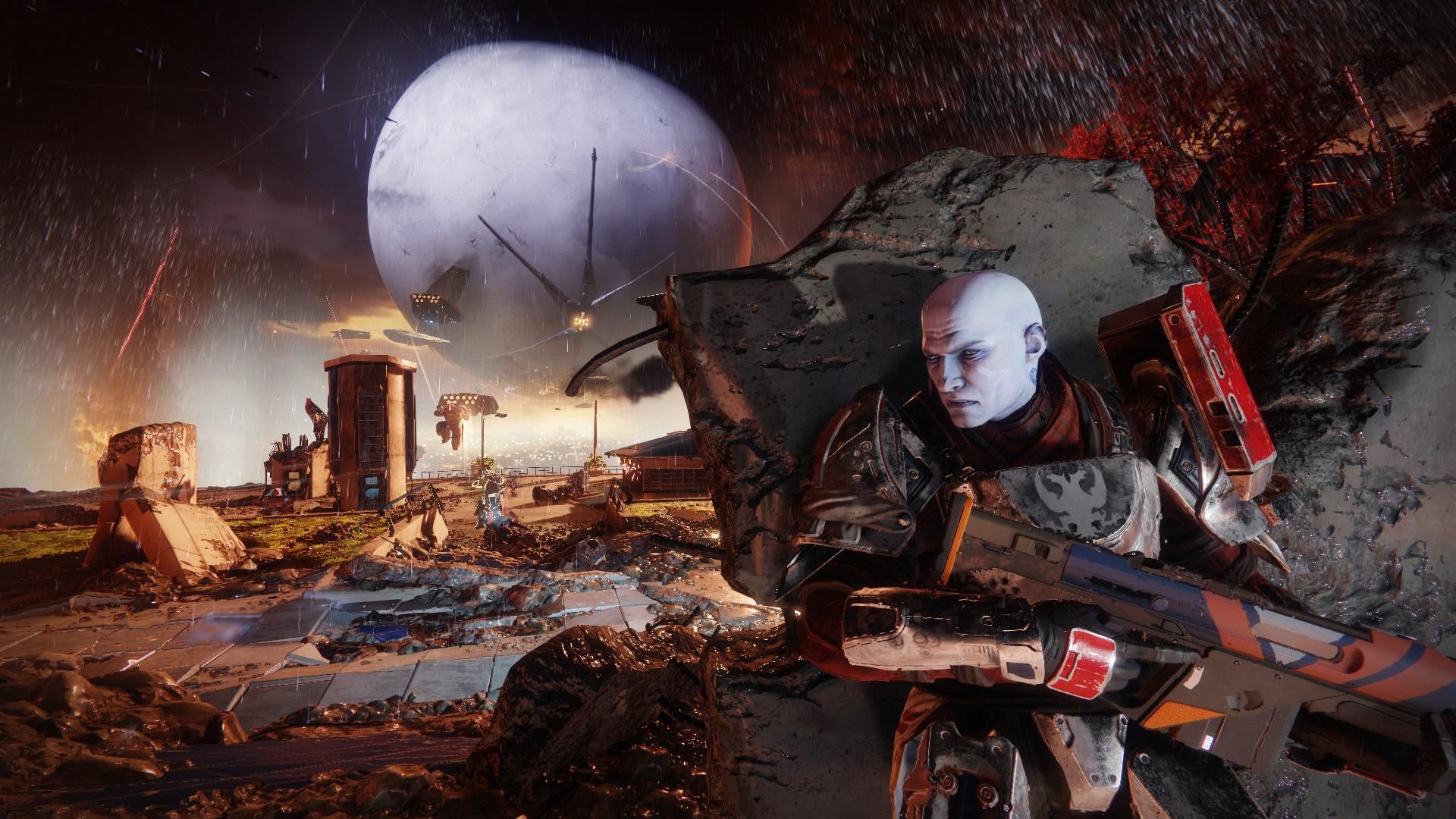
The image of Commander Zavala, a pivotal character from the Destiny universe, serves as a poignant reminder of these discussions. Destiny is a franchise that, while never undergoing a full hard reboot, has experienced several profound transformations that echo the themes of a fresh start.
When Bungie launched Destiny 1 in 2014, it introduced a vast sci-fi world with deep lore, engaging gameplay, and the promise of an evolving narrative. However, the game's early story was often criticized for being fragmented and difficult to follow. When Destiny 2 arrived in 2017, it wasn't a hard reboot in the traditional sense – the player Guardian, Zavala, Ikora, and all the established lore carried over. Yet, it very much acted as a soft reboot. The original Tower was destroyed, the Traveler was caged, and players started with renewed powers, setting a fresh narrative arc that aimed to be more cohesive and accessible. It was a new beginning, a chance to refine the game's identity without abandoning its foundation.
Since then, Destiny 2 has continued to evolve. Major expansions like "Forsaken," "Shadowkeep," "Beyond Light," "The Witch Queen," and "Lightfall" have each acted as mini-reboots for the game's narrative, tone, and gameplay systems. Each expansion brings a new story arc, often introduces new enemy types, new subclasses, and significantly changes the meta of the game. The "New Light" experience, designed specifically for new players, offers a streamlined entry point, effectively functioning as a narrative summary and simplified tutorial that brings fresh Guardians into the current state of the game without requiring them to play through years of content.
Could Destiny ever undergo a full, hard reboot? It's highly unlikely for a live-service game with a deeply invested player base and a continuously unfolding story. The financial and emotional cost of alienating millions of players by completely erasing their progress, characters, and achievements would be immense. Instead, Bungie opts for constant iteration, using major expansions and seasonal updates to prune old content, introduce new directions, and refresh the experience. This strategy reflects the "reboot might not have made sense but it's what many people wanted" sentiment perfectly: rather than a destructive reset, the community often desires continuous innovation and refinement within the existing framework. They want the feeling of a fresh start without the loss of their established investment, a challenge that Bungie, like other live-service developers, constantly navigates. The very nature of a live-service game means it's always in a state of soft reboot, adapting, changing, and striving to be better than its last iteration.
Conclusion: Navigating the Reboot Landscape
The concept of a "reboot" in entertainment, particularly in the realm of video games, is a testament to the dynamic relationship between creators, their creations, and the audiences who cherish them. It embodies the constant tension between nostalgia and innovation, between preserving beloved legacies and embracing the need for change. While a full, hard reboot might sometimes feel like an extreme measure, the fervent desire for one often stems from a genuine love for a franchise and a hope that it can once again capture the magic, modernize its appeal, or simply find its way back to what made it special.
However, the path of the reboot is fraught with significant challenges. The risk of alienating dedicated fans, losing the unique identity of a series, or simply failing to replicate past successes looms large. Developers and publishers face an incredibly difficult balancing act: how to honor the past while boldly stepping into the future. The diverse approaches we've explored—from subtle soft reboots and faithful remakes to innovative spiritual successors and the continuous evolution of live-service titles—demonstrate that there's no single right answer.
Ultimately, the success of any fresh start, whether it's a complete reimagining or a gentle evolution, hinges on a deep understanding of what made the original resonate with players, coupled with a clear vision for how to make it compelling for today's audience. As the entertainment landscape continues to evolve, the debate around reboots will undoubtedly persist. One thing remains clear: whether it made sense or not, the desire for a fresh start often reflects a passionate community's enduring hope for their favorite worlds to thrive for generations to come.
from Kotaku
-via DynaSage
