
Apple Wins EU Challenge Over Keyboard Maker's Citrus Logo
Apple's Big Win: How Reputation Protected Its Iconic Logo Against a Keyboard Maker in Europe
In the complex world of global branding, even the most seemingly minor disputes can reveal deep insights into how powerful companies protect their identities. Recently, tech giant Apple found itself in a legal battle with a Chinese keyboard manufacturer over a logo that Apple argued was too similar to its own famous bitten apple design. This case, decided by the European Union Intellectual Property Office (EUIPO), offers a fascinating look at the intricacies of trademark law, highlighting how a company's immense reputation can be a decisive factor, even when visual similarities are minimal.
The core of the issue began when Yichun Qinningmeng Electronics Co., a Chinese company known for making mechanical keyboards and keycaps, sought to register its unique logo as a European Union Trade Mark. Apple swiftly objected to this filing, believing that the proposed logo, despite its differences, could still confuse customers or unfairly benefit from Apple's world-renowned brand. What followed was a detailed legal review that ultimately saw the EUIPO siding largely with Apple, particularly when it came to products related to computers.
Unpacking the Contenders: Apple vs. Yichun Qinningmeng Electronics Co.
To fully grasp the dynamics of this dispute, it's essential to understand both parties involved. On one side, we have Apple Inc., a company whose brand recognition is virtually unmatched globally. Its iconic logo – a sleek, bitten apple – is immediately identifiable and symbolizes innovation, quality, and a premium user experience. This logo isn't just a pretty picture; it's a powerful business asset, meticulously protected through intellectual property laws worldwide. Every time a consumer sees that logo, they associate it with decades of brand building, billions of dollars in marketing, and a promise of a certain standard.
On the other side is Yichun Qinningmeng Electronics Co. This company, according to its website, specializes in mechanical keyboards and keycaps – a niche but growing market among computer enthusiasts and professionals. Interestingly, the company's online presence also suggests it sells solar panels, indicating a diverse product portfolio. The company's name itself, "Qinningmeng," is significant, as part of it translates to a type of citrus fruit. This linguistic connection directly influenced their logo design.
The Controversial Logo: A Citrus Fruit with a Twist
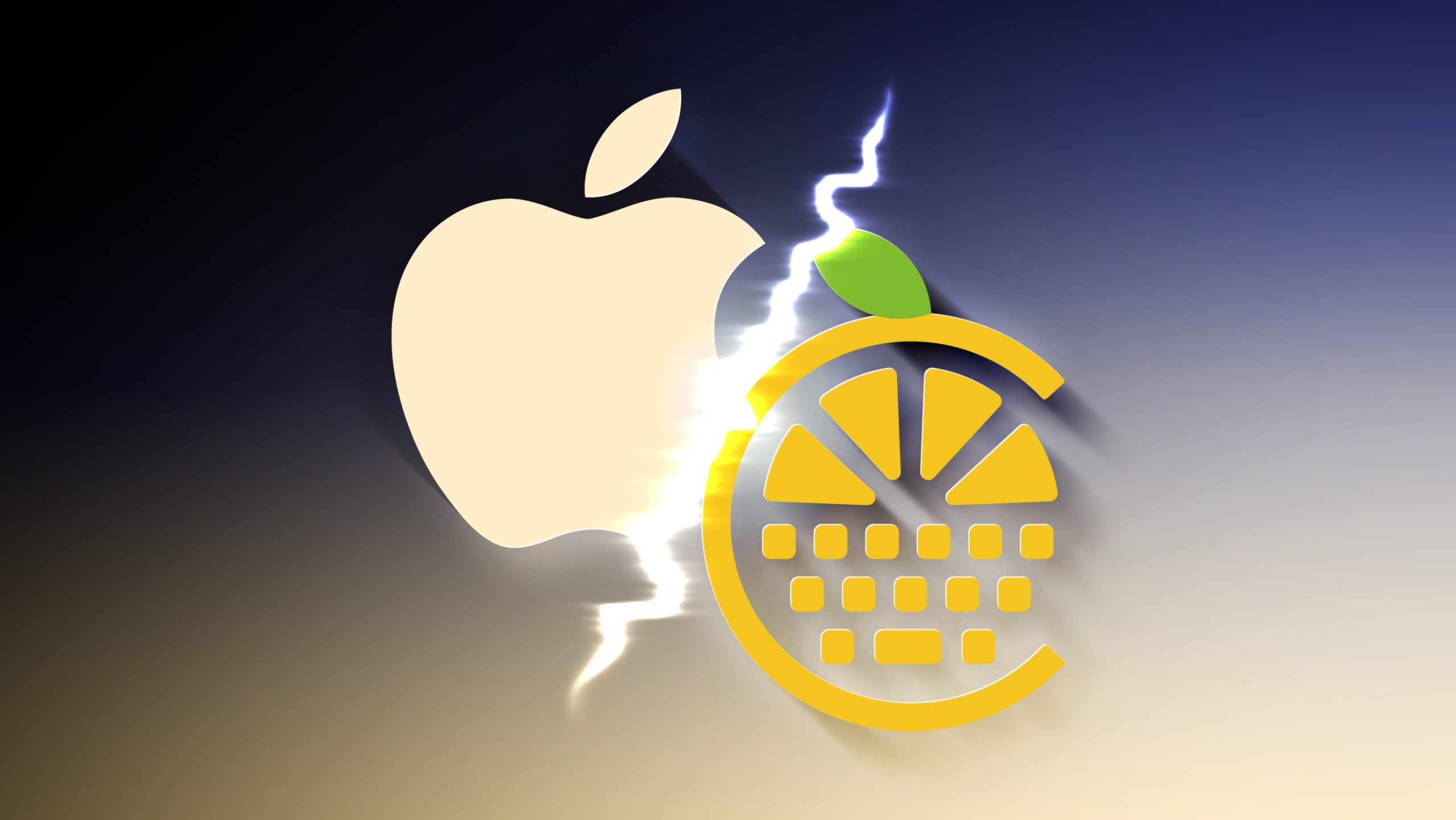
The logo that sparked Apple's concern was a distinctive design featuring a citrus fruit. This wasn't just any fruit; it was stylized with the bottom segments cleverly shaped to resemble keyboard keys. A green leaf angled to the left adorned the top of the fruit, and a section on the right side appeared to be missing, adding to its unique character. The design clearly drew inspiration from the company's name and its primary product line, making it a thoughtful and relevant symbol for their brand.

From the perspective of Yichun Qinningmeng Electronics Co., this logo was a creative representation of their identity – a citrus fruit (from their name) combined with keyboard elements (from their product). It aimed to be distinct and memorable within their market. However, Apple saw potential issues, fearing that even a slight resemblance to their own globally recognized logo could lead to confusion or dilution of their brand's uniqueness.
Apple's Initial Argument: Too Close for Comfort?
When Apple lodged its objection with the EUIPO, its primary argument revolved around the visual similarity between the keyboard maker's citrus logo and its own iconic apple design. Apple contended that the citrus logo, with its detached leaf and the missing section, resembled an apple that had been bitten. This argument suggested that consumers, especially those quickly glancing at the logo, might mistakenly associate it with Apple, thereby blurring the lines of brand identity.
This type of argument is common in trademark law, where companies often claim a "likelihood of confusion" among the public. The idea is to prevent a situation where consumers might believe that two different products or companies are somehow connected or that one endorses the other, simply because their logos are too similar. For a company like Apple, with decades of meticulous brand building, any potential for confusion is taken very seriously.
The EUIPO's Initial Visual Assessment: More Orange Than Apple
However, the EUIPO's initial assessment of the visual similarities did not entirely align with Apple's perspective. The office carefully examined both logos, noting their respective shapes and features. Their conclusion regarding visual resemblance was quite specific:
The opponent argues that the figurative element of the contested sign also consists of an apple device with a detached leaf and a bite. However, the body of the figurative element consists of a circle (despite the missing part) and apples are not perfectly round. Furthermore, apples are not normally depicted in such a shape which is, in any case, more akin to an orange or other round-shaped fruits.
Therefore, while the Opposition Division agrees that the figurative element of the contested sign is likely to be perceived as depicting a fruit of some sort and that the detached oblong shape is therefore also likely to be perceived as depicting a leaf, in view of its round shape together with the relatively generic leaf shape, it will not be immediately associated with any fruit in particular but rather with a round-shaped fruit in general.
It follows from the above that, in the present case, the relevant public will perceive the contested application as a highly stylised round-shaped fruit bearing additional fanciful figurative elements. In particular, the triangular shapes, due to their arrangement, may be seen as segments. Furthermore, the square and rectangular figures in the lower part, again by virtue of their arrangement, may evoke a keyboard.
In essence, the EUIPO found that the keyboard company's logo, with its perfectly round shape, was visually more akin to an orange or another round-shaped citrus fruit than to an apple. Apples, as the office pointed out, are not typically perfectly round. While acknowledging that the logo depicted a fruit with a leaf, the distinct elements, particularly the keyboard-like segments at the bottom, further differentiated it. They concluded that while there were "minor commonalities," the overall visual similarity was "to a very low degree," and the "signs are not conceptually similar." This meant that, purely on looks, the logos were distinct enough that they wouldn't immediately be confused.
The Decisive Factor: Apple's Immense Reputation and the "Mental Link"
Despite the EUIPO's initial finding that the logos were not highly similar visually or conceptually, the final decision largely favored Apple. This shift in reasoning is where the case becomes particularly instructive for businesses and trademark law enthusiasts. The EUIPO's decision pivoted from visual similarity to the overwhelming strength of Apple's brand reputation within the European Union and the potential for customers to "establish a mental 'link' between the signs."
Trademark law often considers not just direct confusion but also "dilution" or "taking unfair advantage" of an existing famous mark. This means that even if consumers aren't directly confused into thinking a product is from Apple, they might still unconsciously associate it with Apple due to a similar logo. This association, however subtle, could allow the new brand to benefit from the positive feelings, trust, and prestige that Apple has painstakingly built over decades. This is precisely the argument Apple made, and the EUIPO agreed.
Apple's argument, as quoted in the ruling, was powerful and direct:
Given the immense reputation of the Opponent's Earlier Mark, it is hard to believe that the Applicant's intention was not, at the very least, to bring the Opponent's Apple Logo to mind in some way. More likely, the Application represents a deliberate attempt to take advantage of that reputation to offer identical and highly similar goods. As a result, the addressed public, when confronted with the Applicant's sign, will wrongly assume that the Application indicates a connection to Apple (i.e. that the Applicant is a supplier or manufacturer).
This statement encapsulates the essence of brand protection for highly reputable marks. Apple argued that the keyboard company's intention, whether explicit or subconscious, was to evoke a connection to the Apple brand, even if the logos weren't identical. This "mental link" could lead consumers to assume a connection that doesn't exist, thereby allowing the keyboard maker to unfairly leverage Apple's hard-earned goodwill. The EUIPO found this argument compelling, recognizing the unique power and influence of Apple's brand in the marketplace.
The Verdict: A Partial Victory for Apple, Specific Limitations for the Keyboard Maker
The outcome of the EUIPO's decision was a partial refusal to grant the European Union Trade Mark to Yichun Qinningmeng Electronics Co. This wasn't a blanket ban; rather, it was specific to certain categories of goods. The company is now unable to proceed with the trademark process for keyboards or any other related computer goods. This is a significant setback for their branding efforts in the EU for their primary products.
However, the application to use the logo for solar panels will be allowed to proceed. This distinction highlights the nuanced nature of trademark protection, which often considers the specific goods or services being offered. The likelihood of confusion or the establishment of an unfair "mental link" is typically assessed within relevant product categories. It's far less likely that consumers would associate a solar panel company's citrus logo with Apple, given Apple's primary focus on electronics and software.
Yichun Qinningmeng Electronics Co. retains the option to file a notice of appeal within the next two months, indicating that this dispute might not be entirely concluded. Such appeals are common in trademark law, as companies often invest heavily in their brand identities and will fight to protect them.
A Familiar Pattern: Apple's History of Rigorous Logo Defense
This European trademark dispute is not an isolated incident; it fits into a broader pattern of Apple's aggressive and proactive approach to protecting its logo and brand identity worldwide. Apple has a long and well-documented history of objecting to fruit-related logos, even when the fruits in question are not apples, or when the designs seem quite distinct.
One notable example occurred when Apple sued the developers behind a cooking app named Prepear. The app's logo was pear-shaped and featured a leaf, prompting Apple to argue it was too similar to their own. The dispute eventually led Prepear to make slight modifications to its logo, such as flattening the leaf, to avoid further legal battles.
Another instance involved Apple objecting to an apple logo used by a Norwegian political party. While political parties and tech companies operate in vastly different spheres, Apple's consistent stance is that any use of a fruit with a leaf, particularly one with a missing section or a unique slant, could potentially dilute their mark or create an undue association. These examples illustrate that Apple's strategy isn't solely about protecting an "apple" image; it's about safeguarding the specific visual elements (fruit shape, leaf, missing section) that have become synonymous with its powerful brand.
Indeed, Apple opposes dozens of trademark applications every year, not just in the U.S. and Europe, but globally. This consistent vigilance underscores the immense value Apple places on its intellectual property and its determination to maintain an unambiguous and distinct brand presence in a crowded market.
The Global Landscape of Brand Protection: The US Dispute
Interestingly, Apple and Yichun Qinningmeng Electronics Co. also faced a similar trademark dispute in the United States. However, the resolution in the U.S. was more straightforward. The trademark application was terminated after the Chinese company failed to respond to the opposition proceedings. This outcome highlights the procedural differences and varying legal landscapes across different jurisdictions. In the U.S., a failure to respond typically results in a default judgment, making the process much quicker and simpler than a contested hearing like the one in the EUIPO.
This comparison between the EU and US cases further illustrates the complexities faced by businesses operating internationally. A company must navigate distinct legal frameworks, procedural requirements, and cultural interpretations of branding in each major market where it seeks protection. What might be a simple administrative oversight in one region could lead to a lengthy and costly legal battle in another.
Broader Implications: Lessons for Businesses in the Digital Age
This case between Apple and Yichun Qinningmeng Electronics Co. offers several crucial lessons for businesses of all sizes, especially those aiming for global reach:
The Power of Reputation Over Visual Similarity:
The most significant takeaway is that for globally recognized brands, reputation can sometimes outweigh direct visual similarity in trademark disputes. Even if a new logo looks distinct upon close inspection, if it evokes an unconscious "mental link" to a famous brand, it can still be deemed an infringement. This means companies need to consider not just how their logo looks, but also what associations it might inadvertently create.
Thorough Trademark Searches are Non-Negotiable:
Before investing in a logo and brand identity, businesses must conduct exhaustive trademark searches in all relevant jurisdictions where they plan to operate. This includes searching not just for identical marks but also for similar concepts, highly stylized designs, and well-known brands that could claim a "mental link" even with subtle resemblances. Ignorance of existing trademarks is rarely a valid defense.
Understanding Jurisdictional Nuances:
The differing outcomes in the EU and US cases emphasize that trademark law is not uniform globally. What passes in one country might be rejected in another. Companies with international ambitions need expert legal advice tailored to each market to avoid costly mistakes and lengthy disputes.
The Cost of Brand Protection:
For a company like Apple, fiercely defending its trademark is a strategic business decision. The cost of litigation, while substantial, is seen as an investment in protecting a multi-billion dollar brand asset. For smaller companies, however, facing off against a giant like Apple can be financially ruinous, regardless of the merits of their case. This creates an uneven playing field that smaller entities must navigate carefully.
Creativity Within Constraints:
Entrepreneurs and designers are constantly challenged to be innovative, but this case reminds them that creativity must operate within legal boundaries. When designing a logo, especially one that incorporates common motifs like fruits or simple geometric shapes, it's crucial to ensure sufficient distinctiveness to avoid inadvertently treading on the intellectual property of established brands.
Conclusion: The Ongoing Battle for Brand Identity
The dispute between Apple and Yichun Qinningmeng Electronics Co. is more than just a legal skirmish over a logo; it's a testament to the enduring importance of brand identity in the modern global economy. It underscores that trademarks are not merely pictures or words; they are vital business assets that embody a company's reputation, quality, and consumer trust. For a company like Apple, protecting its bitten apple logo is paramount to preserving its market position and avoiding any erosion of its unique brand appeal.
While the EUIPO acknowledged the visual differences between the two logos, it ultimately recognized the unparalleled power of Apple's brand reputation. The decision to prevent the keyboard maker from using its citrus logo for computer-related goods signals a strong message: even subtle resemblances, when combined with the immense goodwill of a famous mark, can be enough to trigger legal action and shape market access. As businesses continue to globalize and digital platforms make brand exposure instant and widespread, the strategic protection of intellectual property will only grow in importance, defining the boundaries of creativity and competition in the years to come.
This article, "Apple Wins EU Challenge Over Keyboard Maker's Citrus Logo" first appeared on MacRumors.com
Discuss this article in our forums
from MacRumors
-via DynaSage
