
Andy Serkis Says Snobbery Around Video Game Acting Has Changed A Lot Since Heavenly Sword On PS3
The Fading Crown: What Nintendo Switch's Stall and 2K Layoffs Mean for the Future of Gaming
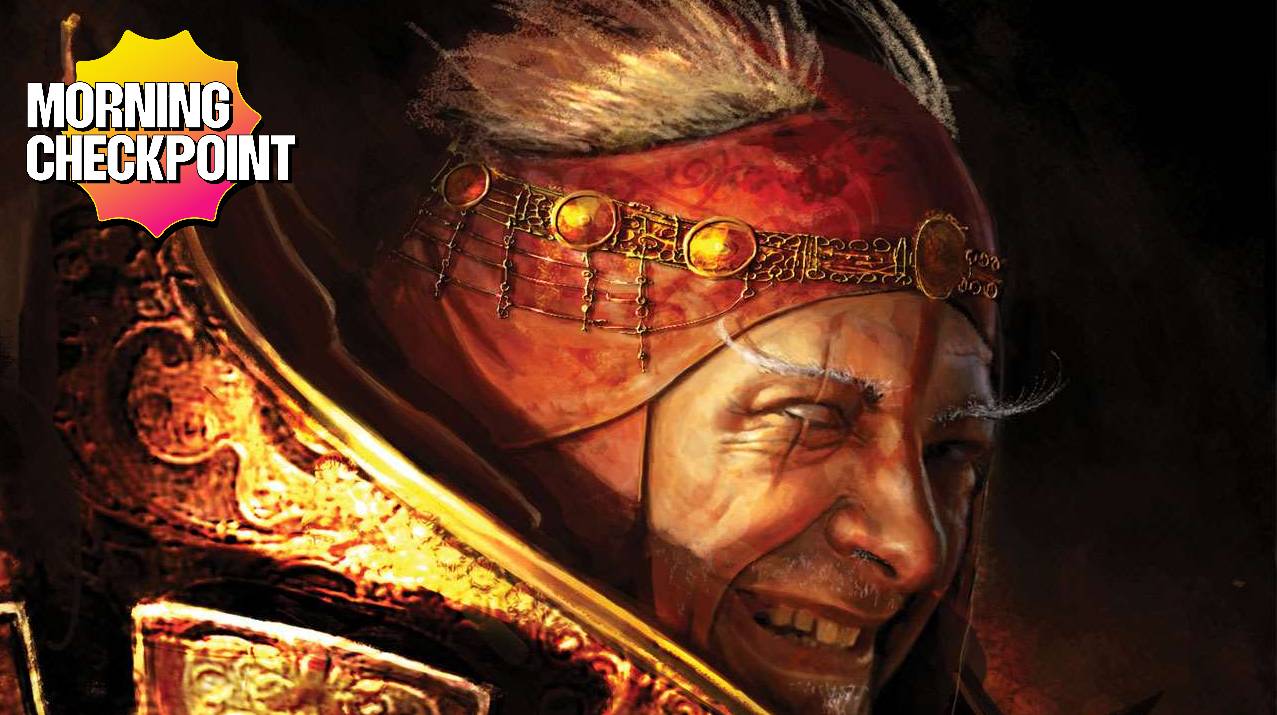
The image of a king wincing in the dark is powerful, evoking a sense of struggle, uncertainty, and perhaps the heavy burden of leadership during challenging times. This solitary figure, bathed in shadow, seems to embody the very essence of an era coming to a close or a difficult decision being made. In many ways, this striking visual serves as a fitting metaphor for the current state of the video game industry. It's an industry grappling with rapid technological advancements, shifting consumer expectations, and economic pressures that often lead to tough choices. We are at a crossroads, where the reign of established titans might be winding down, while the promise of new horizons is still shrouded in mist.
Recent headlines reinforce this feeling of transition and tension. The news that the original Nintendo Switch is "stalling out" sends ripples through the console market, signaling the inevitable march of time and technology. For a console that redefined portable gaming and brought joy to millions, its slowing momentum prompts questions about what comes next for Nintendo and for handheld gaming as a whole. Simultaneously, the distressing news of 2K laying off developers working on "Project Ethos" reminds us of the human cost behind game development, highlighting the often-unstable nature of creative ventures within a highly competitive corporate landscape. These two events, though seemingly disparate, paint a comprehensive picture of an industry in flux, facing both the natural evolution of its products and the harsh realities of its business models.
The Wincing King: A Metaphor for the Gaming Industry's Crossroads
The king in our opening image, wincing in the dark, perfectly captures the mood pervading the video game industry right now. This isn't a king in triumph, but one facing an unseen challenge, burdened by decisions that affect an entire realm. Metaphorically, this figure represents the major players and decision-makers within the gaming world—console manufacturers, major publishers, and studio heads—who are all navigating complex terrain. The "dark" symbolizes the uncertainties of the market: unpredictable player preferences, the rising costs of game development, intense competition, and the ever-present pressure to innovate while remaining profitable. Every choice made, every project greenlit or canceled, carries immense weight, impacting not only balance sheets but also the livelihoods of countless individuals and the entertainment experiences of a global audience.
This wincing posture suggests a moment of vulnerability or pain, perhaps reflecting the growing pains of an industry that has exploded in size and scope over the past two decades. What was once a niche hobby is now a global phenomenon, attracting billions of dollars and diverse audiences. However, this growth comes with its own set of challenges. Market saturation, the demand for increasingly sophisticated graphics and gameplay, and the shift towards live-service models have all created a pressure cooker environment. Leaders are forced to make strategic pivots, sometimes abandoning promising projects or letting go of talented teams, all in the name of adapting to an incredibly dynamic landscape. The pain of these decisions is palpable, even if they are deemed necessary for long-term survival.
The "crown" that such a king wears can be seen as the legacy and reputation of an established platform or company. For Nintendo, the Switch has been a crown jewel, but even the brightest crowns can begin to lose their luster with time. The wince implies an acknowledgment that past glories, while cherished, may not be enough to carry into the future without significant change. It speaks to the arduous task of balancing tradition with innovation, of respecting a successful past while boldly stepping into an unknown future. This delicate balancing act is what defines the struggle of many companies in the current gaming climate, where yesterday's groundbreaking success can quickly become tomorrow's outdated technology.
Furthermore, the king's solitude in the dark highlights the isolated nature of high-level decision-making. While the gaming community often expresses its desires and disappointments loudly, the ultimate burden of charting a course through turbulent waters falls on a few key individuals. These leaders must often look beyond immediate public sentiment, making choices based on complex market analysis, financial projections, and long-term strategic visions that may not always be immediately popular but are deemed essential for the health of their enterprise. The wince, then, is a deeply human reaction to this immense responsibility, a silent acknowledgement of the difficulty inherent in guiding an entire kingdom—or industry—through its various trials and transitions.
Ultimately, this powerful image compels us to look beyond the surface-level news and consider the deeper implications for the gaming world. It invites us to empathize with the struggles of innovation, the pressures of the market, and the human element woven into the fabric of this vast entertainment industry. As we delve into the specific cases of the Nintendo Switch and 2K's Project Ethos, keep this image in mind, for it provides a poignant lens through which to understand the current narrative of change and challenge in gaming. It sets the stage for a discussion about evolution, adaptation, and the persistent quest for new ways to delight players while navigating complex business realities.
Nintendo Switch 1 Stalls Out: The End of an Era?
The news that the original Nintendo Switch is "stalling out" doesn't come as a surprise to many industry observers, yet it marks a significant moment in the console's impressive lifecycle. Launched in March 2017, the Nintendo Switch was a revelation, successfully blending the best aspects of home console gaming with the unparalleled convenience of a portable device. Its unique hybrid design, innovative Joy-Con controllers, and a strong lineup of first-party titles like The Legend of Zelda: Breath of the Wild and Super Mario Odyssey propelled it to massive global success, selling over 130 million units worldwide and becoming one of Nintendo's best-selling consoles of all time. It created its own niche, offering an experience distinct from its more powerful competitors, PlayStation and Xbox.
However, seven years is a long time in the fast-paced world of technology. While the Switch received updates like the OLED model, these were incremental improvements rather than generational leaps. The signs of it "stalling out" are manifold: a noticeable slowdown in hardware sales compared to its peak, fewer major first-party releases that typically drive console purchases, and a growing performance gap when compared to the PlayStation 5 and Xbox Series X/S. Modern games, with their ever-increasing demands for graphical fidelity and processing power, are starting to push the Switch's aging hardware to its limits, often resulting in visual compromises or lower frame rates that become increasingly difficult to ignore for a discerning audience.
Player expectations have naturally evolved since 2017. Gamers are now accustomed to 4K resolution, ray tracing, and buttery-smooth frame rates on their home consoles and PCs. While the Switch's portability remains a strong selling point, the desire for a more powerful "Switch 2" or next-generation Nintendo console has reached a fever pitch. Rumors and speculation abound regarding its potential features: better processing power, improved graphics, backward compatibility, and perhaps even higher resolution output in docked mode. Nintendo itself has remained tight-lipped, but the market's anticipation is a clear signal that consumers are ready for the next evolution of Nintendo's vision, demonstrating that even a beloved console eventually reaches its twilight years. You can often find discussions about the Switch's future on gaming forums like ResetEra or in analyses by publications like IGN.
The "stalling out" phase is not just about declining sales; it's about the console reaching a mature point in its lifecycle where it has maximized its market penetration and new user acquisition becomes more challenging. Existing owners might be waiting for the next big first-party title, but the pipeline for such blockbusters naturally thins as a console generation draws to a close. For developers, building games for an aging platform presents increasing challenges, often requiring significant optimization work to achieve acceptable performance, which can be costly and time-consuming. This further incentivizes them to look towards newer, more powerful hardware for their ambitious projects, creating a self-fulfilling prophecy of a platform gradually slowing down.
Despite its current deceleration, the legacy of the original Nintendo Switch is undeniable. It proved that a unique value proposition can carve out massive success even against more technologically advanced competitors. It normalized hybrid gaming, making it a viable and desirable form factor. It introduced new ways to play and created unforgettable gaming memories for millions. Its "stall" is not a failure, but rather a natural progression, a signal that its chapter is concluding, making way for what Nintendo hopes will be another groundbreaking innovation. How Nintendo manages this transition, balances supporting the existing user base with generating excitement for its successor, will be a critical test for the company in the coming years. The industry watches closely to see if they can once again redefine what a console can be.
Project Ethos and 2K Layoffs: A Troubling Industry Trend
While the Nintendo Switch's slowing momentum is a natural part of a console's lifecycle, the news of 2K laying off developers from "Project Ethos" strikes a much more somber chord, highlighting the challenging and often precarious nature of working in the video game industry. These layoffs are not an isolated incident but rather indicative of a broader, troubling trend that has seen thousands of talented individuals lose their jobs across various gaming companies in recent times. Behind every successful game, there's a team of passionate developers, artists, programmers, and designers whose livelihoods are directly tied to the volatile tides of project development, market performance, and corporate strategy.
"Project Ethos" itself remains largely shrouded in mystery, which is often the case for canceled projects. What little we know is that it was an unannounced title being developed under the 2K umbrella, a major publisher known for popular franchises like Grand Theft Auto (through its parent company Take-Two Interactive), NBA 2K, and Borderlands. The cancellation of such a project, especially one that was far enough along to have a dedicated development team, signifies a significant shift in strategic priorities or a re-evaluation of its market viability. For the developers involved, it means sudden unemployment, often without much warning, forcing them to search for new opportunities in a highly competitive job market.
The business side of publishing giants like 2K and its parent company, Take-Two Interactive, is driven by financial performance and shareholder expectations. While creating innovative and engaging games is the core mission, profitability and return on investment are paramount. Decisions to cut projects or lay off staff are typically made after careful consideration of development costs, projected sales, market trends, and internal resource allocation. Sometimes, projects simply don't meet internal milestones, become too expensive to develop, or are deemed unlikely to achieve the desired commercial success. This often leads companies to pivot towards more established, safer bets—like yearly sports franchises or known IPs—or to invest heavily in live-service games that promise recurring revenue.
The layoffs at 2K are part of a distressing pattern observed across the entire gaming industry over the past year or two. Major companies, including Microsoft (Xbox), Sony (PlayStation), Epic Games, Unity, Embracer Group, and countless smaller studios, have all announced significant job cuts. Several factors contribute to this widespread instability. One major reason cited is the post-pandemic correction: the gaming industry saw unprecedented growth during the COVID-19 lockdowns, leading to significant over-hiring. As people returned to pre-pandemic activities, this boom softened, leaving companies with larger workforces than sustainable in a leaner market. Additionally, rising development costs, increasing interest rates, and a general economic downturn have amplified the pressure to streamline operations and cut expenses.
The impact of these consistent layoffs extends beyond the individuals directly affected; it ripples through the entire industry. It fosters an environment of fear and uncertainty, potentially stifling creativity and risk-taking. Developers might become more hesitant to pitch innovative, unproven concepts if they perceive a higher chance of cancellation and job loss. This could lead to a reliance on existing, proven formulas, potentially hindering the creation of truly groundbreaking new intellectual properties. Moreover, the loss of experienced talent due to layoffs means a depletion of institutional knowledge and expertise, making it harder for studios to build cohesive, high-performing teams for future projects. Addressing the human element of game development and fostering greater job stability is a crucial challenge for the industry moving forward, as discussed by many industry analysts and reported on sites like GamesIndustry.biz.
Navigating the Crossroads: What's Next for Gaming?
The combined narratives of the Nintendo Switch's lifecycle coming to a natural close and the disheartening layoffs at 2K paint a vivid picture of an industry at a critical crossroads. On one hand, we see the inevitable march of technological progress, demanding newer, more powerful hardware to push the boundaries of interactive entertainment. On the other, we witness the harsh economic realities that can suddenly halt creative endeavors and displace dedicated professionals. Navigating these complexities requires a delicate balance between ambitious innovation and pragmatic stability, a challenge that will define the future trajectory of gaming.
The tension between innovation and stability is perhaps the most significant theme. Companies are under constant pressure to develop groundbreaking new technologies and compelling gaming experiences. Nintendo, for instance, thrives on innovation, consistently attempting to redefine how we play. The success of their next console, the anticipated "Switch 2," will depend heavily on its ability to offer a fresh perspective while meeting modern performance demands. However, innovation is expensive and risky. Projects like "Ethos" are born from this desire to create something new, but the very nature of such ventures means they might not always see the light of day if they don't align with evolving strategic or financial goals. The industry needs a robust ecosystem where creativity can flourish without being constantly under the shadow of economic uncertainty.
The role of players in shaping this future cannot be overstated. Consumer choices – what games we buy, what platforms we invest in, what features we prioritize – send powerful signals to publishers and developers. If players consistently demand higher fidelity graphics, then console manufacturers will respond by pushing hardware capabilities. If certain genres or monetization models are rejected, companies will adapt their strategies. This feedback loop is essential, but it also means players share a collective responsibility in supporting the kinds of games and development practices they wish to see thrive. Informed consumerism, including supporting studios that prioritize ethical labor practices and sustainable development, can contribute to a healthier industry.
Looking ahead, new technologies are poised to reshape the landscape further. Cloud gaming, while still finding its footing, promises to make high-end gaming accessible without expensive hardware. Artificial Intelligence (AI) is already impacting game development, from generating content to creating more sophisticated non-player characters, and its role will only grow. Virtual Reality (VR) and Augmented Reality (AR) continue to mature, offering immersive experiences that could redefine how we interact with digital worlds. These advancements present both incredible opportunities for innovation and significant challenges in terms of development costs and market adoption. Companies must invest wisely in these areas, discerning which technologies are truly transformative versus those that are fleeting trends.
The importance of intellectual property (IP) will also remain a cornerstone of the industry. Established franchises provide a sense of security, drawing in loyal fanbases and offering predictable revenue streams. This is why we often see sequels, remasters, and spin-offs of popular series. However, a healthy industry also needs new IPs to prevent stagnation and attract diverse audiences. The challenge lies in fostering an environment where new ideas can be nurtured and brought to fruition, even if they don't carry the immediate brand recognition of a major blockbuster. This requires publishers to take calculated risks and provide stable support for creative teams, fostering an environment where bold ideas aren't prematurely abandoned.
Conclusion: The Enduring Spirit of Gaming
The wincing king in the dark perfectly encapsulates the current state of the video game industry: a powerful entity grappling with internal pressures and external changes. The "stalling out" of the beloved Nintendo Switch reminds us that even the most successful reigns have an end, paving the way for inevitable evolution and the next generation of consoles. This transition, while exciting, highlights the relentless pace of technological progress and the constant demand for innovation that drives the market forward. Nintendo's challenge, and indeed the industry's, is to manage these transitions gracefully, honoring past successes while building compelling futures.
Simultaneously, the layoffs at 2K involving "Project Ethos" serve as a stark reminder of the human element often obscured by quarterly reports and sales figures. These incidents underscore the fragility of careers in an industry that, despite its massive growth, remains prone to economic volatility and strategic re-prioritization. It's a call to action for greater stability, more thoughtful project management, and a renewed focus on supporting the talented individuals who are the true architects of our digital worlds. The pain reflected in the king's wince is, in part, the pain of these individuals and the uncertainty that permeates their professional lives.
As we look to the future, the gaming industry stands at a pivotal juncture. It is a time of both immense promise, with exciting new technologies on the horizon, and significant challenges, as companies grapple with sustainable growth and ethical labor practices. The journey ahead will undoubtedly be complex, requiring adaptability, foresight, and a deep understanding of both technology and human desire. Yet, the enduring spirit of gaming—its ability to connect people, tell stories, and create immersive experiences—will surely prevail. The king may wince, but the kingdom of gaming will continue to evolve, offering new adventures and pushing the boundaries of interactive entertainment for generations to come. The resilience and passion of both creators and players will ultimately guide the industry towards its next era of innovation and excitement.
from Kotaku
-via DynaSage
