
This PS2 Game Parody Of The Pitt Is The Perfect Way To End Season 2
The Ultimate Diagnosis: Imagining a Beloved Medical Drama as a PS2-Era Medical Simulator
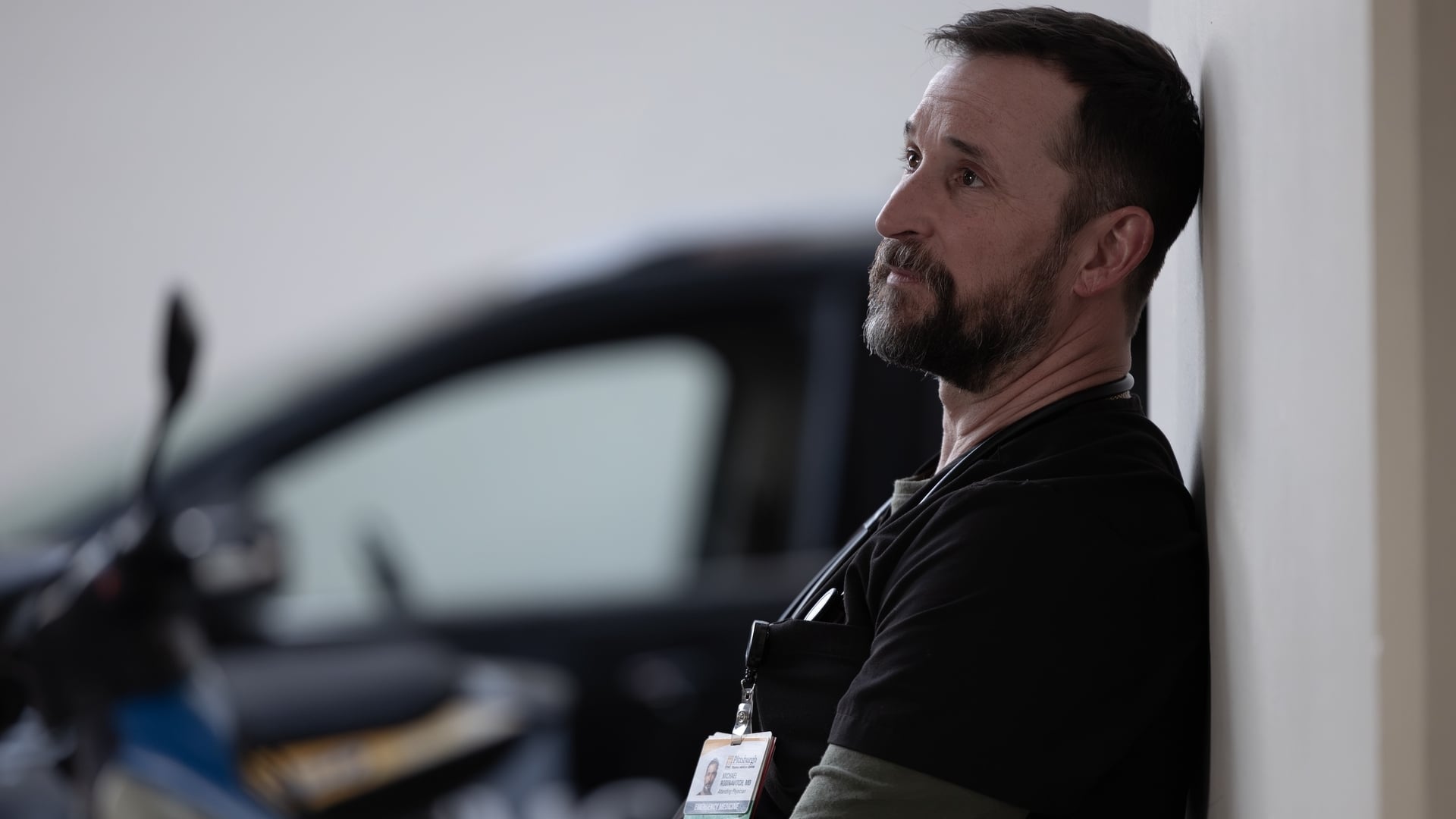 The world of entertainment often surprises us with creative crossovers, but few concepts spark the imagination quite like the idea of an animated parody of a popular medical drama, specifically imagining it as a PlayStation 2 (PS2) era medical simulation game. This brilliant, tongue-in-cheek concept takes the high-stakes, emotionally charged world of a show like ER, a fixture for many years and now often available on streaming platforms like HBO Max, and filters it through the lens of early 2000s video game technology. It’s a genius fusion of nostalgia, satire, and pure comedic potential, promising a unique blend of cringe-worthy graphics, repetitive yet addictive gameplay, and exaggerated drama that only a retro game parody could deliver.
A Deep Dive into the Concept: What Makes It So Genius?
At its heart, this idea thrives on contrast. We're talking about a meticulously crafted, often gritty television series known for its realism (or at least its dramatic interpretation of it) being reduced to the blocky, sometimes clumsy mechanics of a PS2 game. The humor comes from the clash between the source material's intensity and the limitations of the chosen medium.The Animated Parody Angle
Animation is the perfect vehicle for this kind of satire. Live-action parody often struggles to capture the specific exaggerations needed without simply looking like a cheap imitation. Animation, however, allows for complete freedom. Characters can be drawn with exaggerated features, movements can be comically stiff or wildly over-the-top, and medical procedures can be depicted with a level of absurdity that would be impossible, or perhaps too gruesome, in live-action. Think of the rubbery movements, the simplified character designs, and the ability to warp reality for comedic effect. An animated parody gives creators full license to poke fun at medical drama tropes, from the perpetually frantic pace to the impossibly beautiful doctors. It can highlight the ridiculousness of a doctor delivering a perfectly timed, dramatic monologue while performing CPR, or the almost magical way certain patients recover.The Choice of a Medical Drama (Likely ER)
While the prompt refers to an "HBO Max show," the image of Noah Wyle strongly suggests the classic medical drama ER. ER, which ran for 15 seasons and redefined the genre, is an ideal target for such a parody. It’s iconic, universally recognized, and packed with established characters, dramatic scenarios, and signature tropes. From the frenetic pace of the emergency room to the complex personal lives of its doctors, ER provided endless material for both serious storytelling and playful mockery. Other shows like Grey's Anatomy or House M.D. could also fit, but ER's historical impact and its emphasis on raw, often chaotic hospital life make it a prime candidate for a PS2-era sim treatment. The show’s emphasis on medical emergencies arriving rapid-fire, demanding quick thinking and even quicker actions, translates perfectly into the fast-paced, mini-game heavy structure typical of early 2000s simulation games.The Nostalgia of the PlayStation 2 Era
The PS2 isn't just an old console; it's a cultural phenomenon. It was a console that introduced millions to the joys of gaming, featuring groundbreaking titles alongside quirky, experimental, and sometimes clunky releases. The "PS2-era" immediately conjures images of distinct graphics: jagged edges, low-resolution textures, character models that were a bit stiff, and an overall charm that modern hyper-realistic games often lack. This era also defined a certain style of gameplay, particularly for simulation titles. Games like *Trauma Center* (though on the DS, it captured a similar spirit) or even early *Surgeon Simulator* concepts (predating the PS2 but embodying the challenge of clunky controls for medical procedures) highlight the inherent humor and difficulty in performing delicate tasks with imprecise digital tools. This nostalgia acts as a powerful layer, inviting players to remember a simpler, yet often more frustrating, time in gaming.Deconstructing the "Medical Drama" Aspect
To truly appreciate the parody, one must first understand the elements it's satirizing. Medical dramas have captivated audiences for decades, and for good reason.The Enduring Legacy of Shows Like ER
ER wasn't just a TV show; it was a cultural touchstone. It brought the chaotic, high-pressure environment of a Chicago emergency room into millions of homes. It launched careers, tackled sensitive social issues, and pushed the boundaries of television storytelling. Its "walk-and-talk" camera style became legendary, conveying a sense of constant urgency and movement. The show balanced incredibly complex medical cases with deeply personal character arcs, making viewers emotionally invested in the lives of its doctors and nurses. This legacy makes it a rich target for a parody that can affectionately jab at its conventions while celebrating its impact.The High Stakes and Emotional Rollercoaster
Every episode of a good medical drama is a roller coaster. Patients arrive on the brink of death, miraculous saves are made, and heartbreaking losses occur. Doctors grapple with ethical dilemmas, personal demons, and the sheer exhaustion of their demanding profession. This constant emotional intensity is a key ingredient. In a PS2 sim, this could be represented by a "stress meter" for the doctor-player, fluctuating patient vitals on a rudimentary UI, or dramatic "game over" screens if a patient succumbs. The heightened drama provides ample opportunities for comedic exaggeration, turning life-or-death situations into hilariously difficult mini-games.The Characters We Loved (and Loathed)
Medical dramas are defined by their ensemble casts. The stoic chief of staff, the brilliant but troubled resident, the compassionate nurse, the rebellious intern – these archetypes are instantly recognizable. In a parody game, these characters would be simplified, perhaps even caricatured, embodying their most salient traits. Dr. Carter's earnestness, Dr. Ross's charm, Dr. Greene's compassion, or Dr. Weaver's strictness could be boiled down to distinct gameplay attributes or dialogue options. Imagining these complex individuals as low-poly character models, delivering pre-recorded, often stiff, dialogue lines adds another layer of comedic brilliance. Their personal dramas, which often intertwined with their professional lives, could become simplified "side quests" or influence their performance in medical mini-games.Why Medical Dramas Are Ripe for Parody
Despite their serious subject matter, medical dramas often rely on predictable tropes. The impossible diagnosis, the last-minute save, the dramatic patient reveal, the love triangle in the breakroom, the ethical dilemma that has no easy answer – these are all hallmarks of the genre. They are comfortingly familiar, which makes them perfect for good-natured teasing. A PS2 medical sim could hilariously lampoon these elements: a specific mini-game for identifying the "rare disease," a quick-time event (QTE) for a "miraculous defibrillation," or dialogue options that always lead to a romantic subplot, regardless of the patient's condition. The parody doesn't aim to diminish the original show's impact but rather to celebrate its memorable quirks through a new, humorous lens.Step into the OR: The PS2 Medical Sim Experience
Now, let's dive into what a game like this would actually look and feel like, fully embracing its PS2-era identity.Visuals and Aesthetics: Low-Poly Charm
The core of the PS2 sim experience would be its visuals. Imagine blocky character models with visible polygons, movements that are less fluid and more like a series of distinct animations, and environments that feel static yet functional.Pixelated Perfection
Character faces would be rudimentary, perhaps with textures that stretch and distort when expressing emotion, or simply static expressions. Doctors and nurses would shuffle rather than walk gracefully, their limbs moving in slightly unnatural ways during examinations or procedures. The emergency room itself would be a collection of low-resolution textures – tiled floors, generic medical equipment, and perhaps a few blinking lights to simulate monitors. Blood would likely be a simple red sprite or a flat texture, appearing comically unrealistic. This charmingly dated aesthetic wouldn't be a flaw but a deliberate choice, central to the humor and the nostalgic appeal.Static Backgrounds and Repetitive Animations
Background characters might be simple two-dimensional cutouts, or models with even fewer polygons, moving in pre-programmed loops. When a patient is rushed in, their stretcher might glide in on an almost invisible track, and the animated chaos of the ER would be represented by a few repeating sprite animations of staff running back and forth, or a blinking "URGENT!" icon on screen. The limited animation budget would mean that complex actions are either abstracted or played out through a few key frames, adding to the game's retro charm and comedic effect. The operating room, a place of intense drama in the show, would become a rather sterile, blocky environment with just enough detail to convey functionality.Gameplay Mechanics: More Than Just Button Mashing
A PS2 medical sim would need engaging, albeit simplified, gameplay loops to keep players hooked. It wouldn't be just watching; it would be doing, even if "doing" means struggling with quirky controls.Diagnosis Mini-Games
Upon a patient's arrival, the player, acting as a doctor, would engage in a series of mini-games to diagnose their condition. This could involve "matching" symptoms to diseases from a limited list, quickly scanning a low-res X-ray for anomalies with a clunky cursor, or performing a rudimentary physical exam via a series of button prompts. A "dialogue wheel" might appear to ask the patient about their symptoms, with choices that range from medically accurate to comically unhelpful. Failing these mini-games could lead to misdiagnosis, wasting precious "game time" or requiring more complex (and perhaps more frustrating) interventions later. Imagine a mini-game where you have to literally connect dots on a rudimentary anatomical diagram to pinpoint the source of pain, all while a timer ticks down.Surgical Challenges and Quick-Time Events
The heart of any medical sim lies in its surgical sequences. In a PS2 parody, these would be a masterclass in controlled chaos. Basic procedures like suturing a wound could be a rhythm-based mini-game, while more complex surgeries might involve a series of timed button presses or joystick movements to mimic cutting, clamping, or injecting. Think of a QTE sequence for defibrillation, where failing to hit the buttons in time results in a comically flat-lining patient. Precision would be key, but the controls would be deliberately a little bit off, creating moments of genuine frustration that quickly turn into laughter. Maybe applying bandages involves a Tetris-like puzzle to cover the wound effectively.Resource Management: Beds, Staff, and Budget
Beyond direct patient care, a good sim also incorporates management elements. Players might have to allocate limited hospital beds, assign nurses to patients, or manage a budget that constantly runs low. Random events could occur, like a critical piece of equipment breaking down, forcing the player to make difficult choices or engage in another mini-game to repair it. Hiring new staff might involve reviewing overly simplistic CVs or playing a short interview mini-game. These elements add depth, transforming the experience from a mere sequence of medical tasks into a broader hospital management challenge, all within the PS2’s technical constraints.Time Pressure and Urgency
A defining characteristic of medical dramas is urgency. Patients are always critical, time is always running out. This translates perfectly into PS2-era gameplay. Most actions would be timed, with an on-screen clock constantly ticking down. Certain procedures might have tight deadlines, and failing to meet them could result in penalties – lower "reputation" points, increased patient suffering, or even a game over. The frantic pace, combined with the slightly clunky controls, would create a constant sense of comedic panic, mirroring the controlled chaos of a real-life ER while amplifying it for humor. The screen might flash red, or an alarm sound might blare, further stressing the player.Sound Design: The Heartbeat of the Hospital
The audio experience would be just as crucial as the visuals in evoking that PS2-era feel.Looping Soundtracks and Exaggerated SFX
Expect a soundtrack consisting of a few looping instrumental tracks – perhaps a tense, dramatic melody for emergencies, a calmer, slightly melancholic tune for quieter moments, and a cheerful, slightly cheesy track for successful outcomes. Sound effects would be simple but effective: a distinct "beep-beep" for monitors, a squishy sound for medical procedures, a cartoonish "thump" for patient falls, and an exaggerated "gasp" for dramatic revelations. These effects, while simple, would be instantly recognizable and contribute significantly to the parody’s charm.Limited Voice Acting
Voice acting in early PS2 games was often sparse, limited to key dialogue lines, and sometimes delivered with a charming earnestness that could border on robotic. In our parody, the iconic lines from the medical drama might be delivered by character models with limited lip-sync, or perhaps even in a garbled, compressed audio format, adding to the retro aesthetic. Important plot points might be conveyed through text boxes with accompanying sound effects, requiring players to read through simplified dramatic exchanges. The most memorable quotes could be recycled and played at slightly inappropriate moments for comedic effect.Storyline and Character Interaction: Simplified Drama
The narrative and character development, while central to the original shows, would be streamlined and often exaggerated for the game.Iconic Characters as Game Sprites
Imagine Dr. Ross or Dr. Greene as low-poly models with simplified animations. Their complex backstories would be reduced to a few key traits, influencing their gameplay abilities or dialogue options. A character known for their impulsiveness might have a higher chance of a successful but risky procedure, while a cautious character might excel at diagnosis but struggle with speed. Interacting with them would involve simple dialogue trees, leading to predictable, yet amusing, outcomes. Their personal relationships could be reduced to "affinity meters" that impact team performance or unlock specific "romance" mini-games.Episodic Gameplay and Branching Paths
The game could be structured episodically, much like the show, with each "level" presenting a new set of patients and challenges. Players might face branching paths based on their decisions: successfully saving a patient could lead to a bonus level or unlock a new medical tool, while a failure might lead to a more challenging scenario in the next "episode." The overarching narrative might involve climbing the ranks of the hospital, dealing with a rival doctor, or uncovering some minor bureaucratic scandal, all rendered with the charming simplicity of a PS2-era plotline. Each episode would culminate in a dramatic "episode summary" text screen, complete with a low-res still image and a final score.The Humor and Satire: A Prescription for Laughter
The true genius of this concept lies in its ability to generate humor and provide insightful satire.Exaggerating Medical Clichés
Medical dramas are replete with clichés. The impossible recovery, the doctor who always knows best, the patient with the rare, bizarre condition – these are staples. A PS2 medical sim can take these to absurd extremes. A patient might come in with an ailment so convoluted it requires a multi-stage mini-game involving bizarre tools. The "wise old doctor" character might give advice in cryptic, overly dramatic one-liners, providing no actual help. The constantly beeping monitors, the urgent whispers, and the rapid-fire medical jargon that often goes over viewers' heads can be amplified for comedic effect, becoming almost nonsensical in the game context.The Frustration of Early Sim Games
Part of the humor also comes from the inherent frustration of early simulation games. Clunky controls, unclear objectives, and sudden difficulty spikes were common. Imagine struggling to perform a delicate incision with a joystick, only for the game to declare "INCORRECT PROCEDURE!" and levy a penalty. The joy (and pain) of wrestling with game mechanics that weren't quite perfected adds a layer of self-aware humor to the parody, reminding players of their own gaming past. This simulated struggle transforms the high drama of the ER into a delightfully absurd challenge.Juxtaposing High Drama with Low-Fidelity Graphics
The visual contrast is a goldmine for humor. A character model with a stiff, unchanging expression might deliver a voice-acted line about the immense pain of a patient, or the moral weight of a life-or-death decision. A dramatic camera zoom onto a blocky, low-res injury would elicit laughter rather than gasps. This juxtaposition highlights the artifice of both the dramatic genre and the gaming medium, creating a meta-commentary on how we consume and interpret media. It's funny because it's so wrong, yet so right, in capturing the essence of both worlds.Meta-Commentary on Gaming and TV
This concept also offers a chance for meta-commentary. It can subtly critique the repetitive nature of medical dramas or the often-formulaic structure of certain simulation games. It can poke fun at the expectations audiences have for both mediums. Are doctors really that dramatic all the time? Are all early 2000s games truly this clunky? The answer, in this parody, is a resounding and hilarious "yes!" It allows for a playful critique that deepens the humor beyond mere surface-level jokes. It’s a love letter and a gentle roast rolled into one.Imagining Specific Gameplay Scenarios
Let's expand on what some specific "levels" or scenarios in this game might look like, truly bringing the PS2 medical sim to life.Level 1: The Admitting Desk
The game could start with a relatively simple scenario at the admitting desk. The player, as a new intern, must quickly process incoming patients. This might involve a series of timed mini-games: accurately typing patient information (via on-screen keyboard simulation), quickly triaging patients based on their presented symptoms (dragging and dropping patients to "critical," "urgent," or "stable" queues), and dealing with demanding family members via a simple dialogue tree. Failing to triage correctly could lead to a patient’s condition worsening, adding pressure to subsequent levels. A simple "patient satisfaction" meter would fluctuate based on your speed and politeness.The Traumatic Emergency: A QTE Nightmare
A major incident, like a car crash or a building collapse, would be a core level. Patients would stream in, each requiring immediate attention. This would be a rapid-fire sequence of QTEs: "Stabilize breathing" (hit X repeatedly), "Stop bleeding" (mash square), "Identify internal injury" (rotate joystick to scan a blocky body model). The screen would be filled with flashing indicators, beeping alarms, and frantic cries from the rudimentary voice actors. A complex surgery for a critical trauma patient might involve a multi-stage mini-game, where each step (scalpel, clamp, suture, drain) has its own specific, slightly awkward button combination or timed sequence. Failure at any point could lead to a dramatic "patient lost" screen, perhaps with a low-res image of a flatlining monitor.The Romantic Subplot: Dialogue Trees and Morale Boosts
Medical dramas are infamous for their romantic entanglements. In our PS2 sim, these would be simplified into optional side quests. Interacting with a love interest might involve choosing the "right" dialogue options during a breakroom chat or during a brief, quiet moment in a supply closet. Successfully navigating these interactions could boost the player-character's "morale" meter, offering temporary buffs to surgical precision or diagnosis speed. Conversely, awkward or failed romantic attempts could lead to "stress" debuffs. Imagine a mini-game where you have to subtly flirt while simultaneously trying to accurately fill out patient charts.Dealing with Bureaucracy and Hospital Politics
Hospital life isn't just about medicine; it's also about navigating paperwork, demanding administrators, and inter-departmental squabbles. A level could involve a "paperwork mini-game" where the player must correctly fill out forms under a time limit, or a "negotiation mini-game" with a stern hospital administrator to secure more budget for new equipment. Dealing with a rival doctor could involve making strategic choices in conversations, trying to outshine them in a medical challenge, or even sabotaging their efforts (though perhaps in a comically mild way, like "accidentally" misplacing their coffee). These non-medical challenges would break up the surgical action and add to the game's satirical depth.The Enduring Appeal of Retro Gaming
The choice of the PS2 era for this parody isn't just about comedic effect; it taps into a powerful vein of nostalgia.A Trip Down Memory Lane
For many, the PS2 represents a golden age of gaming. It evokes memories of long hours spent in front of a CRT TV, exploring vast new worlds or mastering challenging gameplay mechanics. This parody acts as a portal back to that era, allowing players to relive those feelings, but with a humorous twist. It’s a chance to appreciate how far games have come, while simultaneously celebrating the charm and simplicity of a bygone age. It connects with players on an emotional level, making the humor even more potent.Simplicity vs. Complexity
Modern medical simulation games are incredibly complex, aiming for hyper-realism. This PS2 parody embraces the opposite. It celebrates the simplicity, the often-overlooked charm of limited graphics and straightforward gameplay loops. It reminds us that games don't need photorealistic visuals to be engaging or fun. In fact, sometimes, the very limitations of older technology can foster creativity and unique forms of expression that stand out in today's crowded market. It’s a testament to the idea that a good concept, even with "outdated" tools, can still be incredibly entertaining.The Indie Dev Scene and PS2 Homages
The indie game development scene is rife with titles that pay homage to older eras, often using pixel art or deliberately retro graphics. A PS2 medical sim parody would fit perfectly within this movement. It could inspire independent developers to explore similar concepts, blending unlikely genres and leveraging nostalgic aesthetics for fresh, humorous experiences. Such a game wouldn't need a massive budget; its appeal would lie in its clever concept and execution, proving that innovation can come from unexpected places.Why This Concept Deserves to Be Real
This isn't just a fleeting thought; it's a concept with genuine potential that could captivate a specific, enthusiastic audience.A Niche Market
While it might not be a AAA blockbuster, a PS2-era medical drama parody would find a dedicated niche. Fans of medical dramas, retro gaming enthusiasts, and those who appreciate witty satire would flock to it. In an age where every game often aims for the widest possible audience, catering to a specific, passionate group can lead to a highly successful and beloved title. It's the kind of game that gets shared widely on social media, sparks discussions, and becomes a cult classic for its unique humor and charm.Community Potential
Such a game would have immense community potential. Players could share their hilarious in-game failures, their struggles with the clunky controls, and their favorite exaggerated character moments. Speedrunners might attempt to complete surgeries as fast as possible, while others might focus on unlocking every ridiculous achievement. It fosters a sense of shared enjoyment and inside jokes that resonate deeply with its target demographic. Imagine fan art depicting the blocky versions of beloved characters or memes generated from the game's intentionally bad graphics or voice acting.Conclusion: A Brilliant Blend of Worlds
The concept of an animated parody of a classic medical drama, reimagined as a PS2-era medical simulator, is more than just a passing fancy. It’s a stroke of genius that perfectly blends satire, nostalgia, and comedic potential. From its low-poly character models and clunky mini-games to its exaggerated sound design and simplified storylines, every aspect contributes to a wonderfully self-aware and humorous experience. It celebrates the enduring appeal of shows like ER while affectionately poking fun at their conventions, all wrapped in the charmingly dated package of early 2000s gaming. This brilliant fusion doesn't just entertain; it reminds us of the power of creative storytelling and the joy of revisiting the past with a fresh, humorous perspective. This hypothetical game wouldn’t just be a nostalgic trip; it would be a masterclass in comedic timing, a testament to the enduring power of medical drama tropes, and a loving homage to an iconic gaming era. It’s a concept that truly deserves to jump from imagination to reality, offering a much-needed dose of laughter and a nostalgic diagnosis for our digital ailments.What are your thoughts? Which medical drama would you love to see get the PS2 sim parody treatment? Share your ideas in the comments below!
from Kotaku
-via DynaSage
