
The Weird Appeal Of The Bob Hoskins Mario Movie Will Endure Forever
The Immortal Spark: Why Visionary "Failures" Outlast Flawless Products
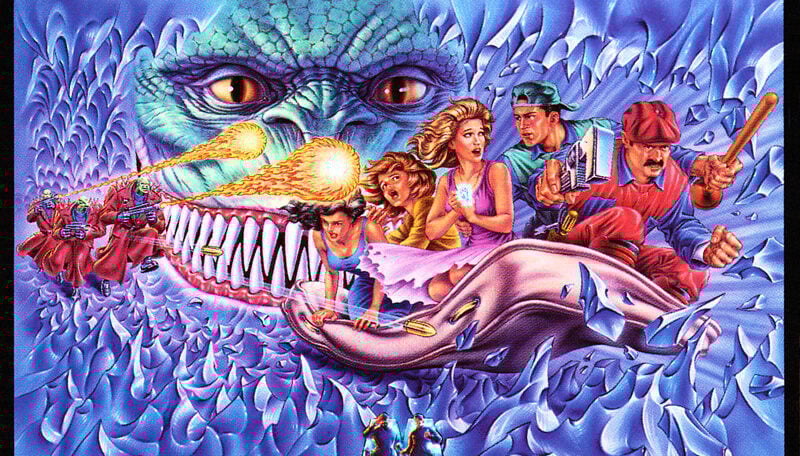
In the vast and ever-evolving landscape of video games, a curious truth often emerges: some of the most influential and enduring titles were not always immediate, unqualified successes. There's a profound statement that resonates deeply within this observation: "A disaster with vision will be revisited long after the latest, finely rendered piece of merchandise." This isn't just a poetic turn of phrase; it's a commentary on what truly gives a game lasting power and cultural significance. It speaks to the idea that a profound, groundbreaking concept, even if initially hampered by technical limitations, commercial struggles, or critical misunderstandings, possesses an inherent spark that ensures its legacy. These are the games that, despite their initial flaws or lukewarm reception, had a clear, innovative direction, a true "vision" that allowed them to shape genres, inspire future creators, and remain relevant decades later, long after visually stunning but uninspired counterparts have faded from memory. Consider the iconic image above – Super Mario Bros., a game that, despite its revolutionary nature, was built within the tight constraints of early 8-bit technology. It wasn't a "disaster" in the traditional sense, but its success wasn't guaranteed, and its vision, though clear, had to overcome significant hurdles.
This principle forces us to re-evaluate how we measure the true success of a video game. Is it purely based on sales figures in the first week, a Metacritic score, or the flawless execution of its graphics? Or is there something deeper – a fundamental design philosophy, an audacious creative risk, an innovative mechanic – that truly determines its long-term impact? The games we remember and return to are often those that pushed boundaries, dared to be different, and introduced ideas that resonated beyond their initial release window. These are the titles that embedded themselves in the fabric of gaming history, not just for their polish, but for their daring, their originality, and the sheer audacity of their vision. They remind us that true artistry and lasting influence often spring from a wellspring of innovation, rather than merely from perfect execution.
Defining "Disaster with Vision" in the Gaming World
To truly grasp this concept, we must first define its components. What constitutes a "disaster" in the context of video games? It could be a commercial flop, selling far below expectations despite significant investment. It might be a critical disappointment, earning scathing reviews for its bugs, confusing mechanics, or underdeveloped features. Sometimes, it's a technical mess, plagued by glitches, crashes, and poor performance that make it difficult to play. Think of games that were simply "ahead of their time," released on hardware incapable of fully realizing their ambition, or into a market not yet ready for their innovations. These games might have been considered failures upon their initial release, generating disappointment rather than excitement among players and critics alike. They might have been plagued by significant issues, making them difficult to recommend at launch, or simply misunderstood by a broader audience accustomed to more conventional experiences. However, the crucial element is that beneath these layers of perceived failure or inadequacy, there lay a glimmer of something truly special.
Conversely, "vision" refers to the core creative idea, the innovative spark, or the unique design philosophy that underpins a game. It's the groundbreaking mechanic, the immersive storytelling, the revolutionary art style, or the audacious ambition to create an entirely new genre. A game with vision attempts something fundamentally new or executes an existing concept in a profoundly different way. It's the blueprint, the soul of the game, that transcends its temporary packaging. This vision might be obvious only in retrospect, once technology catches up or the audience matures. It's the forward-thinking approach that allows a game to influence subsequent titles, inspire new developers, and redefine what's possible within the medium. This vision is the persistent thread that ties the game to the future, making it more than just a fleeting entertainment product. It’s what transforms a simple game into a touchstone for an entire generation of interactive entertainment.
The contrast to this "disaster with vision" is the "finely rendered piece of merchandise." This refers to games that are technically competent, visually stunning, and perhaps even critically well-received at launch, but ultimately lack a distinctive identity or innovative spark. They are safe, polished, and perfectly playable, yet utterly forgettable. These are the games that might tick all the boxes for a contemporary audience – beautiful graphics, smooth gameplay, familiar mechanics – but offer little in the way of originality or lasting impact. They are products of their time, perfectly optimized for current trends, yet without the foundational ideas that would allow them to be remembered years down the line. While they provide immediate gratification, they fail to leave a lasting mark on the player's imagination or on the broader evolution of game design. They represent the peak of execution without the depth of conceptual innovation, much like a perfectly painted replica that lacks the soul of an original masterpiece.
The Enduring Appeal of Vision: Why Ideas Outlast Graphics
The primary reason why visionary games, even flawed ones, outlast their perfectly polished contemporaries lies in the nature of their components. Graphics, no matter how breathtaking at launch, are ephemeral. They are tied to the technology of their era and will inevitably age. What looks cutting-edge today will look dated tomorrow. The ultra-realistic character models and expansive environments that once wowed us eventually give way to even more impressive iterations. However, core game mechanics, innovative storytelling techniques, and brilliant level design are timeless. The fundamental joy of precise platforming in Super Mario Bros., the thrill of strategic exploration in The Legend of Zelda, or the immersive choice-and-consequence narratives of early RPGs remain engaging regardless of their visual fidelity. These elements are the building blocks of player experience, the engines of fun, and they resonate across generations, proving that a strong idea is far more durable than a stunning render.
Innovation also sparks new genres and ideas, laying the groundwork for countless future titles. A game with vision doesn't just entertain; it inspires. It creates a new vocabulary for designers, opening up possibilities previously unimagined. When a game introduces a groundbreaking control scheme, a novel narrative structure, or an unprecedented way for players to interact with a virtual world, it doesn't just become a hit; it becomes a blueprint. Developers then learn from it, build upon it, and adapt its core principles to create new experiences. This iterative process is how the gaming medium evolves. Many games that were initially rough around the edges, or perhaps too ambitious for their time, become the unsung heroes of gaming history, their ideas refined and celebrated in later, more successful titles. Their initial "disaster" phase was merely a necessary proving ground for revolutionary concepts that would eventually become industry standards. The struggles faced by their creators ultimately contributed to a richer and more diverse gaming ecosystem.
Furthermore, games with vision contribute to the art form itself, not just the market. They push the boundaries of what video games can be, exploring themes, emotions, and interactive paradigms that elevate the medium beyond simple entertainment. These games challenge conventions, provoke thought, and demonstrate the artistic potential of interactive experiences. They are the experimental films, the avant-garde music, or the abstract paintings of the gaming world – perhaps not immediately accessible or universally beloved, but vital for the growth and legitimacy of the medium. They broaden the scope of what games can achieve, proving that they are not just toys, but powerful tools for storytelling, expression, and even profound philosophical inquiry. This artistic contribution is invaluable, ensuring that games remain a vibrant and evolving cultural force, capable of surprising and moving us in unexpected ways.
The "fun factor" often stems from core design, not just visual fidelity. While flashy graphics can provide an initial "wow" moment, it's the intuitive controls, the clever puzzles, the satisfying combat loops, and the compelling progression systems that keep players coming back. These elements are products of thoughtful design and a clear vision. A game can be graphically plain but profoundly fun if its core mechanics are well-crafted and engaging. Conversely, a game can be a visual masterpiece but utterly boring if its gameplay loop is repetitive, uninspired, or simply not enjoyable. The longevity of classic titles like Tetris or Pac-Man, with their minimalist visuals but infinitely replayable mechanics, stands as a testament to this truth. They prove that true entertainment value comes from the interactive experience, not just the aesthetic packaging.
Finally, time allows for re-evaluation and nostalgia. What was once dismissed as unconventional or flawed can, with the benefit of hindsight, be appreciated as groundbreaking. Technical shortcomings become charming quirks, and experimental mechanics are seen as bold innovations. The context of a game's release often plays a significant role in its initial reception; market trends, prevailing technologies, and critical biases can all influence how a game is perceived. However, as time passes, these external factors often fade, allowing the intrinsic qualities of a game – its vision and design – to shine through. This re-evaluation often happens through a wave of nostalgia, as players rediscover old favorites and new generations explore the roots of their beloved genres. What was once overlooked or misunderstood is then celebrated, finding its rightful place in the pantheon of gaming classics, proving that the seeds of vision, once planted, will eventually blossom.
Case Studies: Iconic Examples of Enduring Vision
Super Mario Bros. and the Birth of a Genre
Let's revisit the image at the top of this post: Super Mario Bros. While it wasn't a commercial "disaster" in any sense, its development was a masterclass in overcoming limitations with pure vision. Released in 1985 for the Nintendo Entertainment System (NES), it faced severe hardware constraints. The console had limited memory, processing power, and graphical capabilities. Yet, Shigeru Miyamoto and his team had a crystal-clear vision: create a side-scrolling platformer that was intuitive, fun, and endlessly replayable. They innovated relentlessly. The fluid physics, the responsive controls, the introduction of power-ups that changed gameplay (like the Super Mushroom or Fire Flower), and the ingenious level design that taught players new mechanics without explicit tutorials – these were all products of extraordinary vision. The world of Super Mario Bros. was a tightly packed, meticulously crafted experience designed to extract maximum enjoyment from minimal resources. It wasn't just a game; it was a foundational text for an entire genre, defining what a platformer could be for decades to come.
Its "revisitability" is legendary. Even today, decades later, players can pick up Super Mario Bros. and immediately understand its appeal. Its mechanics are timeless, its level design an ongoing lesson in game theory. It proved that a game didn't need photorealistic graphics to be immersive or deeply engaging. It needed a strong core idea, executed with precision and creativity. The "disaster" here wasn't a failure, but rather the initial challenge of making an incredible game within very strict limitations. The "vision" was the unwavering commitment to creating an innovative and fun experience that would transcend those technical hurdles. This dedication to innovative gameplay and intuitive design ensured that the game, even if its visuals are now quaint, remains as playable and enjoyable as ever, a true testament to its enduring power.
Pioneering 3D Worlds: Vision Beyond Clunky Graphics
Consider the early days of 3D gaming. Many titles from the mid-90s, while revolutionary for attempting to move beyond 2D, often presented players with clunky controls, blocky graphics, and confusing camera systems. Games like `Alone in the Dark` (1992) or `Virtua Fighter` (1993) were groundbreaking in their ambition to create three-dimensional spaces, but by today's standards, their execution was crude. They might have been considered "disasters" in terms of playability or visual fidelity compared to their 2D contemporaries, but their vision was undeniable. They paved the way for masterpieces like `Super Mario 64` (1996), which refined 3D camera control and platforming, demonstrating how a clear vision, given time and technological advancement, could truly revolutionize gameplay. These early 3D efforts, despite their imperfections, laid the conceptual groundwork for how players would interact with virtual worlds for generations, proving that the experimental, visionary attempts, however flawed, were crucial for the evolution of the entire medium. Their initial struggles were a necessary part of the journey toward perfecting the 3D experience.
Games Ahead of Their Time: Cult Classics and Hidden Gems
Beyond the mainstream successes, there are numerous examples of games that were genuine commercial or critical disappointments at launch but possessed an undeniable vision that was later appreciated. Take `Shenmue` (1999) for instance. It was a hugely ambitious title for the Sega Dreamcast, boasting an open world, detailed environments, complex character interactions, and a cinematic story. It was a technical marvel, but also incredibly expensive to develop, and its slow pace and niche appeal meant it never achieved the commercial success needed to justify its budget, effectively contributing to the Dreamcast's downfall. By conventional metrics, it was a "disaster." Yet, its vision for a living, breathing world, its intricate simulation of daily life, and its innovative narrative structure were far ahead of their time. Years later, it’s celebrated as a cult classic, recognized for its groundbreaking approach to open-world design and interactive storytelling, influencing countless games that followed. Its enduring legacy proved that the strength of its ideas far outweighed its initial commercial shortcomings.
Similarly, games like `Grim Fandango` (1998) faced a challenging market. Released during a period when the adventure game genre was in decline, it struggled to find a wide audience despite its unique art style, witty dialogue, and compelling noir narrative. Critics loved it, but sales were modest. Yet, its vision of a stylized underworld based on Aztec mythology, its innovative character design, and its intricate puzzles cemented its status as a timeless classic. It wasn't a "disaster" in quality, but its commercial underperformance certainly made it a financial one for LucasArts at the time. Today, it’s lauded for its artistic merit and storytelling, a testament to how creative vision can transcend market trends and achieve lasting cultural significance. These examples highlight how visionary projects, even when commercially challenged, can leave an indelible mark on the gaming landscape, inspiring generations of creators.
The Modern Gaming Landscape: Nurturing Vision
In today's gaming industry, the tension between producing a "finely rendered piece of merchandise" and a "disaster with vision" is more pronounced than ever. Large publishers often prioritize safe bets: sequels, remakes, and titles that adhere closely to established, commercially successful formulas. This approach often leads to highly polished, technically impressive games that are enjoyable but rarely revolutionary. The pressure for perfect execution and immediate commercial return can stifle creative risk-taking, leading to a proliferation of games that look amazing but feel a bit too familiar. The focus shifts from innovation to optimization, from groundbreaking ideas to flawless implementation of existing ones. While this approach yields consistently high-quality products, it also risks stagnating the industry's creative potential, leading to a landscape dominated by iterative improvements rather than bold new directions.
However, the independent game development scene has emerged as a crucial breeding ground for vision. Without the crushing financial pressure of AAA budgets, indie developers are free to experiment, take risks, and pursue truly unique ideas. Many indie games, especially in their early access phases, might fit the "disaster" label due to bugs, unpolished graphics, or niche appeal. Yet, titles like `Minecraft`, `Stardew Valley`, or `Undertale` started as passion projects with unique visions that defied mainstream conventions, eventually garnering massive critical and commercial success. These games, often born from a single creative idea rather than a market brief, demonstrate that pure vision, even with limited resources, can captivate millions and redefine genres. They embody the spirit of innovation, proving that a compelling concept can overcome any initial rough edges, ultimately fostering a diverse and dynamic gaming ecosystem.
The cycle of innovation ensures that yesterday's "disaster with vision" becomes today's inspiration. Game developers constantly draw upon the rich history of the medium, learning from both the triumphs and the perceived failures of the past. Elements from early, experimental games – be they narrative techniques, control schemes, or artistic styles – are often reinterpreted and refined in contemporary titles. The visionary ideas that struggled to find their footing in their original forms often find new life when re-contextualized with modern technology and a more receptive audience. This continuous dialogue with the past ensures that the seeds of innovation sown by earlier, perhaps misunderstood, titles continue to bear fruit, enriching the gaming experience for new generations. It’s a powerful reminder that no creative effort, however flawed its initial reception, is ever truly wasted if it carries a strong, resonant vision.
The Enduring Legacy of Super Mario Bros.
Returning to our starting point, the legacy of Super Mario Bros. perfectly encapsulates the power of enduring vision. Its fundamental design principles – the importance of precise controls, the clarity of visual feedback, the gradual introduction of new mechanics, and the sheer joy of movement – have been adopted, adapted, and celebrated across countless games and genres. It wasn't just a hit; it was a masterclass in game design, a blueprint that demonstrated how elegant simplicity could lead to profound depth. Its influence is so pervasive that many of its innovations are now simply considered "standard" in game development, often without conscious thought about their origin. This speaks to the depth of its visionary design – ideas so perfectly executed they transcend their original context and become part of the universal language of gaming. Decades later, its 8-bit aesthetic, once limited by technology, is now seen as charming and iconic, a testament to the fact that strong design, not just visual fidelity, truly stands the test of time.
The game's "revisitability" is not just about nostalgia; it's about timeless design. It remains a benchmark for platformers and a joy to play because its core mechanics are robust and perfectly tuned. Every jump feels just right, every enemy encounter presents a clear challenge, and every secret encourages exploration. This level of polished gameplay within a limited framework is a direct result of the visionary approach taken by its creators. They focused on perfecting the player experience, understanding that the interaction itself was paramount. This commitment ensured that Super Mario Bros. would not merely be a product of its time but a lasting work of interactive art, continually rediscovered and appreciated by new generations of players. Its status as a cultural icon is not accidental; it is the direct consequence of a powerful, unwavering vision that prioritized player experience and groundbreaking design above all else.
Conclusion: Prioritizing Vision for the Future of Gaming
The adage "A disaster with vision will be revisited long after the latest, finely rendered piece of merchandise" serves as a powerful reminder for both creators and consumers in the video game industry. It underscores the critical difference between fleeting commercial success based on superficial polish and lasting cultural impact driven by genuine innovation. While immaculate graphics and flawless performance offer immediate gratification, it is the underlying creative vision – the daring ideas, the groundbreaking mechanics, the unique artistic expressions – that ultimately determines a game's place in history. These visionary titles, even those that faced initial struggles, are the ones that truly push the medium forward, inspiring new creators and enriching the collective experience of players for decades to come.
As players, we should celebrate and encourage risk-taking in game development. We should look beyond initial bugs or unconventional design choices to appreciate the underlying vision. As developers, the lesson is clear: prioritize bold ideas and innovative design over merely chasing graphical fidelity or market trends. While a certain level of polish is always desirable, it should never come at the expense of creative ambition. The games we remember and return to are those that dared to be different, that challenged our perceptions, and that left an indelible mark on our imaginations. They are the games that, perhaps stumbling at first, eventually proved that a strong idea, a true vision, is the most powerful and enduring currency in the world of interactive entertainment. What "disasters with vision" do you remember fondly, and what games do you believe will be revisited long after their contemporaries are forgotten? Share your thoughts and join the conversation about what truly makes a game immortal!
from Kotaku
-via DynaSage
