
The New Faces Of Death Is A Fun Stab At The Grisly State Of Social Media
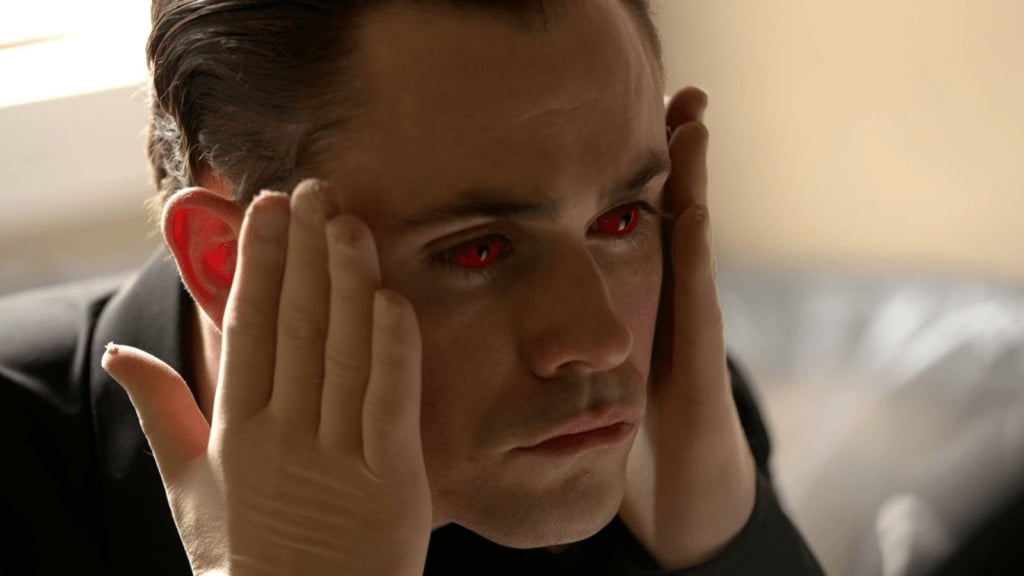
Faces of Death 2026: A Modern Horror Take That Skips the Deep Dive
The name "Faces of Death" has a special, somewhat infamous, place in the history of horror and shock cinema. For decades, it represented the ultimate forbidden film, a whispered legend passed between friends, promising real, unedited glimpses into the most macabre aspects of human experience. Now, in 2026, director Daniel Goldhaber has dared to bring this controversial title back to the screen with a "re-imagined mondo movie." While the new film is a perfectly enjoyable piece of modern pop horror, it seems surprisingly content to offer surface-level thrills, largely sidestepping any serious discussion or "cross-examination" of its controversial namesake's themes and legacy. This raises interesting questions about what a modern re-imagining of such a potent property aims to achieve in an age where genuine shock is readily available online.
The Echo of a Legend: What Was the Original Faces of Death?
To understand the new film, we must first look back at the original. The 1978 film, directed by John Alan Schwartz (under the pseudonym Conan Le Cilaire), wasn't just a movie; it was a cultural phenomenon and an urban legend rolled into one. Marketed as a genuine documentary showing various forms of death, from animal attacks to assassinations and bizarre accidents, it shocked audiences around the world. The film claimed to be a collection of footage gathered by a pathologist named Dr. Francis B. Gröss, presenting a gruesome tour of human mortality.
The "Mondo" Movie Phenomenon
The original Faces of Death belonged to a specific subgenre known as "mondo movies." These were often Italian-made pseudo-documentaries that emerged in the 1960s, starting with "Mondo Cane" (1962). Mondo films typically featured sensational, exotic, and often disturbing scenes from around the world, frequently blurring the lines between reality and staged events. Their appeal lay in their supposed authenticity – the promise of seeing things you weren't meant to see. For *Faces of Death*, this meant viewers were lured by the tantalizing, horrifying prospect of watching real people die.
The Power of Deception and Forbidden Fruit
What made *Faces of Death* so impactful was its carefully crafted deception. While much of the footage was either faked (often quite poorly by today's standards), re-enacted, or clips from other films, the producers went to great lengths to convince audiences it was real. This ambiguity, combined with the taboo subject matter, turned the film into a forbidden artifact. In an era before the internet made graphic content easily accessible, *Faces of Death* was the ultimate source of morbid curiosity. It challenged viewers' sensibilities, pushing boundaries and leaving a lasting, often disturbing, impression. The very act of watching it felt like participating in something illicit, something that tested your moral limits. This psychological dimension was arguably more powerful than any actual gore on screen.
Daniel Goldhaber's Vision: Reimagining a Classic in 2026
Fast forward to 2026, and we have Daniel Goldhaber at the helm of this ambitious re-imagining. Goldhaber is not a stranger to provocative filmmaking. His previous works, such as the critically acclaimed tech-horror film "Cam" and the eco-thriller "How to Blow Up a Pipeline," show a director interested in exploring contemporary issues, often through the lens of genre cinema. He's known for his sharp social commentary and his ability to craft tense, thought-provoking narratives that engage with modern anxieties.
Given his filmography, many viewers might have approached Goldhaber's *Faces of Death* with high expectations. One might anticipate a film that delves deep into the nature of media, truth, and manipulation in the digital age. How does the concept of "real death" hold up in an era of deepfakes, viral misinformation, and endless streams of user-generated content? A director like Goldhaber seemed perfectly positioned to tackle these complex questions, using the infamous *Faces of Death* title as a springboard for profound social critique. His past work suggests a willingness to use genre tropes not just for entertainment, but as vehicles for deeper exploration.
"Re-imagined Mondo Movie": What Does It Mean Today?
The term "re-imagined mondo movie" is intriguing. The original mondo films thrived on the illusion of showing untouched, shocking reality. But in 2026, our relationship with shocking imagery is fundamentally different. The internet has saturated our collective consciousness with everything from genuine tragedies to elaborate hoaxes, often presented without context or consequence. How can a film hope to shock or provoke in the same way its predecessor did when audiences are constantly exposed to unedited violence and despair through their social media feeds?
A true "re-imagining" of the mondo concept for the modern era would ideally explore this new landscape. It could comment on the desensitization brought on by constant exposure, the ethics of sharing graphic content, or the psychological toll of witnessing endless simulated or real violence online. It might even critique the very human desire to gaze upon the macabre. Instead of simply presenting shock, a re-imagined mondo film could examine *why* we seek it out, and what that says about us as a society. It's an opportunity to turn the mirror back on the audience, challenging their consumption habits and their perception of reality in the digital age. This is where Goldhaber's film had the potential to truly shine, transforming a notorious exploitation film into a relevant cultural commentary.
A "Perfectly Fine Piece of Pop Horror"
The assessment that Goldhaber's film is a "perfectly fine piece of pop horror" is telling. "Pop horror" suggests something accessible, stylish, and perhaps more mainstream in its approach than its gritty, underground ancestor. This usually implies a focus on polished visuals, effective jump scares, and a narrative that fits within established genre conventions, rather than actively trying to redefine them or challenge the audience in deeply uncomfortable ways. The film likely delivers on these fronts: it's well-directed, competently acted, and offers a compelling horror experience that resonates with contemporary tastes.
It's easy to imagine the new *Faces of Death* using modern filmmaking techniques to create genuinely unsettling scenes. Advanced special effects, clever editing, and a solid understanding of suspense could make for a genuinely scary or disturbing film. It probably features a slick production design and a soundtrack that amps up the tension. For a regular horror movie fan, this is a winning combination. It provides the thrills and chills expected from a night at the cinema or a streaming session, without demanding too much introspection. But "perfectly fine" also carries a subtle undertone: that it might be good, but perhaps not great or groundbreaking, especially when considering the weighty name it carries. It suggests a film that meets expectations without necessarily exceeding them or pushing the boundaries in a way that its predecessor, however ethically questionable, managed to do.
The Central Critique: Uninterested in Cross-Examining Its Namesake
This is where the new *Faces of Death* truly reveals its character, or perhaps, its lack thereof. The core criticism – that it's "largely uninterested in cross-examining its namesake" – points to a significant missed opportunity. What does "cross-examining its namesake" truly mean in this context? It implies a critical engagement with the legacy, themes, and controversies of the original film. It suggests a deeper dive into the ethical, psychological, and sociological aspects that made the original so infamous.
Truth, Deception, and Media Literacy
The original *Faces of Death* was built on a foundation of deception. It presented staged events as real, challenging viewers to discern truth from fiction. In 2026, with the proliferation of "fake news," deepfakes, and manipulated images, a re-imagining could have brilliantly explored the erosion of trust in media. It could have asked: How do we tell what's real anymore? What responsibility do creators have when blurring these lines? Does the act of knowing something is fake make it less disturbing? By not engaging with these questions, the new film might simply be perpetuating the surface-level shock without offering any valuable commentary on our current media landscape. It might be playing the same game as the original, but with higher production values, rather than analyzing the game itself.
The Ethics of Exploitation
The original film was widely condemned for exploiting human suffering, whether real or simulated, for entertainment and profit. A modern re-imagining had a unique chance to critique this very concept. It could have explored the moral implications of consuming such content, the desensitization it causes, and the ethical dilemmas faced by those who create or distribute it. Does the new film acknowledge its own participation in this cycle, or does it merely continue it in a more palatable, "pop" form? If it avoids this ethical self-reflection, it risks being seen as just another piece of exploitation, albeit one wrapped in a more sophisticated package. The opportunity to comment on the morality of morbid curiosity seems to have been overlooked.
Audience Psychology and Morbid Curiosity
Why are we drawn to such dark content? The original *Faces of Death* tapped into a primal human fascination with death and violence. A thoughtful re-imagining could have explored the psychology behind this morbid curiosity. What does it say about us that we are drawn to images of suffering and mortality? Is it a way to confront our own fears, or something darker? By failing to explore these deeper psychological aspects, the film might simply be catering to that curiosity rather than interrogating it. It might entertain the desire for the macabre without ever asking why that desire exists, or what its consequences are. For a film with such a potent name, this feels like a missed opportunity to truly resonate on a deeper, more intellectual level.
The Missed Opportunity for Goldhaber
Given Daniel Goldhaber's track record, this lack of deeper engagement is particularly striking. He is a director who has shown a willingness to challenge audiences and explore complex societal issues. With *Faces of Death*, he had a canvas ripe for such exploration. One would expect him to use the notorious title as a Trojan horse to smuggle in incisive commentary on internet culture, media ethics, and the modern appetite for manufactured reality. Instead, if the film truly is "uninterested in cross-examining its namesake," it suggests a choice to prioritize entertainment and genre thrills over intellectual or philosophical depth. This doesn't make it a bad film, but it certainly makes it a less ambitious one, especially for a director of Goldhaber's caliber. It's possible the studio or commercial pressures steered the film away from more challenging themes, opting for a wider appeal, but the implication remains: a potentially groundbreaking film settled for being merely "fine."
The Modern Horror Landscape and the Place of Shock
Today's horror landscape is diverse and constantly evolving. From elevated horror that tackles serious social issues to found-footage films that push the boundaries of realism, there's a wide spectrum of approaches. The question for any modern "mondo" film is: what is its place? In an era where actual shocking content is just a click away, can a staged film truly shock anymore? Or must it evolve into something more meta, more self-aware?
Some modern horror films, like "The Blair Witch Project" or "Host" (2020), have successfully used the format of "found footage" to create immersive, unsettling experiences that play with audience perceptions of reality. These films don't just show scary things; they make you question the source, the authenticity, and your own role as a viewer. A *Faces of Death* re-imagining could have pushed these boundaries further, perhaps by incorporating elements of interactive media, live streaming, or deepfake technology to create a truly unsettling and thought-provoking experience about what "real" means in 2026.
The choice to make a "pop horror" film suggests a desire for broader appeal, moving away from the niche, transgressive nature of the original mondo genre. This decision likely makes the film more financially viable and accessible to a wider audience, but it comes at the cost of the deeper, more challenging questions that the title inherently brings with it. The film, in essence, becomes another entry in the horror genre, rather than a significant commentary on the genre itself or the societal impulses it addresses.
Conclusion: A Missed Opportunity for a Deeper Examination
Daniel Goldhaber's re-imagined *Faces of Death* arrives with the heavy legacy of its infamous predecessor. As a "perfectly fine piece of pop horror," it likely delivers on its promise of unsettling visuals and engaging scares, satisfying audiences looking for a contemporary genre thrill. It probably leverages modern filmmaking techniques to create a visually striking and tense experience that aligns with current horror trends. However, the observation that it is "largely uninterested in cross-examining its namesake" highlights a significant thematic shortcoming.
The opportunity was immense: to use the notoriety of *Faces of Death* as a platform to explore crucial contemporary issues concerning media literacy, the ethics of sensationalism, the psychology of morbid curiosity, and the blurring lines between reality and fiction in the digital age. With a director of Goldhaber's caliber, known for his incisive social commentary, many hoped for a film that would not only shock but also provoke deep thought and critical self-reflection. Instead, it appears the film opts for a more straightforward, albeit polished, horror experience. It’s a choice that might make for an entertaining movie night, but it leaves the rich, challenging questions posed by the original *Faces of Death* largely unanswered and unexplored.
Ultimately, *Faces of Death* (2026) may stand as a competent piece of modern horror, but perhaps also as a testament to how even the most provocative titles can be tamed and smoothed into mainstream entertainment, sacrificing challenging themes for broader appeal. For those who hoped for a film that truly wrestled with the ethical morass and psychological impact of its namesake, the new *Faces of Death* might feel like a missed opportunity to truly stare into the abyss of our media consumption and morbid curiosities. It's a film that provides a ride, but doesn't necessarily ask you to think deeply about where you're going or why you chose to get on.
Have you seen Daniel Goldhaber's *Faces of Death* (2026)? What are your thoughts on its approach to the original film's legacy? Share your opinions in the comments below!
from Kotaku
-via DynaSage
