
Pragmata Isn’t A ‘Sad Dad’ Game, It’s A Game That Loves Fatherhood, And That Rules
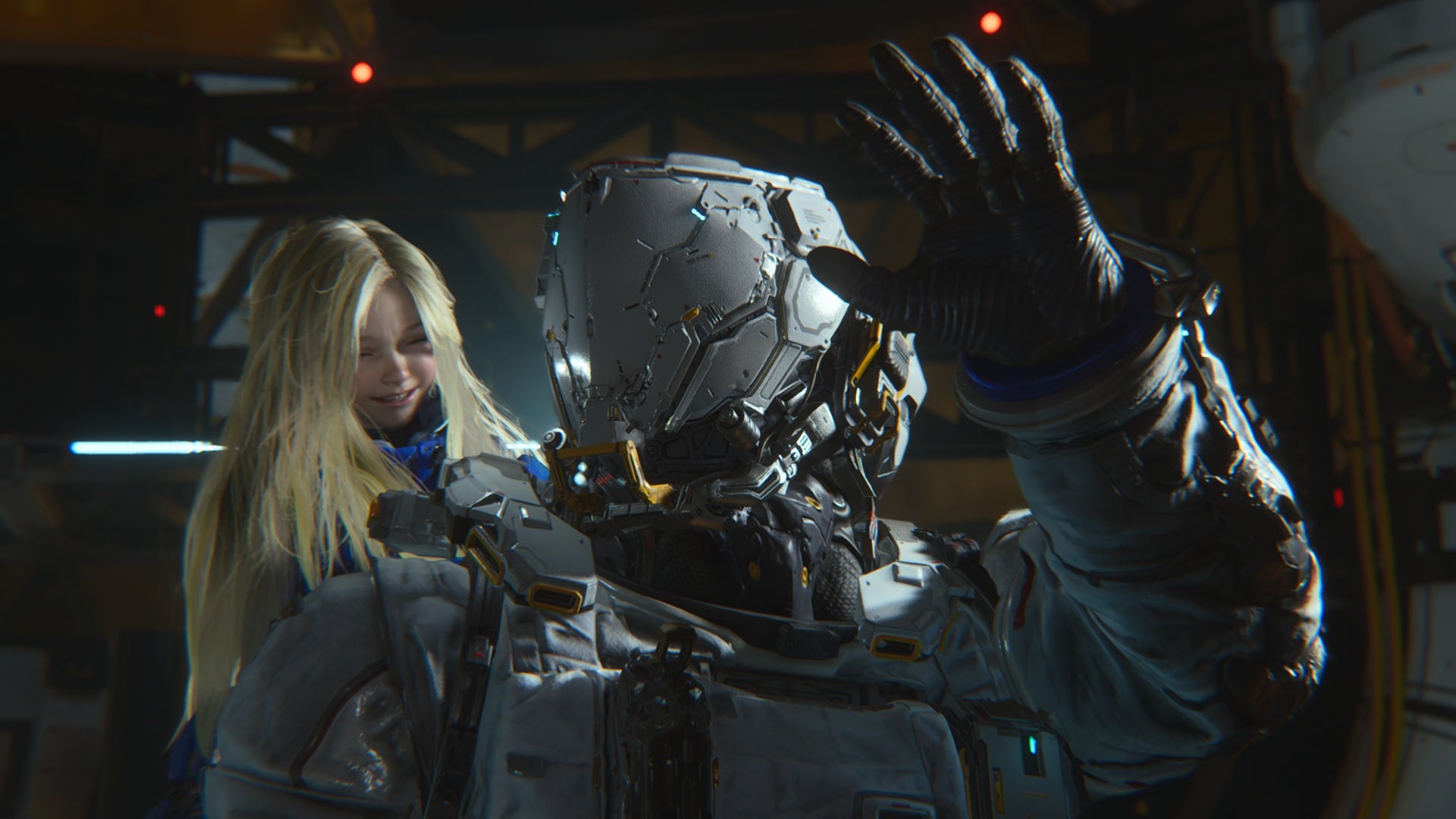
A New Horizon in Sci-Fi Gaming: Balancing Protection and Emotional Connection in Capcom's Latest Shooter
In the vast and ever-evolving landscape of video games, especially within the action-packed sci-fi shooter genre, true innovation can be a rare and exciting find. While many titles focus purely on intense combat, stunning visuals, and intricate lore, Capcom is poised to redefine what players can expect from a high-stakes adventure. Their upcoming sci-fi shooter introduces a groundbreaking concept: where success isn't just about how many enemies you defeat or how quickly you can aim, but also about the profound connection you forge with a crucial character named Diana. This game intricately weaves the act of caring for Diana’s emotional well-being into its core gameplay, making it as vital as safeguarding her physically.
This isn't just another escort mission with a fragile NPC. Instead, Capcom is presenting a truly dynamic partnership, a delicate dance between trigger-fingered defense and heartfelt empathy. Players will discover that Diana is not merely a plot device or a target to protect; she is a character with a rich inner world, whose emotional state directly impacts the unfolding narrative and the very mechanics of your mission. This unique approach promises to deliver an unforgettable experience, pushing the boundaries of player immersion and character interaction in ways seldom seen in the genre.
Beyond the Battlefield: The Emotional Core of Aetherian Echoes
Imagine a futuristic world plagued by unknown threats, where humanity's last hope rests on a specialized team. You are a highly skilled operative, equipped with advanced weaponry and training. But unlike typical scenarios, your most critical asset isn't a powerful weapon or a high-tech gadget; it's Diana, a brilliant scientist or perhaps an individual with extraordinary psionic abilities, who holds the key to humanity's survival. Her importance goes beyond her physical presence; it resides in her mind, her spirit, and her ability to function under extreme pressure.
Capcom's vision for this game, which we'll refer to hypothetically as "Aetherian Echoes," challenges players to think beyond traditional combat strategies. It posits that a person's inner strength and emotional resilience are just as vulnerable and valuable as their physical health. Therefore, the game's mechanics are designed to reflect this duality. Neglecting Diana's emotional state could have dire consequences, potentially leading to failed missions, altered story paths, or even the ultimate loss of hope for the future.
Understanding Diana's "Heart and Soul" System
The core innovation lies in the "Heart and Soul" system, a sophisticated mechanism that tracks and reflects Diana's emotional well-being throughout the game. This isn't a simple "morale meter" that goes up and down with basic actions. Instead, it's a nuanced representation of her psychological state, influenced by a multitude of factors, both big and small. Players will learn to read her cues, understand her needs, and make choices that genuinely resonate with her character.
Her emotional state might be visibly represented through subtle UI elements – perhaps a shifting aura, a unique animation, or even changes in her dialogue and vocal tone. When Diana is confident and composed, she might provide crucial tactical insights, unlock new abilities for the player, or assist in solving complex puzzles. Conversely, if she becomes overwhelmed, fearful, or distressed, her performance could degrade. She might hesitate, become distracted, or even make critical errors during sensitive operations. This direct link between her emotional state and tangible gameplay effects creates a powerful incentive for players to genuinely care for her.
Impact of Emotional State on Gameplay: A Symbiotic Relationship
Let's delve deeper into how Diana's emotional state actively shapes your gameplay experience. When Diana is in a state of high morale, feeling secure and supported, she could:
- Enhance Player Abilities: A confident Diana might project a temporary shield, increase your weapon accuracy, or even highlight enemy weak points.
- Provide Tactical Support: She could hack into enemy systems more efficiently, open locked doors faster, or provide unique environmental analysis.
- Boost Narrative Progression: Certain dialogue options or story branches might only unlock when Diana trusts you completely and feels emotionally stable enough to share critical information or take risks.
- Offer Psychological Resilience: During intense combat encounters, her calm presence might reduce your character's stress or improve decision-making under fire.
On the flip side, a distressed or anxious Diana could present significant challenges:
- Impair Mission Performance: She might struggle to perform critical tasks, such as decoding encrypted data or calibrating vital equipment, leading to delays or complications.
- Create Vulnerabilities: Her fear might make her draw unwanted attention, causing enemies to converge on her position, forcing you to divert resources to her immediate protection.
- Limit Dialogue Options: She might become withdrawn, refusing to communicate vital information or participate in necessary conversations, potentially stalling the narrative.
- Induce Player Stress: Witnessing her distress could impose gameplay penalties on the player, such as reduced movement speed, increased recoil, or blurred vision, simulating the psychological impact on the protagonist.
This dynamic interplay ensures that players are constantly engaged with Diana's character, not just as a mission objective, but as an active, emotional participant in the journey. Every choice, every action, and every spoken word carries weight, contributing to the evolving bond between you and Diana.
Interactions: Nurturing Diana's Spirit
So, how exactly does a player manage Diana's emotional well-being in the heat of a futuristic warzone? Capcom has designed a variety of interaction methods, moving beyond simple dialogue trees to incorporate environmental engagement and strategic decision-making:
- Empathetic Dialogue Choices: During pivotal story moments or even casual conversations, players will be presented with dialogue options that range from reassuring and supportive to stern and pragmatic. Choosing the right words at the right time can significantly boost her morale.
- Environmental Comfort: Discovering and bringing her "comfort items" – perhaps a specific type of synthetic tea she enjoys, a holographic projection of her home world, or a piece of art from her past – could provide a significant boost. These are often found through exploration or side quests.
- Strategic Decision-Making: Sometimes, protecting Diana's heart means making tough calls. For instance, choosing a longer, safer route through a hostile territory, even if it delays the mission, might be better for her emotional state than a direct, high-risk confrontation.
- Reassurance During Stress: During intense combat sequences or moments of high tension, players might have quick-time events or specific actions to perform that offer her reassurance, like shielding her, providing covering fire while whispering encouraging words, or simply ensuring her safety is prioritized.
- Personal Space and Downtime: The game might feature hub areas or safe zones where players can spend time with Diana, engaging in non-mission-critical activities. These moments of quiet companionship can be crucial for her emotional recovery and for deepening the player-character bond.
These interactions aren't just arbitrary mini-games; they are organically integrated into the game's flow, making the act of caring for Diana feel natural and essential. Players will gradually learn her personality, her fears, and her hopes, transforming her from an NPC into a truly memorable companion.
The "Protecting Her" Aspect: Classic Sci-Fi Shooter Prowess
While the emotional depth is revolutionary, let's not forget that at its heart, this is still a Capcom sci-fi shooter. This means players can expect robust, satisfying combat mechanics that are the hallmark of the genre. The challenge lies in seamlessly blending this action with the nuanced companion system.
You'll be navigating derelict space stations, hostile alien planets, and high-tech corporate facilities, all teeming with adversaries. The game will feature a diverse arsenal of futuristic weaponry, from energy rifles and plasma launchers to advanced melee tools and tactical grenades. Expect fluid movement, precise aiming, and exhilarating gunplay that Capcom is renowned for.
Combat Mechanics and Environmental Hazards
The combat encounters will be challenging and strategic. Players will need to utilize cover, exploit environmental advantages, and adapt to various enemy types. Imagine facing swarms of aggressive alien creatures, heavily armored rogue robots, or cunning human mercenaries, each requiring different tactical approaches.
However, the presence of Diana elevates these encounters beyond typical shootouts. You're not just fighting for yourself; you're fighting to keep her safe. This introduces new layers of complexity:
- Dynamic Cover System: You might need to create temporary cover for Diana, or guide her to secure locations while engaging enemies.
- Threat Prioritization: Enemies might specifically target Diana, forcing you to quickly eliminate threats near her.
- Environmental Protection: Beyond enemy fire, the environment itself can be a danger. Protecting Diana from collapsing structures, atmospheric hazards, or sudden traps becomes crucial.
- Limited Resources: Do you use your last medkit on yourself, or save it for Diana who is critically injured, knowing her survival is paramount to the mission's success?
These scenarios ensure that every combat decision is weighed against Diana's well-being, both physically and emotionally. A close call might leave her unharmed physically but deeply shaken mentally, impacting future interactions.
Weaving the Two Together: A Symbiotic Gameplay Loop
The true genius of "Aetherian Echoes" lies in how it intertwines these two seemingly disparate elements – brutal combat and tender emotional care – into a cohesive, organic gameplay loop. It’s not about switching between two separate modes; it's about making decisions where both aspects are constantly present in your mind.
Consider a scenario: you're pinned down by heavy enemy fire, and Diana, who is helping you hack a crucial console, suddenly announces she's overwhelmed. Do you prioritize clearing the enemies immediately, potentially exposing her to more danger as she works, or do you take a moment to offer her reassurance, buying her a small morale boost but leaving yourself vulnerable for a few precious seconds? These are the kinds of dilemmas that make "Aetherian Echoes" so compelling.
Decision-Making Under Pressure: Combat vs. Empathy
The game will present numerous moments where players must weigh the immediate combat needs against Diana's emotional state. For example:
- High-Risk Maneuvers: A quick, aggressive flank might clear enemies faster but could terrify Diana, potentially making her less effective in the next puzzle sequence. A slower, methodical approach might keep her calm but prolongs combat and depletes your resources.
- Resource Allocation: Using a scarce resource, like a specialized stimpack, could heal you instantly, but perhaps Diana is suffering from a debuff caused by low morale. Which need is more critical for the overall mission?
- Dialogue in Combat: Some dialogue options might even appear during active combat, allowing you to quickly shout words of encouragement or command, which can have immediate effects on Diana's current performance or mental state.
These choices are not just binary; they have cascading consequences, affecting not only the immediate outcome but also the long-term relationship with Diana and the narrative path. The game subtly teaches players that brute force alone won't secure victory; empathy and understanding are equally powerful weapons.
Narrative Integration: Diana's Story is Your Story
Diana isn't just a mechanic; she's the heart of the story. Her backstory, her struggles, her hopes – all of these are integral to the overarching plot. As you protect her physically and nurture her emotionally, you uncover more about her past, her connection to the looming threat, and the true stakes of your mission. The game aims to create a deep, personal narrative where the player's actions directly influence Diana's character arc.
Perhaps Diana suffers from past trauma, which manifests as specific anxieties in certain environments or during particular events. Your success in helping her overcome these fears, not just by shooting enemies but by offering genuine support, could lead to powerful character development and even unlock new abilities unique to her character. This makes the player's role more than just a soldier; you become a guardian, a confidant, and ultimately, a friend.
Capcom's Vision and Innovation: Setting a New Standard
Capcom has a rich history of pushing boundaries, from survival horror with Resident Evil to fast-paced action with Devil May Cry. With "Aetherian Echoes," they seem to be venturing into new territory for the sci-fi shooter genre, aiming to blend high-octane action with profound emotional storytelling. This innovative approach could redefine how companion characters are perceived and integrated into gameplay.
Many games have featured AI companions, but often they are either invincible plot devices or frustrating liabilities. "Aetherian Echoes" aims to elevate the companion experience by making Diana a central, vulnerable, and deeply interactive character whose well-being is not just a passive objective but an active, ongoing gameplay challenge. This level of emotional depth and player agency in shaping a companion's journey could set a new benchmark for character-driven gameplay in action titles.
The dedication to making Diana's "heart and soul" as important as her physical protection demonstrates a commitment to creating a more human, more engaging, and ultimately, more memorable interactive experience. It forces players to connect on a deeper level, to empathize, and to understand that sometimes, the greatest battles are fought not with bullets, but with kindness and understanding.
The Future of Companion AI and Emotional Gaming
Capcom's initiative with "Aetherian Echoes" points towards an exciting future for gaming. As technology advances, the line between scripted events and dynamic player-driven narratives blurs. Games like this, which emphasize the psychological and emotional impact of player actions on AI characters, pave the way for richer, more immersive storytelling.
Imagine the possibilities: companions who remember your past actions, react genuinely to threats, and evolve based on the relationship you cultivate. This isn't just about AI behaving realistically; it's about AI inspiring genuine emotional responses from players, fostering a sense of responsibility and connection that transcends typical game objectives.
This approach could influence future game design across various genres, proving that complexity and depth aren't limited to intricate skill trees or expansive open worlds, but can also be found in the delicate balance of human (or humanoid) interaction and emotional consequences.
Conclusion: A Symphony of Action and Empathy
Capcom's untitled sci-fi shooter, with its focus on intertwining Diana's emotional and physical well-being into its core gameplay, stands as a beacon of innovation in the genre. It promises a thrilling blend of the explosive combat we expect from a top-tier shooter, coupled with an unprecedented level of emotional depth and character interaction. Players will find themselves not just fighting for survival, but nurturing a fragile yet powerful bond that determines the fate of the entire mission.
This game challenges the notion that action and emotion must exist separately, demonstrating that they can, in fact, enhance one another. By making Diana’s heart and soul just as critical to protect as her physical safety, Capcom is inviting players on a journey that is not only packed with adrenaline but also rich with meaning and profound personal connection. "Aetherian Echoes" is poised to be more than just a game; it's an experience that will resonate long after the final shot is fired, a testament to the power of empathy in the face of overwhelming odds.
from Kotaku
-via DynaSage
