
NASA Shares Photos Shot on iPhone 17 Pro Max During Artemis II Mission to the Moon
NASA's Artemis II Mission: iPhone 17 Pro Max Captures Stunning Lunar Journey Moments
The vastness of space has always captivated humanity, pushing the boundaries of exploration and innovation. Now, thanks to NASA's groundbreaking Artemis II mission, we're not only venturing back to the Moon, but we're also getting an unprecedented, personal view of this historic journey – captured not by specialized, bulky space cameras, but by a device many of us carry in our pockets: the iPhone 17 Pro Max.
In a truly remarkable turn of events that highlights the incredible advancements in modern consumer technology, NASA has recently unveiled a series of breathtaking photos taken by astronauts aboard the Orion spacecraft during the Artemis II mission. These aren't just any photos; they are intimate glimpses of our planet and the human endeavor to return to lunar orbit, all beautifully captured through the lens of an iPhone 17 Pro Max.
A New Perspective from the Orion Spacecraft
These newly released images offer a deeply personal look at life in space, showcasing Artemis II Commander Reid Wiseman and Mission Specialist Christina Koch as they gaze back at our home planet. The photographs portray a serene yet powerful moment of reflection, with Earth appearing as a vibrant blue marble against the inky blackness of space, framed by one of the Orion spacecraft's main cabin windows.
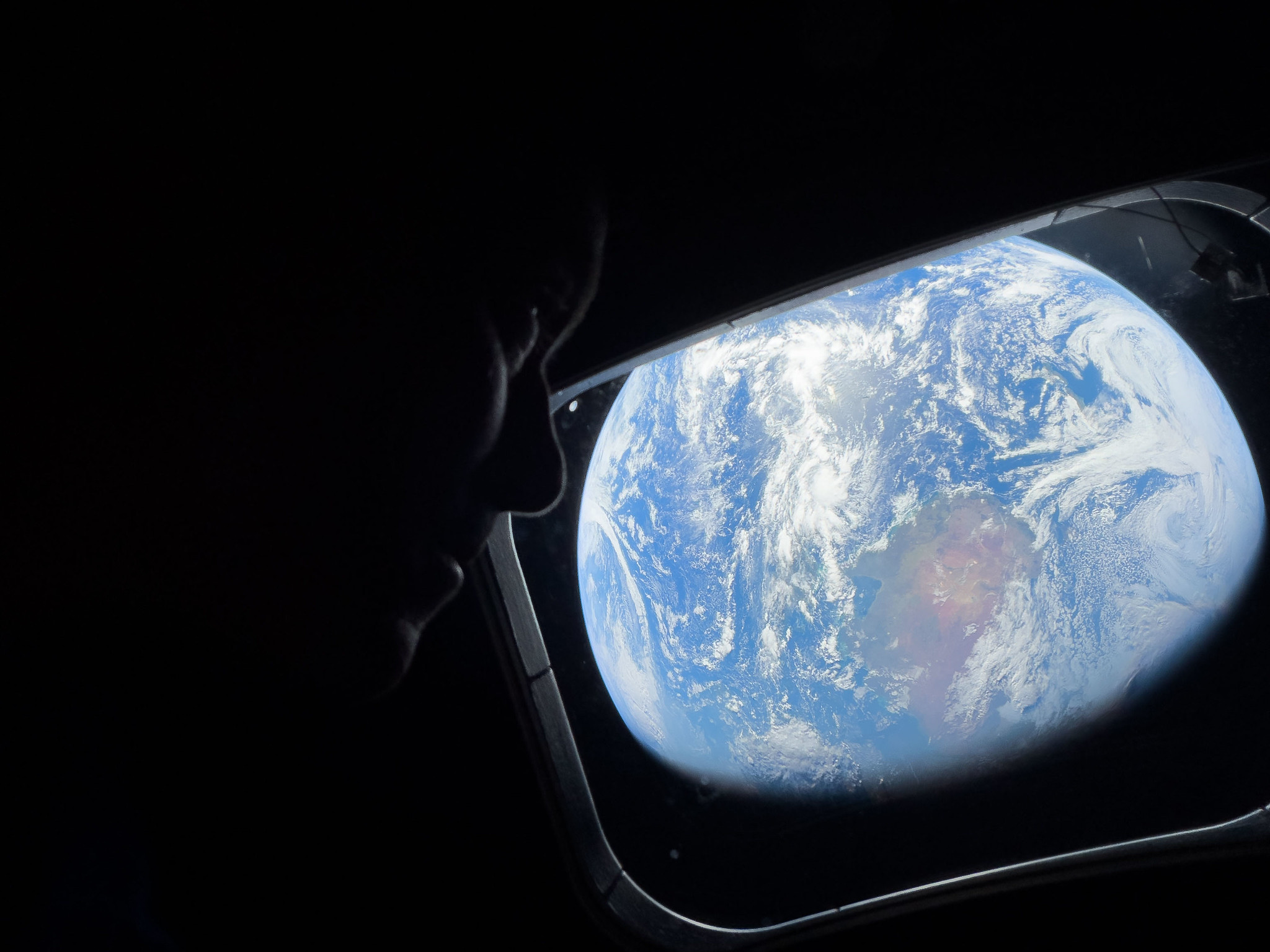 Shot on iPhone 17 Pro Max (Wiseman)
The data embedded in these captivating images, publicly available on Flickr, reveals that they were taken with the iPhone 17 Pro Max's front camera on April 2nd. This date holds particular significance as it marks just the second day of the Artemis II mission, underscoring how quickly astronauts adapted to using this familiar piece of technology in their extraordinary new environment. The choice of the front camera likely indicates the astronauts were taking "space selfies" or documenting their personal experience from their perspective within the capsule, adding a layer of human intimacy to the grand narrative of space exploration.
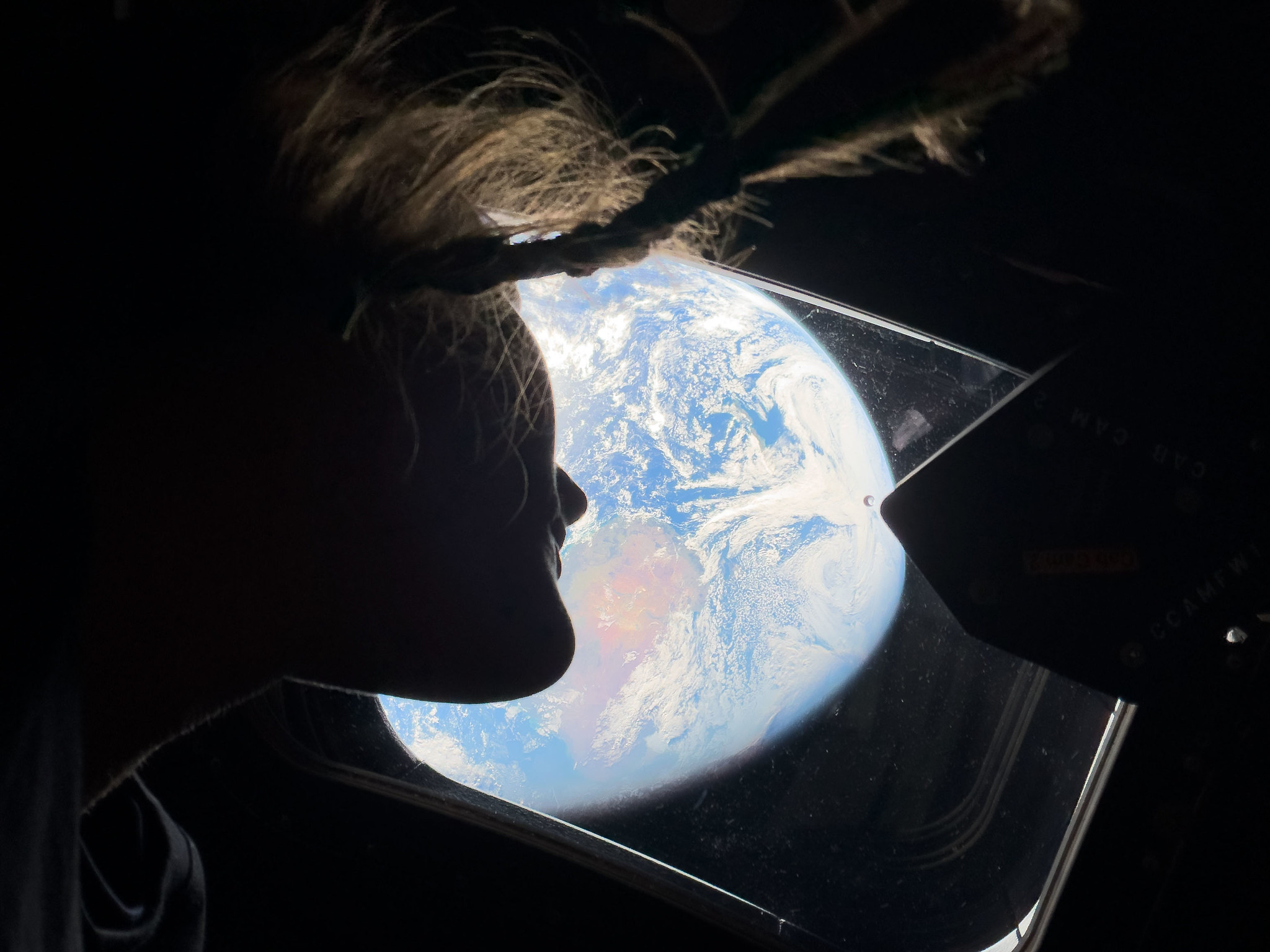 Shot on iPhone 17 Pro Max (Koch)
The iPhone 17 Pro Max: Officially Space-Qualified
The presence of iPhones on a mission of this magnitude isn't a casual decision. It marks a significant milestone that began in February when NASA made a pivotal announcement: the iPhone had been fully qualified for extended use in orbit. This qualification isn't just a rubber stamp; it's the culmination of rigorous testing and evaluation, ensuring the device can withstand the extreme conditions of space.
For a commercial off-the-shelf (COTS) product like the iPhone to earn NASA's seal of approval for use in space, it must demonstrate exceptional resilience. Space environments are notoriously harsh, characterized by vacuum, intense radiation, dramatic temperature fluctuations, and the forces of launch and re-entry. NASA's qualification process would have subjected the iPhone 17 Pro Max to a battery of tests, simulating these conditions to confirm its reliability and operational integrity in a hostile extraterrestrial setting.
Reports indicate that each of the four crew members aboard the Orion spacecraft is equipped with an iPhone 17 Pro Max. This decision provides astronauts with personal devices for capturing photos and videos, allowing them to document their unique experiences beyond the purely scientific and mission-critical photography. It's a testament to the iPhone's advanced camera capabilities, its user-friendliness, and its robust design that it can now serve alongside highly specialized equipment in the unforgiving environment of space.
The iPhone 17 Pro Max, with its cutting-edge camera system, likely offers features particularly beneficial in space. These could include improved low-light performance for capturing dimly lit interiors or stunning views of Earth at night, advanced image stabilization to counteract movement in zero gravity, and sophisticated computational photography features that enhance image quality by combining multiple frames. The ability to capture high-resolution photos and videos easily, then potentially process and share them (when communication links allow), offers an invaluable tool for both astronaut well-being and public outreach, allowing the world to feel more connected to the mission.
Artemis II: Charting Humanity's Return to the Moon
The Artemis II mission itself is a monumental undertaking, representing NASA's first crewed journey to the Moon since the Apollo program concluded in 1972. It is a critical step in the broader Artemis program, which aims not just to return humans to the lunar surface but to establish a sustainable long-term human presence on and around the Moon, paving the way for future missions to Mars. The insights gained from Artemis II are fundamental to these ambitious long-term goals.
The four-person crew – Commander Reid Wiseman, Pilot Victor Glover, Mission Specialist Christina Koch, and Canadian Space Agency astronaut Jeremy Hansen – embarked on this ambitious journey to test the Orion spacecraft's critical systems, validate its life support, and practice the operations required for future lunar landings. Artemis II is designed as a lunar flyby mission, meaning the Orion spacecraft will not land on the Moon but will orbit it, taking the crew farther into space than any human has ever traveled before, an astonishing record-breaking endeavor.
The mission's trajectory is meticulously planned. After launching from Earth, the Orion spacecraft performs a complex series of maneuvers to build up speed and set its course for the Moon. Upon reaching the vicinity of the Moon, it slingshots around our natural satellite, using the Moon's gravity to propel it back towards Earth. This journey is expected to culminate on Monday, when the crew reaches the far side of the Moon, an extraordinary feat that will break the existing record for the farthest distance traveled from Earth by humans. This achievement underscores the incredible capabilities of the Orion spacecraft and the daring nature of the mission.
The significance of Artemis II cannot be overstated. It is a dress rehearsal for Artemis III, the mission slated to put humans back on the lunar surface. The data gathered, the experiences gained, and the systems validated during Artemis II are crucial for ensuring the safety and success of future lunar expeditions. While the Orion spacecraft is incredibly powerful and capable of deep-space travel, it is not designed to land on the Moon itself; its primary role is to transport astronauts to lunar orbit and back safely to Earth. The current mission is set to conclude with a splashdown on April 10th, bringing the pioneering crew home.
Beyond the iPhone: A Spectrum of Space Photography Tools
While the iPhone 17 Pro Max is making headlines for its remarkable contributions to astronaut photography, it's important to remember that it operates as part of a comprehensive suite of imaging tools aboard the Orion spacecraft. Professional space photography continues to rely on highly specialized cameras designed for specific scientific and documentation purposes, each playing a vital role in capturing every aspect of the mission.
All other photos shared from the Artemis II mission so far, excluding those recently captured by the iPhones, were taken with an array of robust professional-grade cameras. These include:
- Nikon D5: A flagship professional DSLR known for its exceptional image quality, durability, and performance in challenging conditions. Its full-frame sensor and extensive lens options make it ideal for capturing high-resolution images of Earth, the Moon, and the spacecraft itself with incredible detail.
- Nikon Z 9: Nikon's top-tier mirrorless camera, offering similar professional-grade capabilities to the D5 but with the advantages of a mirrorless design, such as faster processing, advanced autofocus, and superior video capabilities. Its lighter form factor and modern features make it a powerful tool for space imaging.
- GoPro HERO4 Black: A compact, rugged action camera primarily used for capturing wide-angle video and stills, often mounted in specific locations for unique perspectives or to document intricate procedures. While an older model, its compact size, durability, and ability to record immersive footage make it useful for specific applications within the confined spaces of the spacecraft.
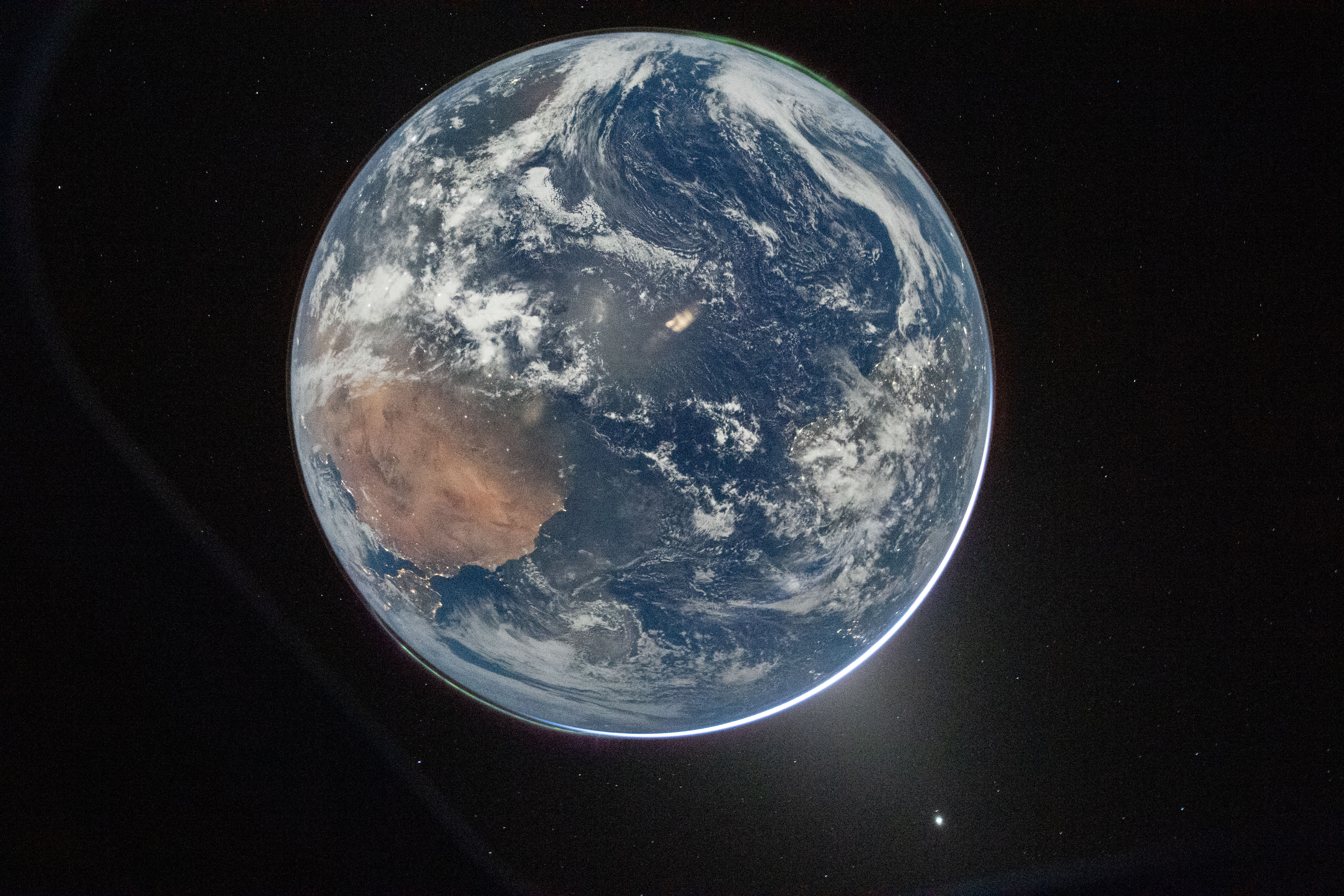 Shot on Nikon D5
The use of such a diverse range of cameras highlights the multi-faceted nature of space photography. Each camera serves a specific purpose, from capturing scientifically precise imagery required for mission analysis, to documenting operational procedures, and, now, providing personal, artistic perspectives from the crew. The ability to integrate consumer-grade devices like the iPhone alongside these professional tools offers flexibility and new opportunities for storytelling from space, reaching a broader audience than ever before.
The Rise of Commercial Off-The-Shelf (COTS) Technology in Space
The qualification and deployment of the iPhone 17 Pro Max on Artemis II is a prime example of a growing trend in space exploration: the increasing adoption of Commercial Off-The-Shelf (COTS) technology. For decades, virtually every piece of equipment destined for space had to be custom-designed and rigorously tested to meet stringent aerospace standards. While this ensured unparalleled reliability, it often came with astronomical costs and lengthy development cycles, which could slow down progress and innovation.
Utilizing COTS devices like smartphones offers several compelling advantages for space agencies like NASA, helping them achieve their ambitious goals more efficiently:
- Cost-Effectiveness: Mass-produced consumer electronics are significantly cheaper than custom-built space hardware. This allows for more devices to be deployed, or for budget savings to be redirected to other mission-critical areas, enabling more exploration with existing resources.
- Familiarity and Ease of Use: Astronauts are already accustomed to using smartphones in their daily lives. This familiarity reduces training time and allows them to quickly adapt to using the device in a weightless environment, focusing more on the task of capturing images rather than mastering complex controls. This intuitive interface is invaluable in high-stress situations.
- Rapid Innovation: The consumer electronics market evolves at an incredibly rapid pace. By leveraging COTS, space missions can benefit from the latest technological advancements in camera quality, processing power, and user interfaces much faster than if they relied solely on custom-designed solutions, keeping pace with technological frontiers.
- Versatility: A single smartphone can perform multiple functions – acting as a camera, video recorder, communication device, personal organizer, and even a platform for custom apps developed specifically for mission support. This multi-functionality reduces the need for carrying multiple single-purpose devices.
- Public Engagement: Photos and videos captured on a familiar device resonate more deeply with the public. It helps bridge the gap between the extraordinary world of space travel and everyday life, making space exploration feel more accessible and relatable to people worldwide, fostering greater interest and support.
However, integrating COTS technology into space missions is not without its challenges. Devices must be thoroughly vetted for their ability to withstand radiation, extreme temperatures, and the vacuum of space. Software must be secured and adapted for flight operations, ensuring no interference with critical systems. Power management and data transfer solutions must also be robust and reliable. The successful qualification of the iPhone 17 Pro Max demonstrates that Apple has developed a device robust enough to meet many of these demands, and that NASA has found ingenious ways to mitigate the remaining risks, showcasing a brilliant collaboration.
This trend is likely to continue, with more consumer electronics finding their way into space for various applications, from personal computing to scientific instrumentation, further blurring the lines between terrestrial technology and aerospace innovation. It represents a pragmatic and forward-thinking approach to space exploration, allowing for more ambitious missions within realistic budgetary constraints and inspiring technological crossover.
The Enduring Impact of Space Photography
From the iconic "Earthrise" photo taken during Apollo 8 to the detailed panoramas captured by Mars rovers, images from space have always played a crucial role in inspiring generations, advancing scientific understanding, and shaping our perspective of Earth's place in the cosmos. The images captured by the iPhone 17 Pro Max on Artemis II will undoubtedly join this pantheon of significant space photography, offering a fresh, contemporary lens on lunar exploration.
These personal snapshots offer more than just technical documentation; they provide a human element to an otherwise monumental technological endeavor. Seeing astronauts, just like us, gazing at Earth through a phone lens, evokes a powerful sense of connection and wonder. It reminds us of the shared human spirit of exploration and the profound beauty of our home planet, visible even from hundreds of thousands of miles away, reinforcing the preciousness of our world.
The high quality of these iPhone images ensures that they are not just mementos but valuable visual records. They contribute to the visual narrative of the Artemis program, engaging the public and making the mission tangible for millions worldwide. This visual storytelling is vital for maintaining public support for space exploration and inspiring the next generation of scientists, engineers, and astronauts to reach for the stars.
Looking Ahead: The Future of iPhones and Human Spaceflight
The successful deployment and use of the iPhone 17 Pro Max on Artemis II sets an exciting precedent. It suggests that future lunar and even Martian missions could increasingly incorporate advanced consumer devices, not just for personal use but potentially for more integrated roles within the mission architecture. The possibilities for technological synergy are vast and exciting.
As smartphone technology continues to advance, with improvements in camera sensors, processing power, battery life, and ruggedness, their utility in space will only grow. We might see future iPhones playing roles in controlling scientific instruments, providing augmented reality overlays for maintenance tasks, or even serving as backup navigation tools for astronauts. This partnership between leading tech companies like Apple and space agencies like NASA signifies a collaborative future where innovation from all sectors contributes to humanity's push into the final frontier, making space exploration more accessible and innovative.
The Artemis program is a testament to human ingenuity and our enduring desire to explore. With Artemis II breaking records and pushing boundaries, and with familiar technology like the iPhone along for the ride, we are witnessing a new era of space exploration – one that is more connected, more personal, and more accessible than ever before. The future of space is looking brighter and more engaging, thanks to these technological leaps.
Stay Connected with Artemis II and iPhone Tech
This article, "NASA Shares Photos Shot on iPhone 17 Pro Max During Artemis II Mission to the Moon" first appeared on MacRumors.com
Discuss this article in our forums
from MacRumors
-via DynaSage
