
Kingdom Come 2 Director Rails Against Woke Games While Saying He Pressured His Team To Include Gay Romance
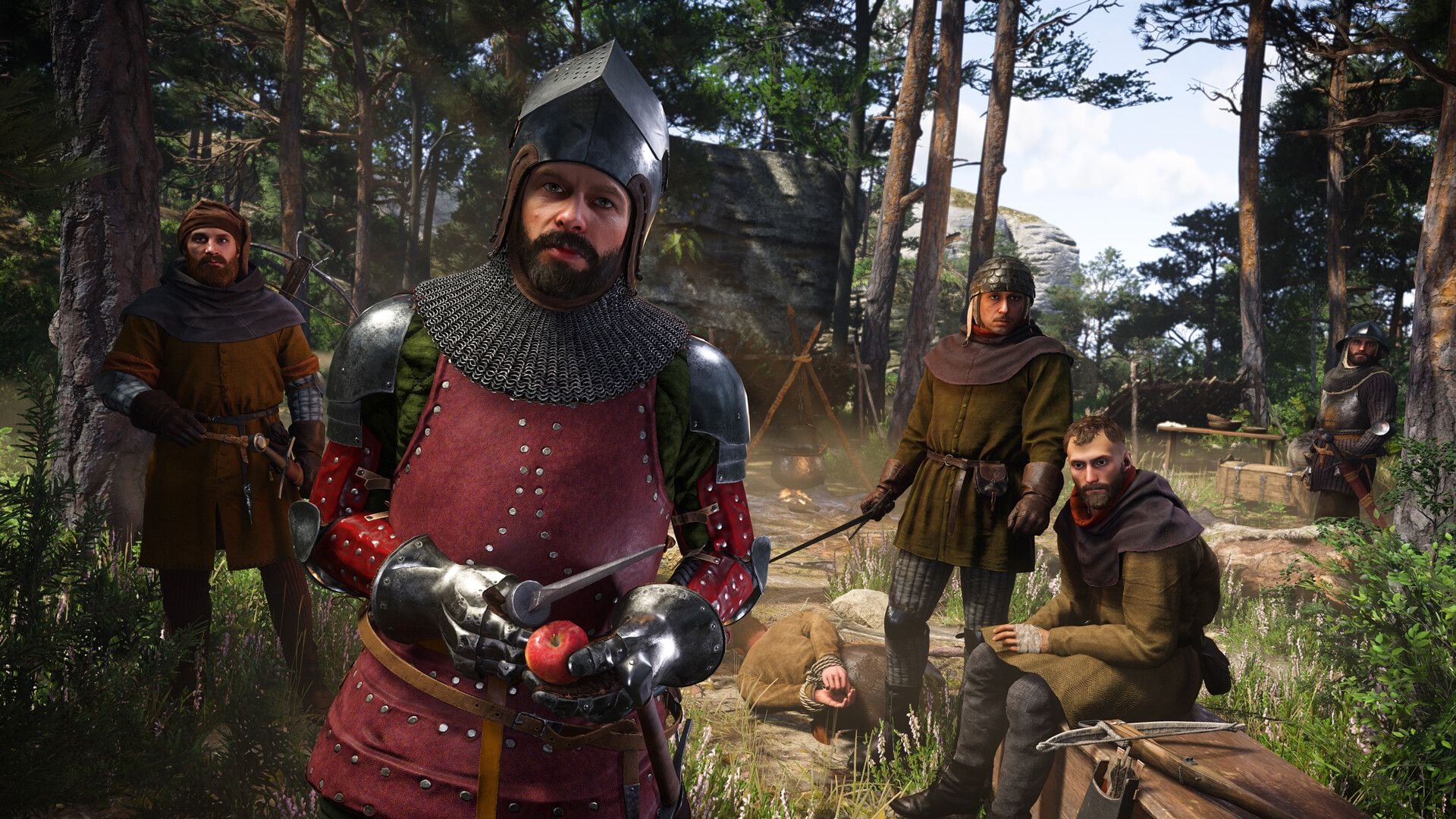
Daniel Vávra and Kingdom Come: Deliverance: Navigating History, Representation, and the "Woke" Debate
Daniel Vávra, the creative director behind the acclaimed role-playing game Kingdom Come: Deliverance (KCD), often finds himself at the center of discussions surrounding historical accuracy, artistic freedom, and modern social commentary in video games. His work, particularly KCD, is celebrated for its deep commitment to portraying 15th-century Bohemia with an almost unparalleled level of realism. This dedication, however, frequently brings him into conversations about "wokeness" – a term that has become a lightning rod in gaming and wider cultural circles.
The core of these discussions often boils down to how historical games should approach representation, including sensitive topics like sexuality and gender roles, without alienating players or compromising their core creative vision. When elements of identity, whether explicitly portrayed or merely implied, appear in KCD, Vávra and his team at Warhorse Studios are quick to emphasize that such inclusions are rooted in meticulous historical research, not a desire to push a modern social agenda. This commitment to historical context forms the bedrock of their defense against accusations of being "woke," seeking instead to present a truthful, if sometimes uncomfortable, reflection of the past.
Understanding "Woke" in the Gaming Context
Before diving deeper into Vávra's perspective, it's crucial to understand what "woke" typically means in current gaming discourse. Originally, "woke" meant being aware of social injustices, particularly racial discrimination. However, its meaning has evolved, often used by critics to describe what they perceive as an overemphasis on progressive social issues, diversity, or inclusivity in media, sometimes at the expense of storytelling, historical accuracy, or artistic integrity. In gaming, this might manifest as characters whose identities feel forced, storylines that prioritize a moral message over organic development, or a perceived revisionist approach to history to fit modern sensibilities.
For many traditional gamers and developers like Vávra, the term "woke" signals a departure from what they see as authentic creative expression. They argue that games should primarily focus on engaging gameplay, compelling narratives, and immersive worlds, allowing social commentary to emerge naturally from the themes rather than being overtly injected. The concern is that if a game is perceived as "woke," it might be seen as preachy or as sacrificing realism for the sake of political correctness, potentially alienating a segment of the audience that values escapism and historical fidelity above all else.
Kingdom Come: Deliverance's Philosophy of Realism
Kingdom Come: Deliverance stands out precisely because of its unwavering dedication to historical realism. Set in the actual historical region of Bohemia in 1403, the game plunges players into a world without magic, dragons, or grand fantasy elements. Instead, it offers a grounded, gritty portrayal of medieval life, complete with its challenges, social structures, and cultural nuances. Every piece of armor, every village layout, and every historical event is painstakingly researched to ensure authenticity. This commitment extends to the characters, their dialects, their beliefs, and their daily struggles.
Vávra has often stated that his goal was to create a game that felt like a living history book, allowing players to experience a specific time and place as authentically as possible. This approach naturally means that the game reflects the attitudes and realities of the 15th century, not the 21st. For instance, the game doesn't shy away from depicting the harsh realities of serfdom, religious intolerance, or the limited roles available to women in that era. This is not done to endorse these historical attitudes but to present them as they were, fostering a deeper understanding of the past. It’s this meticulous adherence to historical truth that Vávra believes should guide any representation within the game, including discussions around personal identity and relationships.
Navigating Representation: The "Gay Game's Gayness" Discussion
The phrase "his gay game's gayness isn't woke" captures a specific tension point, suggesting that KCD, or at least certain aspects of it, might have been labeled "gay" or interpreted as having LGBTQ+ elements, leading Vávra to clarify its historical basis. While Kingdom Come: Deliverance is not defined by LGBTQ+ themes, the discussion likely arises from isolated instances or interpretations of character interactions, which Vávra addresses by grounding them in historical fact rather than modern progressive narratives. For example, some characters might exhibit behaviors or relationships that, through a contemporary lens, could be interpreted as non-heteronormative. However, Vávra's consistent defense is that any such portrayal is a reflection of known historical possibilities or documented societal norms of the period, not an intentional modern statement on diversity.
Consider the historical record: same-sex relationships, while often condemned by the Church, existed in various forms throughout history. If a character in KCD engages in such a relationship, Vávra would argue it's because historical research indicates this was a plausible aspect of 15th-century life, not because Warhorse Studios is trying to fulfill a quota for modern representation. This distinction is crucial for Vávra. He wants players to understand that if an element appears in the game, it's because it fits the historical narrative, not because it's an effort to tick a "woke" checkbox. The game's primary mission is to transport players to the past, not to bring the past to modern ideological standards. This nuanced approach aims to prevent the game from being mislabeled and misinterpreted by those who view any form of non-traditional representation as an inherently "woke" agenda.
Developer Intent vs. Public Perception
The challenge for developers like Daniel Vávra often lies in the gap between their creative intent and how their work is perceived by various audiences. In the age of social media and online discourse, games are increasingly scrutinized not just for their technical merits or entertainment value, but also for their social implications. A developer might introduce a character or a storyline with purely historical or narrative motivations, only for it to be interpreted through a contemporary social or political lens. This often leads to misunderstandings, accusations, and the need for developers to clarify their positions.
Vávra's statements regarding KCD's content and its relation to "wokeness" are an attempt to control the narrative around his game. He aims to ensure that players understand the foundational principles guiding Warhorse Studios' decisions: historical accuracy and artistic vision. When a detail is included, whether it's the lack of diversity often seen in modern media or the inclusion of a historically plausible "non-traditional" relationship, it's meant to serve the authenticity of the setting. The battle for Vávra is to prevent his game from being co-opted into modern cultural wars, preferring it to be judged solely on its merits as a historical RPG.
The Broader "Culture War" in Gaming
Daniel Vávra's situation is not an isolated incident but rather a microcosm of a larger "culture war" unfolding within the gaming industry. Debates around representation, historical accuracy, and artistic freedom have become increasingly common and often heated. From discussions about female protagonists in historical settings to the inclusion of diverse characters in fantasy worlds, various factions within the gaming community hold strong, often opposing, views.
On one side are those who advocate for more inclusivity and progressive messaging in games, arguing that games, as a powerful cultural medium, have a responsibility to reflect modern societal values and offer diverse perspectives. On the other side are those who prioritize creative freedom, historical fidelity, and what they perceive as "apolitical" entertainment, often pushing back against what they label as "forced" diversity or "woke" narratives. Developers like Vávra, who are deeply committed to a specific historical vision, often find themselves caught in the crossfire, having to defend their creative choices against both extremes of the ideological spectrum. Their efforts to maintain historical authenticity can be interpreted by some as resistant to progress, while others see them as stalwarts defending artistic integrity against ideological pressure.
Why the "Not Woke" Defense is Essential for Vávra
For Daniel Vávra, emphasizing that Kingdom Come: Deliverance is "not woke" is more than just a preference; it's a strategic defense of his artistic philosophy and the game's identity. His core audience for KCD values its realism and historical accuracy above all else. By explicitly stating that the game's content is derived from historical research rather than contemporary social trends, he reinforces this bond with his player base and clarifies the creative intent behind Warhorse Studios.
This stance also protects the integrity of the historical setting. If a game like KCD were perceived as bending historical facts to fit modern social narratives, it would undermine its very premise as an authentic historical experience. Vávra's defense ensures that any representation, including potentially controversial ones, is seen as a genuine attempt to portray the past as it was, with all its complexities and contradictions, rather than an attempt to impose modern ideals onto historical figures or events. It's about maintaining a clear distinction between historical education and contemporary activism, positioning KCD as a window into the past, unclouded by present-day political agendas.
Impact on Game Development and Community Dialogue
These ongoing discussions profoundly impact game development and the broader gaming community. Developers are increasingly aware that their narrative choices, character designs, and historical interpretations will be scrutinized from multiple angles. This can lead to increased caution, more extensive explanations of creative decisions, and sometimes, even self-censorship to avoid controversy.
On the community side, these debates can be divisive. While they stimulate important conversations about representation, historical accuracy, and the role of art in society, they can also devolve into unproductive arguments. Daniel Vávra's experience highlights the constant negotiation between a developer's artistic vision, the expectations of various player groups, and the complex landscape of modern social commentary. His outspoken nature, while sometimes controversial, has also fostered a dedicated community that appreciates his commitment to an uncompromised historical vision. This ongoing dialogue shapes not only how games are made but also how they are received, discussed, and understood by players around the world.
The Enduring Value of Historical Games
Despite the controversies, games like Kingdom Come: Deliverance hold immense value. They offer a unique, interactive medium through which players can engage with history in a way that textbooks or documentaries often cannot. By meticulously recreating 15th-century Bohemia, Vávra and Warhorse Studios provide a living, breathing historical sandbox that educates as much as it entertains. Players learn about medieval economics, social hierarchies, religious practices, and military tactics through direct experience.
The debates surrounding representation and "wokeness," while challenging, ultimately underscore the power and influence of video games as a cultural force. They compel us to think critically about how history is presented, whose stories are told, and the responsibilities of creators in shaping narratives. Daniel Vávra’s efforts to clarify his game’s historical underpinnings against contemporary labels are a testament to his dedication to his craft and his vision for bringing a specific period of history to life with as much authenticity as possible, inviting players to step into the past without filtering it through the present.
Conclusion: A Complex Tapestry of History and Identity
The discussion around Daniel Vávra and Kingdom Come: Deliverance’s relationship with "wokeness" is a complex one, weaving together threads of historical accuracy, artistic integrity, and modern identity politics. While the game itself is celebrated for its devotion to realism, any perceived deviation or inclusion that could be interpreted through a contemporary social lens immediately triggers debate.
Vávra's consistent message is clear: any aspect of identity or relationship portrayed in KCD is there because historical research supports its plausibility in 15th-century Bohemia, not because of a desire to appease modern progressive sensibilities. This stance, while drawing criticism from some, resonates deeply with a player base that values an unvarnished, authentic historical experience. Ultimately, the ongoing dialogue surrounding Vávra, KCD, and the "woke" label highlights the intricate challenges faced by creators who strive to deliver historically faithful narratives in a world increasingly sensitive to questions of representation and social commentary. It reminds us that art, especially interactive art like video games, is rarely free from interpretation and debate, continually sparking conversations about its purpose, its audience, and its place in our evolving cultural landscape.
from Kotaku
-via DynaSage
