
iPhone Fold Production Pushed Back, But Fall 2026 Launch Still on Track
The iPhone Fold: Unpacking the Latest Production Buzz and What It Means for a 2026 Launch
The anticipation for Apple's first foldable device, often referred to as the iPhone Fold, has reached a fever pitch. Fans and tech enthusiasts alike are eager to see how Apple will innovate in this burgeoning market segment. However, recent reports from industry sources suggest that the road to launch is not entirely smooth. While the device is still officially slated for a grand debut in the fall of 2026, whispers of production hurdles have started to circulate, creating a mix of excitement and cautious optimism.
According to a detailed report from the reputable tech publication, DigiTimes, the production schedule for the highly anticipated iPhone Fold is currently running behind its initial targets. Specifically, the site indicates that the manufacturing timeline has been pushed back by "roughly one to two months." Despite this delay in the internal schedule, Apple has reportedly not yet communicated any official launch postponements to its vast network of suppliers. This suggests a delicate balance: Apple is still firmly committed to its 2026 launch window, implying a potentially tighter and more aggressive production push to make up for lost time.
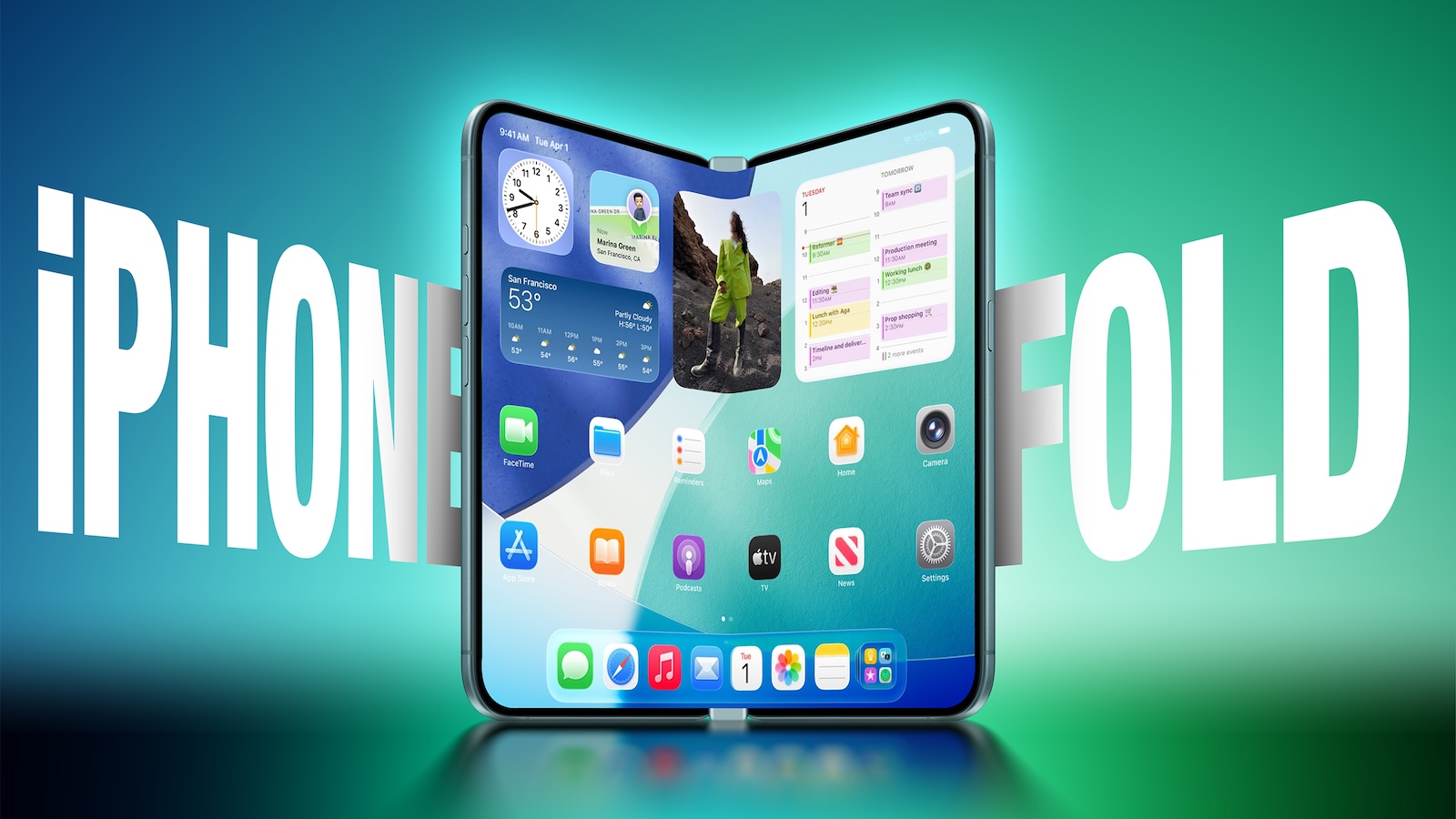
Apple's Entry into the Foldable Market: High Stakes and High Expectations
The prospect of an iPhone Fold represents a monumental moment for Apple and the broader smartphone industry. For years, Apple has been known for its meticulous approach to product development, often waiting for technologies to mature before integrating them into its ecosystem. While other manufacturers, most notably Samsung and Google, have already launched several generations of foldable devices, Apple's entry is expected to redefine the category. An iPhone Fold isn't just another smartphone; it's Apple's statement on the future of mobile computing, blending the portability of a phone with the expansive canvas of a tablet.
The company's decision to enter the foldable space isn't taken lightly. Apple's design philosophy, its robust software ecosystem, and its unparalleled brand loyalty mean that an iPhone Fold would immediately become a benchmark. Consumers expect not just a functional foldable, but one that embodies Apple's signature elegance, intuitive user experience, and unwavering quality. This places immense pressure on the development and production teams to deliver a device that not only works flawlessly but also pushes the boundaries of what a foldable phone can be. The stakes are incredibly high, and any production hiccups, even minor ones, are scrutinized for their potential impact on this ambitious launch.
The Shifting Production Timeline: From June to August
Initially, Apple had envisioned starting mass production of the iPhone Fold in June 2026. This timeline would have provided a comfortable buffer for ramping up production ahead of a typical fall launch, ensuring ample stock for global markets. However, the recent information from DigiTimes indicates that this schedule has now slipped, with mass production now projected to commence in early August. This roughly two-month delay, while seemingly minor on its own, can have significant ripple effects across a complex global supply chain, especially for a groundbreaking product like a foldable phone.
Several theories are emerging to explain this adjustment. Some rumors suggest that Apple is encountering more manufacturing challenges than anticipated during the crucial Engineering Validation Test (EVT) phase, which the iPhone Fold is currently undergoing. The EVT phase is where initial designs are tested rigorously to ensure they meet engineering specifications, and it's common for issues to arise with new technologies. These could range from perfecting the complex hinge mechanism to refining the foldable display's durability or integrating new components seamlessly. Overcoming these engineering hurdles is paramount to Apple's quality standards.
Conversely, other reports remain optimistic, indicating that these manufacturing issues, even if present, won't necessarily lead to a launch delay. This perspective suggests that Apple's extensive experience in managing intricate supply chains and its ability to rapidly iterate on design and manufacturing processes might allow it to absorb these initial delays without pushing back the final release date. The company is known for its incredible efficiency and its capacity to accelerate production when needed, often leveraging its massive network of suppliers to achieve seemingly impossible timelines.
Navigating the Crucial Validation Stages: EVT, DVT, and PVT
To fully understand the implications of the production delays, it's essential to grasp the various validation stages a new Apple product, particularly one as complex as the iPhone Fold, must undergo before reaching mass production. These stages are critical for ensuring quality, reliability, and manufacturability.
Engineering Validation Test (EVT)
The iPhone Fold is currently in its Engineering Validation Test (EVT) phase. This is the earliest and often most challenging stage for new product development. During EVT, engineers build initial prototypes to test the core functionality, design, and performance of the device's hardware. It's about proving that the engineering design works as intended. For a foldable phone, EVT involves exhaustive testing of the hinge mechanism – ensuring its durability over tens or hundreds of thousands of folds, its feel, and its ability to hold various angles. The foldable display itself undergoes rigorous stress tests for creasing, pixel integrity, and responsiveness. Other components like the battery, cameras, and internal processors are integrated and tested for thermal management, power efficiency, and overall system stability. Any significant design flaws or unexpected manufacturing difficulties uncovered in EVT can necessitate redesigns, which naturally consume time and push back subsequent stages.
Design Validation Testing (DVT)
After a successful EVT phase, the device moves into Design Validation Testing (DVT). This stage focuses on ensuring that the product's design meets all its functional, aesthetic, and regulatory requirements. DVT prototypes are closer to the final product in terms of materials, finishes, and user experience. Tests here include drops, environmental exposure (temperature, humidity), electromagnetic compatibility (EMC), and specific regulatory compliance for various markets. The user interface and software integration for the unique foldable form factor are also heavily scrutinized. Apple's high standards mean that DVT is a demanding process where even minor design imperfections can trigger further refinements, potentially impacting the schedule. It's about verifying that the product not only functions but also delivers the premium experience Apple users expect.
Production Validation Testing (PVT)
The final pre-mass production stage is Production Validation Testing (PVT). This is where Apple and its manufacturing partners test the actual production line processes and tools. PVT ensures that the device can be consistently manufactured at scale, reliably, and efficiently, meeting all quality control standards. It’s a dry run of the assembly line, identifying any bottlenecks, defects in manufacturing processes, or inconsistencies in materials from various suppliers. Any issues found here mean adjustments to the manufacturing process, tool recalibration, or even changes in supplier components. A smooth PVT is crucial for avoiding widespread product defects and ensuring sufficient supply upon launch. With the mass production start already delayed, a compressed timeline for DVT and PVT could introduce risks, as there might be less time to address any last-minute issues that arise.
Conflicting Reports: Will It Be 2026 or 2027?
The journey of the iPhone Fold has been punctuated by a variety of speculative reports, sometimes offering conflicting views on its launch timing. This is common for highly anticipated Apple products, where every snippet of information is analyzed and debated.
Last week, the esteemed Japanese financial newspaper Nikkei reported that the ongoing engineering delays, possibly those identified during the EVT phase, could potentially compel Apple to postpone the launch of the iPhone Fold until 2027. A delay of this magnitude would be significant, pushing the device out of its projected 2026 holiday release window and potentially impacting Apple's competitive standing in the rapidly evolving foldable market. Such a delay would also mean missing a full year's sales opportunity and allowing competitors to further solidify their positions. Nikkei’s track record in reporting on Apple’s supply chain often lends credibility to its claims, making this a noteworthy concern for those tracking the iPhone Fold.
However, counteracting this perspective, Mark Gurman from Bloomberg, widely regarded as one of the most reliable sources for Apple news, offered a more optimistic outlook. Gurman stated unequivocally that the iPhone Fold remains firmly on track to launch "around the same time" or "soon after" the iPhone 18 Pro models in September 2026. Gurman's reports are often based on deep connections within Apple's corporate structure and supply chain, suggesting that while there might be internal challenges, Apple is confident in its ability to meet the fall 2026 deadline. This aligns with Apple's typical strategy of launching its flagship devices during its September event, making the iPhone Fold a potential "one more thing" reveal alongside its traditional iPhone lineup.
The latest report from DigiTimes attempts to reconcile these two seemingly disparate launch timing rumors. It acknowledges that there is indeed a delay in the testing phase – which aligns with Nikkei's concerns about engineering hurdles. However, DigiTimes then suggests that Apple possesses the capability to "make up ground" during the mass production phase. This implies that while the initial development might be slower than planned, Apple's manufacturing prowess and supplier coordination could accelerate the latter stages of production, ensuring the device still hits its target launch window. This scenario, while ambitious for a first-generation device with complex new technologies, is not entirely unprecedented for Apple, which has a history of tight schedules and efficient execution.
Potential Ramifications: Supply Chain Shortages and Availability Woes
Even if Apple manages to hit its fall 2026 launch target, a delay in the mass production timeline could have significant repercussions for consumers. A compressed production schedule, starting in August instead of June, leaves a much narrower window to build up substantial inventory before the expected September/October launch. This could directly lead to "serious supply chain shortages," a phrase that sends shivers down the spine of anyone who has tried to pre-order a highly anticipated Apple product on launch day.
Historically, new and innovative Apple products, especially first-generation devices like the original iPhone, Apple Watch, or HomePod, often face "constrained availability" during their initial rollout. The iPhone Fold, with its groundbreaking design and complex manufacturing process, is particularly susceptible to such issues. The foldable display technology is still relatively new, and the intricate hinge mechanism requires precision engineering and assembly. Scaling up production for millions of units within a tighter timeframe presents immense challenges for Apple's manufacturing partners.
What does this mean for eager consumers? It suggests that the iPhone Fold is "likely to be constrained," meaning initial stock levels will be limited. When rumors about launch issues surface this early in an iPhone cycle, it typically foreshadows "severe launch shortages." This often translates into a scenario where the device "sells out in minutes during pre-orders." For those who don't act instantly, it could mean weeks or even months of waiting for their device to arrive, or a frustrating hunt across various retailers. This scarcity can also lead to inflated prices on the secondary market, as desperate buyers seek to get their hands on the coveted new device immediately.
Apple might employ strategies to mitigate these shortages, such as a phased launch in select markets, or prioritizing direct sales through its own channels. However, the sheer global demand for an Apple foldable is expected to be immense, making widespread availability a significant challenge if production truly starts later than initially planned. Consumers looking to purchase the iPhone Fold upon its release should prepare for a potentially competitive pre-order experience.
What to Expect: Price, Features, and the Foldable Experience
Beyond the production timeline, two of the most burning questions surrounding the iPhone Fold revolve around its potential price and its defining features. As Apple's inaugural foldable device, it is expected to sit at the very top of the company's product hierarchy, reflecting its innovative technology and premium positioning.
The Premium Price Tag
Current speculation pegs the expected cost of the iPhone Fold to be somewhere between $2,000 and $2,500. This places it firmly in the ultra-premium segment of the smartphone market, comparable to or even exceeding the prices of existing high-end foldable devices from competitors. Several factors contribute to this hefty price tag: the extensive research and development invested in creating a robust and elegant foldable mechanism, the high cost of the flexible display technology, the use of premium materials, and Apple's characteristic pricing strategy for new and innovative product categories. For many, this will be a significant investment, but one that promises a groundbreaking mobile experience.
Innovative Dual Displays
One of the most exciting aspects of the iPhone Fold will undoubtedly be its dual-display functionality. When closed, the device is expected to feature a compact 5.5-inch display. This size would make it highly portable and ideal for quick checks, notifications, and single-handed use, similar to smaller traditional smartphones. It offers a convenient form factor for everyday tasks where a larger screen isn't necessary.
However, the true magic unfolds when the device is opened, revealing a much larger 7.8-inch display. This expansive screen real estate transforms the iPhone Fold into a tablet-like device, perfect for multitasking, media consumption, gaming, and productivity tasks that benefit from a bigger canvas. Imagine working on two apps side-by-side, watching movies with an immersive view, or enjoying a more expansive browsing experience, all on a device that still fits in your pocket (albeit a larger one). This seamless transition between a compact phone and a mini-tablet is the core promise of the foldable form factor, and Apple is expected to deliver a highly refined version of this experience.
Beyond the Screens (Speculative Features)
While details are scarce, we can speculate on other features that Apple might integrate to justify the premium price and differentiate the iPhone Fold. This could include:
- Apple Pencil Support: The larger internal display would be a natural fit for Apple Pencil, offering creative professionals and note-takers a versatile digital canvas.
- Advanced Camera System: Apple's camera technology is always a highlight, and the iPhone Fold is likely to feature cutting-edge optics and computational photography capabilities, potentially leveraging its unique form factor for new shooting modes.
- Software Optimizations: Crucial to the foldable experience will be iOS optimizations for multitasking, app continuity between the external and internal displays, and new widgets or UI elements designed specifically for the larger, flexible screen.
- Robust Hinge Technology: Apple's design reputation suggests a highly engineered and durable hinge that minimizes creasing while offering a smooth and satisfying folding experience.
- Powerful Internals: Expect the latest Apple Silicon chip, ensuring blazing-fast performance, efficient power management, and advanced AI capabilities.
More comprehensive details about the device's design, specifications, and full feature set can be found in our dedicated iPhone Fold roundup, which is regularly updated with the latest rumors and reports.
Conclusion: A Tight Schedule, But Hope Remains
The journey to the launch of the iPhone Fold is proving to be a compelling narrative of innovation, ambition, and the inherent challenges of pioneering new technologies. While reports of production delays, pushing mass manufacturing to early August, introduce an element of uncertainty, Apple's steadfast commitment to a fall 2026 launch provides a reassuring counter-narrative.
The reconciliation of conflicting reports by DigiTimes suggests that Apple is in a race against time, aiming to make up for lost ground during the critical mass production phase. This ambitious undertaking speaks volumes about the company's determination to bring its vision of a foldable iPhone to market as soon as possible. Consumers should brace themselves for a potentially constrained initial supply, echoing the launch challenges of many past groundbreaking Apple products. However, the promise of a device that seamlessly blends a compact phone with a mini-tablet, featuring Apple's signature design and software, remains a powerful draw.
As the fall 2026 window approaches, all eyes will be on Apple to see how it navigates these production complexities. The iPhone Fold isn't just a new product; it's a testament to Apple's engineering prowess and its long-term strategy in the mobile landscape. Its arrival will undoubtedly mark a pivotal moment, shaping the future of smartphones for years to come.
This article, "iPhone Fold Production Pushed Back, But Fall 2026 Launch Still on Track" first appeared on MacRumors.com
Discuss this article in our forums
from MacRumors
-via DynaSage
