
Aqara W200 Thermostat Launches With Apple Adaptive Temperature and Clean Energy Support
Introducing the Aqara Thermostat Hub W200: A New Era for Smart Home Climate Control
In the rapidly evolving world of smart home technology, innovation continues to redefine how we interact with our living spaces. Today marks a significant step forward with the official launch of the Aqara Thermostat Hub W200, a groundbreaking device poised to reshape smart climate management in North American homes. This isn't just another thermostat; it's a Matter-enabled hub packed with intelligent features designed to offer unparalleled control, energy efficiency, and seamless integration into your smart ecosystem.
The Thermostat Hub W200 stands out from the crowd, introducing capabilities that elevate it beyond typical smart thermostat offerings. As Aqara’s inaugural thermostat specifically engineered for the North American market, it arrives with a robust set of functionalities. For the past few months leading up to this launch, I've had the privilege of thoroughly testing two of these units, delving deep into their capabilities and understanding their real-world performance.
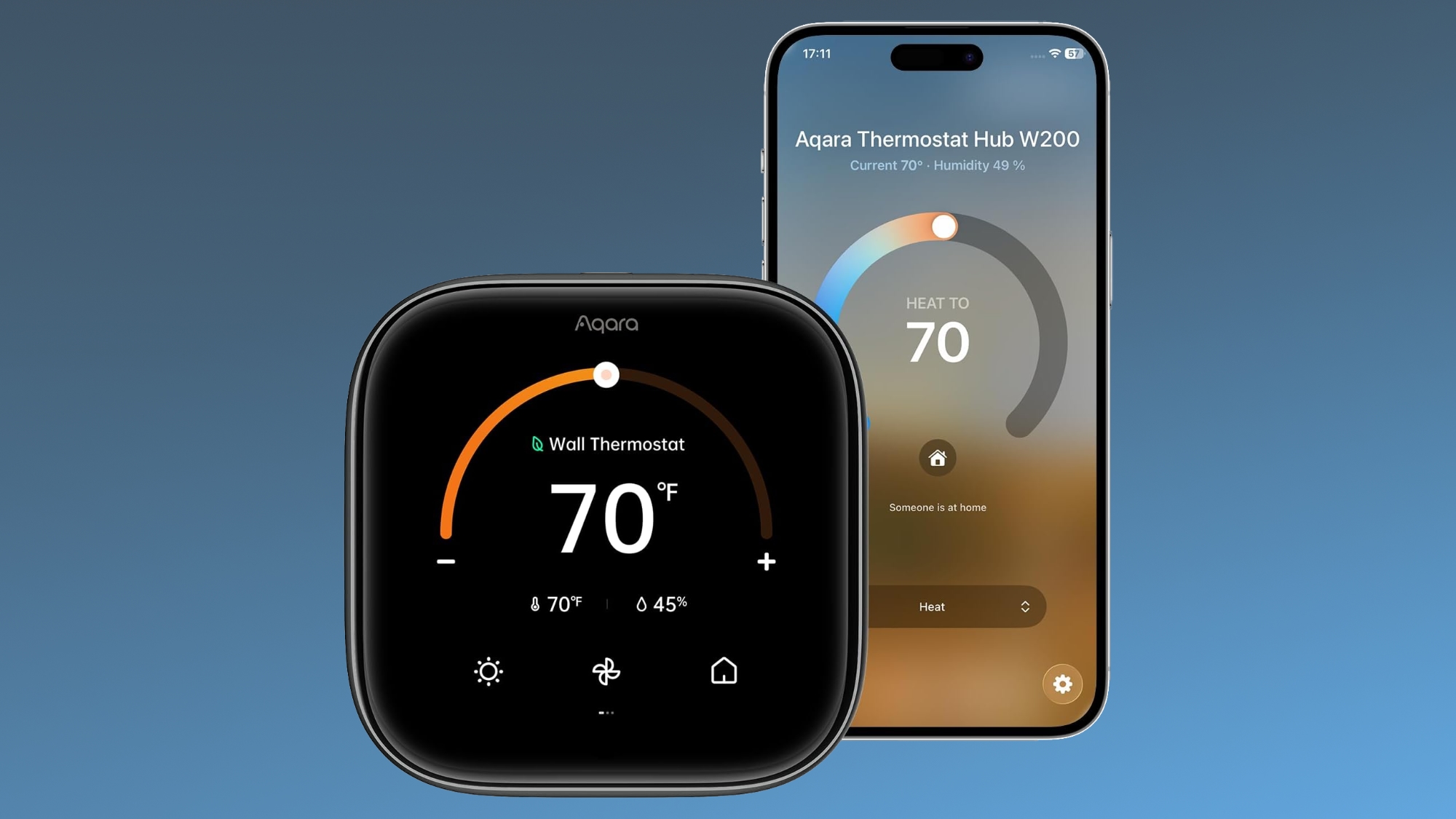
What immediately distinguishes the W200 is its multifaceted design. It functions primarily as a sophisticated thermostat, offering precise temperature control for your home. However, its utility extends far beyond mere climate management. The W200 also incorporates a cutting-edge presence sensor, intelligently detecting occupancy to optimize heating and cooling. More impressively, it acts as a central hub for other Aqara and Matter-compatible devices, leveraging both Thread and Zigbee wireless protocols for robust and versatile smart home integration.
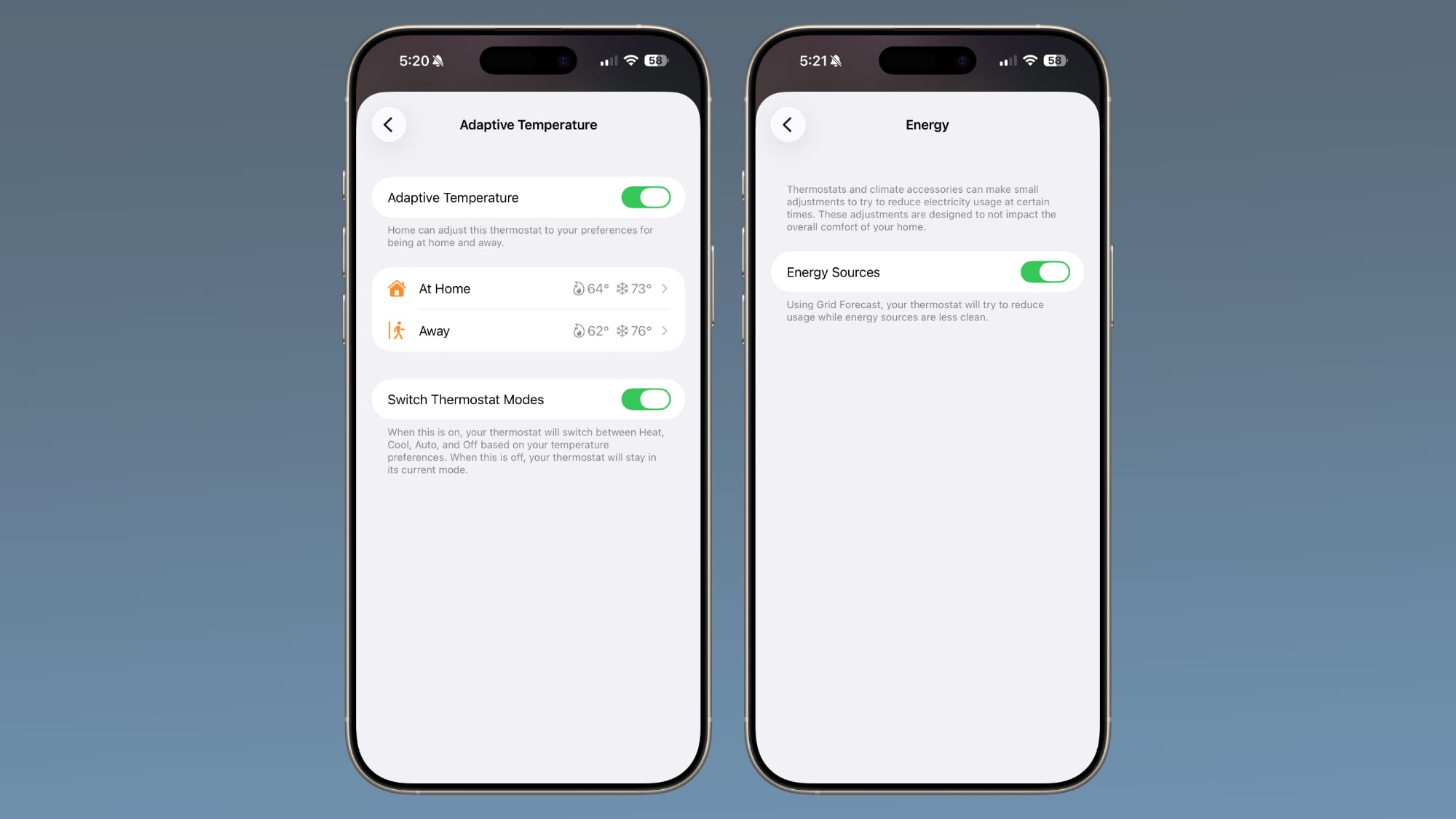
Beyond its core functionalities, the Aqara W200 embraces the latest advancements in smart home intelligence by supporting two innovative HomeKit features that Apple introduced in iOS 26: Adaptive Temperature and Clean Energy Guidance. These features are not mere enhancements; they represent a fundamental shift towards more intelligent and environmentally conscious energy consumption.
Adaptive Temperature is a truly smart solution that intuitively adjusts your thermostat settings based on your daily routines and home occupancy. Imagine leaving your house for work; the system recognizes your absence and subtly shifts to an energy-saving mode. As you approach home, it begins to pre-condition your space, ensuring a comfortable environment upon your arrival. Similarly, it intelligently manages temperatures while you sleep, promoting both comfort and significant energy savings without conscious effort on your part.
Clean Energy Guidance takes this commitment to efficiency a step further, aligning your electricity usage with periods when energy sources are at their "cleanest." This groundbreaking feature intelligently times your heating or cooling cycles, aiming to utilize electricity generated from renewable sources like solar or wind whenever possible. In an era where environmental consciousness is paramount, the W200 empowers users to make more responsible energy choices, contributing to a greener future without compromising comfort.
Design and User Experience: A Blend of Form and Function
The physical design of the W200 is a testament to modern aesthetics, featuring a distinctive "squircle" shape with elegantly rounded edges. This clean, minimalist look strikes a balance, appearing more square than some competitors like Ecobee, yet possessing a more substantial presence than devices like the Nest thermostat. Its thoughtful design ensures it blends seamlessly into various home decors, adding a touch of contemporary sophistication to your wall.
The interface of the W200 is designed for clarity and ease of use. It boasts large, legible text for the current temperature, making it effortless to read from a distance. When not actively being adjusted, the display elegantly transitions to show the current time, maintaining a useful function even in standby mode. Controlling the temperature is straightforward, offering direct interaction via the responsive touchscreen. All advanced settings and controls are conveniently accessible through intuitive swipe gestures, revealing menus that provide comprehensive command over your climate system.
While the glossy surface of the display contributes to its sleek appearance, it is prone to picking up fingerprints. These smudges can be quite noticeable, especially in certain lighting conditions. This is a minor aesthetic consideration, easily remedied with a quick wipe, but worth noting for those who prioritize an immaculate, pristine look for their devices.
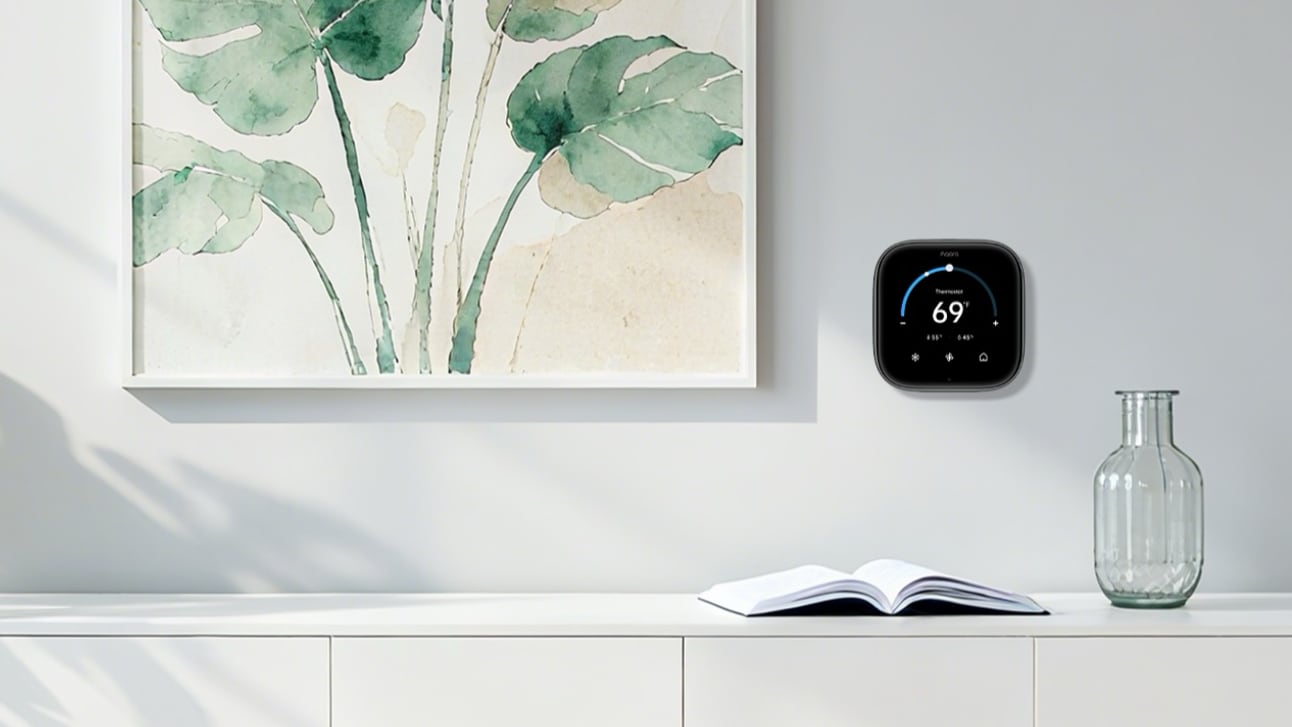
Installation Insights: From Nest to Aqara
My journey with the Aqara W200 began by replacing two existing Nest thermostats, a transition that offered valuable insights into the installation process. Conveniently, the W200 units arrived just before a scheduled HVAC checkup, allowing me to have them professionally installed by my usual HVAC company. While I opted for professional installation for peace of mind, it's worth noting that self-installation would have been entirely feasible and could have saved some money. The wiring configuration for smart thermostats is often consistent, meaning that swapping from one to another typically involves mirroring the existing setup.
For those considering DIY installation, the process is generally straightforward: simply take a clear picture of your current thermostat's wiring before disconnecting it, then replicate that wiring pattern when installing the new W200. The W200 is designed for compatibility with a wide range of HVAC systems, making the electrical hookup manageable for most users with basic technical aptitude. However, a crucial point for self-installers (and something I encountered) is the importance of a "C-wire" or common wire, which provides continuous power to the thermostat. If your existing setup lacks a C-wire, Aqara offers a separately sold C-wire adapter, a necessary component for stable operation.
One minor, yet noticeable, challenge encountered during the swap from Nest to Aqara W200 was the difference in base plate shapes. The W200 features a smaller base plate compared to the Nest. This resulted in revealing unpainted edges on my wall where the larger Nest base plate once sat. While this is purely an aesthetic issue and doesn't impact functionality, it's something to consider for those replacing larger thermostats, as it might necessitate a small touch-up paint job for a perfectly seamless finish.
Versatile System Compatibility: Adapting to Your Home's Needs
My home utilizes a dual heat pump setup: one single-stage and one dual-stage system. Interestingly, the dual-stage heat pump operates as a single-stage unit due to its onboard computer controls, simplifying my specific HVAC configuration. Regardless of the complexity of your system, the Aqara W200 is engineered for broad compatibility. It seamlessly integrates with various heating and cooling sources, including both electric and geo-thermal heat pumps, traditional furnaces, boilers, and other common heating setups. This versatility ensures that a wide array of homes can benefit from its smart features, making it a robust choice for diverse climate control needs across North America.
Intelligent Presence Detection: The Power of mmWave Radar
A standout feature of the Aqara W200 is its integrated mmWave radar, a sophisticated sensor technology that revolutionizes how the thermostat interacts with its environment. Unlike traditional passive infrared (PIR) sensors, mmWave radar can detect not just movement, but also the subtle presence of a person, even if they are stationary. This advanced capability allows the W200 to accurately recognize when someone is in the room and even when they are simply approaching the thermostat.
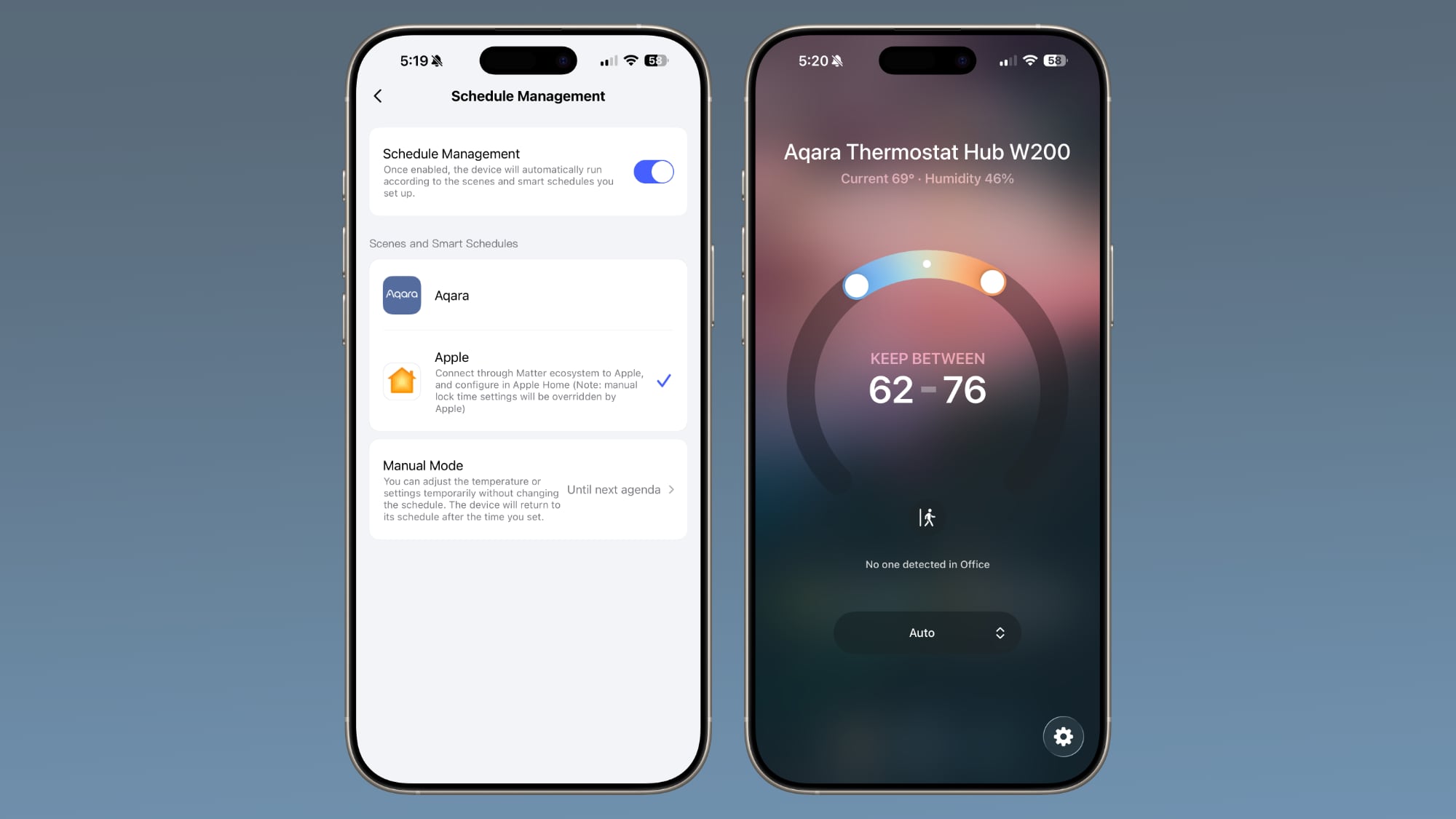
This presence detection capability manifests in several practical ways. For instance, the display on the thermostat automatically activates as soon as someone comes into proximity, eliminating the need to tap or touch it to view information or make adjustments. More significantly, the sensor plays a pivotal role in optimizing heating and cooling schedules. Through the Aqara app, it can activate specific climate programs based on whether someone is detected at home, or even more precisely, within the specific room where the thermostat is located. This granular level of occupancy awareness ensures that energy is only expended when and where it's truly needed, contributing significantly to energy savings and intelligent comfort management.
Control at Your Fingertips: A Multitude of Options
The Aqara W200 offers an impressive array of control options, catering to every preference, from simple manual adjustments to complex automated schedules. The Aqara app itself provides robust smart scheduling features, allowing users to create detailed time-based climate programs. However, it’s important to note that you generally need to choose between allowing the Apple Home app or the Aqara app to take primary control over your thermostat's schedules.
I experimented with both control methods during my testing. While the Aqara app offers intricate, time-of-day specific options, I personally found the Adaptive Temperature interface within the Apple Home app to be less complicated and more intuitive for my needs. Adaptive Temperature, at its core, functions as a highly intelligent home/away setting, simplifying energy management based on occupancy. For users seeking ultimate flexibility, you can opt out of automated schedules entirely and control the temperature manually directly on the thermostat or through the apps.
For those deeply integrated into the Apple ecosystem, the W200's compatibility with HomeKit opens up a world of possibilities. You can simply ask Siri to change the temperature, or, for more advanced users, set up sophisticated HomeKit automations. These automations can be triggered by specific times of day, the status of other HomeKit devices (e.g., turn on heat when a window sensor detects a window is closed and it’s cold), or even based on your location. It’s crucial to have a full Apple Home setup, including an Apple Matter hub such as a HomePod or Apple TV, to fully leverage the W200’s capabilities within the HomeKit ecosystem.
The sheer number of control options ensures that the W200 can adapt to virtually any user requirement. Whether you prefer a straightforward, set-and-forget operation or demand a highly customized, intricate schedule integrated with your smart home, this thermostat is engineered to deliver. Its versatility makes it a powerful asset in any smart home environment.
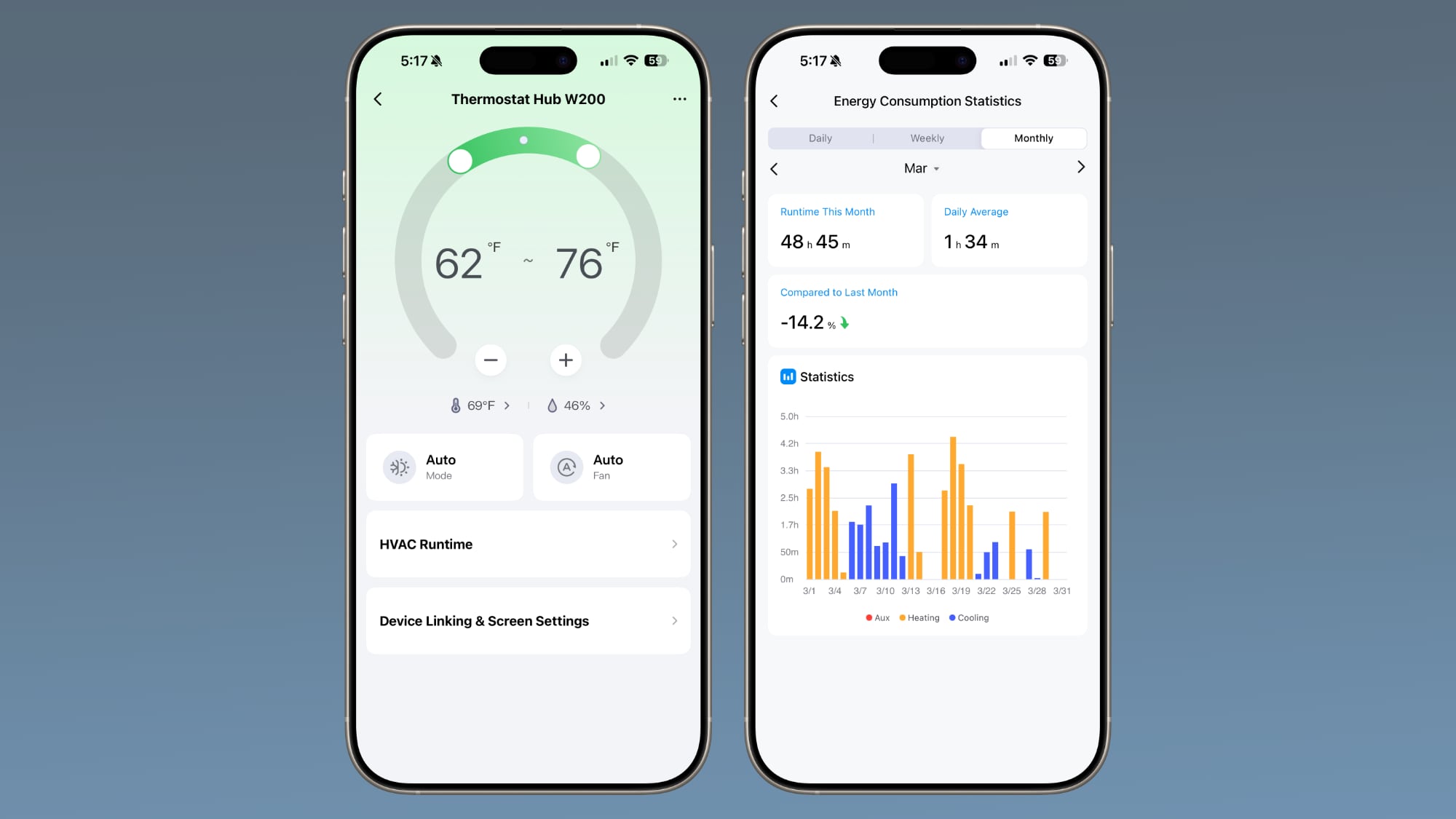
Understanding Energy Savings: Beyond Static Temperatures
The effectiveness of advanced scheduling features like Adaptive Temperature and the Aqara app's custom programs often depends on individual lifestyles and HVAC systems. In my particular situation, as someone who works from home in North Carolina, where humidity is a constant factor, my interior temperatures tend to remain relatively static. During the humid summers, my AC runs consistently to protect my wood floors from moisture damage. In winter, a steady warmth is essential for my indoor plants. These conditions necessitate a largely consistent temperature, regardless of whether I'm physically present in the house.
Furthermore, my heat pump systems operate most efficiently when maintaining a steady temperature, rather than constantly cycling up and down. This means strategies like significantly lowering the heat at night, while effective for some systems, don't yield the same energy savings for my setup. Consequently, the full potential of features designed for frequent temperature adjustments—such as Adaptive Temperature and various time-based scheduling options—is primarily aimed at users with traditional furnaces or other HVAC systems that derive greater electricity savings from dynamic set-points throughout the day.
However, even with my static temperature preferences, I still found value in the scheduling capabilities for specific occasions where I did need to adjust the temperature more frequently. If your home is equipped with an HVAC system that benefits significantly from time-based temperature changes, leading to noticeable electricity bill reductions, then you stand to gain the most from the sophisticated scheduling and energy management features of the W200.
Aqara's Philosophy: Versatility and Choice
Aqara, as a smart home device manufacturer, often emphasizes offering a vast spectrum of options and configurations to its users. While some might argue for a more streamlined product lineup, Aqara's approach seems to center on maximizing versatility, empowering customers to choose precisely how they wish to utilize each device within their smart home ecosystem. This philosophy is evident across their product range.
Consider Aqara's smart locks, for example. They provide a multitude of unlocking methods: fingerprints, NFC cards, smartphone app control, custom passcodes, and even traditional keys. This commitment to diverse functionality is directly mirrored in the W200. With its multiple control interfaces (on-device, Aqara app, Apple Home app, Siri, automations) and its ability to act as a hub for both Thread and Zigbee devices, the W200 embodies this core Aqara principle. It ensures that users are not locked into a single mode of operation but rather have the freedom to integrate and control their climate system in a way that best suits their individual preferences and existing smart home setup.
A Critical Look: The Compressor Lockout and Heat Pump Conundrum
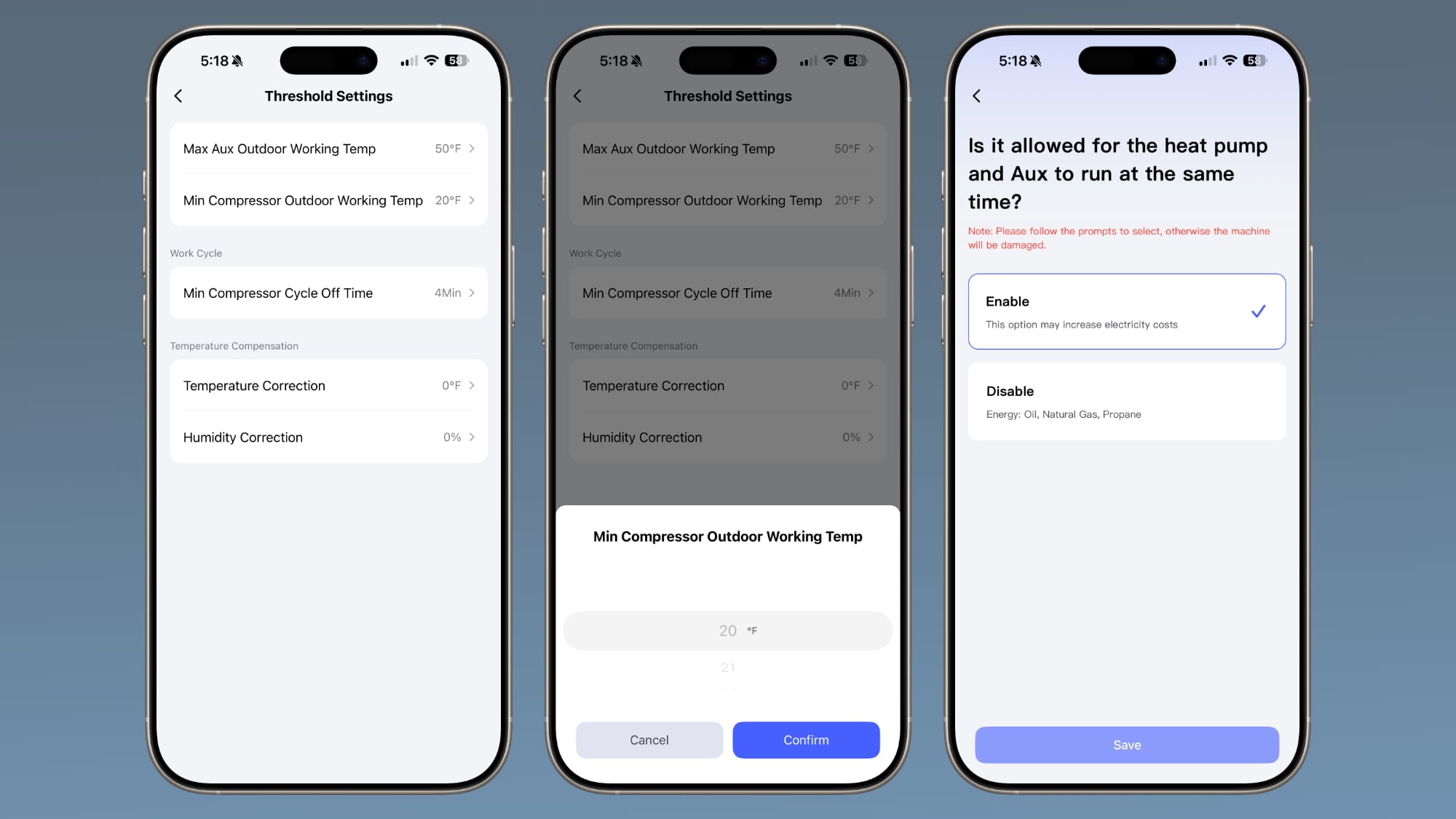
During my extensive testing of the W200, I encountered a significant issue that, as of writing, remains unresolved. The thermostat features a setting labeled "Min Compressor Outdoor Working Temp," which unfortunately cannot be adjusted below 20 degrees Fahrenheit. This default setting immediately raised concerns, as it implies that the system will automatically switch to auxiliary heat once the outdoor temperature drops to or below 20 degrees F. For homes equipped with modern heat pumps, particularly those designed for colder climates, this is far from ideal.
Contemporary heat pumps are engineered to operate efficiently at temperatures well below 20 degrees Fahrenheit, often down to single digits or even sub-zero temperatures. Forcing a switch to auxiliary heat at 20 degrees F is problematic for several reasons. In my case, my auxiliary heat is electric, making it considerably more expensive to operate than the heat pump itself. The primary goal for many heat pump owners is to minimize auxiliary heat usage to maintain energy efficiency and lower utility costs. This unadjustable minimum compressor temperature directly counteracts that objective.
I reached out to Aqara for clarification on this matter. Their suggestion was to disable the "Enable to work with heat pump" feature within the Aux settings. However, this advice directly contradicts their own setup flow within the app, which explicitly directs users to enable both auxiliary and heat pump settings if their auxiliary heat is electric. The app even displays a stern warning: "Please follow the prompts to select, otherwise the machine will be damaged." As someone who is not an HVAC expert, being presented with conflicting instructions and such a dire warning makes choosing the correct option a daunting and potentially risky decision.
The wording surrounding auxiliary heating and compressor temperature settings within both the Aqara app and on the thermostat itself is ambiguous and, frankly, unhelpful. My attempts to seek further clarification from Aqara were not fruitful, leaving the core issue unresolved. Even my professional HVAC technician expressed reservations about recommending this thermostat specifically for my heat pump system, precisely because of the inability to adjust the compressor lockout temperature to a lower threshold.
For context, competing smart thermostats, such as Ecobee, often provide specific settings to minimize auxiliary heat usage and even allow for the disabling of compressor lockout thresholds. These granular controls are conspicuously absent on the W200. While Aqara has indicated that the heat pump wording in their app will be updated in the future, the fundamental issue of inadequate user control over critical heat pump operations persists. Therefore, if you own a modern heat pump, especially one designed for cold climates, I strongly advise conducting thorough research and potentially seeking further clarification before committing to the W200. While my region doesn't experience an abundance of days below 20 degrees, I was unable to test the thermostat's performance at that critical temperature during the review period, leaving a lingering question mark over its suitability for such conditions.
Ecosystem Expansion: Seamless Integration with Your Aqara Home
Beyond its core thermostat functions, the Aqara W200 truly shines as a central component within a broader Aqara smart home ecosystem. Its capabilities extend far beyond mere temperature control, integrating intelligently with other Aqara devices to create a cohesive and automated living experience.
For instance, if you already own an Aqara video doorbell or a smart lock, the W200's vibrant display can become a dynamic interface for these devices. Imagine being able to view a live snapshot from your video doorbell directly on your thermostat screen, or even unlock your front door with a quick tap, all without needing to pull out your phone. This level of interconnectedness adds a significant layer of convenience and control to your daily routines.
Furthermore, the W200 seamlessly works with Aqara's range of smart sensors. When paired with devices like the Aqara Presence Multi-Sensor FP300, which uses advanced mmWave technology for highly accurate occupancy detection, or the Aqara Climate Sensor W100, which provides precise temperature and humidity readings in different rooms, the W200 can enable incredibly granular automations. For example, you could set up a rule to automatically adjust the heating or cooling in a specific zone based on whether someone is detected in that room by the FP300, or to fine-tune the temperature based on localized readings from the W100, ensuring optimal comfort and energy efficiency across your entire home. The W200 effectively becomes the brain for these climate-related automations.
Additionally, as a Matter-enabled device, the W200 possesses the inherent ability to integrate with and control other Matter-certified devices from various manufacturers. While my personal preference is to manage my broader Matter ecosystem through Apple Home for centralized control, the W200's capability to act as a Matter Controller means it can serve as a versatile hub for those who prefer to build their smart home around the Aqara platform.
This deep integration means your climate control isn't an isolated system, but rather an intelligent, responsive part of your entire smart home, working in concert with security, lighting, and other smart devices to create a truly automated and comfortable environment.
Bottom Line: A Promising Smart Thermostat with Key Considerations
Setting aside the notable confusion surrounding the compressor lockout and auxiliary heating settings – an area that certainly requires improvement from Aqara – my overall experience with the W200 has been largely positive. Throughout the testing period, the thermostat performed reliably and consistently, proving to be more dependable than my previous Nest thermostat. It effectively added a layer of useful automation and enhanced control to my home's climate system, significantly improving the smart home experience.
For those seeking a robust, HomeKit-compatible smart thermostat, the Aqara W200 presents itself as a compelling alternative, particularly if you are eager to leverage the latest Apple Home features such as Adaptive Temperature and Clean Energy Guidance. These innovations alone make it a strong contender in the crowded smart thermostat market.
However, the unresolved issues concerning heat pump control, specifically the fixed minimum compressor outdoor working temperature and the ambiguous app wording, are critical points for prospective buyers. If your home relies on a modern heat pump, especially one designed for colder climates where auxiliary heat minimization is key, it is imperative to conduct thorough research and potentially seek further clarification from Aqara or your HVAC professional. For other heating systems, or if your heat pump use case aligns with the W200's current limitations, it stands as an excellent choice.
How to Buy: Pricing and Availability
The Aqara Thermostat Hub W200 is readily available for purchase, making it easy to upgrade your home's climate control system. You can acquire this innovative smart thermostat from popular online retailers. Specifically, the W200 can be purchased from Amazon for $160.
It's important to remember the C-wire requirement for consistent power. If your existing HVAC setup does not include a C-wire, an essential component for the stable operation of many smart thermostats, a compatible C-wire adapter is available for purchase separately. This adapter typically costs around $30 and is a necessary addition for installations lacking this crucial wire.
Note: Aqara provided MacRumors with two W200 thermostats for the purpose of this review. No other compensation was received.
This article, "Aqara W200 Thermostat Launches With Apple Adaptive Temperature and Clean Energy Support" first appeared on MacRumors.com
Discuss this article in our forums
from MacRumors
-via DynaSage
