
Apple is Closing a Unionized Store in the U.S. and the Union is 'Outraged'
Apple Announces Permanent Closure of Three U.S. Retail Stores, Sparks Union Outrage
A significant development has emerged from Apple's retail operations, as the tech giant confirmed its decision to permanently close three of its stores across the United States in June. This announcement, while impacting several communities, has drawn particular attention and strong condemnation due to one of the affected locations being the company's first unionized retail store in the U.S. This move has ignited a heated debate about corporate decision-making, worker rights, and the future of retail, especially for unionized employees.
The closures are set to take place in three different states, affecting employees and customers who have relied on these physical Apple locations for product purchases, technical support, and community engagement. The details surrounding the closures, particularly the differing arrangements for employees at the unionized store versus the non-unionized ones, have further amplified the discussion and raised questions about the underlying motivations behind Apple's strategic retail adjustments.
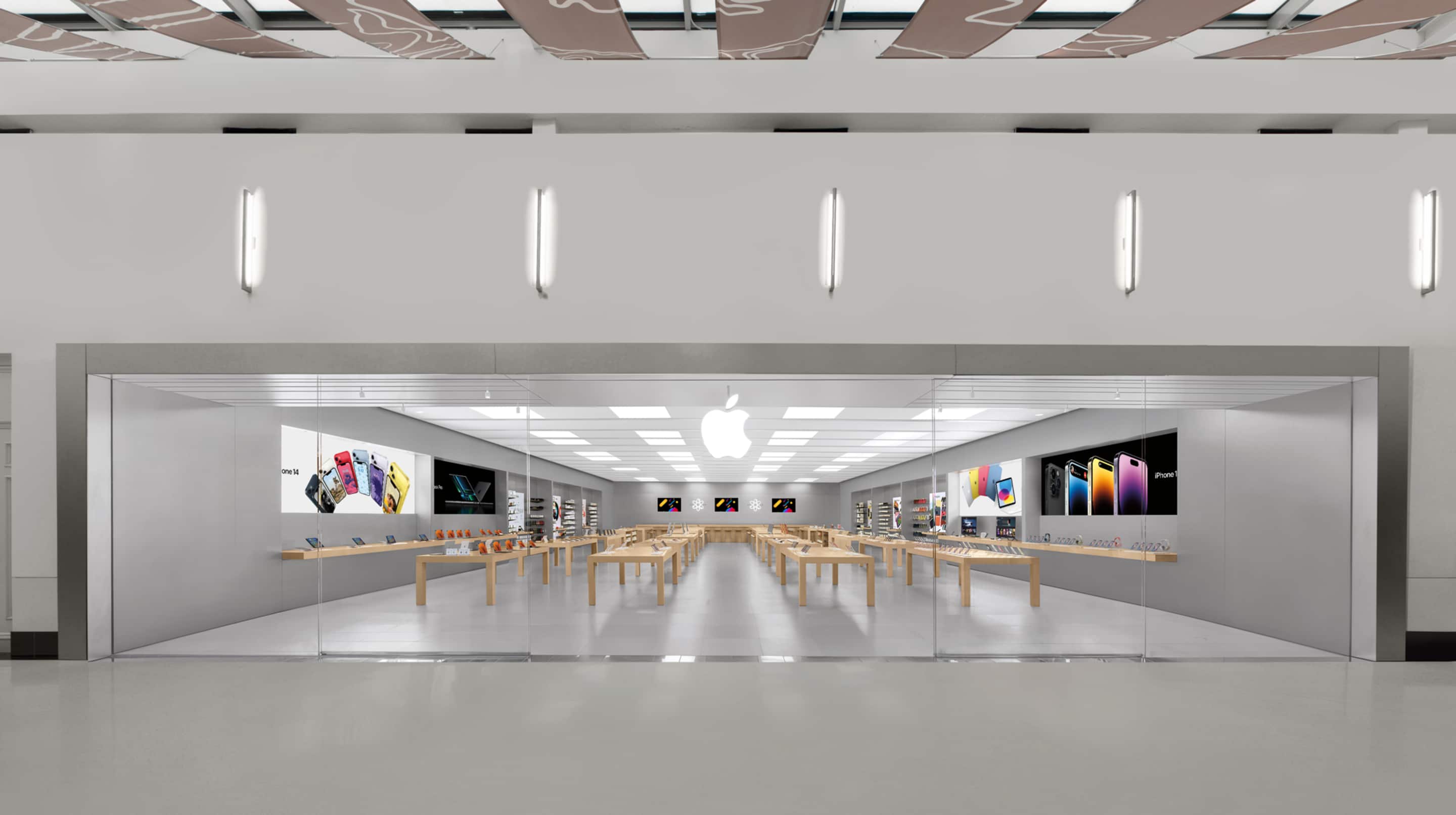 Apple Towson Town Center in Maryland
The Three Stores Facing Closure
Apple's announcement confirms the permanent closure of three prominent retail locations: Apple Towson Town Center in Towson, Maryland; Apple Trumbull in Trumbull, Connecticut; and Apple North County in Escondido, California. These stores, each serving distinct communities, are slated to cease operations in June, marking a significant shift in Apple's regional retail presence. For customers in these areas, this means a re-evaluation of how they access Apple's products and services, likely pushing them towards nearby alternative stores, authorized resellers, or online platforms.
The impact on local economies and shopping centers where these stores are located is also a point of consideration. Apple stores often serve as anchor tenants, drawing significant foot traffic and contributing to the overall vibrancy of a mall. Their departure can leave noticeable voids, potentially accelerating trends of decline in struggling retail environments. This decision underscores the challenges faced by traditional brick-and-mortar retail in an increasingly digital shopping landscape, prompting large companies like Apple to continuously assess the viability and strategic importance of their physical locations.
Apple Towson Town Center: A Unionized Precedent
Among the three closures, the Apple Towson Town Center store holds a unique and particularly sensitive position. This location in Towson, Maryland, made history in 2022 by becoming the first Apple retail store in the United States to unionize. Its employees joined the International Association of Machinists and Aerospace Workers' Coalition of Organized Retail Employees (IAM CORE), marking a pivotal moment in the landscape of tech and retail labor relations. The unionization effort at Towson was seen by many as a potential blueprint for other Apple stores and even other major tech companies, signaling a growing desire among retail workers for collective bargaining power and improved working conditions.
In 2024, after significant negotiations, the IAM CORE and Apple successfully signed a collective bargaining agreement, a landmark achievement that established specific terms and conditions for employment at the Towson store. This agreement covered various aspects of employment, including wages, benefits, and workplace policies, providing a structured framework for how employee relations would be managed. The existence of this agreement makes the closure of the Towson store particularly contentious, as it raises questions about the future of the union and the protections afforded to its members under the negotiated contract. Unlike the other two closing stores, Apple has stated that no replacement store is planned for the Towson area, adding another layer of complexity to the situation for its employees.
Trumbull and North County: Differing Employee Outcomes
The other two locations slated for closure are Apple Trumbull in Trumbull, Connecticut, and Apple North County in Escondido, California. While these closures are certainly impactful for their respective communities and employees, Apple has outlined a more straightforward path for their staff. The company has explicitly stated that employees at both the Trumbull and North County stores will "continue their roles" at nearby Apple stores. This means that transfer eligibility is guaranteed for these employees, offering a measure of job security and continuity despite the closure of their current workplaces. The ability to seamlessly transition to another Apple location provides a stark contrast to the situation faced by their counterparts in Towson, highlighting the distinct implications of union representation in such corporate decisions.
This guaranteed transfer approach for non-unionized stores is a common practice for large corporations aiming to retain talent and minimize disruption during strategic consolidations or closures. It reflects an operational flexibility that can be more complex to implement when a collective bargaining agreement is in place, as specific clauses and negotiated terms must be adhered to. The clear communication and assured transfers for Trumbull and North County employees offer a sense of stability, allowing them to anticipate their continued employment with Apple, albeit at a different physical location. This approach mitigates some of the immediate negative impacts often associated with store closures, ensuring that the company retains experienced staff and minimizes the need for extensive rehiring processes in adjacent markets.
Apple's Official Rationale: "Declining Conditions"
In a formal statement addressing the closures, Apple explained that the "difficult decision" to shutter all three stores was primarily driven by "declining conditions" within the shopping malls where these locations operated. This rationale points to broader trends affecting physical retail spaces across the United States, as consumer habits continue to shift towards online shopping and away from traditional mall environments. The company emphasized its commitment to delivering "exceptional service and great experiences" for customers and its ongoing strategy of "investing to expand and enhance our retail stores and offerings worldwide." However, it also underscored the need to be "deliberate about evaluating our existing locations to ensure that we can meet our customers' needs in the best way."
At Apple, we are constantly striving to deliver exceptional service and great experiences for our customers. As we continue investing to expand and enhance our retail stores and offerings worldwide, we remain deliberate about evaluating our existing locations to ensure that we can meet our customers' needs in the best way. Following the departure of several retailers and declining conditions at Trumbull Mall, the Shops at North County, and Towson Town Center, we've made the difficult decision to close our stores at these locations.
Our team members at Trumbull and North County will continue their roles at nearby Apple Retail stores. Towson employees will be eligible to apply for open roles at Apple in accordance with the collective bargaining agreement. We look forward to continuing to serve customers at nearby stores and on Apple.com, the Apple Store app, and at Apple Authorized Resellers and Service Providers throughout the states.
The Broader Trend of Mall Decline
The "declining conditions" cited by Apple are indicative of a pervasive challenge facing many shopping malls across the U.S. Over the past decade, a confluence of factors, including the rise of e-commerce, changing consumer preferences, and economic downturns, has led to a significant decrease in foot traffic and tenant occupancy in numerous enclosed malls. Many once-bustling shopping centers are now struggling with high vacancy rates, reduced maintenance, and a general loss of appeal. When major anchor stores or popular retailers depart, it creates a domino effect, further diminishing the mall's attractiveness to both shoppers and other potential tenants. This cycle of decline can make it financially unviable for high-profile brands like Apple to maintain a presence, as the surrounding environment no longer aligns with their brand image or customer experience expectations.
Specifically regarding the Towson Town Center, the mall has indeed been facing significant challenges. Recent reports confirm the departure of several well-known retailers, including Banana Republic, Madewell, and Tommy Bahama, which announced their exits earlier this year. These high-profile vacancies can severely impact a mall's ability to draw and retain customers, making it a less desirable location for premium brands. Furthermore, local news outlets have highlighted a concerning trend of rising crime rates in the area surrounding the Towson Town Center in recent years. An increase in crime can deter shoppers and employees, contributing to an unsafe perception that directly impacts business viability and the overall customer experience. These factors, taken together, present a compelling business case for Apple to reconsider its presence in such an environment, irrespective of other considerations.
The Union's Strong Reaction: Accusations of "Union Busting"
The International Association of Machinists and Aerospace Workers (IAM) Union, which represents the employees at the Apple Towson Town Center, responded to Apple's closure announcement with profound outrage and serious allegations. The union unequivocally stated that it is "outraged" by the decision to close the Towson store, not only because it is the first unionized Apple retail location in the U.S. but also because it believes Apple is abandoning its workers and a community that depends on the store for essential services and its unique access to public transit. This strong reaction highlights the perceived betrayal and potential broader implications of the closure.
The IAM Union is outraged by Apple's decision to close its Towson, Md., store—the first unionized Apple retail location in the United States—and abandon both its workers and a community that relies on it for critical services and its unique access to public transit. Apple's claim that the collective bargaining agreement prevents relocation is simply false and raises serious concerns that this closure is a cynical attempt to bust the union. We are exploring all legal options and will work with elected officials and allies to hold Apple accountable. We stand with our IAM Coalition of Organized Retail Employees (IAM CORE) members and the community that depends on this store for essential access and support.
The "False" Claim and Union Busting Concerns
A core element of the union's protest revolves around Apple's statement concerning employee transfers. Apple had initially indicated that Towson employees would be "eligible to apply for open roles at Apple in accordance with their collective bargaining agreement," implying that the agreement somehow limited their transfer options compared to non-unionized stores. The IAM Union vehemently rejected this, stating that Apple's claim that the collective bargaining agreement "prevents relocation is simply false." This direct contradiction immediately escalated tensions and fueled suspicions.
The union explicitly raised "serious concerns that this closure is a cynical attempt to bust the union." "Union busting" refers to a range of legal and illegal activities undertaken by employers to prevent the formation of labor unions or to undermine existing ones. While companies can legitimately close underperforming locations, when a unionized store is singled out or treated differently, it often triggers accusations of anti-union bias. The IAM's argument suggests that Apple is using the mall's declining conditions as a pretext to dismantle the union presence at its first organized retail location, thereby sending a message to other potential unionizing stores.
IAM further confirmed that it is "exploring all legal options" and intends to "work with elected officials and allies to hold Apple accountable" for this decision. This indicates a potential for legal challenges, including unfair labor practice charges, if the union can demonstrate that Apple's actions were motivated by a desire to undermine union activity rather than purely legitimate business reasons. The involvement of elected officials and allies also suggests a broader campaign to generate public and political pressure on Apple, portraying the company as prioritizing anti-union tactics over worker well-being.
The union's stance is rooted in the belief that the collective bargaining agreement should, if anything, provide *more* protection for its members during a store closure, not less. The perception that Apple is using the agreement as a reason for lesser job security compared to non-unionized employees is precisely what sparks the "union busting" accusation. This situation pits a powerful global corporation against a determined labor union, setting the stage for a potentially protracted dispute that could have significant implications for labor relations in the tech industry.
Clarifying the Collective Bargaining Agreement: An Update
In an important clarification that emerged following the union's initial outcry, Apple provided further details regarding the specific clauses within the collective bargaining agreement (CBA) that govern store closures and employee entitlements. According to Apple, the contract that the union agreed to outlines specific conditions under which employees would be transferred or rehired in the event of a store closure. This updated information helps to shed light on the contractual obligations and benefits negotiated by both parties.
The core of the agreement, as explained by Apple, states that if the company were to open a new store within 50 miles of the current Towson Town Center location, then the affected employees would be eligible for transfer or rehire. In such a scenario, the union successfully negotiated for a clear path for its members to maintain their employment with Apple in the immediate vicinity. However, the critical point is that Apple currently has "no current plans to open a new store in the area." This absence of a new store within the stipulated 50-mile radius is what triggers a different set of provisions under the CBA.
In any other circumstance – meaning, if no new store is opened within the 50-mile radius – the union had negotiated for employees to receive severance. Severance packages typically include a period of pay, continuation of benefits, and other support to help employees transition out of their roles. This provision ensures that even without a direct transfer, employees are not left without financial support immediately following a closure. It's a standard feature of many collective bargaining agreements, designed to provide a safety net for workers during corporate restructuring.
Furthermore, the CBA includes a "right of first refusal" clause. This means that if Apple *were* to open a new store in the Towson area within the next 18 months, the affected employees from the Towson Town Center store would have the first opportunity to apply and be considered for those new positions. This clause offers a degree of future protection and priority for the unionized workforce, ensuring that their past employment with Apple is recognized should new opportunities arise relatively soon after the closure.
This clarification from Apple, detailing the agreed-upon terms, introduces nuance to the union's initial claim that the CBA "prevents relocation" or that Apple's stance was "simply false." While the union may have *desired* guaranteed transfers regardless of a new store opening, the contract, as negotiated, explicitly links transfers to the opening of a new location within a specific geographic range. The disagreement now appears to center more on the *interpretation* and *implications* of the contract's clauses, rather than a direct falsehood from Apple about the contract's text. The union's outrage, however, remains potent, rooted in the belief that even if contractually allowed, the closure of a unionized store under these circumstances is inherently suspect and harmful to organized labor efforts.
Broader Implications and The Future Outlook
The closure of the unionized Apple store in Towson, Maryland, transcends a mere retail adjustment; it carries significant implications for the broader landscape of labor relations, particularly within the tech and retail sectors. This event will undoubtedly be closely watched by other Apple retail employees who are considering or actively pursuing unionization. The outcome of the dispute between IAM CORE and Apple will serve as a critical case study, potentially influencing future organizing efforts at Apple and other large corporations that have historically resisted unionization.
For one, the situation intensifies the ongoing debate between corporate prerogatives and worker rights. Apple, like any corporation, has the right to make business decisions, including store closures, based on economic viability. However, when such decisions affect a unionized workforce, they are scrutinized through the lens of labor law and ethical considerations regarding collective bargaining. The accusations of "union busting," even if legally challenging to prove, create a negative public perception that Apple, a company known for its progressive image, would likely want to avoid. The potential for legal battles, perhaps involving the National Labor Relations Board (NLRB), could set precedents for how unionized employees are treated during corporate restructurings.
Moreover, this event underscores the precarious position of brick-and-mortar retail in the digital age. While Apple continues to invest heavily in its iconic retail experience globally, the strategic closure of stores in declining mall environments indicates a selective approach. This selectivity will likely prioritize high-traffic, flagship locations or stores in thriving mixed-use developments over traditional mall spaces that struggle with foot traffic and security concerns. The future of retail may increasingly see brands like Apple consolidating their physical presence into fewer, higher-impact locations, making the competition for prime retail real estate even more intense.
The community aspect is also crucial. Apple stores often become local hubs, offering not just products but also services, workshops, and a gathering space. The closure impacts access to technology and support for local residents, especially those who might rely on public transit to reach the store, as highlighted by the IAM Union. This disruption affects customer loyalty and the overall perception of Apple's commitment to the communities it serves.
Ultimately, the situation at Towson Town Center is a complex tapestry woven with threads of business strategy, labor rights, changing retail dynamics, and community impact. The legal challenges, public relations battles, and the fate of the Towson employees will continue to unfold, offering a poignant look into the evolving relationship between global corporations and their organized workforces.
from MacRumors
-via DynaSage
