
Apple Covers iPhone 17 Pro in Stickers in New Ad
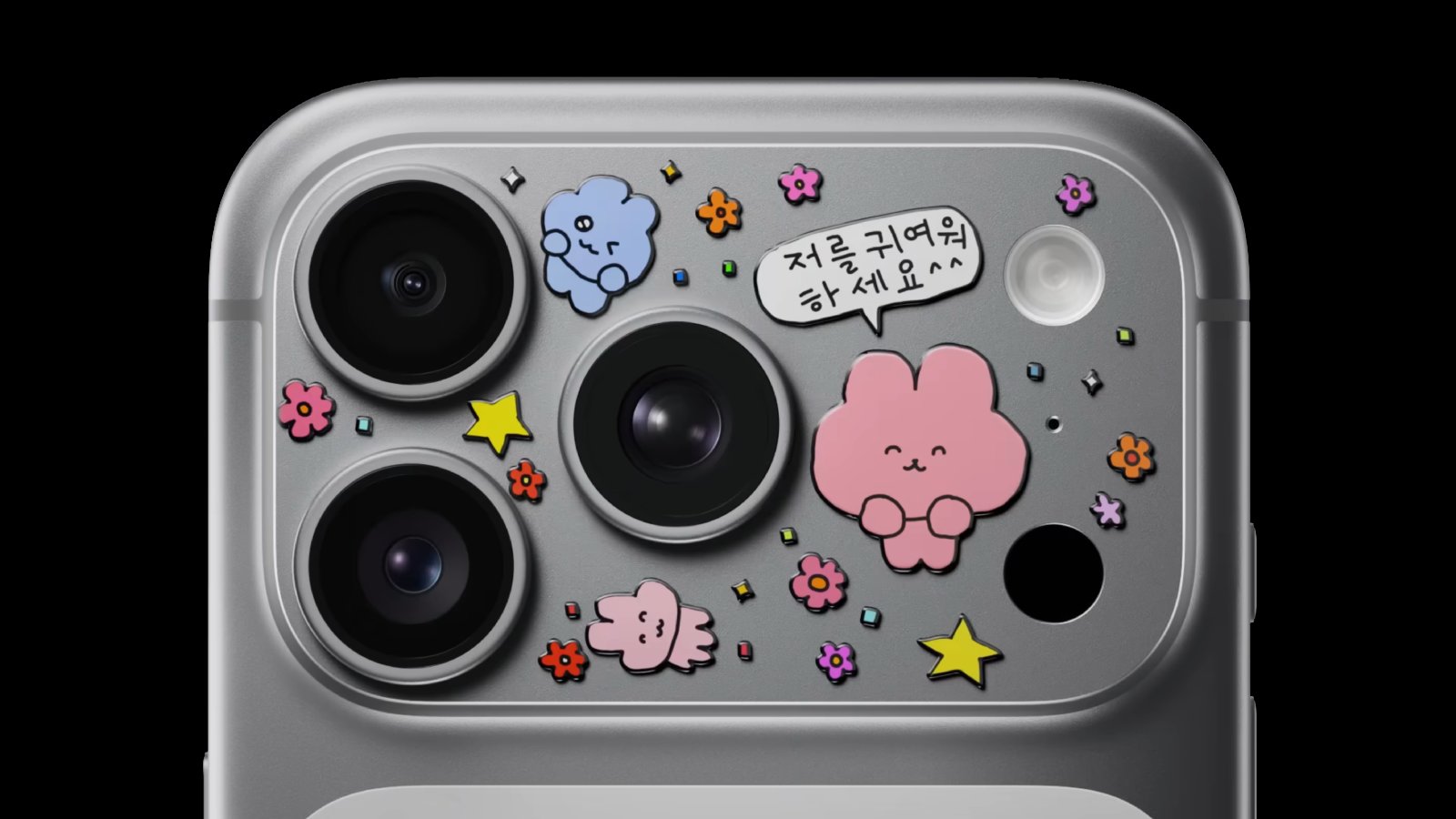
In a video uploaded to its YouTube channel in South Korea today, Apple showed off a handful of iPhone 17 Pro devices decorated with tiny stickers.
Apple's Bold New Direction: Embracing Personalization with iPhone 17 Pro Stickers
In a move that has sparked considerable discussion and excitement, Apple recently unveiled a striking new advertisement on its South Korean YouTube channel. The commercial, featuring the highly anticipated iPhone 17 Pro, showcases these premium devices adorned not with their usual sleek, unblemished finishes, but rather with an eclectic array of tiny, vibrant stickers. This campaign, strategically paired with the trending hashtags #PhoneDecor and #iPhoneCustomization, signifies a compelling evolution in Apple's marketing strategy. It’s a clear signal, particularly aimed at a younger, more expressive demographic, that even the most meticulously designed technology can be a canvas for personal style. The catchy tagline, "Stick it here," brilliantly encapsulates this playful and deeply personal invitation, urging users to quite literally make their mark on their cutting-edge iPhones.
The "Stick It Here" Campaign: Unpacking Apple's Vision for User Expression
The advertisement itself is a fascinating study in brand evolution. For decades, Apple has cultivated an image of unparalleled design purity, where the device's inherent aesthetics were considered paramount. Yet, this new campaign for the iPhone 17 Pro dares to challenge that convention. It doesn't merely highlight the device's advanced features or its powerful performance; instead, it puts its potential for artistic customization front and center. The chosen area for these decorative elements is particularly noteworthy: Apple refers to it as the "plateau"—the distinctive, slightly raised aluminum housing that elegantly encases the sophisticated rear camera system, LED flash, microphone, and the advanced LiDAR Scanner. By designating this prominent, high-tech section as the prime location for stickers, Apple transforms a purely functional component into a focal point for individual expression, blurring the lines between engineering marvel and personal art piece.
The strategic choice of stickers as the primary customization tool is deliberate and multi-faceted. Stickers represent an accessible, reversible, and affordable form of personalization. Unlike more permanent alterations or even traditional phone cases that often conceal the original design, stickers offer a whimsical, temporary means to inject personality. They empower users to frequently refresh their phone's appearance, adapting it to their current mood, evolving style, or fleeting passions. This remarkable flexibility resonates deeply with a generation that prizes individuality and dynamic self-expression above all else. The accompanying hashtags, #PhoneDecor and #iPhoneCustomization, further amplify this message, fostering a vibrant online community where users can proudly share their unique designs, draw inspiration from peers, and engage in a collective celebration of creative tech personalization.
In addition to the main video, the campaign cleverly utilizes a pair of YouTube Shorts. This short-form content is perfectly optimized for rapid consumption and viral sharing across social media platforms. These bite-sized clips likely offer quick, engaging glimpses into the world of iPhone personalization, making the concept even more relatable and attractive to a broad online audience, particularly Gen Z and millennials who are fluent in visual, snackable content. This comprehensive, multi-platform approach, leveraging both longer-form storytelling and concise shorts, underscores Apple's profound understanding of contemporary digital marketing and its ability to connect with diverse user segments through various content formats.
The Deep-Seated Human Need: Why We Personalize Our Digital Companions
The human impulse to express individuality is a fundamental aspect of our psychology, manifesting in countless ways throughout history and across cultures. From ancient cave paintings to modern fashion trends, people consistently seek to differentiate themselves and communicate their unique identities. In the twenty-first century, our personal technology, especially our smartphones, has ascended to the role of an essential extension of the self. These devices are far more than mere communication tools; they are intimate repositories of our memories, vital portals to our social lives, and constant companions that subtly, yet profoundly, reflect who we are. It is therefore entirely natural that we feel a compelling urge to infuse them with our distinct personalities.
The evolution of phone customization mirrors this deep-seated need. Early mobile phones offered rudimentary personalization through a limited selection of ringtones and static wallpapers. With the advent of smartphones, protective cases quickly became a primary avenue for expression, offering a blend of safeguarding and style. However, even the most diverse range of cases often obscures the phone's original design, sometimes making it feel generic or unwieldy. Stickers, by contrast, present a more intimate, direct, and playful form of customization, adhering directly to the device's surface. They allow the phone's inherent, premium aesthetics to remain largely visible while adding bespoke layers of personal flair that speak volumes about the owner.
The enduring appeal of stickers lies in their elegant simplicity, versatility, and democratic accessibility. They provide an effortless and affordable entry point for virtually anyone to participate in the growing trend of phone decor. Whether it's a tiny, whimsical icon symbolizing a cherished hobby, a powerful emblem representing a beloved fictional universe, or a purely aesthetic design that simply brings a smile, stickers enable quick, low-commitment transformations. This unparalleled ability to easily update and refresh the look of a device resonates strongly with consumers who value flexibility, spontaneity, and the freedom to experiment with their style at a moment's notice. Furthermore, the very act of selecting, arranging, and applying stickers can be a wonderfully tactile and creative process, adding another layer of meaningful engagement for the user, turning a passive consumer into an active creator.
This emphasis on personalization speaks to a broader psychological imperative: the desire for authentic self-expression and a sense of belonging within specific subcultures or communities. By customizing their devices, users can eloquently communicate aspects of their identity to the world, signaling their interests, core values, affiliations, and even their current emotional state. In an increasingly digitalized and sometimes impersonal global landscape, personalized tech serves as a tangible anchor to our individual selves, ensuring our devices feel truly "ours"—a reflection of our unique journey—rather than just another mass-produced electronic gadget.
Apple's Evolving Strategy: Harmonizing Global Brand with Local Cultural Nuances
For a significant portion of its history, Apple has meticulously cultivated an image deeply intertwined with sleek, minimalist design, often prioritizing the purity of form and function over overt individualistic expression through physical alteration. The company’s philosophy typically suggested that its products were inherently beautiful, and the default, unadorned experience was the ideal. This new sticker campaign, however, marks a profound strategic pivot, demonstrating Apple's astute awareness of shifting consumer preferences and the critical importance of regional cultural sensitivities. By actively promoting the use of stickers, Apple implicitly acknowledges that even its meticulously engineered hardware can be enhanced and made more personal through user-driven flair, signaling a greater willingness to adapt its global brand narrative to local contexts.
The South Korean Context: A Thriving Landscape of Personal Expression
The decision to debut this particular campaign in South Korea is not incidental; it is a calculated and highly significant strategic move. South Korea stands as a global beacon of cutting-edge aesthetics, dynamic digital culture, and a pervasive emphasis on individual style and meticulous self-presentation. The nation boasts an extraordinarily vibrant youth culture, profoundly influenced by the global phenomena of K-Pop, K-Drama, and a powerful drive towards unique personal branding. Within this context, phone decoration, colloquially known as "폰꾸" (ponkku—a portmantele of 폰 꾸미기, meaning "phone decorating"), is not merely a fleeting trend but a deeply entrenched and widely embraced cultural practice among young South Koreans. From elaborately themed phone cases and whimsical charms to intricate sticker arrangements and customized lock screens, the act of decorating one's phone is a cherished ritual for showcasing personality and keeping pace with the latest aesthetic trends.
In South Korea, smartphones are frequently perceived as essential fashion accessories, holding as much sartorial significance as they do communicative utility. The market for phone accessories, encompassing bespoke cases, charming embellishments, and an astonishing variety of stickers, is not only robust but also fiercely innovative. For Apple to directly engage with this deeply embedded cultural phenomenon by overtly encouraging sticker use on the iPhone 17 Pro is an exceptionally astute strategic maneuver. It unequivocally demonstrates Apple's commitment not only to listening to its diverse user base but also to actively integrating itself into established and vibrant cultural practices. This precisely targeted, localized marketing approach has the potential to forge an even stronger, more authentic connection with the sophisticated South Korean audience, making Apple products feel inherently more culturally resonant and less like aspirational, imported luxury goods. By validating and actively promoting phone decor, Apple is shrewdly tapping into a pre-existing, highly engaged market, thereby aligning its brand with the core values of individuality and self-expression that are paramount in Korean youth culture. This thoughtful move could significantly bolster Apple's brand loyalty and expand its market share in a region where competition, particularly from powerful domestic tech conglomerates, is exceptionally intense. It showcases a remarkable willingness to adapt its revered global brand image to harmonize with nuanced local sensibilities—a definitive hallmark of truly successful international marketing in the modern era.
Shifting Marketing Tactics: From Pure Minimalism to Inclusive Expressiveness
For many years, Apple's marketing narrative was a testament to the elegance of simplicity, the unparalleled seamlessness of its user experience, and the inherent, unadorned beauty of its industrial design. The very notion of "covering up" or "decorating" an Apple product often felt antithetical to its meticulously crafted core brand identity, almost a sacrilege to its minimalist philosophy. Iconic campaigns like "Think Different" celebrated creativity, but primarily in how users leveraged Apple products, not in how they physically altered them. Yet, the iPhone 17 Pro sticker ad marks a profound strategic pivot, signaling a new chapter in Apple's brand narrative.
This notable shift reflects a broader, more nuanced understanding that while core design principles and technological excellence remain paramount, fostering a deeper connection with a new generation of global consumers frequently necessitates meeting them where they are—which is increasingly in vibrant spaces of creativity, personal branding, and fluid self-expression. By openly encouraging customization, Apple is making its premium, high-end devices more approachable, more relatable, and undoubtedly, more fun. It extends a warm invitation to interact with the product on a profoundly personal, emotional, and even collaborative level, transcending mere functionality to cultivate a powerful sense of co-creation between the user and the brand. This evolving strategy could also be a calculated response to the fiercely competitive global smartphone market. As hardware capabilities across various brands increasingly converge and innovate at similar paces, distinguishing one product from another often hinges on brand perception, the holistic user experience, and, crucially, the emotional resonance and connection users feel with their devices. By actively promoting personalization, Apple is introducing another potent layer of emotional engagement, enabling users to forge a greater sense of true ownership, uniqueness, and authentic identity with their iPhone 17 Pro. It elegantly shifts the user's perception from simply "this is a beautifully designed phone" to the far more intimate and empowering sentiment of "this is *my* beautifully designed phone—a reflection of me." This subtle yet significant alteration in narrative could be a powerful differentiator in a crowded market.
The iPhone 17 Pro: More Than Just a Device, It's an Interactive Canvas
Even in its pristine, unadorned state, the iPhone 17 Pro is engineered to represent the zenith of smartphone technology. While its specific, final features may still be subject to anticipation, we can confidently infer its unwavering commitment to premium materials, state-of-the-art camera systems, and a flawlessly refined user experience. The "plateau"—the distinct and visually prominent camera bump—has, in recent generations, become a signature, recognizable element of iPhone design. Within the innovative context of this new campaign, this prominent feature transcends its purely functional role as a sophisticated housing for advanced optics and cutting-edge sensors. Instead, it is consciously repositioned and celebrated as a designated space, an intentional "canvas" eagerly awaiting personal expression and artistic embellishment.
The very fact that Apple, a brand synonymous with design precision, is actively encouraging users to apply decorative items to this specific, highly visible, and technologically integral part of the phone speaks volumes about their confidence in the durability, quality, and aesthetic resilience of their design and chosen materials. It implicitly suggests that the surface of the "plateau" is not only robust enough to withstand various adhesives without compromise but also that the overall aesthetic integrity of the iPhone 17 Pro will not be diminished. On the contrary, the campaign posits that the device will be genuinely enhanced and made more meaningful by these personal, user-applied touches. This approach beautifully synthesizes the high-tech precision of Apple's world-class engineering with the organic, often delightfully imperfect, and deeply personal beauty of human creativity. Imagine the boundless possibilities: users could meticulously select stickers that elegantly complement the iPhone 17 Pro's color scheme, or audaciously opt for stark, eye-catching contrasts. They could thoughtfully theme their sticker arrangements around their most cherished games, favorite films, admired art movements, or even significant social causes. This dynamic interaction transforms the iPhone 17 Pro from a passive, mass-produced consumer item into an active participant in the user's personal narrative. It's a powerful and harmonious combination: the unwavering reliability, unparalleled innovation, and premium quality of an Apple product, seamlessly interwoven with the utterly unique and irreplaceable fingerprint of its discerning owner.
Beyond Stickers: Charting the Future Landscape of Phone Customization
Apple's groundbreaking sticker campaign for the iPhone 17 Pro is far more than a transient trend; it's a significant harbinger, opening up intriguing and expansive questions about the future trajectory of phone customization. While stickers represent an elegantly simple and remarkably effective starting point, the profound underlying philosophy of user-driven personalization could very well catalyze broader, more integrated innovations across the entire tech ecosystem.
We have already witnessed substantial advancements in software customization within iOS. Recent iterations have progressively offered users a richer palette of options for personalizing their home screens with dynamic widgets, bespoke app icons (intricately enabled via the Shortcuts app), and an extensive array of captivating wallpaper choices. This robust trend towards deeper digital personalization is unequivocally poised to continue, providing ever-increasing levels of granular control that empower users to tailor their digital environment with as much precision and passion as they now can their physical device. The digital realm offers boundless potential for expression, and Apple is clearly investing in making that as personal as possible.
Looking ahead, a tantalizing question emerges: Could we foresee more deeply integrated hardware customization options in future Apple devices? While the concept of fully modular phones largely remains a compelling but niche concept in the broader market, Apple might explore ingenious ways to offer officially sanctioned, interchangeable physical elements that transcend the limitations of traditional cases. This could potentially manifest as customizable back panels featuring embedded patterns, unique textures, or even small, specifically designated magnetic areas designed for personalized charms or specialized attachments. The overarching goal would not be to compromise the device's renowned integrity or its iconic design language, but rather to present official, thoughtfully designed avenues for personal modification, allowing users to infuse their device with individual character without resorting to third-party alterations. This approach would seamlessly blend Apple's renowned design prowess with a new emphasis on user agency.
Furthermore, the ascendance of DIY (Do-It-Yourself) tech aesthetics represents a formidable and increasingly influential cultural movement. Modern consumers are no longer content with merely consuming technology; they are actively repurposing, ingeniously decorating, and seamlessly integrating it into their highly personalized lifestyles. Apple's embracing of stickers is a clear and direct nod to this expansive trend, acknowledging that today's consumers demand a deeper, more meaningful connection to their devices than that of being mere passive users. They want to be creators, collaborators, and curators of their tech experience.
Moreover, the profound social aspect of customization cannot be overstated in the digital age. Dominant visual platforms such as Instagram, TikTok, and YouTube Shorts thrive on the instantaneous sharing of creative content. Customized phones, with their endless variations and vibrant designs, are perfectly suited for these platforms, serving as ideal content generators. They empower users to proudly showcase their boundless creativity, draw fresh inspiration from a global community of peers, and organically build vibrant online communities around shared aesthetic interests. The #PhoneDecor and #iPhoneCustomization hashtags, actively promoted by Apple, are already meticulously laying the groundwork for this dynamic social interaction, effectively transforming individual acts of personalization into a collective, globally interconnected movement of digital artistry and self-expression. This fosters a sense of belonging and shared passion among iPhone users worldwide.
Conclusion: Apple's Evolving Brand in a World That Demands Personal Expression
The Apple advertisement featuring the iPhone 17 Pro adorned with an array of playful stickers is unequivocally more than just a typical marketing campaign; it is a profound statement. It powerfully signifies Apple's ongoing evolution in brand identity, gracefully transitioning beyond its historically revered emphasis on stark minimalism to enthusiastically embrace the vibrant, individualistic, and dynamic spirit of its diverse global user base, with a particularly astute focus on culturally rich and expressive markets like South Korea. This strategic shift underscores a brand that is keenly attuned to the pulse of contemporary culture and responsive to the desires of its evolving clientele.
By extending an open invitation to users to "Stick it here" on the sophisticated "plateau" of the iPhone 17 Pro, Apple is not merely selling a product; it is acknowledging and validating the profound, universal human desire for personalization. It thoughtfully legitimizes the powerful idea that even the most advanced, meticulously engineered technology can—and arguably should—serve as a malleable canvas for our unique identities, passions, and narratives. This innovative strategy not only astutely caters to current, burgeoning trends in phone decor and aesthetic customization but also significantly deepens the emotional connection users forge with their devices, subtly transforming a high-tech gadget into a truly personal, cherished artifact—a tangible extension of who they are in the digital age.
As technology becomes ever more ubiquitous and seamlessly integrated into every facet of our daily lives, the profound ability to render it uniquely our own grows exponentially in importance. Apple's embrace of stickers for the iPhone 17 Pro is a brilliantly conceived, refreshingly playful, and culturally savvy move that strategically positions the company at the very vanguard of this transformative shift. It eloquently demonstrates an admirable willingness to adapt, innovate, and lead not solely in the realms of groundbreaking hardware and intuitive software, but crucially, also in how we collectively perceive, interact with, and emotionally connect with our most intimate and personal pieces of technology. It serves as a resounding signal that even for a global brand synonymous with sleek perfection and unparalleled design, there is always ample room—indeed, a vital necessity—for a touch of personal imperfection, a dash of user-driven creativity, and a whole lot of individual charm. This campaign is a testament to Apple's ongoing commitment to staying relevant, relatable, and deeply personal in a rapidly changing world.
This article, "Apple Covers iPhone 17 Pro in Stickers in New Ad" first appeared on MacRumors.com
Discuss this article in our forums
from MacRumors
-via DynaSage
