
An All-Time Classic SNES Emulator Returns With Plans To Change Everything
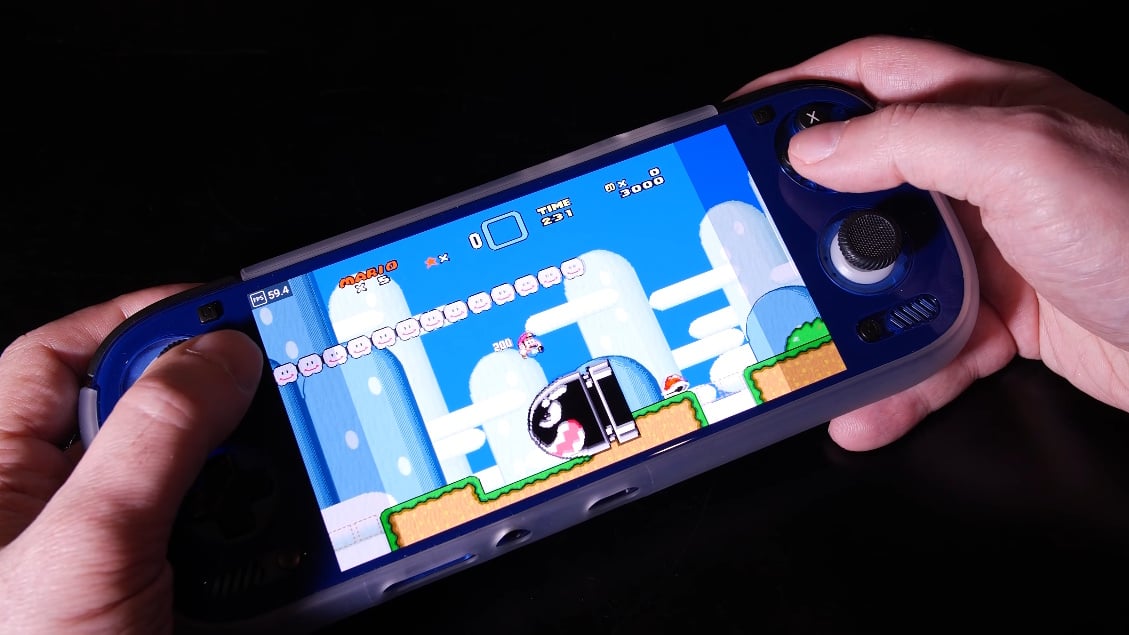
Super ZSNES: Reliving SNES Classics with Modern GPU Power
For many of us who grew up in the golden age of video games, the Super Nintendo Entertainment System (SNES) holds a special place in our hearts. Its vibrant graphics, iconic soundscapes, and groundbreaking gameplay created timeless masterpieces that continue to captivate generations. Yet, playing these cherished classics on original hardware can be a challenge today. This is where emulation comes in, offering a bridge between the past and the present. And among the pantheon of SNES emulators, ZSNES stands out as a legend.
Now, imagine a world where the beloved ZSNES is not just a relic of the past, but a rejuvenated powerhouse, reborn with the muscle of modern graphics processing units (GPUs). This is the promise of Super ZSNES: a visionary revival of the classic 90s Nintendo emulator that dramatically shifts its processing workload to the GPU. This isn't just an update; it's a complete reimagining, promising unparalleled performance, stunning visual fidelity, and a new lease on life for your favorite Super Nintendo games. Let's dive deep into what this means for retro gaming enthusiasts and the future of emulation.
The Legacy of ZSNES: A Pioneer in SNES Emulation
Before we explore the "Super" aspect, it's crucial to understand the foundation: ZSNES. Launched in 1997, ZSNES quickly became one of the most popular and accessible SNES emulators of its time. For countless gamers, it was the gateway to rediscovering games like The Legend of Zelda: A Link to the Past, Super Metroid, and Chrono Trigger long after their original consoles had been boxed away or stopped working. ZSNES was a groundbreaking piece of software, allowing PC users to play virtually any SNES game with remarkable speed and accuracy, even on the less powerful computers of the late 90s and early 2000s.
Its user-friendly interface, robust features like save states, video filters, and even netplay (allowing two players to play over a network), made it an instant favorite. It democratized retro gaming, making the rich library of the Super Nintendo accessible to anyone with a computer. However, as technology advanced, ZSNES began to show its age. Built on an older codebase, primarily relying on the CPU for most of its heavy lifting, it faced challenges with more demanding visual enhancements, modern operating systems, and the ever-increasing complexity of emulation accuracy. While still functional, it had largely been surpassed by newer emulators in terms of accuracy, features, and overall performance on contemporary hardware.
Why Emulation Matters: Preserving Gaming History
The existence of projects like Super ZSNES underscores a vital point: the importance of video game emulation. Emulation is more than just playing old games; it's about digital preservation. Physical game cartridges and consoles degrade over time. Without emulation, countless classic titles, representing significant cultural and technological achievements, could be lost forever. Emulators act as digital time capsules, ensuring that future generations can experience the origins and evolution of interactive entertainment.
Beyond preservation, emulation offers accessibility. Not everyone has the space or the budget for a collection of vintage consoles and games. Emulators provide a cost-effective and convenient way to dive into gaming history. They also enable developers, researchers, and fans to study game design, explore programming techniques from yesteryear, and foster a deeper appreciation for the artistry involved in creating these groundbreaking titles. This mission of preservation and accessibility is precisely why a modern revival of a classic emulator like ZSNES is so exciting.
Introducing Super ZSNES: A Modern Resurrection
So, what exactly is Super ZSNES? It's a bold vision: to take the core spirit and accessibility of the original ZSNES and infuse it with modern emulation techniques, chief among them being the shift to GPU processing. This isn't merely an incremental update; it’s an ambitious undertaking to rewrite or heavily refactor significant portions of the emulator to leverage the powerful parallel processing capabilities of today's graphics cards. The goal is to retain the familiar feel of ZSNES while unlocking a new level of performance and visual fidelity that was previously impossible.
Imagine your favorite SNES games running at pristine 1080p, 4K, or even higher resolutions, with advanced shaders that subtly enhance graphics without losing their original charm. Think of smoother gameplay, reduced input lag, and the ability to integrate seamlessly with modern gaming peripherals. Super ZSNES aims to bridge the gap between retro nostalgia and contemporary gaming expectations, making classic SNES titles feel fresh and engaging on today's powerful machines.
The Game-Changing Shift: GPU Processing Explained
The most significant innovation behind Super ZSNES is its focus on shifting processing to the GPU. To understand why this is such a game-changer, we need to briefly touch upon the difference between a CPU (Central Processing Unit) and a GPU (Graphics Processing Unit).
CPU vs. GPU: Different Tools for Different Jobs
-
CPU (Central Processing Unit): Often called the "brain" of the computer, the CPU excels at handling a wide range of complex tasks sequentially. It's fantastic at processing single threads of instructions quickly and managing overall system operations. Traditional emulators, including the original ZSNES, relied heavily on the CPU to mimic the behavior of the emulated console's hardware, including its custom chips, graphics, and sound.
-
GPU (Graphics Processing Unit): Originally designed specifically for rendering graphics, GPUs are built with thousands of smaller, more specialized cores. These cores are incredibly efficient at performing many simple calculations simultaneously – a concept known as parallel processing. This architecture makes GPUs perfectly suited for tasks that involve massive amounts of repetitive data, such as rendering pixels, applying visual effects, and, increasingly, accelerating scientific computations and artificial intelligence.
Why Emulation Has Been CPU-Bound (Historically)
Emulating a console like the SNES involves recreating the behavior of its various components: the Ricoh 5A22 CPU, the S-PPU (Picture Processing Unit), the S-SMP (Sound Processing Unit), and specialized enhancement chips (like the Super FX chip in games like Star Fox). Many of these components, especially the CPU and the complex timing interactions between them, are traditionally difficult to parallelize and were therefore handled by the host PC's CPU. This approach worked well for a time, but it meant that visual enhancements like high-resolution rendering, complex shaders, and sophisticated filters placed a heavy burden on the CPU, often leading to performance bottlenecks.
Benefits of Shifting to GPU Processing
By shifting core processing, particularly graphics rendering, to the GPU, Super ZSNES can unlock a multitude of benefits:
-
Unprecedented Performance: Modern GPUs are exponentially more powerful than even high-end CPUs when it comes to parallel tasks. Offloading graphics rendering allows Super ZSNES to run games much smoother, even at significantly higher resolutions and with demanding visual enhancements, without bogging down the CPU.
-
Superior Visual Fidelity: The GPU's raw power enables advanced rendering techniques. This means games can be upscaled to 1080p, 4K, or beyond with incredible precision, often using advanced algorithms to smooth out jagged edges and enhance textures. Moreover, complex shaders can be applied in real-time to mimic CRT displays, improve lighting, or even give games a modern graphical makeover while respecting the original art style.
-
Reduced CPU Usage: With the GPU handling the heavy lifting for graphics, the CPU is freed up to focus on the core emulation logic, audio processing, input handling, and other system-level tasks. This leads to a more efficient emulator overall, potentially improving accuracy and leaving more CPU headroom for other applications running on your system.
-
Future-Proofing: The trend in computing is towards increasing GPU power and parallel processing. By building Super ZSNES with GPU acceleration at its core, the project positions itself to benefit from future hardware advancements, ensuring its relevance for years to come.
-
New Possibilities: The sheer power of the GPU opens doors for entirely new features. This could include advanced post-processing effects, real-time texture pack loading, deeper integration with VR technologies (imagine playing F-Zero in a virtual cockpit!), and even AI-driven upscaling of game assets.
Technical Deep Dive: How GPU Acceleration Works in Emulation
For those interested in the technical specifics, the shift to GPU acceleration in an emulator like Super ZSNES involves a fundamental change in how the emulator renders the game world. Instead of the CPU drawing individual pixels or sprites and then sending the final image to the display, the GPU takes over much of this responsibility.
Here’s a simplified breakdown:
-
Command Translation: The emulator's CPU still interprets the SNES game's commands. When the SNES game tells its Picture Processing Unit (PPU) to draw a background layer or a sprite, the emulator translates these low-level SNES PPU commands into instructions that a modern GPU can understand.
-
GPU Pipeline: These translated commands are then sent to the GPU through a graphics API like OpenGL, Vulkan, or DirectX. These APIs provide a standardized way for software to communicate with the graphics hardware.
-
Texture Management: The SNES had limited VRAM (Video RAM) and specific ways of handling background tiles and sprites. A GPU-accelerated emulator will take these SNES graphical assets and upload them as textures to the modern GPU's much larger and faster video memory. This allows the GPU to access them instantly for rendering.
-
Shader Processing: This is where the magic happens. Instead of the CPU calculating every pixel's color, position, and effect, the GPU uses "shaders." These are small programs that run on the GPU's cores, telling them how to render each pixel or vertex. For instance, a vertex shader might transform the position of a sprite, and a pixel (or fragment) shader might apply a filtering effect, upscale the image, or add a scanline effect to mimic a CRT screen. The GPU executes these shaders for millions of pixels simultaneously.
-
Buffer Management: The GPU manages various buffers (framebuffers, depth buffers, etc.) to compose the final image. It renders background layers, then sprites, applying transparency and blending effects as needed, all in parallel.
-
Output: Once the GPU has completed rendering the frame, it sends the final image directly to your monitor, resulting in a smooth, high-fidelity visual experience.
Implementing this shift is complex. It requires a deep understanding of both the SNES hardware and modern graphics pipelines, as well as meticulous optimization to ensure accuracy and performance. However, the reward is a dramatically enhanced emulation experience.
What to Expect from Super ZSNES: Features and Benefits
With GPU processing at its core, Super ZSNES promises a suite of features and benefits that will redefine SNES emulation:
Crystal-Clear Visuals and High-Resolution Gaming
Gone are the days of blurry, pixelated graphics. Super ZSNES will allow you to play SNES games at your display's native resolution, whether it's 1080p, 1440p, or glorious 4K. This means sharper sprites, clearer text, and an overall visual clarity that breathes new life into classic pixel art. The intricate details in games like Secret of Mana or the expansive worlds of Final Fantasy VI will be more vibrant than ever before.
Advanced Shaders and Filters for a Personalized Look
Leveraging GPU power, Super ZSNES can implement a wide array of advanced shaders. These aren't just simple filters; they are sophisticated programs that can transform the visual presentation:
- CRT Simulation: Recreate the authentic look of a cathode ray tube television, complete with scanlines, subtle screen curvature, and color bleed, for the ultimate nostalgic experience.
- HQx/xBRZ Filters: These algorithms intelligently upscale pixel art, smoothing out harsh edges while maintaining the artistic intent, resulting in a cleaner, almost hand-drawn appearance.
- Custom Post-Processing: Apply dynamic lighting, depth of field effects, or even subtle volumetric fog to enhance the atmosphere of certain games, all rendered in real-time by the GPU.
Enhanced Performance and Reduced Input Lag
By offloading rendering to the GPU, Super ZSNES can achieve consistently higher frame rates, even when applying demanding visual effects. This translates to smoother gameplay, particularly crucial for fast-paced action games like F-Zero or platformers like Super Mario World. Furthermore, modern emulation techniques often focus on reducing input lag, making your controller inputs feel more responsive and direct, closely matching the original hardware experience.
Modern Controller Support and Customization
Expect seamless support for a wide range of modern game controllers, including Xbox, PlayStation, and Nintendo Switch Pro controllers. Super ZSNES will likely offer extensive customization options for button mapping, allowing you to configure your controller exactly how you prefer for each game.
Improved Netplay (Multiplayer over the Internet)
The original ZSNES was famous for its netplay. A modern revival with GPU acceleration could bring even more robust and stable online multiplayer. Imagine playing Street Fighter II Turbo or Mario Kart with friends across the globe, experiencing minimal lag and perfectly synchronized gameplay, all with enhanced visuals.
Potential for Modding and Community Content
A modern, well-structured emulator often fosters a vibrant community around modding. With Super ZSNES, there's potential for user-created texture packs, custom ROM hacks with enhanced graphics, and even new shaders that the community develops, further extending the life and appeal of SNES games.
The Future of SNES Emulation: Beyond Super ZSNES
The concept of Super ZSNES, with its focus on GPU acceleration, is part of a larger, exciting trend in the world of emulation. Many cutting-edge emulators for newer systems, like Dolphin (GameCube/Wii), PCSX2 (PlayStation 2), and Yuzu (Nintendo Switch), already rely heavily on GPU rendering to achieve their stunning accuracy and performance. This isn't just a niche technique; it's becoming the standard for delivering high-fidelity emulation.
The ongoing quest for "perfect" emulation—where a game runs exactly as it would on original hardware, with zero discrepancies—continues to drive innovation. GPU acceleration brings us closer to that ideal by providing the raw power needed to simulate complex graphical pipelines while simultaneously enhancing the user experience with modern visual flourishes. Projects like Super ZSNES remind us that even beloved classics can be re-experienced in new and exciting ways, proving that the golden age of gaming is far from over; it's simply evolving.
Getting Started with Super ZSNES (A Hypothetical Guide)
While Super ZSNES represents a future vision, if it were readily available, getting started would involve a few key steps for any aspiring retro gamer:
-
Download Super ZSNES: You would typically visit the official project website to download the latest stable version of the emulator. Ensure you're downloading from a trusted source to avoid malware.
-
System Requirements Check: Given its GPU-centric approach, Super ZSNES would likely require a relatively modern graphics card (NVIDIA GeForce, AMD Radeon, or Intel Arc from the last few generations) and a decent CPU, along with sufficient RAM. The better your hardware, the higher resolutions and more complex shaders you could comfortably run.
-
Acquire SNES Game ROMs (Legally): This is the most crucial and ethically sensitive step. To play games, you need ROM files, which are digital copies of game cartridges. Legally, you should only play ROMs of games you already own. Many older SNES games are now available through official digital storefronts on modern consoles, making it easier to own them legitimately. Always respect copyright laws.
-
Configure Your Controller: Once the emulator is launched, the first thing to do is set up your game controller. Super ZSNES would offer options to map SNES buttons (A, B, X, Y, L, R, Start, Select, D-Pad) to your modern gamepad. Analog sticks might be mapped to the D-Pad for certain games, or used for specific features if implemented.
-
Adjust Video and Audio Settings: This is where the GPU power shines. You would navigate to the video settings to choose your desired resolution (e.g., 4x or 5x native SNES resolution for 1080p/1440p), enable V-Sync for smooth frames, and experiment with various shaders (e.g., CRT, xBRZ, or custom effects). Audio settings would allow you to fine-tune volume and potentially enhance sound fidelity.
-
Load a Game and Play: With everything configured, simply open the ROM file through the emulator's interface. You'd be instantly transported back to the magic of the Super Nintendo, but with a fresh, modern coat of paint, powered by your GPU.
-
Explore Advanced Features: Don't forget to experiment with features like save states (saving your game progress at any point), fast-forward (speeding up slow parts of RPGs), and perhaps even the enhanced netplay for multiplayer sessions.
Conclusion: The Future is Bright for Retro Gaming
The concept of Super ZSNES, a revival of the classic 90s SNES emulator that smartly shifts its heavy graphical processing to the GPU, represents an incredibly exciting leap forward for retro gaming. It's a testament to the enduring appeal of the Super Nintendo's library and the innovation within the emulation community.
By harnessing the immense power of modern graphics cards, Super ZSNES promises not just to make classic games playable, but to elevate them. Imagine reliving the epic adventures of your youth with unparalleled visual clarity, silky-smooth performance, and perhaps even entirely new graphical enhancements, all while maintaining the core magic of the original titles. This isn't just about nostalgia; it's about making gaming history accessible, vibrant, and thrilling for a new generation, and for veterans who wish to see their cherished memories brought to life with a modern polish. The future of SNES emulation, empowered by GPU technology, is looking exceptionally bright.
from Kotaku
-via DynaSage
