
MacBook Neo 2 With a Touch Screen Has Gone From Yes to Maybe to No
MacBook Neo 2: Why the Dream of a Touchscreen is Fading Away
The excitement around a second-generation MacBook Neo featuring a touchscreen has been a roller coaster ride for Apple fans and tech watchers alike. What started as a promising "yes" from early rumors quickly turned into a "maybe," and now, according to the latest reports, it seems the answer is a firm "no" – at least for the foreseeable future. This shift highlights Apple's careful strategy with its product lineup, especially concerning new features and their impact on cost and user experience.
For those tracking Apple's next big steps, the MacBook Neo represents an intriguing new chapter. Positioned as a potentially more accessible entry point into the Mac ecosystem, its features are under intense scrutiny. The idea of a touchscreen, a staple on many competitor laptops and a core component of Apple's own iPad line, seemed like a natural evolution for some. However, the path from rumor to reality in the tech world is often complex, influenced by a myriad of factors from manufacturing costs to strategic market positioning.
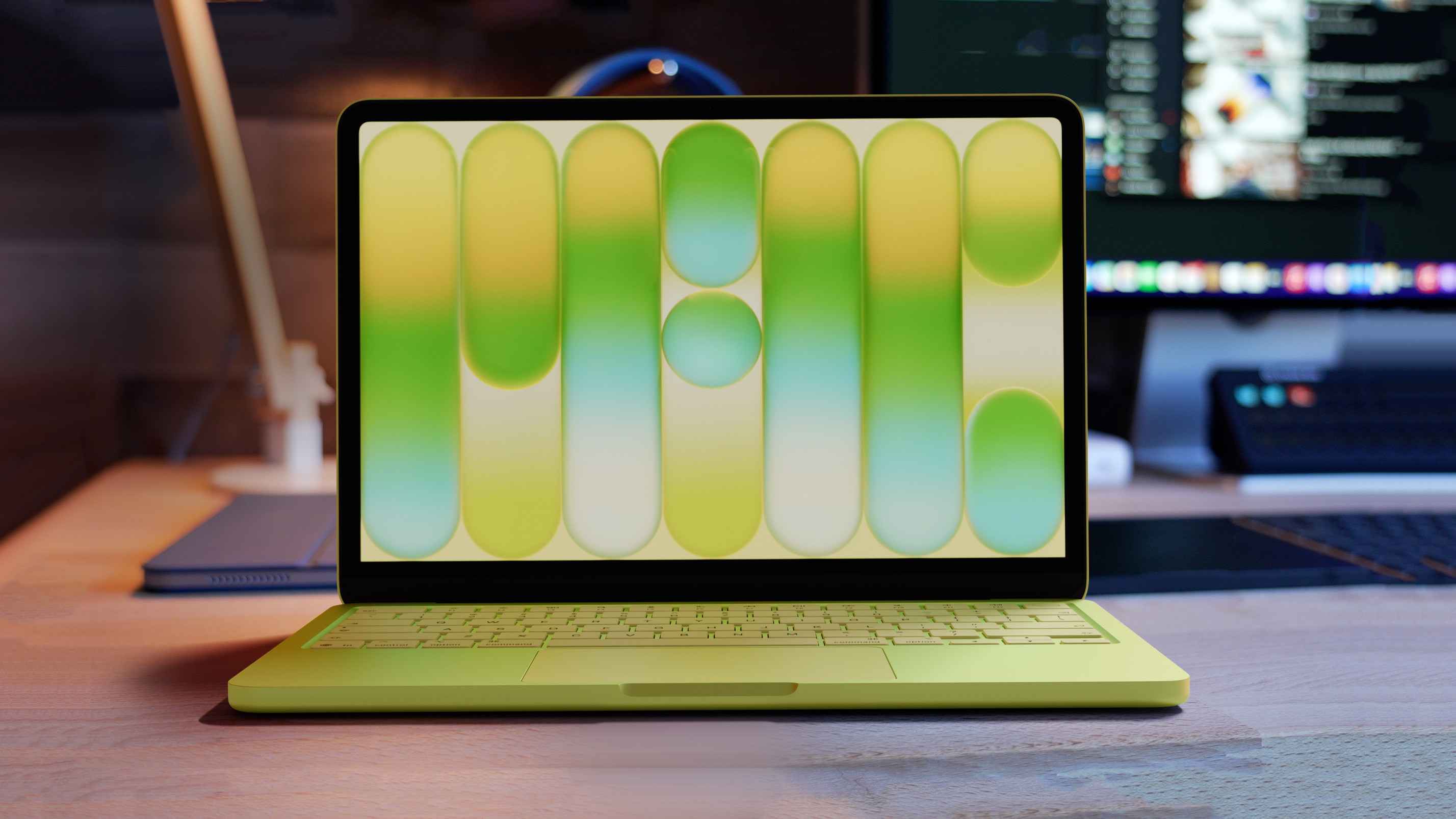
The Rumor Mill: From "Yes" to "No"
The journey of the MacBook Neo 2's potential touchscreen has been a testament to the dynamic nature of Apple rumors. Initially, the prospect was met with enthusiasm. Respected Apple analyst Ming-Chi Kuo, known for his accurate supply chain insights, hinted in September 2025 that the second-generation MacBook Neo "could" include touch support. This sparked significant discussion among the tech community, envisioning a Mac that could bridge the gap between traditional laptop functionality and the intuitive touch interface of the iPad.
However, the narrative began to shift rapidly. Just a week after his initial statement, Kuo offered a more cautious outlook, suggesting that touch support "may" not happen after all. This subtle but significant change indicated that Apple's plans were either not finalized or had encountered challenges. Such revisions from reliable analysts often signal internal debates or technical hurdles within Apple's development process.
The final word, for now, comes from Bloomberg's Mark Gurman, another highly respected authority on Apple's internal workings. In his Power On newsletter today, Gurman completely ruled out the possibility of a touchscreen for the MacBook Neo in the near term. His statement, "I'd be shocked if a touch screen comes to the Neo in the next three years," leaves little room for interpretation. Gurman further clarified that Apple has yet to make a definitive decision on bringing touch-screen support to *any* Macs beyond a future high-end MacBook Pro, which is not expected until late 2026 or early 2027. This timeline pushes the prospect of a touch-enabled MacBook Neo much further into the distant future, effectively putting the dream on hold.
Why the Hesitation? Understanding Apple's Strategy
Apple has historically maintained a clear distinction between its macOS and iPadOS ecosystems. While many Windows laptops have embraced touchscreens, Apple's co-founder Steve Jobs famously dismissed the idea of touch on a laptop, citing ergonomic concerns and the belief that macOS was not designed for touch input. This philosophy has largely held true, with Apple pushing the iPad Pro as its primary touch-first computing device. The company argues that a tablet with a detachable keyboard offers a superior touch experience, while the Mac remains optimized for trackpad and keyboard interaction.
The introduction of the iPad Pro, especially with the Magic Keyboard accessory, blurred the lines between tablet and laptop more than ever. However, Apple has been careful not to cannibalize its own product lines. Equipping a MacBook Neo with a touchscreen would create significant overlap with the iPad Pro, potentially confusing customers about which device best suits their needs. Apple typically prefers to segment its products clearly, ensuring each device has a distinct role and value proposition. A touch-enabled MacBook Neo, especially one at a competitive price, could directly challenge the iPad Pro's market position.
Furthermore, integrating a touchscreen is not as simple as adding a new display panel. macOS itself would require significant re-engineering to provide a truly intuitive and ergonomic touch experience. While elements like the trackpad already support multi-touch gestures, designing the entire operating system, including menus, icons, and interactions, for direct finger input on a vertical screen is a substantial undertaking. Apple's meticulous approach to user experience suggests they wouldn't introduce a half-baked touch interface. They would wait until they could deliver a truly "Apple-quality" touch Mac, which might require a fundamental rethinking of macOS itself.
The Cost Factor: A $499 Laptop with a Touchscreen?
One of the most compelling reasons behind the decision to forgo a touchscreen on the MacBook Neo is undoubtedly the cost. The MacBook Neo is rumored to be Apple's most affordable laptop, potentially starting as low as $499. This aggressive price point would make it incredibly competitive and open up the Mac ecosystem to a wider audience, including students and budget-conscious consumers.
Adding a touchscreen, even a basic one, would "slightly increase the cost of making the MacBook Neo," as the initial reports noted. While "slightly" might not sound like much, in the context of a device priced at $499, every dollar counts. A touch-enabled display requires more complex components, including a digitizer layer, specialized glass, and often a more robust hinge mechanism to withstand touch interactions. These additions, even if they only raise the manufacturing cost by $30-50, could push the retail price above the crucial $499 threshold, making it less attractive to its target demographic.
Apple is known for its high-profit margins, and to achieve a $499 price point for a new Mac, the company would be meticulously optimizing every component and process. Sacrificing a touchscreen is a strategic decision to maintain that aggressive pricing and hit the desired market segment. For a device aimed at affordability, features that add significant cost without being deemed absolutely essential are often the first to be cut. In this case, Apple seems to be prioritizing a lower entry price over a touch interface for the MacBook Neo, differentiating it from more premium offerings in its own lineup and from competitor devices that might offer touch but at a higher price or with a less optimized operating system.
This decision underscores Apple's understanding of its market. The $499 price tag positions the MacBook Neo not just as an affordable Mac, but potentially as a strong competitor to Chromebooks and entry-level Windows laptops, many of which do offer touchscreens. However, Apple's strength lies in its ecosystem, its premium build quality even at lower price points, and its powerful Apple Silicon chips. Forgoing touch helps them deliver on these core strengths within a tight budget.
What to Expect from the MacBook Neo 2: Performance Upgrades
While a touchscreen seems off the table for now, the second-generation MacBook Neo is still expected to bring significant improvements, maintaining its appeal as a compelling entry-level Mac. According to Kuo, the next iteration is likely to be released next year, focusing on core performance enhancements that truly matter for a computing device.
The key upgrade should be the transition to the A19 Pro chip. This represents a substantial leap from the A18 Pro chip found in the current model. Apple's "Pro" designation for these chips signifies a focus on professional-grade performance, even in a more affordable device. The A19 Pro is expected to deliver noticeable improvements in CPU and GPU performance, making everyday tasks smoother, enhancing multitasking capabilities, and improving performance for more demanding applications like video editing or casual gaming. This aligns with Apple's overarching strategy of migrating its entire product line to its custom-designed Silicon, offering superior power efficiency and performance compared to traditional Intel-based machines.
In addition to the new chip, the MacBook Neo 2 is also slated to receive an increased 12GB of RAM, up from the 8GB of RAM in the current model. More RAM directly translates to better multitasking and handling of larger files or more complex applications. For users who might keep multiple browser tabs open, work with several documents simultaneously, or dabble in creative tasks, the extra 4GB of RAM will make a tangible difference in the responsiveness and fluidity of their workflow. This upgrade is crucial for a modern computing experience, especially as software applications continue to demand more memory.
These internal upgrades indicate that Apple is focused on making the MacBook Neo a powerful and capable machine, even without a touch interface. The company seems to be prioritizing raw computing power, efficiency, and the seamless integration of hardware and software – hallmarks of the Apple experience – at an accessible price point. The A19 Pro chip and increased RAM will ensure that the MacBook Neo 2 offers excellent value and performance for its target audience, solidifying its place in the Mac lineup.

The Future of Touch on Mac: Beyond the Neo
While the MacBook Neo 2 is likely to remain non-touch for the foreseeable future, the possibility of touch-screen Macs is not entirely off the table. Mark Gurman's report specifically mentioned that Apple has yet to decide on touch support for Macs *beyond the next high-end MacBook Pro*. This suggests that Apple is indeed exploring touch technology for its laptop line, but perhaps starting with its more premium, higher-margin devices.
A high-end MacBook Pro, expected in late 2026 or early 2027, would offer a different context for a touchscreen. Its higher price point would more easily absorb the increased manufacturing cost of a touch display. Moreover, professional users might benefit from touch input for specific tasks like digital art, precise editing, or interacting with specialized software, where an iPad Pro might not offer the full power or feature set of a Pro Mac. If Apple were to introduce touch on a MacBook Pro, it would likely be accompanied by significant macOS enhancements to ensure a truly productive and ergonomic experience, perhaps even incorporating features seen in iPadOS.
This strategy allows Apple to experiment with touch on a Mac without disrupting the existing MacBook Neo's cost-sensitive position or undermining the iPad Pro's distinct identity. It also gives them time to refine the software experience and gauge user reception before potentially rolling out the feature to more models. The "Liquid Glass UI" mentioned in some rumors could be Apple's long-term vision for how touch and traditional input methods seamlessly integrate, but it's clearly a journey that will unfold gradually and strategically.
Analyst Insights: The Weighing of Sources
The evolving predictions from Ming-Chi Kuo and Mark Gurman highlight the nuanced nature of Apple rumor reporting. Both analysts have strong track records, but they often draw information from different sources. Kuo typically has deep connections within Apple's supply chain, providing insights into component orders, production schedules, and manufacturing plans. Gurman, on the other hand, often has sources closer to Apple's executive and product development teams, offering a view into strategic decisions, software development, and broader product roadmaps.
Kuo's initial "could" might have reflected early prototypes or component evaluations for touch-enabled Neo models, indicating that the possibility was indeed explored by Apple's engineering teams. His subsequent "may not" could signify that these plans were either paused, ran into cost issues, or were strategically deprioritized. Gurman's more definitive "no" for the next three years for the Neo strongly suggests a firm internal decision against the feature for that particular product line, likely driven by high-level product strategy and market positioning considerations.
The progression of these rumors paints a clear picture: while touch was certainly on the table for the MacBook Neo 2 at some point in its development cycle, internal decisions have steered the product in a different direction. This is a common occurrence in product development, where many features are prototyped and considered before a final decision is made based on a complex interplay of cost, feasibility, market strategy, and user experience goals.
The MacBook Neo's Role in the Apple Ecosystem
The MacBook Neo is poised to play a crucial role in Apple's overall product strategy. By offering a Mac at a highly competitive price point, Apple can attract new users who might otherwise opt for a Windows PC or a Chromebook. This expands the Mac user base, bringing more individuals into Apple's services ecosystem (Apple Music, Apple TV+, iCloud, etc.) and potentially leading to future upgrades to higher-end Macs or other Apple devices.
Without a touchscreen, the MacBook Neo maintains a clear differentiation from the iPad Pro, which serves as Apple's flagship touch-first computing device. This ensures that customers understand the distinct value propositions of each product: the iPad Pro for ultimate portability and touch interaction, and the MacBook Neo for a traditional laptop experience powered by Apple Silicon, all at an accessible price. This clear segmentation helps Apple maintain robust sales across its diverse product portfolio.
Conclusion: A Focused Path for the MacBook Neo 2
The dream of a touchscreen MacBook Neo 2 has, for now, come to an end. The journey from "yes" to "maybe" to a definitive "no" from influential analysts like Mark Gurman underscores the intricate decisions Apple faces when developing new products. The primary factors driving this decision appear to be the MacBook Neo's crucial low-cost positioning and Apple's long-standing philosophy regarding touch on macOS, as well as its existing product segmentation with the iPad Pro.
Instead of a touchscreen, the second-generation MacBook Neo will focus on delivering what it does best: powerful, efficient computing in an affordable package. The expected upgrade to the A19 Pro chip and increased 12GB of RAM will ensure that the device offers a significant performance boost, making it an even more compelling option for students, entry-level users, and anyone looking for an accessible gateway into the macOS ecosystem.
While the Mac's future may eventually include touch interaction, particularly in higher-end models like a future MacBook Pro, the MacBook Neo is set to maintain its identity as a traditional, keyboard-and-trackpad-focused laptop. This strategy allows Apple to keep the Neo highly competitive on price while still delivering the premium performance and experience users expect from a Mac. For those eagerly awaiting the next iteration, expect a powerful, efficient, and still very affordable machine, but one without the touch capabilities that were once rumored to be on its horizon. The MacBook Neo 2 promises to be a robust upgrade, even if it won't be tapping into a new dimension of interaction.
This article, "MacBook Neo 2 With a Touch Screen Has Gone From Yes to Maybe to No" first appeared on MacRumors.com
Discuss this article in our forums
from MacRumors
-via DynaSage
