
Here's How Much Faster MacBook Air Gets With M5 Chip vs. M4 Chip
Unleashing the M5 Chip: How Much Faster is the New MacBook Air?
A deep dive into the performance gains and what they mean for you.
The Next Evolution: M5 MacBook Air Performance Unveiled
The world of personal computing is constantly evolving, and at the forefront of this revolution is Apple with its groundbreaking custom silicon. Every new chip generation brings eagerly anticipated performance upgrades, and the latest release, the new MacBook Air with the M5 chip, is no exception. We now have concrete data showcasing just how much faster this machine is compared to its predecessor, the M4-equipped MacBook Air. Thanks to a recent Geekbench 6 result shared by TechRadar's Lance Ulanoff, the numbers are in, and they paint a clear picture of Apple's continued commitment to pushing the boundaries of laptop performance and efficiency.
For those who closely follow Apple's product cycles, these results might not come as a massive shock. The M5 chip had already made its debut last year in the 14-inch MacBook Pro and the iPad Pro. This prior release gave us a sneak peek into the capabilities of this new silicon, setting expectations for its integration into the more mainstream MacBook Air lineup. However, seeing those capabilities translate directly into the Air, a device renowned for its blend of portability and power, is always exciting.
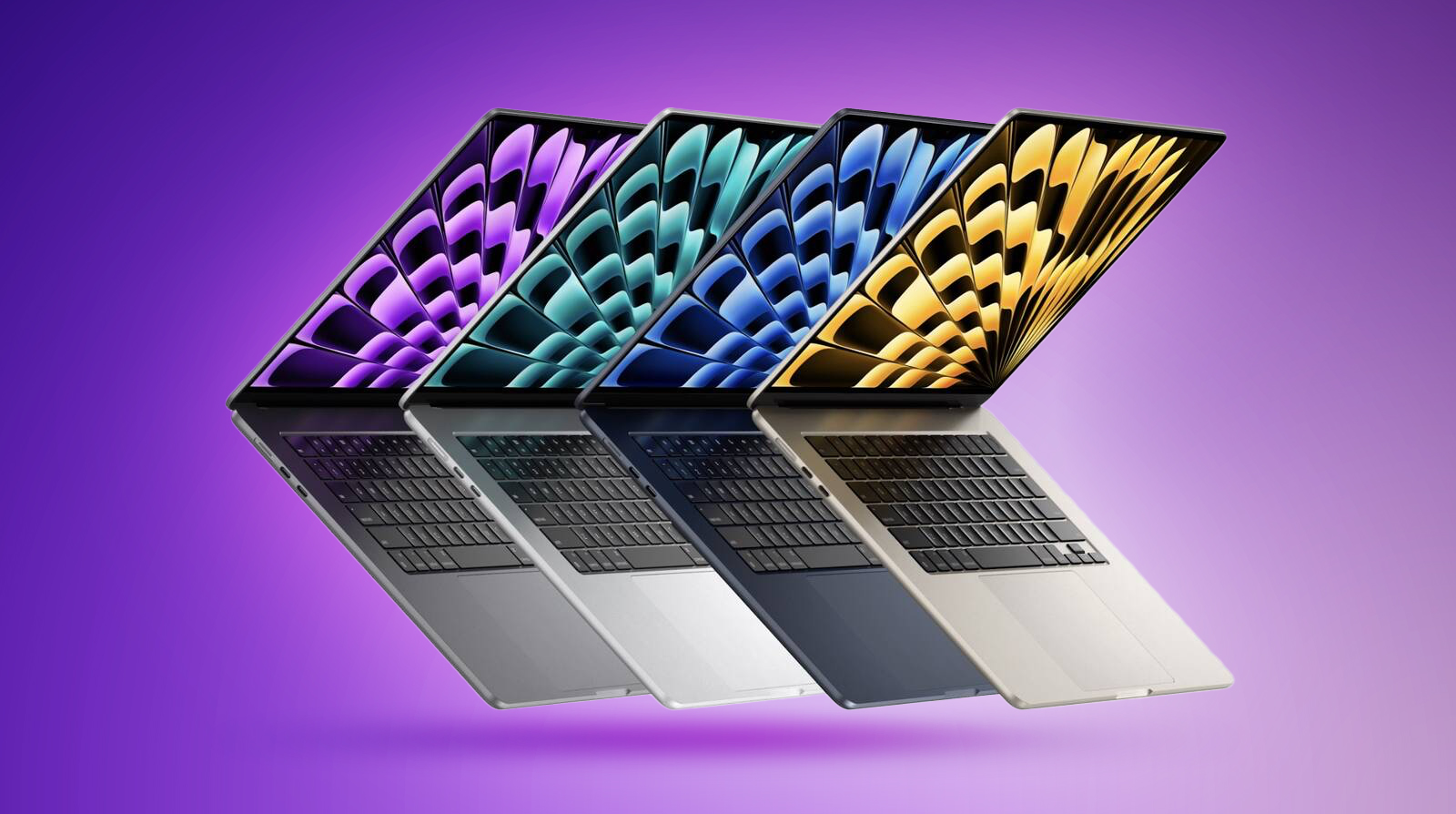
Breaking Down the Benchmarks: M5 vs. M4
To quantify the performance jump, Lance Ulanoff put the new MacBook Air through its paces using Geekbench 6. This widely respected benchmarking tool assesses the raw processing power of a device's CPU, providing a numerical score that allows for direct comparisons across different machines and chip generations. The specific model tested was a MacBook Air featuring the M5 chip with a 10-core CPU – a configuration designed to deliver robust multi-tasking capabilities and handle demanding applications with ease.
The results were impressive: the M5 MacBook Air achieved a multi-core CPU performance score of 17,073. To put this into perspective, its direct predecessor, the MacBook Air with the M4 chip, typically registers an average multi-core score of 14,731. This difference translates to a performance uplift of up to 15% for the new M5 model compared to the previous generation. This percentage gain is significant, especially for a yearly refresh, and it aligns perfectly with what Apple itself advertised when it announced the M5 chip back in October. Such consistency between advertised claims and real-world benchmarks reinforces confidence in Apple's engineering and the performance capabilities of its silicon.
What Does "Multi-Core CPU Performance" Mean for You?
When we talk about "multi-core CPU performance," we're referring to a processor's ability to handle multiple tasks or threads simultaneously. Modern CPUs come with several "cores," each capable of performing calculations. A higher multi-core score indicates that the chip is better at juggling numerous demanding operations at once – think running a web browser with dozens of tabs, editing a high-resolution video, compiling code, or manipulating large datasets in a spreadsheet, all at the same time, without noticeable slowdowns. For the average user, this translates to a snappier, more responsive computing experience across the board, from opening applications to switching between them, and especially when engaging in more intensive creative or productivity tasks.
Where the M5 MacBook Air Stands in the Apple Lineup
While a 15% boost over the M4 Air is certainly noteworthy, it's equally important to understand how the M5 MacBook Air stacks up against other machines in Apple's extensive ecosystem, particularly the more powerful MacBook Pro models. The Geekbench database provides a wealth of comparison data, allowing us to accurately place the new Air in the broader performance hierarchy.
Interestingly, the M5 MacBook Air, with its score of 17,073, demonstrates performance that is up to 16% faster than the MacBook Pro equipped with the M3 Pro chip, which was released a few years ago. This is a crucial point: a passively cooled (meaning no fan) "Air" model is now outperforming an active-cooled "Pro" model from a previous generation. This speaks volumes about the continuous advancements in Apple's chip architecture and efficiency. It means users who might have previously considered an older Pro model for certain tasks can now achieve similar or better performance in the lighter, more portable, and often more affordable MacBook Air.
However, it's essential to manage expectations. The M5 MacBook Air is still designed to be a balance of power and portability, not an outright powerhouse meant to compete with the top-tier "Pro" machines. As such, it remains slower than MacBook Pro models featuring the M4 Pro chip and newer. These Pro chips (M4 Pro, M4 Max, M5 Max) are designed with a different philosophy, featuring more cores, higher power limits, more advanced GPUs, and active cooling systems to sustain peak performance for extended periods, catering to professional users with the most demanding workflows.
The table below provides a comprehensive comparison of Geekbench 6 multi-core CPU scores for various Mac models, each configured with the highest number of CPU cores available for its respective chip, offering a clearer perspective on the M5 MacBook Air's position:
| Mac Model | Multi-Core CPU Score |
|---|---|
| MacBook Pro (M5 Max) | 29,233 |
| Mac Studio (M3 Ultra) | 27,726 |
| MacBook Pro (M4 Max) | 25,702 |
| MacBook Pro (M4 Pro) | 22,490 |
| MacBook Pro (M3 Max) | 20,960 |
| MacBook Air (M5) | 17,073 |
| MacBook Pro (M3 Pro) | 15,260 |
| MacBook Pro (M2 Max) | 14,740 |
| MacBook Air (M4) | 14,731 |
| MacBook Pro (M2 Pro) | 14,451 |
| MacBook Pro (M1 Max) | 12,345 |
| MacBook Pro (M1 Pro) | 12,345 |
| MacBook Air (M3) | 12,020 |
| MacBook Air (M2) | 9,709 |
| MacBook Neo (A18 Pro) | 8,668 |
| MacBook Air (M1) | 8,342 |
From this table, several key observations emerge: the M5 MacBook Air slots in comfortably above several older Pro-level chips, demonstrating incredible efficiency for its class. It highlights the rapid pace of Apple Silicon development, where what was once "Pro" level performance quickly trickles down to the more accessible "Air" models.
Practical Implications: What Does This Performance Mean for Your Daily Use?
Benchmarks are fascinating, but what do these numbers really mean for the average user or even the budding professional? A 15% increase in multi-core CPU performance translates into tangible benefits across a wide array of tasks.
Everyday Productivity and Responsiveness
For most users, daily computing involves web browsing, email, word processing, spreadsheets, and video conferencing. While previous MacBook Air models were already excellent at these tasks, the M5 chip elevates the experience further. You can expect even snappier application launches, smoother transitions between apps, and less lag when dealing with multiple browser tabs, especially resource-intensive ones. If you're someone who often has many apps open simultaneously – perhaps a web browser, a chat app, a document editor, and a music player – the M5's enhanced multi-core capabilities will ensure everything runs flawlessly without a hitch, maintaining that smooth, fluid macOS experience.
Enhanced Creative Workflows
The MacBook Air has increasingly become a capable machine for creative professionals and hobbyists, and the M5 chip only reinforces this. For tasks like photo editing in applications such as Adobe Lightroom or Pixelmator Pro, you'll notice faster image loading, quicker filter applications, and smoother edits, especially when working with high-resolution files or complex layers. Video editors dabbling in iMovie or even light projects in Final Cut Pro will experience faster rendering times for effects and exports, as well as more fluid playback of multiple video tracks. While it won't replace a MacBook Pro for heavy, sustained 4K+ video editing or 3D rendering, the M5 Air undeniably pushes the boundaries of what's possible in a thin, light form factor.
The Rise of On-Device AI Performance
One of the most significant narratives surrounding Apple's latest chips, including the M5, is their focus on Artificial Intelligence (AI) and Machine Learning (ML) capabilities. Apple has explicitly stated that the M5 chip represents "the next big leap in AI performance." This means the M5 doesn't just have a faster CPU; it also features an enhanced Neural Engine, which is a specialized part of the chip designed specifically for AI tasks. For users, this translates into real-world benefits: improved performance for features like Siri, more accurate dictation, advanced photo and video enhancements (such as object recognition and intelligent cropping), and the ability to run sophisticated local AI models directly on your device. As more AI-powered software becomes commonplace, from advanced text generation to image manipulation and intelligent automation, the M5 MacBook Air is well-positioned to handle these workloads efficiently and privately, without needing to send all your data to the cloud.
Casual Gaming and Entertainment
While the MacBook Air isn't marketed as a gaming laptop, the continuous improvements in Apple Silicon mean better graphics performance with each generation. Although the Geekbench results primarily focus on the CPU, the M5 chip also comes with a more capable integrated GPU. This translates to smoother frame rates in casual games, better graphics fidelity, and an overall more enjoyable gaming experience for titles available on macOS and Apple Arcade. For entertainment, the M5 ensures seamless 4K video playback, fast video encoding/decoding, and efficient streaming, making it an excellent media consumption device.
Battery Life: Performance Without Compromise
A hallmark of Apple Silicon has been its incredible power efficiency. Despite offering significant performance gains, each new chip generation often maintains or even improves battery life. The M5 chip is built on advanced process technology, allowing it to deliver more performance per watt. This means you can push the MacBook Air harder for longer without constantly searching for a power outlet. This combination of increased speed and stellar battery endurance makes the M5 MacBook Air an ideal companion for students, professionals, and anyone who needs a reliable, all-day computing device on the go.
Who Should Upgrade to the M5 MacBook Air?
Understanding the performance gains is one thing, but deciding if the M5 MacBook Air is the right upgrade for you is another. Here's a breakdown for different user groups:
Current M4 MacBook Air Owners:
Given the 15% performance jump, an upgrade from the M4 to the M5 MacBook Air is likely not necessary for most users. While the M5 is faster, the M4 is still an incredibly capable chip, and the generational leap typically isn't dramatic enough to warrant an immediate upgrade unless your workload is extremely demanding and every bit of speed counts.
M3 MacBook Air Owners:
If you're coming from an M3 MacBook Air, the M5 offers a more noticeable performance improvement. The combined gains over two generations could make tasks feel significantly snappier, especially for creative work or AI-intensive applications. If your M3 Air is starting to feel a bit stretched by your daily tasks, the M5 could be a worthwhile upgrade.
M1, M2, or Intel-based MacBook Air Owners:
This is where the M5 MacBook Air truly shines as an upgrade. If you're still using an M1 or M2 MacBook Air, or especially an older Intel-based model, the M5 will feel like an absolute revelation. The difference in speed, efficiency, and battery life will be transformative. You'll experience dramatically faster application launches, smoother multi-tasking, superior graphics performance, and an all-day battery that older machines simply can't match. For users in this category, the M5 MacBook Air represents an exceptional leap forward in personal computing.
First-Time Mac Buyers or Those Switching from Other Platforms:
For anyone new to the Mac ecosystem or looking to switch from a Windows laptop, the M5 MacBook Air is arguably one of the best entry points. It offers a powerful, efficient, and beautifully designed machine that can handle virtually anything a general user throws at it, with ample headroom for more demanding tasks. Its combination of performance, portability, and battery life makes it an outstanding value proposition.
The Future of Apple Silicon and the MacBook Air
The consistent year-over-year performance improvements demonstrated by chips like the M5 highlight Apple's relentless innovation in silicon design. The company's strategy of vertical integration – designing both the hardware and software – allows for unparalleled optimization, leading to the remarkable efficiency and power we see in its devices.
Looking ahead, we can expect this trend to continue. Future M-series chips will likely push the boundaries even further, particularly in areas like AI processing, graphics rendering, and even more advanced energy efficiency. This continuous evolution means that the "Air" line, once considered the entry-level offering, will continue to gain capabilities that were previously exclusive to Pro models, blurring the lines in terms of raw power while maintaining its distinct identity as the ultimate portable powerhouse.
The MacBook Air remains a cornerstone of Apple's laptop lineup, balancing sleek design, incredible portability, and now, even more formidable performance. The M5 chip ensures that it not only keeps pace with modern computing demands but also sets new standards for what a thin and light laptop can achieve.
Availability and Further Resources
Excited to experience the M5 power for yourself? The new MacBook Air is available to pre-order now and officially launches on Wednesday, March 11. Don't miss the chance to get your hands on Apple's latest portable marvel.
For those interested in delving deeper into benchmark comparisons across Apple's entire chip family, we recommend exploring additional coverage. You can find Geekbench results for other high-performance machines, including benchmarks for the MacBook Pro with the M5 Max chip – an absolute beast of a processor – and even initial benchmarks for the intriguing MacBook Neo with the A18 Pro chip, showcasing the breadth of Apple's silicon endeavors.
from MacRumors
-via DynaSage
