
Apple's 50th Anniversary Finale Revealed
Celebrating Five Decades of Innovation: Apple's Grand 50th Anniversary Finale
As Apple approaches its monumental 50th anniversary, a global wave of excitement has been building. Over the past few weeks, the tech giant has delighted fans and employees alike with a series of surprise performances and special events held in various cities around the world. From bustling urban centers to picturesque landscapes, these celebrations have served as a vibrant prelude to what promises to be an unforgettable conclusion. The anticipation has now reached a fever pitch, with Bloomberg's renowned Apple insider, Mark Gurman, revealing fascinating details about the company's ultimate celebratory event, a grand finale designed to cap off half a century of groundbreaking innovation.
This milestone isn't just a date on a calendar; it's a testament to a company that has consistently pushed the boundaries of technology, design, and culture. Fifty years ago, in a garage in Los Altos, California, a vision was born that would eventually transform the world. From the revolutionary Apple I to the ubiquitous iPhone, Apple's journey has been marked by audacious ideas, relentless pursuit of perfection, and a profound impact on how we live, work, and connect. The global celebrations, though varied in their execution, all share a common thread: a tribute to the ingenuity, passion, and sheer audacity that define the Apple spirit.
The Grand Finale at Apple Park: A Private Extravaganza
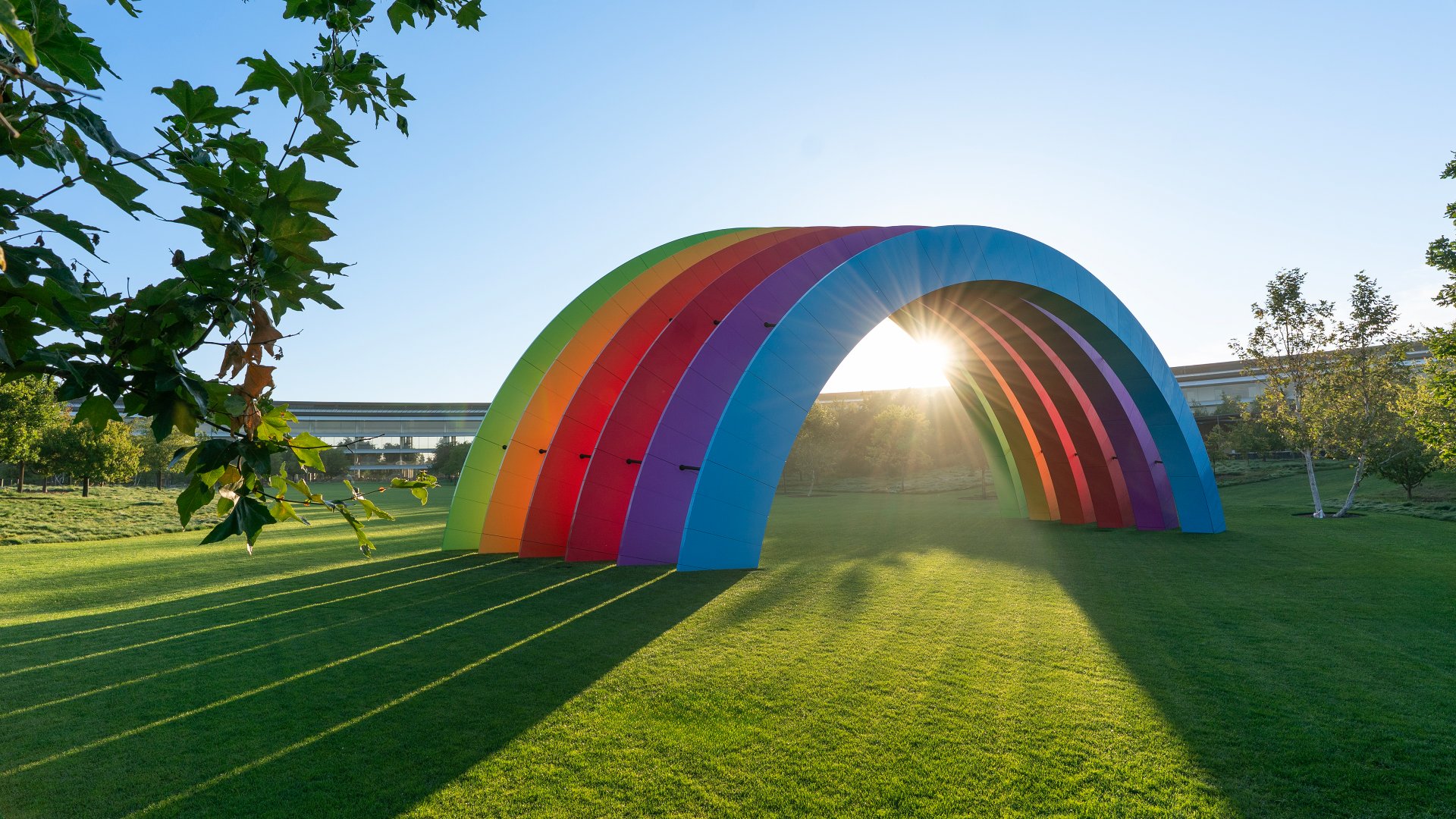
In a highly anticipated social media post, Mark Gurman confirmed what many had hoped for: Apple's extensive 50th-anniversary festivities will culminate in a spectacular finale. This exclusive event is slated to take place this week at the very heart of Apple's operations – its magnificent Apple Park headquarters. Conceived as a "grand finale," this gathering is primarily designed for the company's dedicated employees, offering them a unique and personal way to partake in this historic moment. The choice of Apple Park, a symbol of the company's forward-thinking design and collaborative spirit, makes this finale all the more poignant and meaningful.
Apple Park, often referred to as the "spaceship" due to its distinctive circular design, is more than just an office complex; it's a monument to Apple's ethos. The campus, which opened its doors in 2017, was a vision brought to life by Steve Jobs and designed to foster creativity, collaboration, and a deep connection with nature. Its vast green spaces, advanced research facilities, and iconic Steve Jobs Theater make it an ideal setting for an event of this magnitude. For employees, celebrating half a century of innovation within these hallowed grounds offers a profound sense of belonging and shared accomplishment, recognizing their collective contributions to Apple's enduring legacy.
A Legendary Performer: Is Paul McCartney Taking the Stage?
Adding an electrifying layer of intrigue to the grand finale, Gurman tantalizingly hinted at the identity of a "special guest" performer. The clues he provided immediately sent ripples of excitement through the tech and music worlds. "Let me just say he's still going strong, was part of the British Invasion and [Steve] Jobs would've been ecstatic," Gurman stated. While not explicitly naming the artist, these clues strongly point towards one of the most iconic figures in music history: Sir Paul McCartney.
The possibility of McCartney gracing the stage at Apple Park is more than just a celebrity appearance; it's a harmonious convergence of cultural titans. Paul McCartney, a living legend and a pivotal member of The Beatles, fundamentally reshaped music and popular culture during the 1960s with the "British Invasion." His enduring career, marked by unparalleled songwriting and performance, continues to inspire generations. The reference to Steve Jobs being "ecstatic" is particularly telling. Jobs was known for his deep appreciation of music and art, and his profound admiration for The Beatles was no secret. He frequently cited their creative process, their blend of art and commerce, and their ability to innovate as inspirations for Apple. In many ways, The Beatles' revolutionary impact on music mirrors Apple's transformative effect on technology. Both entities defied conventions, created passionate fan bases, and crafted experiences that resonated deeply with the human spirit.
Bringing McCartney, or an artist of similar legendary stature, to perform at this event would not only be a spectacular celebration of Apple's history but also a profound homage to the artistic vision that Steve Jobs so deeply cherished. It speaks to the idea that innovation isn't just about silicon and software, but about creativity, expression, and the enduring power of human connection, principles that both Apple and The Beatles have exemplified throughout their respective journeys. Such a performance would etch this 50th-anniversary celebration into the annals of both tech and cultural history.
Apple Park Visitor Center Closure and Event Exclusivity
Further supporting the anticipation around the grand finale, MacRumors contributor Aaron Perris observed that the Apple Park Visitor Center would be closing early at 3 p.m. Pacific Time on Tuesday, March 31. This early closure, while not explicitly tied to the event by Apple, strongly suggests preparations for a significant private gathering on the campus. The Visitor Center, typically open to the public, features an Apple Store, a café, and a rooftop viewing deck that offers panoramic views of the main building and campus. Its closure underscores the private nature of the impending celebration.
It is our understanding that Apple's final celebration will indeed be an exclusive affair, lacking a public component. This means the event is likely to be limited to Apple's corporate employees and other invited guests, ensuring a more intimate and focused celebration for those who have contributed directly to the company's success. While this decision may disappoint some ardent Apple fans eager to partake in the festivities, it aligns with a pattern of major internal celebrations Apple has held in the past. These events often serve as a way to acknowledge and appreciate the hard work and dedication of the company's workforce, reinforcing a sense of shared purpose and pride.
The question of whether Apple's vast network of retail employees will be invited remains unanswered. Retail staff are on the front lines, embodying the Apple brand and connecting directly with customers every day. Their role is crucial to the company's global success and customer experience. While previous large-scale Apple events have sometimes included retail leaders, a full-scale invitation to all retail employees would be logistically immense given the global footprint of Apple Stores. Regardless, the intent of this finale is clear: to create a memorable experience for those who make Apple, Apple.
Apple officially turns 50 on April 1. It is currently unclear whether the final celebration will take place on March 31 or on the actual anniversary date of April 1. However, regardless of the precise timing, one thing is certain: it should be quite the party, a fitting tribute to half a century of innovation, ambition, and global impact.
Apple's Journey to 50: A Legacy of Disruption and Design
The 50th anniversary is not merely a date; it's a moment to reflect on an extraordinary journey that began in 1976. Founded by Steve Jobs, Steve Wozniak, and Ronald Wayne, Apple Computer Co. quickly moved beyond Wayne's brief involvement to become a beacon of technological progress. The Apple I, hand-built by Wozniak, laid the groundwork, but it was the Apple II that truly propelled the company into the nascent personal computer market. With its color graphics and expandable architecture, the Apple II became one of the first truly successful mass-produced personal computers, endearing itself to homes and schools worldwide and setting the stage for a revolution.
The 1980s heralded the arrival of the Macintosh, a product born from Jobs' vision of a computer that was "insanely great" and accessible to everyone. Launched with the iconic "1984" Super Bowl commercial, the Macintosh introduced a graphical user interface (GUI) and a mouse to the masses, fundamentally changing how people interacted with computers. This wasn't just a technical leap; it was a philosophical one, emphasizing user-friendliness and intuitive design over command-line complexity. The Mac’s elegant aesthetic and powerful capabilities inspired a generation of creative professionals, solidifying Apple’s reputation as a company that cared deeply about both form and function.
However, Apple's journey was not without its trials. The mid-1990s saw the company facing significant challenges, losing market share and struggling to find its direction. The return of Steve Jobs in 1997, initially as an interim CEO, marked the beginning of one of the most remarkable corporate turnarounds in history. Jobs immediately streamlined product lines, fostered a culture of uncompromising quality, and reinvigorated Apple's spirit of innovation. This period of intense focus and creative resurgence led directly to the products that would redefine entire industries.
The late 1990s and early 2000s witnessed Apple's spectacular revival. The iMac injected personality and color back into personal computing. Then came the iPod in 2001, a device that didn't just play music; it reinvented how we listened to, purchased, and experienced it. Coupled with the iTunes Store, the iPod created a seamless ecosystem that revolutionized the music industry, empowering users and offering a legitimate alternative to piracy. This was a critical step in Apple's evolution from a computer company to a consumer electronics powerhouse, demonstrating its ability to merge hardware, software, and services into an irresistible package.
The true game-changer arrived in 2007 with the iPhone. It wasn't just a phone; it was a multi-touch computer that fit in your pocket, combining a phone, an iPod, and an internet communicator into one elegant device. The iPhone, and subsequently the App Store launched in 2008, created an entirely new mobile ecosystem, unleashing a tidal wave of innovation and entrepreneurship. Developers flocked to the platform, creating millions of apps that transformed everything from communication and entertainment to productivity and health. The iPhone single-handedly redefined the smartphone category and remains one of the most successful products in history, continuously evolving and setting new benchmarks for mobile technology.
Beyond the iPhone, Apple continued its relentless pursuit of innovation. The iPad introduced the tablet computing paradigm, bridging the gap between smartphones and laptops. The Apple Watch brought intelligent technology to our wrists, focusing on fitness, health, and convenience. More recently, Apple's emphasis on services—Apple Music, Apple TV+, Apple Arcade, iCloud—has solidified its position as a comprehensive ecosystem provider, generating recurring revenue and deepening customer engagement. The recent introduction of Apple Vision Pro signals the company's continued exploration of spatial computing, hinting at the next frontier of personal technology. Fifty years on, Apple remains a formidable force, driven by a legacy of daring innovation and an unwavering commitment to user experience and design excellence.
Steve Jobs' Enduring Vision and Gurman's Poignant Remark
Mark Gurman's comment about Steve Jobs being "ecstatic" at the prospect of Paul McCartney performing is incredibly insightful and resonates deeply with Apple's cultural foundation. Steve Jobs was not just a technologist; he was a visionary who believed in the intersection of technology and liberal arts. He famously stated that "technology alone is not enough—it's technology married with liberal arts, married with the humanities, that yields us the results that make our heart sing." This philosophy is evident in every Apple product, from its minimalist design to its intuitive user interfaces, and the profound emotional connection users develop with them.
Jobs' admiration for The Beatles stemmed from their ability to innovate, to create something truly new and impactful, and to maintain an incredibly high standard of quality in their craft. He saw parallels between the band's creative synergy and the kind of collaborative spirit he wanted to foster at Apple. For Jobs, the perfection of a song, the elegance of an album cover, and the emotional resonance of their music were akin to the precision engineering, aesthetic beauty, and profound user experience he sought in Apple's products. He would have recognized in McCartney's enduring career and influence the same pursuit of excellence that defined his own life's work.
This 50th-anniversary celebration, especially with a legendary performer like Paul McCartney, serves as a powerful testament to Jobs' enduring vision. It's a reminder that Apple's success isn't solely about market share or profits; it's about creating magical products that enrich lives, inspire creativity, and connect people around the globe. The event at Apple Park, a campus Jobs meticulously envisioned, would have been a moment of immense pride for him, witnessing the culmination of half a century of relentless pursuit of his foundational ideals. It's a celebration not just of a company, but of a legacy that continues to shape the future.
The Future of Apple: Beyond the First 50 Years
As Apple celebrates its golden jubilee, the question naturally turns to what the next 50 years might hold. The company is not resting on its laurels; it continues to invest heavily in research and development, exploring new frontiers in artificial intelligence, augmented and virtual reality, and health technology. Projects like Apple Vision Pro hint at a future where digital content seamlessly blends with the physical world, offering immersive experiences that could once again redefine personal computing.
Apple's commitment to privacy, sustainability, and accessibility also positions it as a leader in corporate responsibility, guiding its innovation with a strong ethical compass. The company’s focus on creating an integrated ecosystem of hardware, software, and services ensures a continuous stream of interconnected experiences, making its products indispensable to millions. The spirit of innovation that characterized the garage days of Steve Jobs and Steve Wozniak remains vibrantly alive, propelling Apple into uncharted territories while staying true to its core values of simplicity, elegance, and user empowerment.
The journey over the past five decades has been nothing short of extraordinary. From its humble beginnings to becoming one of the most valuable and influential companies on the planet, Apple has consistently defied expectations and reshaped industries. This 50th-anniversary finale is not just a party; it's a reaffirmation of Apple's identity, a moment to honor its past, celebrate its present, and look forward with unbridled optimism to a future filled with even more groundbreaking innovations.
Conclusion: A Golden Milestone for a Global Icon
Apple's 50th anniversary is a remarkable milestone, a testament to enduring vision, relentless innovation, and a profound connection with its users. The global celebrations, culminating in a potentially legendary event at Apple Park, underscore the company's unique place in the world. Whether it's the anticipation of a performance by a cultural icon like Paul McCartney, the reflection on Steve Jobs' indelible legacy, or the awe inspired by Apple Park itself, this anniversary is a moment of profound significance.
It's a time to celebrate the countless products that have changed our lives, the design philosophy that has inspired an entire industry, and the dedicated individuals who have contributed to Apple's unparalleled success. The excitement surrounding this grand finale isn't just about a party; it's about acknowledging half a century of a company that dared to think differently, that consistently pushed the boundaries of what was possible, and that continues to shape our technological future. Here's to 50 years of Apple, and to many more decades of making magic happen.
This article, "Apple's 50th Anniversary Finale Revealed" first appeared on MacRumors.com
Discuss this article in our forums
from MacRumors
-via DynaSage
