
Apple is Aiming to Add a System-Wide Liquid Glass Slider to iOS 27
Apple's iOS 27 Update: Bringing Unprecedented Liquid Glass Customization to Your iPhone
Get ready for a potentially groundbreaking change in how you experience your iPhone! According to renowned Bloomberg journalist Mark Gurman, in his latest Power On newsletter today, the upcoming iOS 27 might introduce a highly anticipated system-wide setting that allows users to precisely control the look and feel of the interface. While the latest internal version of iOS 27 doesn't show major overhauls to the existing "Liquid Glass" design, this new level of customization could be a significant step forward for Apple.
The Evolution of iOS Design and the Rise of Liquid Glass
Apple has always been at the forefront of user interface design, consistently evolving its visual language to keep pace with technological advancements and user expectations. From the early days of skeuomorphism – where digital elements mimicked real-world objects – to the introduction of the more minimalist, flat design with iOS 7, Apple’s design philosophy has aimed for clarity, elegance, and intuitive usability. More recently, Apple has introduced elements that add depth, subtle translucency, and a sense of layered space to the interface. This shift has culminated in what many refer to as the "Liquid Glass" design.
Liquid Glass, as a design concept within iOS, refers to the characteristic translucent and often blurred backgrounds found in various parts of the operating system. It’s designed to provide a sense of depth, allowing glimpses of content beneath while still keeping the primary focus on the foreground elements. This aesthetic not only looks modern and sophisticated but also enhances the feeling of fluidity and responsiveness within the OS. Think of the Control Center, notification banners, or certain widget backgrounds – they all exhibit this distinct visual style, creating a cohesive and immersive user experience.
The introduction of Liquid Glass was not merely an aesthetic choice; it was part of a broader strategy to make the iOS interface feel more dynamic and alive. By allowing background elements to subtly show through, Apple creates a visual continuity that ties different parts of the operating system together. It gives the impression that the interface is not a collection of static panels but a living, breathing environment where elements can overlap, recede, and come forward gracefully. This design language helps to guide the user's eye and provides a clearer hierarchy of information, making the device feel more intuitive and natural to interact with.
Liquid Glass Today: A Glimpse into Current Customization
While the Liquid Glass aesthetic has been a staple in recent iOS versions, Apple has also begun to offer users a taste of customization. This move acknowledges the growing demand among users for more control over their device's appearance, moving beyond a one-size-fits-all approach. These initial steps, though limited, paved the way for the more extensive customization options we might see in iOS 27.
iOS 26.1: "Clear" vs. "Tinted" Options
iOS 26.1 marked an important moment by giving users their first explicit choice regarding the Liquid Glass look: "Clear" or "Tinted." This option, while seemingly minor, had a noticeable impact on the visual density and readability of user interface elements. The "Clear" option typically offers a lighter, more transparent appearance, allowing more of the background wallpaper or app content to show through. This can create a very airy and minimalist feel, appealing to users who prefer maximum transparency and a less intrusive interface.
On the other hand, the "Tinted" option adds more opacity and often a subtle color tint to the Liquid Glass elements. This increased opacity makes foreground elements, such as text and icons, stand out more prominently against their translucent backgrounds. For some users, this enhanced contrast can significantly improve readability, especially in situations with complex wallpapers or varying lighting conditions. It provides a more solid and defined look, reducing potential visual clutter and ensuring that UI elements are always distinct and easy to discern. This initial choice, though limited, demonstrated Apple's willingness to experiment with user-adjustable visual settings within the Liquid Glass framework.
iOS 26.2: The Lock Screen Slider
Building on the foundation laid by iOS 26.1, iOS 26.2 introduced a slider that offered an even finer degree of control, albeit in a very specific context: the Lock Screen's clock. This slider allowed users to manually adjust the opacity of the clock element on their Lock Screen. It was a subtle yet significant addition, allowing users to fine-tune how much the clock stood out against their chosen wallpaper. This feature was particularly appreciated by those who wanted to create a perfectly balanced aesthetic for their Lock Screen, making the clock more or less prominent depending on their visual preferences and the complexity of their background image.
While the Lock Screen clock slider was a welcome addition, its limited scope highlighted the potential for similar controls across the entire operating system. It served as a proof-of-concept, demonstrating that granular opacity adjustments could be integrated into iOS. The positive reception to this feature likely encouraged Apple to explore expanding this functionality. Users began to wonder: if we can adjust the clock, why not other elements? This question set the stage for the highly anticipated system-wide slider in iOS 27, moving beyond specific, isolated elements to encompass the entire user interface, promising a new era of personalized visual control.
iOS 27: The Dawn of System-Wide Control
The latest news from Mark Gurman points to a much more expansive future for Liquid Glass customization in iOS 27. While current internal builds don't show a drastic redesign of Liquid Glass itself, the focus is squarely on giving users unprecedented control over its existing aesthetic. This means that instead of a few predefined options or a single-element slider, users might soon have the power to precisely adjust the translucency of Liquid Glass across the entire operating system, from notification banners to the Control Center, and potentially even app interfaces.
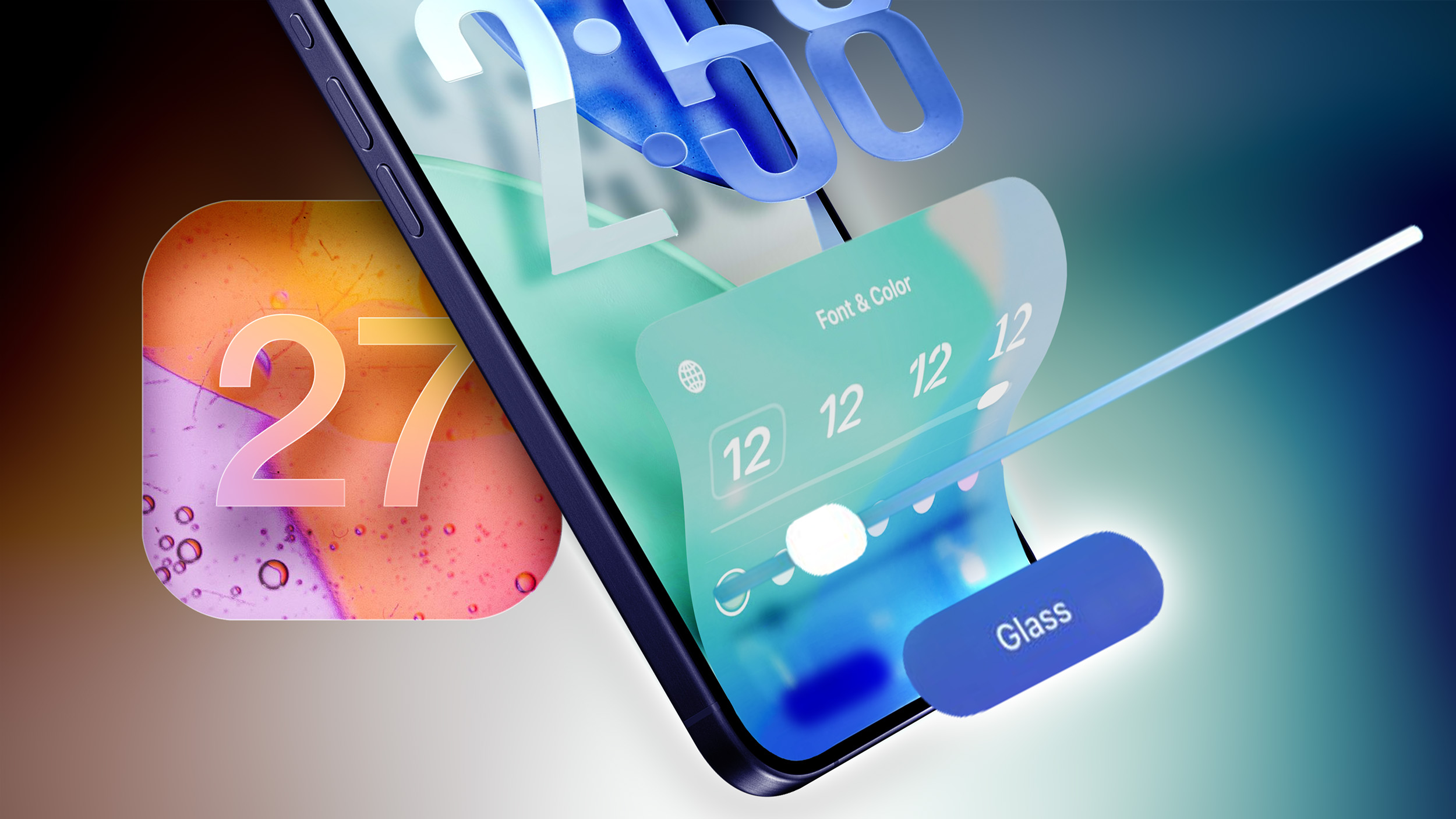
This prospective system-wide slider for Liquid Glass represents a significant philosophical shift for Apple. Historically, Apple has maintained a tight rein on UI customization, preferring to offer a highly curated experience. While this approach ensures consistency and a refined look, it has often left users desiring more personal expression. A system-wide slider would empower users to tailor their iPhone's visual environment to their exact preferences, whether they prefer a subtle, almost invisible glass effect or a more pronounced, opaque background for maximum clarity. This level of granular control would allow for a truly personalized aesthetic that adapts to individual needs and tastes, making the iPhone feel even more like an extension of its owner.
Gurman’s insights are further solidified by his comments on social media, where he specifically addressed the system-wide Liquid Glass slider. "Apple is trying again now for iOS 27," Gurman stated, referencing the engineering challenges faced in previous attempts. While he adds the cautionary "TBD if it lands," his confirmation that Apple is actively pursuing this feature for iOS 27 is a strong indicator of its potential arrival. This acknowledgment underscores Apple's commitment to delivering features that enhance user experience, even if they pose significant technical hurdles. The possibility of such a feature arriving this year has generated considerable excitement within the Apple community, eagerly anticipating the official announcement and subsequent beta testing phase.
Why a System-Wide Liquid Glass Slider is a Game-Changer
The potential introduction of a system-wide Liquid Glass slider in iOS 27 is more than just a minor aesthetic tweak; it represents a significant enhancement to the user experience, touching upon personalization, accessibility, and potentially even broader design philosophies at Apple. This feature addresses several key user demands and could redefine how we interact with and perceive the iOS interface.
Personalization and User Expression
In today's digital landscape, users increasingly value the ability to personalize their devices. An iPhone is often a very personal item, and the desire to make it truly one's own goes beyond choosing a wallpaper. A system-wide Liquid Glass slider would offer a powerful new dimension of personal expression. Users could fine-tune the transparency and blur of UI elements to match their preferred aesthetic, complement their chosen wallpaper, or simply reflect their mood.
This level of control allows individuals to craft a unique visual environment that resonates with them. For some, a nearly transparent interface might be ideal, creating an airy, minimalist look. For others, a more opaque, "frosted glass" effect might be preferred, offering a greater sense of visual separation between UI elements and background content. By bridging the gap between Apple's expertly curated design and the user's desire for individual flair, this feature empowers users to truly make their iPhone feel distinctively theirs, fostering a deeper connection with their device and enhancing their overall satisfaction.
Accessibility and Readability
Beyond aesthetics, the system-wide Liquid Glass slider holds significant implications for accessibility and readability. Translucent design elements, while beautiful, can sometimes pose challenges for users with certain visual impairments or in specific environmental conditions. For instance, highly transparent backgrounds can make text and icons difficult to read against busy or bright wallpapers, leading to eye strain and reduced comprehension.
With the ability to increase the opacity of Liquid Glass elements, users can significantly enhance the contrast between foreground content and background interfaces. This means clearer text, more distinct icons, and an overall improvement in readability across the entire operating system. Users who spend extended periods on their devices, or those with conditions like low vision or dyslexia, could greatly benefit from being able to adjust these settings to suit their individual needs, making iOS a more inclusive and comfortable platform for everyone. It’s a powerful tool for reducing visual fatigue and ensuring that the iPhone remains effortlessly usable in any situation.
Setting a New Precedent for Apple
Apple has historically maintained a reputation for a highly controlled user experience, often dictating design choices rather than offering extensive customization. This approach, while ensuring consistency and a polished aesthetic, has sometimes been a point of contention for users who desire more flexibility. The introduction of a system-wide Liquid Glass slider could signal a subtle but significant shift in Apple's design philosophy.
By empowering users with this level of visual control, Apple would be demonstrating a responsiveness to evolving user feedback and market trends. It suggests a willingness to balance its signature curated experience with a newfound emphasis on personal choice. This move could set a new precedent for how Apple approaches future UI features, potentially opening the door to other forms of customization while still maintaining the core elegance and consistency that defines iOS. It highlights Apple's commitment to continuous improvement and its ability to adapt while staying true to its core values of user-centric design.
The Engineering Hurdles: Why It's Not So Simple
While the concept of a system-wide Liquid Glass slider sounds straightforward, its implementation within a complex operating system like iOS presents substantial engineering challenges. Apple's meticulous attention to detail means that such a feature cannot simply be tacked on; it must be seamlessly integrated, perform flawlessly, and maintain visual consistency across thousands of UI elements and applications.
The complexity arises from the sheer scale of the task. iOS is not just a single interface; it's a vast ecosystem of system apps, third-party applications, widgets, notifications, and dynamic elements. Ensuring that a single opacity slider works uniformly and beautifully across all these diverse components, without introducing visual glitches, performance slowdowns, or inconsistencies, is an monumental undertaking. Each UI element, from a simple button to a complex animated menu, must correctly interpret and apply the chosen transparency level, maintaining its legibility and intended visual hierarchy.
Mark Gurman’s previous reports revealed that Apple had initially targeted a system-wide Liquid Glass slider for iOS 26 but "ran into engineering challenges when trying to extend it across the entire system." This candid insight underscores the difficulty of the task. It's not just about changing a single value; it involves a deep dive into the rendering engine, ensuring compatibility with various display technologies, managing battery efficiency, and guaranteeing a smooth user experience even as transparency levels are dynamically adjusted.
However, Gurman's latest update indicates that Apple is "trying again now for iOS 27" and could "go back to the drawing board and manage to get the system-wide slider working." This willingness to revisit and overcome complex technical obstacles is characteristic of Apple. It demonstrates their dedication to perfecting features, even if it means delaying them to ensure a robust and high-quality implementation. The fact that they are making another concerted effort for iOS 27 suggests they might have found solutions to the previous challenges, making the prospect of this feature landing in the next major update very real and exciting.
Mark Gurman: A Trusted Voice in Apple Leaks
When it comes to unreleased Apple products and software features, few sources are as consistently accurate and reputable as Mark Gurman. As a prominent journalist for Bloomberg, Gurman has built an unparalleled track record over the years, frequently breaking news about Apple's plans long before official announcements. His deep network of sources within Apple and its supply chain provides him with unique insights into the company's closely guarded secrets, making his reports highly anticipated and widely trusted by the tech community.
Gurman's methodology often involves reporting on internal development cycles, code snippets, and supply chain movements, providing a detailed look at what Apple is working on. His "Power On" newsletter is a must-read for anyone interested in the future of Apple's ecosystem, covering everything from hardware prototypes to software updates. The fact that he is reporting on the Liquid Glass slider for iOS 27, even noting the engineering challenges and Apple's renewed efforts, lends significant credibility to the possibility of this feature's arrival.

His social media updates, often serving as quick confirmations or elaborations on his longer articles, further underscore the reliability of his information. When Gurman states that "Apple is trying again now for iOS 27" regarding a specific feature, it carries significant weight. While he includes the caveat "TBD if it lands" – acknowledging the fluid nature of software development – the very mention of Apple's renewed efforts for iOS 27 indicates that this feature is a serious priority and actively under development. For Apple enthusiasts, Gurman's reports are often the first credible glimpse into what the future holds for their beloved devices.
What Else to Anticipate from iOS 27
While the system-wide Liquid Glass slider is a captivating potential feature, iOS 27, like all major annual updates, is expected to bring a host of other improvements and new functionalities to the iPhone. Each iteration of iOS typically focuses on enhancing core experiences, introducing innovative features, and refining the overall performance and security of the operating system.
We can generally anticipate significant performance boosts, making the latest iPhones even snappier and more efficient. Battery life optimizations are also a perennial focus, as Apple continually strives to extend the endurance of its devices. Beyond these fundamental improvements, iOS 27 is likely to introduce new features across various categories. This could include enhancements to existing apps like Messages, Mail, or Safari, making them more powerful and intuitive. We might see new widget capabilities, expanded Lock Screen customizations, or even entirely new applications that leverage Apple's latest hardware innovations.
Given the industry-wide focus on artificial intelligence, it's highly probable that iOS 27 will incorporate deeper and more sophisticated AI capabilities. This could manifest in smarter Siri interactions, more intelligent photo and video editing tools, enhanced organizational features, or even proactive suggestions that make daily tasks easier and more efficient. Security and privacy enhancements are also a given, as Apple consistently rolls out new measures to protect user data and ensure a safe digital environment.
The journey to iOS 27 will kick off with the annual Worldwide Developers Conference (WWDC) in June, where Apple traditionally unveils its major software updates. Following this presentation, beta testing for developers and then public testers will begin, allowing enthusiasts to get an early look at the new features and provide feedback. The official public release of iOS 27 is expected to follow in September, alongside the launch of the next generation of iPhones, making it an exciting period for Apple users eager to experience the latest innovations.
The potential for a system-wide Liquid Glass slider in iOS 27 represents an exciting prospect for iPhone users. It signifies Apple's commitment to providing a more personalized and accessible user experience, allowing individuals to fine-tune their device's aesthetics to an unprecedented degree. While the engineering challenges are significant, Mark Gurman's reports suggest that Apple is determined to overcome them, potentially ushering in a new era of visual customization for iOS. As we await the official announcements at WWDC, the anticipation for iOS 27, and particularly this innovative slider, continues to build, promising a more fluid, personal, and visually engaging iPhone experience.
This article, "Apple is Aiming to Add a System-Wide Liquid Glass Slider to iOS 27" first appeared on MacRumors.com
Discuss this article in our forums
from MacRumors
-via DynaSage
