
Will Apple Music Get AI Playlists in iOS 27?
The world of technology is constantly evolving, and Artificial Intelligence (AI) is at the forefront of this change. It’s becoming increasingly common to find AI features integrated into almost every app and service we use daily. From smart assistants that manage our schedules to sophisticated algorithms that recommend products, AI is silently making our digital lives more convenient and personalized. One area where AI has recently gained significant traction is within music streaming applications, particularly with the rise of AI-generated playlists.
These innovative playlists are changing how we discover and enjoy music, moving beyond simple genre selections to offer deeply personalized experiences based on our moods, activities, and even our deepest thoughts expressed in text. This trend is not just a passing fad; it’s a powerful demonstration of how AI can enhance creative and entertainment platforms. Given this widespread adoption and the clear benefits for users, it’s highly probable that Apple, a company known for its user-centric design and technological innovation, will embrace this trend in its Apple Music service in the very near future. The pressure from competitors who are already offering these cutting-edge features is mounting, making a native AI playlist solution from Apple almost inevitable.

YouTube Music Leads the Way with AI Playlists
One of the latest major players to jump into the AI playlist arena is YouTube Music. Just this week, YouTube Music started rolling out its new AI playlist feature, much to the excitement of its user base. This innovative tool is designed to transform a user's abstract ideas, specific moods, or preferred genres into a highly personalized music collection. It’s a significant leap from traditional playlist creation, offering a level of customization that was previously unimaginable.
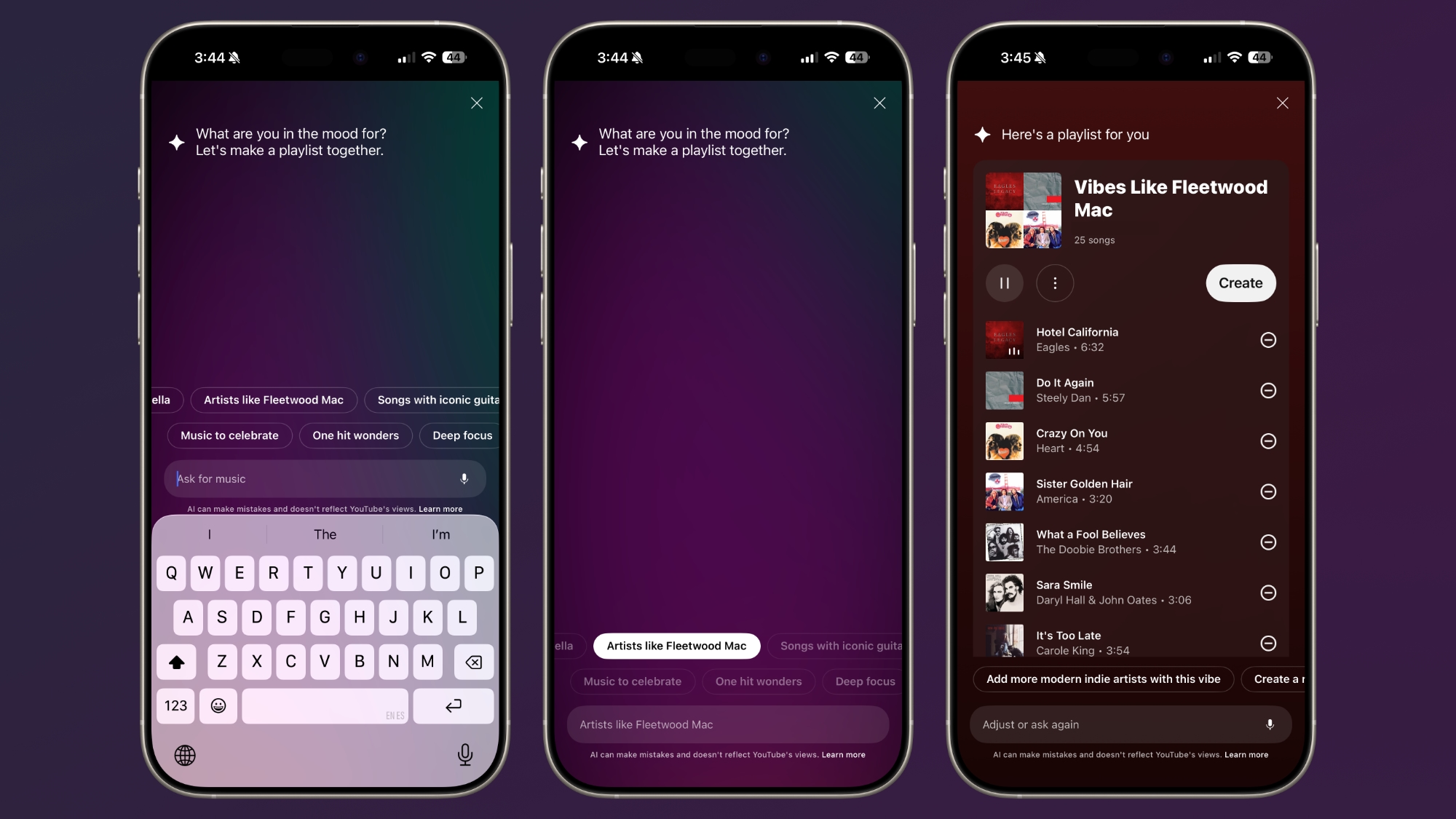
Accessing this powerful feature is straightforward for eligible users. Subscribers to YouTube Premium and YouTube Music Premium can find an intuitive option within the "Library" section of the YouTube Music app. Here, they are invited to engage with the AI by simply typing in a request. Imagine being able to ask for "upbeat songs for a morning run," "calm music for studying," or "songs that make me feel nostalgic for the 90s." The possibilities are virtually endless.
Users can be as broad or as specific as they wish. They can suggest any genre, a particular artist they adore, a specific feeling they want to evoke, a memorable phrase, or even a unique activity they're undertaking. The AI then processes this input, sifting through YouTube Music’s vast catalog to generate a custom playlist that perfectly matches the user's prompt. This personalization goes beyond mere genre matching; it attempts to understand the nuances of the user's request, drawing on common associations and musical characteristics to deliver a truly bespoke listening experience. This feature not only makes music discovery more exciting but also significantly reduces the time and effort traditionally spent on curating playlists manually. It's about empowering users to articulate their musical desires, no matter how vague or intricate, and have them instantly translated into a harmonious collection of songs.
Spotify's Advanced "Prompted Playlist" Feature
Spotify, a pioneer in music streaming and personalized recommendations, has been actively exploring and expanding its AI capabilities. In January, the company significantly expanded a test of its "Prompted Playlist" feature. This sophisticated tool leverages AI to generate highly customized music suggestions based on detailed text-based requests from users. It marks a significant evolution in how Spotify helps its users discover and engage with music, moving beyond their well-known algorithmic recommendations to a more interactive and user-driven approach.
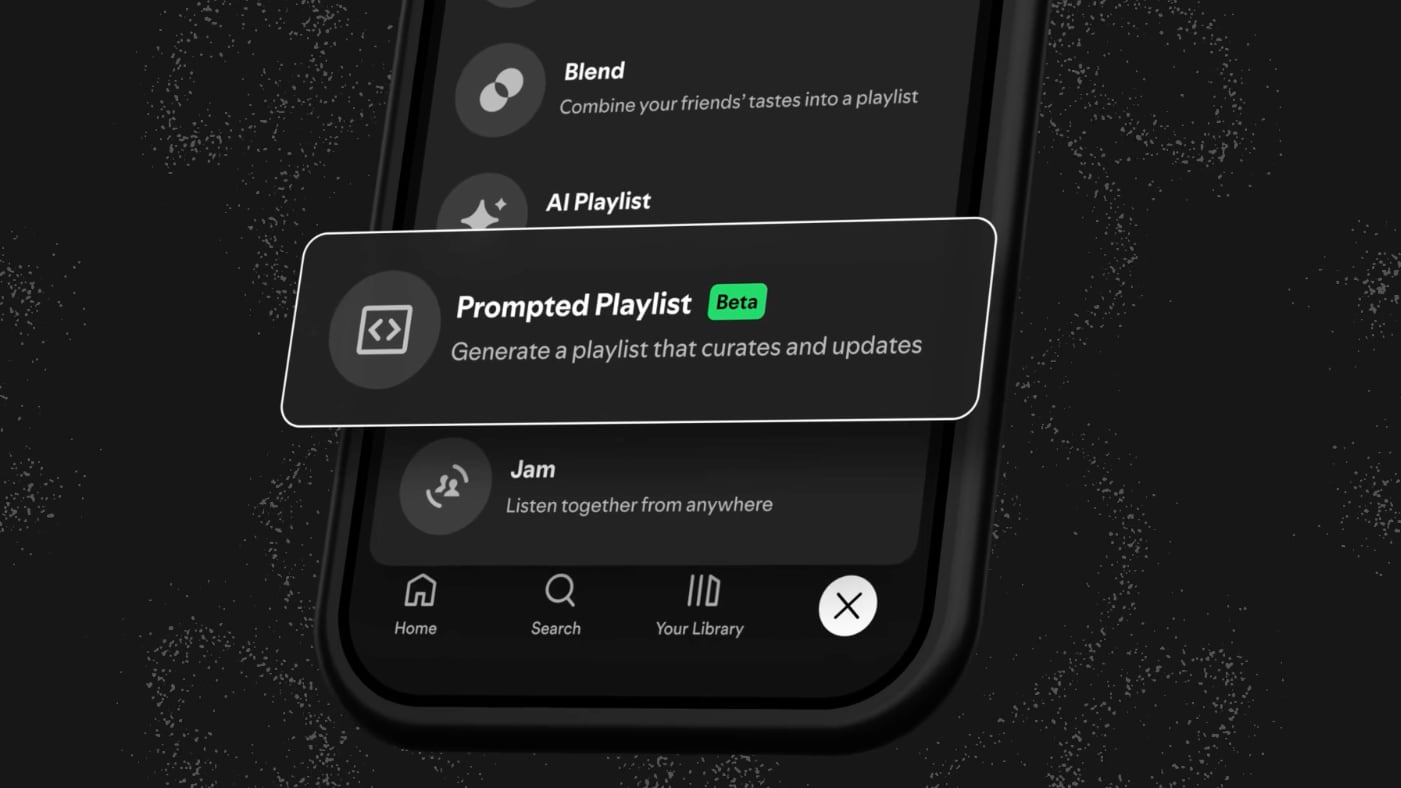
The "Prompted Playlist" feature is currently available to Spotify Premium users, providing an exclusive advantage for those who subscribe to the service. These users can describe exactly what they want to hear in natural language, much like having a conversation with a personal music expert. The AI behind this feature is incredibly intelligent, going beyond simple keyword matching. It meticulously analyzes the user’s extensive listening history, taking into account their past preferences, favorite artists, and beloved genres. Simultaneously, it keeps a keen eye on current music trends and popular charts, ensuring the generated playlists are both personally relevant and culturally aware. This comprehensive analysis allows the AI to craft song suggestions that not only fit the parameters of the request but also feel fresh, engaging, and perfectly aligned with the user's evolving taste.
One of the most compelling aspects of Spotify's AI playlists is their dynamic nature. Unlike static, manually curated playlists, these AI-generated collections are designed to be living entities. They are kept continuously up to date and automatically refreshed as a user's listening patterns change. This means that as your musical journey evolves, so too do your AI playlists, ensuring that the music you receive is always relevant and exciting. This adaptive quality is a game-changer, providing a truly personalized and ever-fresh listening experience without any manual intervention required from the user.
Spotify has provided numerous examples to illustrate the versatility and depth of this feature. Users can initiate requests with broad ideas and then refine them with subsequent, more specific prompts. For instance, you could start by asking for "music from my top artists from the last five years." Once the initial playlist is generated, you can then follow up with a request like "and feature deep cuts I haven't heard yet." This iterative process allows for incredibly fine-tuned control over the playlist creation, ensuring that the final output perfectly matches the user's expectations, even for niche preferences or less-played tracks.
Beyond artist and historical preferences, the requests can also be tailored to specific activities and time periods. Imagine planning a workout and needing the perfect soundtrack: "high-energy pop and hip-hop for a 30-minute 5K run that keeps a steady pace before easing into relaxing songs for a cool-down." This level of detail demonstrates the AI's ability to understand complex scenarios and translate them into a coherent and functional playlist. It’s not just about selecting songs; it’s about crafting a musical journey that complements real-life events, enhancing everything from exercise routines to relaxation sessions.
Furthermore, Spotify's AI playlists offer flexibility beyond initial generation. Users have the power to tweak their playlists by editing the original prompts, allowing for continuous refinement and customization. If a playlist isn't quite right, a simple prompt adjustment can reshape it. Additionally, users can set these playlists to refresh daily or weekly with new music, ensuring a constant stream of fresh discoveries tailored to their ongoing preferences. This feature truly transforms playlist creation from a one-time event into an ongoing, dynamic musical experience.
The "Prompted Playlists" represent a significant advancement over Spotify's prior playlist-generating features, which allowed users to request songs based on general mood or activity. While those earlier features were useful, the new AI-driven approach enables much greater specificity and detail. The ability to articulate complex desires and receive highly personalized, adaptable playlists marks a new era in music discovery and consumption, setting a high bar for competitors in the streaming music market.
Amazon Music's "Maestro" for Effortless Playlist Creation
Not to be outdone in the competitive landscape of music streaming, Amazon's music service has also embraced the power of AI to enhance the user experience. Since 2024, Amazon Music has offered a distinctive feature called "Maestro," which empowers users to build personalized playlists using intuitive text-based prompts and even emoji characters. This innovative tool mirrors the capabilities seen in offerings from YouTube Music and Spotify, providing a seamless and highly customizable way for users to interact with their music library.
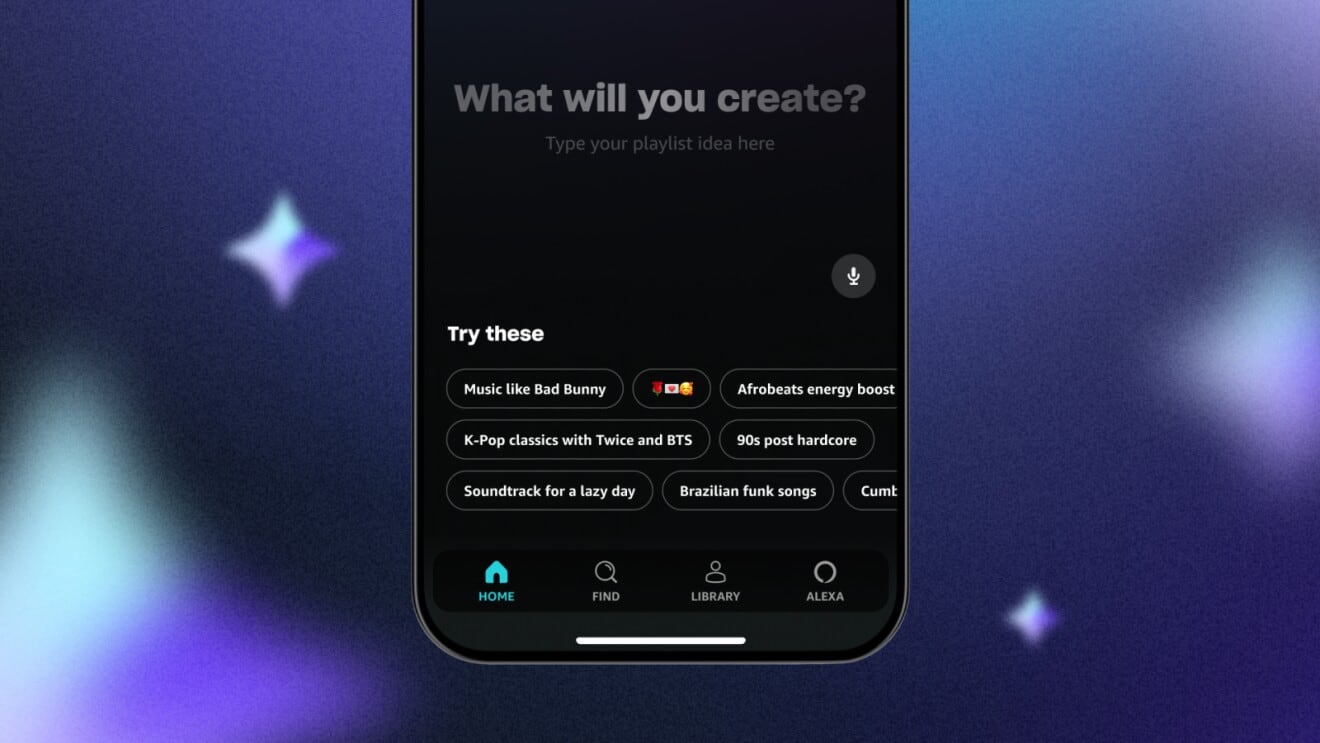
Amazon describes Maestro as a feature that helps users create "any playlist they can think of," underscoring its versatility and responsiveness to individual desires. The beauty of Maestro lies in its simplicity and effectiveness. Users can articulate their musical preferences in everyday language, just as they might describe them to a friend. Whether it's a specific genre, an artist, a desired mood, or even a particular activity, Maestro takes these inputs and translates them into a curated list of songs. For example, a user could type "upbeat pop for a party" or "relaxing jazz for a rainy afternoon." The AI then taps into Amazon Music's extensive catalog, selecting tracks that align perfectly with the given prompt.
What makes Maestro particularly engaging is its support for emoji characters. This adds a playful and incredibly intuitive dimension to playlist creation. Instead of typing out "music for a happy mood," a user could simply use a 😊 emoji. For a workout, 💪; for a sad moment, 😔. This visual language makes the process even more accessible and fun, especially for users who prefer a quicker, more expressive way to convey their feelings and needs. It's a clever integration that demonstrates Amazon's understanding of diverse user interaction styles.
Like its counterparts, Maestro aims to solve the common problem of "playlist paralysis" – the overwhelming feeling of not knowing where to start when faced with a vast music library. By providing a smart, AI-driven assistant, Amazon Music ensures that users can effortlessly conjure up the perfect soundtrack for any occasion. This not only enhances music discovery but also deepens user engagement with the platform, making it a more integral part of their daily lives. The availability of such features across multiple major streaming services highlights a clear industry trend: personalized, AI-generated playlists are no longer a luxury but a growing expectation from modern music consumers.
Apple Music Rumors: The Anticipation for Native AI Playlists
While major competitors like YouTube Music, Spotify, and Amazon Music are rapidly advancing their AI playlist capabilities, Apple Music has remained notably reserved in this specific area. For years, Apple has indeed leveraged AI to generate custom "For You" playlists for Apple Music users, offering personalized mixes based on listening habits and discovered genres. These playlists, such as "New Music Mix," "Favorites Mix," and "Chill Mix," have been well-received, providing a degree of personalization that helps users discover new tracks and revisit old favorites. However, there's a crucial distinction: these existing features operate primarily in the background, analyzing user data to push recommendations. There isn't an option for users to directly type in a prompt—a specific mood, activity, or intricate request—and receive a customized playlist in immediate response, which is the hallmark of the new AI playlist trend.
The absence of such a feature has not gone unnoticed, and there have been strong indicators that Apple is indeed working to catch up. Last year, Mark Gurman of Bloomberg, a highly respected source for Apple insights, reported that Apple was actively working on an Apple Music reboot specifically focused around AI. This news generated considerable excitement among users and industry observers alike, suggesting that a significant overhaul with AI at its core was on the horizon.
Following Gurman's report, we did see some AI-related enhancements roll out, particularly with iOS 26 Music. These included a new AutoMix feature, designed to create more seamless transitions between songs, enhancing the flow of playback. Additionally, updated lyrics translation features were introduced, making it easier for users to understand and engage with music from around the world. While these were welcome improvements, they ultimately did not include the eagerly anticipated option to generate AI playlists using natural language prompts. Furthermore, there were no specific Apple Intelligence features explicitly integrated into Apple Music at that time, leaving many users wondering when the more direct AI controls would arrive.
The expectation for more comprehensive AI integration, particularly in Apple Music, remains high. It's widely anticipated that more of Apple's core applications will adopt Apple Intelligence features with the upcoming release of iOS 27. This general push towards deeper AI integration across the Apple ecosystem strongly suggests that new AI Apple Music features are indeed on the roadmap. The timing seems right, especially considering Apple's strategic focus on AI across its entire product line. At present, Apple is becoming one of the only major streaming music services that does not offer a direct, prompt-based AI playlist creation tool. This competitive gap creates a strong incentive for Apple to quickly integrate such a feature, ensuring its service remains at the forefront of innovation and user satisfaction.
A Temporary Workaround: ChatGPT Integration
In the meantime, for Apple Music users who are eager to experiment with AI-generated playlists, there is a clever workaround involving third-party AI tools. There is an existing option to generate Apple Music playlists using ChatGPT. This powerful conversational AI can integrate with Apple Music, allowing users to leverage its advanced natural language processing capabilities to create music recommendations and playlists based on their prompts. Users can ask ChatGPT to create a playlist for a specific mood, genre, artist, or activity, and it will then search the Apple Music catalog to compile a list of suitable songs.
While this integration offers a taste of AI-driven playlist creation, it comes with certain limitations that highlight the need for a native solution. Primarily, ChatGPT does not have direct access to a user's individual listening history within Apple Music. This means that while it can generate a playlist based on general knowledge and broad catalog searches, the personalization of these suggestions is somewhat limited compared to what Spotify or YouTube Music offer, where the AI deeply understands the user's past preferences. Without access to listening history, the AI cannot factor in personal biases, discovered artists, or overlooked gems from the user's own library, making the recommendations less bespoke.
Another practical limitation is the manual effort required. Once ChatGPT generates a list of songs, these playlists typically need to be manually added to Apple Music. This involves copying song titles or searching for them individually within the Apple Music app, which can be a tedious process, especially for longer playlists. This friction point detracts from the seamless, instant gratification that native AI playlist features in other services provide. While ChatGPT integration is a useful stopgap, it clearly demonstrates the superior user experience that a deeply integrated, native AI playlist feature within Apple Music would offer.
A native AI playlist feature in Apple Music would be much more akin to what Spotify and YouTube are currently offering. Such a feature would leverage Apple's own vast user data, seamlessly integrate with the Apple Music interface, and provide instant, contextually rich playlists without any manual transfer steps. It would not only close the competitive gap but also enhance Apple Music's position as a leading, innovative music streaming platform. The anticipation for this development is high, and it seems only a matter of time before Apple delivers on this increasingly standard feature for modern music consumption.
Discuss this article in our forums
In conclusion, the integration of AI-powered playlist generation is rapidly becoming a fundamental feature in the competitive landscape of music streaming. Services like YouTube Music, Spotify, and Amazon Music have already introduced sophisticated tools that allow users to craft highly personalized playlists using simple text prompts, reflecting their moods, activities, and specific musical desires. These innovations represent a significant leap forward in music discovery and user engagement, moving beyond traditional algorithmic recommendations to offer a more interactive and dynamic listening experience.
For Apple Music, the pressure to adopt such a feature is mounting. While Apple has long utilized AI for its "For You" recommendations, the absence of a direct, prompt-based AI playlist creator places it behind its major competitors. Reports from reliable sources like Mark Gurman have hinted at an AI-focused reboot for Apple Music, and while some AI enhancements have arrived, the core AI playlist feature remains elusive. However, with the expected expansion of Apple Intelligence features across iOS 27 and Apple's broader strategic emphasis on AI, it seems highly probable that a native, deeply integrated AI playlist solution for Apple Music is on the horizon.
Such a feature would not only close the competitive gap but also significantly enhance the Apple Music experience, offering users unprecedented control and personalization. It would leverage Apple's extensive ecosystem and user data to create truly bespoke musical journeys, making music discovery effortless and intuitive. The current workaround through ChatGPT, while functional, underscores the need for a seamless, first-party solution that fully integrates with a user's listening history and provides instant, hassle-free playlist generation.
The future of music streaming is undoubtedly intertwined with AI, and the ability to simply ask for the perfect soundtrack for any moment is becoming a standard expectation. Apple Music's eventual adoption of AI playlists will be a pivotal moment, further solidifying its position as a leading platform and ensuring its users can enjoy the very best of what modern music technology has to offer. We eagerly await to see how Apple will innovate in this space and bring its unique touch to the world of AI-generated music.
