
M4 iPad Air: What's New and When It's Coming
Apple is getting ready to host a special "Experience" event on March 4, where they'll show off new things to a select group of media. Leading up to this big day, we're expecting to see updates to several of their popular products. Among these new devices, the iPad Air is a strong candidate for an upgrade. This means it's the perfect time to dive into what new features and improvements we might see in the next version of this beloved tablet.
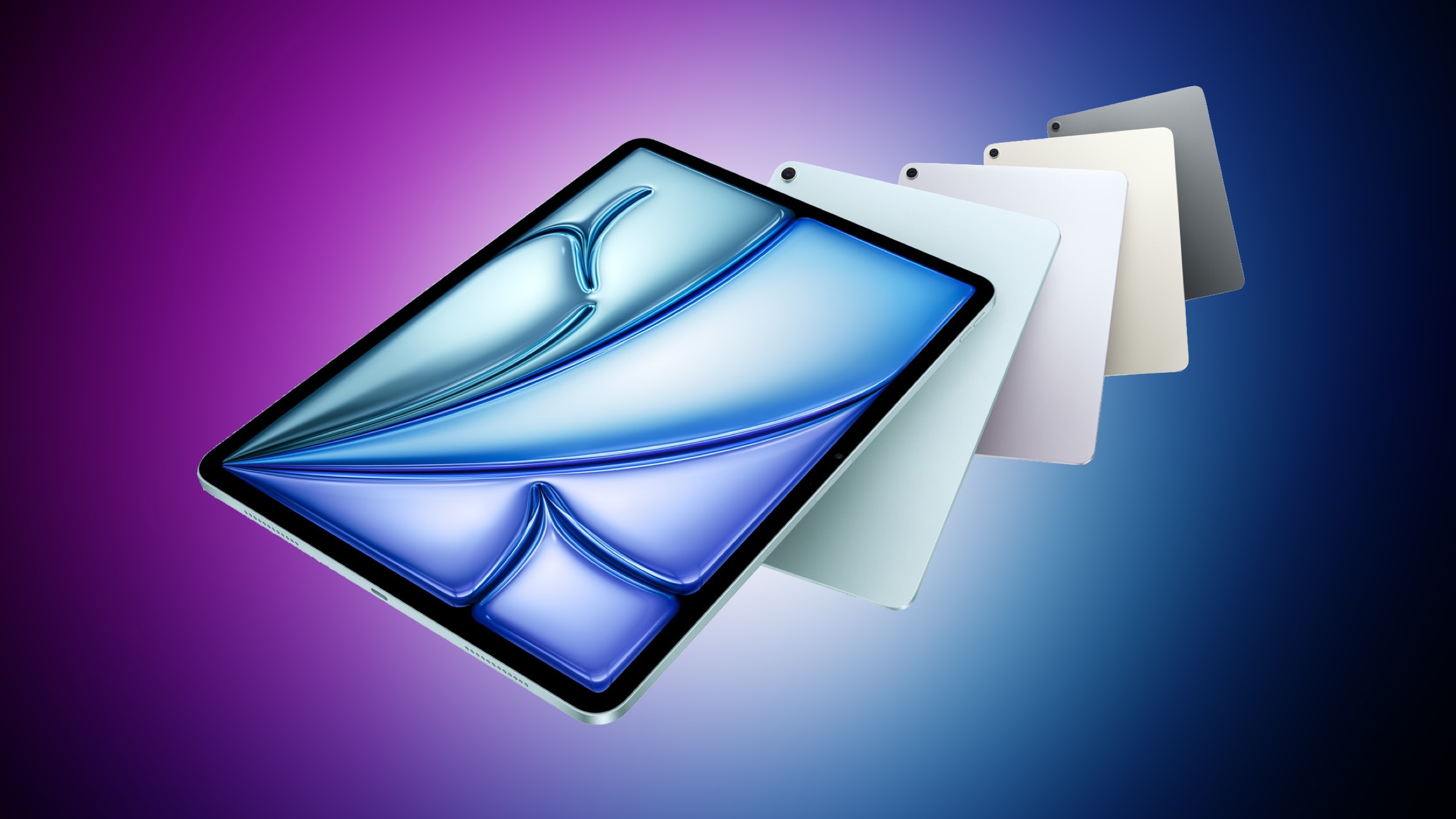
Design and Display: Keeping What Works, Waiting for More
When a new Apple product is on the horizon, one of the first things many people look forward to is a fresh new look. However, for the upcoming iPad Air, it appears Apple is focusing its efforts elsewhere, as current rumors suggest there will be no major external design changes. This means we can expect the familiar sleek aluminum unibody, flat edges, and overall aesthetic that has defined the most recent generations of the iPad Air. While some might find this news a little disappointing, a consistent design has its own advantages. It ensures that existing accessories, such as cases and protective covers, will remain compatible, saving users from needing to invest in new gear immediately. Furthermore, a stable design allows Apple to perfect the manufacturing process, potentially leading to greater reliability and consistency in the finished product.
This continuity in design also extends to the size options. The new iPad Air is expected to maintain its popular 11-inch and 13-inch display variants. The 11-inch model offers excellent portability, making it an ideal companion for students, commuters, and anyone who needs a powerful tablet that's easy to carry around. It strikes a fantastic balance between screen real estate for casual tasks like browsing, streaming, and light productivity, and a compact form factor that fits comfortably in most bags. On the other hand, the 13-inch model caters to users who crave more screen space for immersive media consumption, detailed creative work, or serious multitasking with multiple apps open side-by-side. This larger canvas transforms the iPad Air into a more serious workstation, blurring the lines between a tablet and a laptop, especially when paired with a keyboard accessory. Apple's decision to retain these two distinct sizes ensures that the iPad Air continues to serve a wide array of user preferences and use cases, allowing individuals to choose the perfect size for their specific needs without having to compromise on the core iPad Air experience.
The Display: Standard Brilliance, Professional Aspirations
One area where the iPad Air traditionally distinguishes itself from its more premium sibling, the iPad Pro, is in its display technology. The upcoming iPad Air is expected to continue using a standard LED (Liquid Crystal Display) rather than the cutting-edge OLED (Organic Light Emitting Diode) technology found in the iPad Pro. While both technologies offer vibrant colors and sharp images, OLED displays provide deeper blacks, higher contrast ratios, and better power efficiency because each pixel can emit its own light and turn off completely. For the average user, the LED display on the iPad Air is still incredibly impressive, offering excellent brightness and color accuracy for everyday tasks like watching movies, browsing photos, and reading. However, those who perform highly specialized creative work, such as professional photo or video editing, might notice the subtle differences offered by OLED, especially in dark scenes or when precise color representation is paramount.
The transition of the iPad Air to OLED is likely a matter of "when," not "if," but for now, Apple seems content to keep this premium display technology exclusive to the iPad Pro lineup. This strategy allows Apple to clearly differentiate its product tiers, offering distinct advantages for those willing to invest in the top-tier device. By doing so, the iPad Air remains a more accessible option without compromising significantly on visual quality for most users.
Another feature that will remain exclusive to the iPad Pro is ProMotion technology. ProMotion automatically adjusts the display's refresh rate up to 120Hz, providing incredibly fluid scrolling, highly responsive gaming, and a more natural feel when using the Apple Pencil. For the iPad Air, the display will continue to operate at a standard 60Hz refresh rate. While 60Hz is perfectly adequate for the vast majority of tasks and provides a smooth experience, the absence of ProMotion means that users won't experience the buttery-smooth animations and heightened responsiveness that comes with a higher refresh rate. There are no indications that Apple plans to bring ProMotion to the iPad Air in this refresh, reinforcing its position as a feature that helps define the professional segment of Apple's tablet offerings.
Connectivity, Security, and Imaging
In terms of fundamental features, the iPad Air will maintain its modern connectivity and security options. It will continue to feature a versatile USB-C port, which has become an industry standard for charging and connecting various accessories, from external drives to monitors and hubs. This universal port simplifies the user experience by allowing a single cable to handle multiple functions. For security and convenience, the iPad Air will retain its reliable Touch ID sensor, integrated into the top button. This allows for quick and secure unlocking, app purchases, and authentication with just a touch of your finger, a feature many users find intuitive and practical.
The front and rear cameras are also expected to remain unchanged. While iPads aren't typically the primary device for serious photography, their cameras are incredibly useful for video calls, scanning documents, and capturing quick photos or videos. The existing camera setup on the iPad Air performs admirably for these tasks, offering good image quality and reliable performance in various lighting conditions. This continuity suggests that Apple is satisfied with the current camera capabilities for the iPad Air's target audience.
A Splash of Color and Familiar Accessories
With minor refreshes, Apple sometimes introduces a new color option to keep things interesting. It's possible we could see a fresh hue added to the iPad Air lineup, offering users more ways to personalize their device. However, this isn't a guaranteed change for a "minor refresh" and could be reserved for future, more significant updates. Regardless, the existing range of colors is already appealing and diverse. Importantly, no new accessories are rumored alongside this update. This means the new iPad Air will continue to be fully compatible with Apple's excellent Magic Keyboard and the advanced Apple Pencil Pro. The Magic Keyboard transforms the iPad Air into a laptop-like experience with a comfortable typing feel and an integrated trackpad, making it ideal for productivity tasks. The Apple Pencil Pro offers precise input for drawing, note-taking, and creative endeavors, with features like hover, squeeze, barrel roll, and haptic feedback enhancing the artistic experience. This continued compatibility is a significant benefit for users who already own these accessories or plan to invest in them, ensuring their investment remains valuable.
M4 Chip: A Leap in Performance and Intelligence
One of the most exciting rumored upgrades for the upcoming iPad Air is the inclusion of the M4 chip. Apple has a clear strategy for its iPad lineup: the iPad Air typically receives a chip that's one generation behind the bleeding-edge performance found in the iPad Pro. Given that the iPad Pro was reportedly updated with the powerful M5 chip in October 2025, it logically follows that the iPad Air is now poised to inherit the M4 chip. This positioning allows the iPad Air to offer exceptional performance at a more accessible price point than the Pro models, making it a compelling choice for a wide range of users.
The Power of the M4: Speed, Efficiency, and AI
Both the M3 chip (found in the current iPad Air and other Apple devices) and the M4 chip are built using a 3-nanometer manufacturing process. This advanced process allows for more transistors to be packed into a smaller space, leading to greater efficiency and performance. However, the M4 benefits from an updated 3-nanometer process, which brings further refinements in speed and power efficiency. This isn't just a slight bump; it represents a significant engineering achievement that translates directly into a faster, smoother, and more power-conscious user experience.
The M4 chip comes with substantial improvements across its core components. It boasts up to 10 CPU cores, an increase from the 8 cores in the M3. More CPU cores mean the chip can handle more tasks simultaneously, leading to snappier app launches, smoother multitasking, and faster completion of complex computations. Whether you're juggling multiple apps, editing photos, or running demanding productivity software, the increased core count will make a noticeable difference.
Perhaps one of the most crucial upgrades in the M4 is its faster Neural Engine. The Neural Engine is Apple's specialized hardware designed to accelerate machine learning (ML) and artificial intelligence (AI) tasks. With the growing importance of AI in everything from advanced photography features to voice recognition and smart suggestions, a more powerful Neural Engine ensures that the iPad Air can handle these sophisticated AI workloads with ease. This translates into features that are not just faster, but also more intelligent and responsive, adapting seamlessly to your usage patterns and enhancing various aspects of the iPad experience.
Beyond the CPU and Neural Engine, the M4 also offers increased memory bandwidth. Memory bandwidth refers to how quickly data can be moved between the chip's processing units and its memory. Higher bandwidth means that the CPU and GPU can access data faster, which is critical for data-intensive tasks like video editing, graphic design, and running large applications. This improvement contributes to the overall responsiveness and capability of the system, preventing bottlenecks that can slow down performance.
The GPU (Graphics Processing Unit) in the M4 is also more power efficient. While still delivering excellent graphics performance, its improved efficiency can lead to better battery life, especially during graphically intensive activities such as gaming, video playback, or using professional creative applications. Apple states that the M4 CPU is up to 30 percent faster than the M3 CPU, and its GPU is up to 21 percent faster. These are not incremental gains; they represent a substantial generational leap that will be immediately felt by users, making the new iPad Air capable of handling tasks that were once reserved for more powerful, often desktop-class, machines.
Embracing Apple Intelligence
The current iPad Air already supports Apple Intelligence, and the next-generation model with the M4 chip will continue to do so, leveraging its even faster Neural Engine. Apple Intelligence is Apple's suite of personal intelligence features that integrate deep into iOS, iPadOS, and macOS. These features use on-device AI to provide context-aware assistance, enhance writing, create custom images, summarize information, and much more, all while prioritizing user privacy. The M4's enhanced AI capabilities are crucial for unlocking the full potential of Apple Intelligence, ensuring that these smart features run smoothly, quickly, and efficiently. This makes the iPad Air an even more powerful and helpful tool for everyday tasks and creative pursuits.
Regarding RAM (Random Access Memory), the iPad Pro models received increased RAM with higher storage tiers in their M5 update. However, there's no specific information yet on whether the same change will come to the iPad Air. Current iPad Air models feature 8GB of RAM, which is the minimum requirement for Apple Intelligence. While 8GB is sufficient for most users and many professional tasks on iPadOS, more RAM would further enhance multitasking capabilities and allow for smoother handling of extremely large files or very demanding applications. Should Apple decide to offer higher RAM configurations for the iPad Air, it would solidify its position as a device capable of tackling even more intensive workloads without a hitch.
Charging: Getting Power Faster
Just as the iPad Pro gained faster charging capabilities with its M5 update, there's a strong possibility that this welcome improvement could "trickle down" to the iPad Air. Faster charging is one of those quality-of-life features that users appreciate immensely. In a fast-paced world, minimizing the time your device spends tethered to an outlet is a significant advantage. Whether you're quickly topping up before heading out, or needing a burst of power during a busy workday, faster charging enhances productivity and convenience. While the specific wattage or charging speeds aren't rumored, any improvement over the current generation would be a noticeable and beneficial upgrade, allowing users to spend more time using their iPad Air and less time waiting for it to charge.
N1 Networking Chip: Enhanced Connectivity
Another exciting internal upgrade expected for the new iPad Air is the adoption of the N1 networking chip. This chip first made its debut in the iPhone 17 models, signaling Apple's commitment to bringing its custom-designed silicon to more aspects of its devices. The N1 chip is an Apple-designed Wi-Fi and Bluetooth chip, and its in-house development offers significant advantages over using third-party chips, which Apple has relied on in previous devices. By designing its own networking hardware, Apple gains greater control over performance, power efficiency, and seamless integration with the rest of the iPad's components. This vertical integration is a hallmark of Apple's strategy, aiming to deliver a more optimized and cohesive user experience.
The Future of Wireless: Wi-Fi 7 and Bluetooth 6
The N1 chip is designed to support the very latest wireless technologies: Wi-Fi 7 and Bluetooth 6. These standards represent a leap forward in connectivity. Wi-Fi 7 (also known as 802.11be or Extremely High Throughput - EHT) promises dramatically faster speeds, lower latency, and increased capacity compared to previous Wi-Fi generations. For users, this means quicker downloads, smoother 4K/8K video streaming, more reliable performance in crowded network environments, and a more responsive experience for online gaming and cloud-based applications. As home and public networks increasingly adopt Wi-Fi 7 routers, the new iPad Air will be future-proofed to take full advantage of these advanced capabilities.
Similarly, Bluetooth 6 offers improvements in range, speed, and power efficiency for connecting wireless accessories like headphones, keyboards, and smart home devices. It can lead to more stable connections, better audio quality for wireless headphones, and longer battery life for both the iPad and its connected peripherals. These advancements in both Wi-Fi and Bluetooth connectivity ensure that the iPad Air will provide a robust and cutting-edge wireless experience.
The current iPad Air offers Wi-Fi 6E support, which is already a fast standard utilizing the 6GHz band. However, with the N1 chip and Wi-Fi 7, the next-generation model could see significantly faster Wi-Fi speeds on compatible networks. This is especially impactful for tasks that require large data transfers, such as downloading large files, streaming high-resolution content, or backing up to cloud services. For users with compatible Wi-Fi 7 routers, this upgrade will unlock the full potential of their network, making the iPad Air feel even more responsive and capable.
Apple Modem: Reliable Cellular Connectivity
For the cellular versions of the iPad Air, another significant internal upgrade is expected: the adoption of Apple's C1X modem chip. This chip was first seen in the M5 iPad Pro models and marks a continued push by Apple to design more of its core components. The C1X is an upgraded variant of the C1, which was Apple's inaugural in-house modem chip. Moving away from third-party modem suppliers like Qualcomm allows Apple to better integrate the modem with its other chips (like the M4) and the iPad's software, leading to optimized performance, improved power efficiency, and potentially more stable and reliable cellular connections.
Understanding 5G: Sub-6GHz and mmWave
The C1X modem offers performance on par with comparable Qualcomm chips in many respects, ensuring a fast and consistent 5G experience. However, its 5G connectivity is currently limited to sub-6GHz bands. To understand this, it's helpful to know that 5G operates on different frequency ranges. Sub-6GHz 5G is the most widespread type of 5G. It offers a good balance of speed and range, allowing signals to travel further and penetrate buildings more effectively. This makes it ideal for broad coverage across cities and rural areas, delivering significantly faster speeds than 4G LTE for most users.
On the other hand, mmWave (millimeter-wave) 5G operates on much higher frequencies. It can deliver incredibly fast, gigabit-level speeds, but its range is very short, and it struggles to penetrate obstacles like walls or even leaves. This means mmWave 5G is typically available only in very specific, densely populated outdoor areas or stadiums. The absence of mmWave 5G support in the C1X modem might seem like a limitation, but for the iPad Air, it's largely a non-issue. The current version of the iPad Air also does not support mmWave, so this isn't a downgrade but rather a continuation of the existing cellular capabilities, now powered by Apple's custom silicon.
The decision to focus on sub-6GHz 5G for the iPad Air makes practical sense. It covers the vast majority of user needs and available 5G networks. Furthermore, Apple's modem chips are known for being much more power-efficient than many third-party alternatives. This efficiency translates directly into longer battery life when using cellular data, which is a crucial advantage for a mobile device like the iPad. The improved integration with other iPad components also contributes to overall system stability and performance, ensuring that cellular connectivity is as seamless and reliable as possible.
Pricing: Stable Value for an Upgraded Experience
Perhaps some of the best news for potential buyers is that there are currently no rumors of a price increase for the next-generation iPad Air. This stability in pricing would be a significant win for consumers, especially given the array of powerful internal upgrades expected. The 11-inch model is anticipated to continue starting at $599, maintaining its position as an attractive option for those seeking a balance of portability, power, and affordability. For users who desire more screen real estate, the 13-inch model is expected to start at $799, offering a larger canvas for productivity and entertainment without a jump in price.
Maintaining these price points, while integrating a faster M4 chip, advanced networking, and potentially faster charging, significantly enhances the iPad Air's value proposition. It means that users will be getting a more capable and future-proof device for the same investment. This strategic pricing helps the iPad Air remain a highly competitive option in the tablet market, positioning it perfectly between the entry-level iPad and the premium iPad Pro. For many, the iPad Air offers the sweet spot, delivering impressive performance and features that cater to a broad audience of students, creatives, and professionals, all at an accessible price.
Launch Date: The Countdown Begins
The excitement for the new iPad Air is building, and the launch could be right around the corner. Rumors suggest that the device could be released as soon as next week, ahead of Apple's highly anticipated "Special Experience" event on March 4. Apple sometimes opts for quiet, press-release launches for minor product refreshes, especially if the event itself is focused on a different, perhaps more groundbreaking, announcement. This means that eager customers might not have to wait long to get their hands on the upgraded iPad Air.
An early release would allow Apple to generate buzz and get these updated devices into customers' hands swiftly. It also suggests that the production lines are ready, and the new tablets are prepared for distribution. For anyone considering an iPad upgrade or a first-time purchase, keeping an eye on Apple's official news channels in the coming days is highly recommended. The arrival of the new iPad Air is set to invigorate the tablet market, offering a compelling blend of power, sophistication, and enduring value.
This article, "M4 iPad Air: What's New and When It's Coming" first appeared on MacRumors.com
Discuss this article in our forums
from MacRumors
-via DynaSage
